
How to Compare Turmeric Extract Curcumin by Purity and Bioavailability
DETAILS
How to Compare Turmeric Extract Curcumin by Purity and Bioavailability
When evaluating turmeric extract curcumin, purity alone does not tell the full story.
A label may show a high percentage, yet deliver weak absorption in real use.
That is why smart comparison starts with two filters.
First, check curcuminoid purity. Then, verify how well the formula improves uptake.
This guide explains how to compare turmeric extract curcumin with a more practical, evidence-based lens.
Why Purity Is Only the Starting Point
Many buyers focus first on the purity number.
Common labels include 95% curcuminoids, full-spectrum turmeric extract, or standardized curcumin complex.
These claims matter, but they do not answer the full selection question.
Turmeric extract curcumin has naturally low water solubility.
It is also metabolized quickly, which limits how much reaches systemic circulation.
So a higher purity product may look stronger on paper, yet perform worse in practice.
A better comparison balances concentration, delivery system, testing quality, and intended use.
What Purity Actually Means
Purity usually refers to the percentage of total curcuminoids in the extract.
Those curcuminoids often include curcumin, demethoxycurcumin, and bisdemethoxycurcumin.
A 95% extract is highly concentrated compared with raw turmeric powder.
Still, concentration alone does not guarantee better biological effect.
- High purity helps standardize dosage.
- It supports easier product-to-product comparison.
- It does not automatically improve bioavailability.
- It should always be read together with formulation details.
How to Evaluate Bioavailability in Turmeric Extract Curcumin
Bioavailability describes how much active material is absorbed and becomes available to the body.
This is where the biggest differences between turmeric extract curcumin products often appear.
From a selection perspective, this is often the more decisive metric.
Common Absorption Technologies
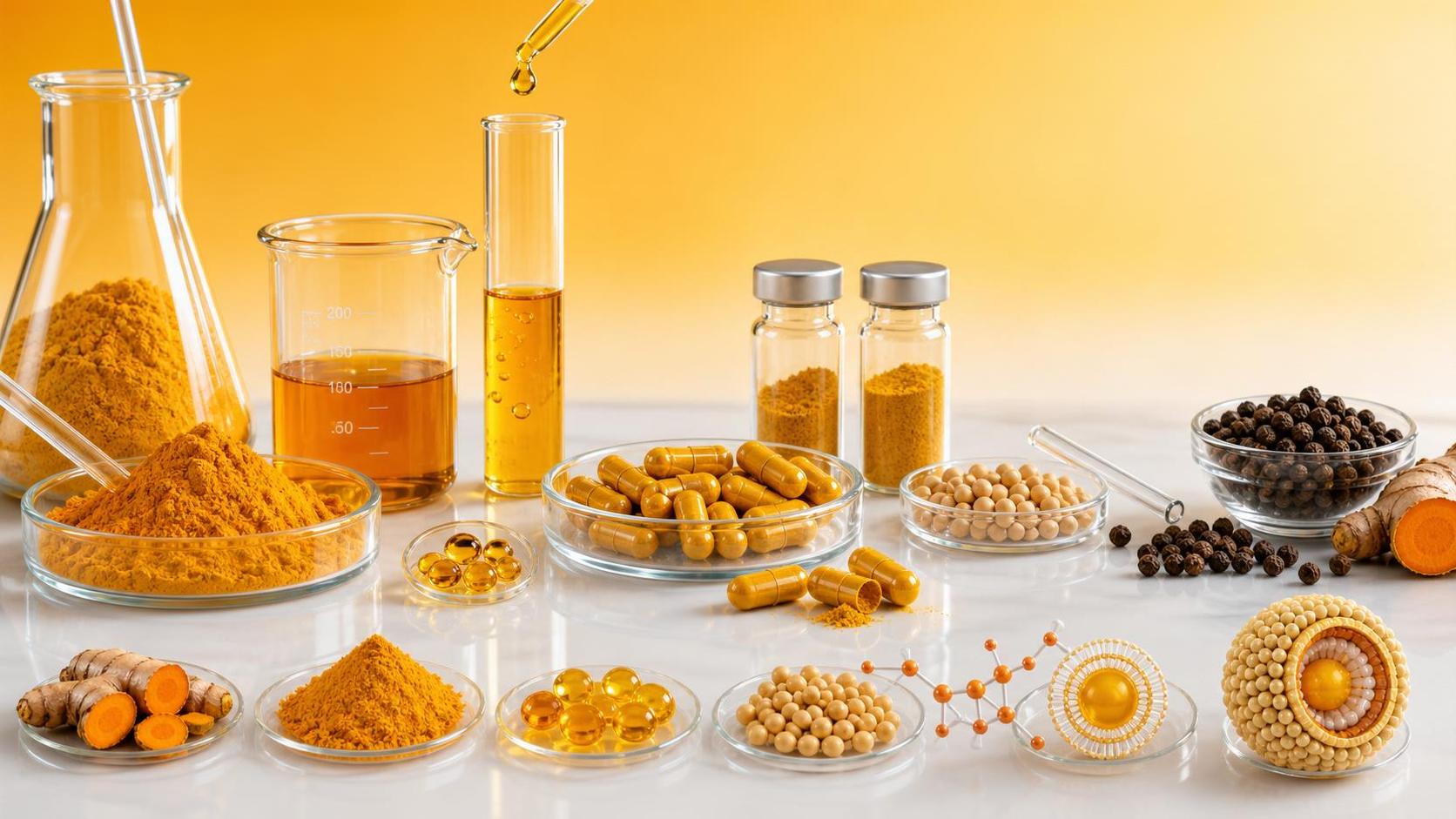
Manufacturers use several methods to improve turmeric extract curcumin absorption.
Each approach has tradeoffs in cost, evidence depth, labeling clarity, and stability.
- Piperine blends: Often paired with black pepper extract to slow curcumin breakdown.
- Phytosome systems: Bind curcumin to phospholipids to support transport across membranes.
- Micellar formats: Use surfactant-like systems to improve dispersion in water.
- Liposomal delivery: Encapsulates actives in lipid vesicles for enhanced uptake potential.
- Nano-dispersions: Reduce particle size to increase surface area and dissolution behavior.
Not every technology works equally well across all formats.
Capsules, softgels, powders, and liquid suspensions may show different performance profiles.
What Strong Evidence Looks Like
Claims such as “20x better absorption” need careful reading.
The comparison baseline matters a lot.
One product may compare itself to plain curcumin powder, not another enhanced extract.
More useful signals include published pharmacokinetic data, human studies, and repeatable dosing protocols.
- Look for human clinical data, not just lab simulations.
- Check whether the study used the exact branded ingredient.
- Confirm the dose, duration, and subject profile.
- Review whether plasma concentration or AUC was measured.
- Be cautious with dramatic multiplier claims lacking context.
A Practical Comparison Framework
To compare turmeric extract curcumin efficiently, use a simple structured checklist.
This keeps evaluation grounded in measurable factors, not just marketing language.
Questions Worth Asking Before You Compare Price
Price can be misleading if the underlying formula is weak.
A lower-cost turmeric extract curcumin product may require higher doses to reach similar exposure.
- Is the extract standardized and clearly labeled?
- Is the absorption system named and supported by data?
- Does the supplier share test reports without hesitation?
- Is the serving size realistic for long-term use?
- Does the formula include unnecessary fillers or vague blends?
How Third-Party Testing Changes the Decision
This is where selection gets more serious.
A strong turmeric extract curcumin product should not rely on label claims alone.
Independent testing adds the transparency needed for confident comparison.
That same evidence-first approach mirrors how technical procurement teams evaluate high-performance materials.
Organizations such as SiliconCore Metrics apply this logic in engineering supply chains every day.
The principle is simple: measurable data reduces decision risk.
Key Reports to Review
- Certificate of Analysis: Confirms identity, potency, and batch consistency.
- Heavy metal testing: Important for lead, arsenic, cadmium, and mercury control.
- Microbial testing: Helps verify hygiene and process control.
- Residual solvent testing: Relevant when extraction methods use chemical solvents.
- Stability data: Shows whether the formula maintains potency over shelf life.
If these records are missing, comparison becomes much weaker.
In practice, transparency often separates serious suppliers from marketing-driven brands.
Common Comparison Mistakes to Avoid
Several mistakes appear again and again when people compare turmeric extract curcumin.
Avoiding them can save time and improve decision quality.
- Comparing extract weight instead of active curcuminoid content.
- Assuming 95% purity always means better effectiveness.
- Trusting absorption claims without clinical context.
- Ignoring contaminant screening and batch documentation.
- Using price per bottle instead of price per effective serving.
A more reliable method is to compare usable value, not label drama.
That shift usually leads to clearer decisions.
A Simple Decision Path for Better Selection
If you want a practical way to compare options, follow this order.
- Start with standardized turmeric extract curcumin content.
- Review the delivery technology and absorption rationale.
- Check human evidence tied to the exact formulation.
- Verify third-party purity and safety reports.
- Calculate value using active dose per serving.
- Only then compare brands on price and convenience.
This approach keeps the decision grounded in performance, not packaging.
It also makes side-by-side evaluation much faster.
Final Takeaway
The best turmeric extract curcumin comparison goes beyond purity claims.
What matters most is the balance between standardized actives, absorption design, and verified quality data.
When those pieces are reviewed together, product differences become much easier to judge.
Use this framework to compare turmeric extract curcumin options more confidently, ask better questions, and make a more informed final choice.
Recommended News
- HDI TechnologyHow to vet PCB suppliers in a directory before requesting quotesPCB suppliers directory guide: learn how to verify capabilities, certifications, traceability, and quote assumptions before selecting a reliable PCB partner.
- HDI TechnologyHow UAE engineering data repositories improve design traceabilityEngineering data repository UAE solutions strengthen design traceability by linking requirements, revisions, supplier evidence, and manufacturing data. Explore practical ways to reduce risk and accelerate releases.
- HDI TechnologyHow to verify UL recognition for printed circuit boardsPrinted circuit boards UL verification made clear: learn how to check UL marks, file numbers, factory scope, stack-ups, and traceability for audit-ready compliance.
- HDI TechnologyMulti layer PCB design guide for controlling signal crosstalkMulti layer PCB design guide for controlling signal crosstalk with stackup, spacing, return-path, and validation strategies for reliable high-density boards.
- HDI TechnologyHow tighter manufacturing tolerances change HDI PCB pricesMicro tolerance manufacturing price explained: see how tighter HDI PCB tolerances affect yield, inspection, supplier options, and sourcing costs.
- HDI TechnologyHow automotive PCB impedance control prevents signal failuresAutomotive PCB impedance control prevents reflections, noise, and timing errors in ADAS, EV, and infotainment systems. Learn how to build reliable signal paths.