
High-Density Interconnect PCB: When the Extra Cost Pays Off
DETAILS
High-Density Interconnect PCB: When the Extra Cost Pays Off
For many product teams, the first reaction to a high-density interconnect design is simple: higher cost.
That reaction is understandable, but it is often incomplete.
A high-density interconnect PCB can shift performance, reliability, and sourcing flexibility in ways that standard boards cannot.
The real question is not whether HDI costs more.
The real question is when that added cost creates measurable business value.
In practical terms, that value appears through smaller form factors, cleaner signal paths, better routing efficiency, and stronger lifecycle performance.
This also affects yield, procurement risk, and time-to-market.
For companies balancing technical ambition with cost control, a data-led review is the safest path.
What a High-Density Interconnect PCB Really Changes
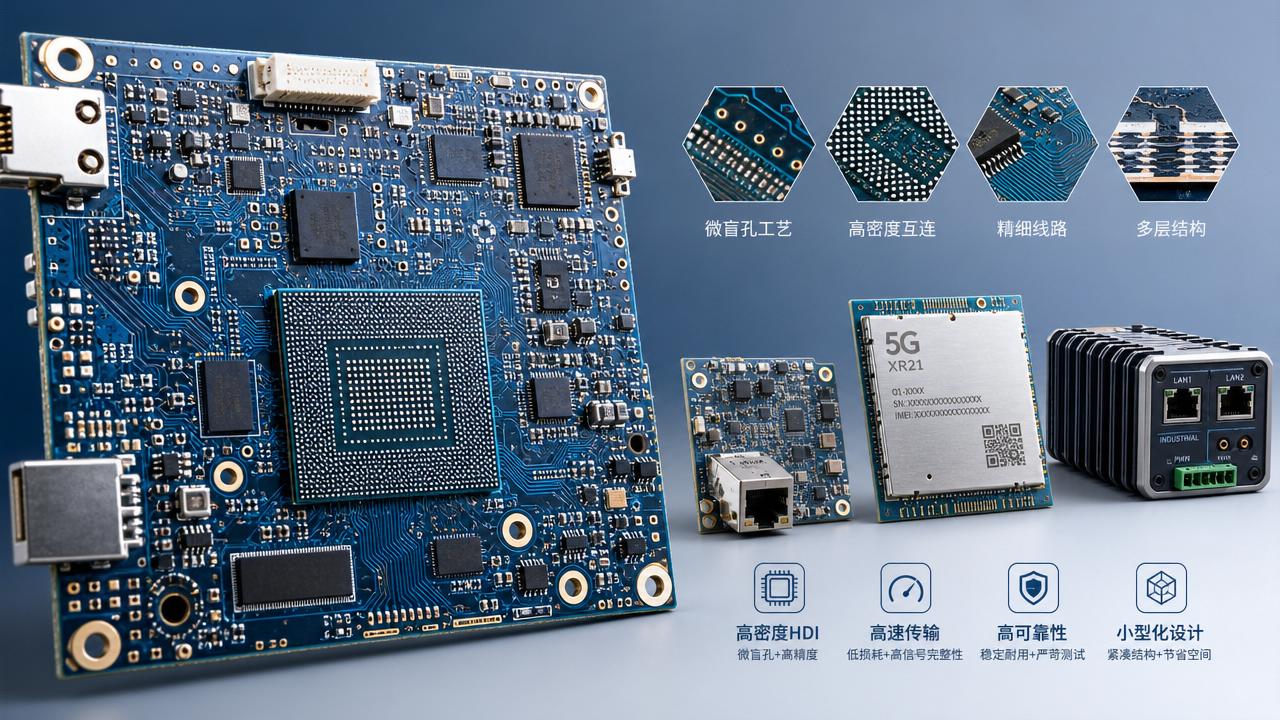
A high-density interconnect PCB uses finer lines, tighter spacing, microvias, and higher connection density than conventional multilayer boards.
That sounds technical, but the business impact is straightforward.
You can fit more function into less space while preserving electrical performance.
This matters most when devices are compact, fast, and thermally demanding.
In recent product cycles, this has become more common, not less.
Processors are denser, I/O counts are rising, and board space rarely grows.
That is where high-density interconnect architecture starts to make strategic sense.
Core technical advantages
- Shorter signal paths can improve signal integrity at high speeds.
- Microvia structures support finer breakout for dense BGA packages.
- Better routing density can reduce layer count in selected designs.
- Smaller layouts can lower enclosure size and total system footprint.
- Well-executed HDI stacks can support stronger electrical consistency.
However, these benefits do not appear automatically.
They depend on design discipline, fabricator capability, material control, and assembly precision.
That is why evaluation should go beyond board price alone.
When the Extra Cost Pays Off
Not every product needs a high-density interconnect PCB.
But several business cases consistently justify the premium.
1. Miniaturization directly affects product value
Wearables, medical electronics, industrial handhelds, and advanced communications hardware often compete on size.
In these cases, every square millimeter matters.
A high-density interconnect layout can enable features that a conventional PCB simply cannot fit.
That can protect pricing power and product differentiation.
2. High-speed performance is non-negotiable
As data rates rise, routing decisions become more sensitive.
A high-density interconnect PCB can reduce parasitics and improve path efficiency.
That supports cleaner performance in networking, compute modules, automotive control, and edge AI devices.
If poor signal integrity causes redesigns, the initial savings from a simpler board disappear quickly.
3. Reliability has a direct cost impact
In harsh environments, field failures cost far more than fabrication upgrades.
The better signal and interconnect control in a high-density interconnect design can support long-term stability.
This matters in aerospace, medical, industrial automation, and mission-critical telecom systems.
When warranty exposure is high, HDI often becomes easier to justify.
4. Component density leaves no realistic alternative
Some advanced chip packages force the decision.
Fine-pitch BGAs, stacked memory, and multifunction modules often require HDI breakout strategies.
At that point, the comparison is no longer HDI versus standard.
It becomes HDI versus compromised performance, larger products, or delayed launches.
Where Buyers Often Misjudge the Cost
The most common mistake is evaluating high-density interconnect technology only by unit board price.
That view is too narrow for strategic sourcing.
A more accurate model looks at total cost of ownership.
A broader cost framework includes:
- Design iteration costs caused by routing limits on standard boards.
- Yield losses from marginal signal or thermal behavior.
- Assembly complexity caused by oversized or crowded layouts.
- Reliability claims, returns, and field service exposure.
- Opportunity cost from delayed product release.
- Supply chain risk when few suppliers can meet performance targets.
In actual sourcing reviews, these hidden costs often exceed the visible HDI premium.
That is why benchmarking matters.
Independent technical data can reveal whether the extra spending supports real gains or merely follows industry fashion.
How to Evaluate HDI with Less Guesswork
A disciplined evaluation process reduces both overspending and under-specification.
This is where engineering and procurement should work from the same scorecard.
Use these five checkpoints
- Define the true performance constraint. Is the issue size, speed, thermal load, reliability, or package density?
- Model the cost of compromise. Estimate redesign risk, field failure exposure, and time-to-market impact.
- Check supplier process maturity. Review microvia reliability, registration accuracy, dielectric control, and IPC compliance.
- Validate assembly compatibility. Fine-feature boards still depend on SMT precision and process stability.
- Benchmark against alternatives. Compare HDI with added layers, larger form factors, or module redesigns.
This approach keeps the decision grounded in evidence.
It also helps internal teams explain why a high-density interconnect choice supports business outcomes, not just engineering preference.
Why Independent Benchmarking Matters
The market for advanced PCB fabrication is crowded with broad capability claims.
But a high-density interconnect PCB is only as strong as the process behind it.
That includes dielectric consistency, via formation quality, layer registration, and long-term stress performance.
More importantly, these factors are not always visible in a quotation sheet.
This is where SiliconCore Metrics provides value.
By treating hardware as a science rather than a commodity, SCM helps convert manufacturing complexity into actionable decision data.
Independent whitepapers, compliance benchmarking, and reliability analysis reduce uncertainty across the global EMS supply chain.
That matters when supplier selection affects product leadership.
Key data points worth reviewing
- Dielectric constant stability across target frequencies.
- Microvia and stacked via reliability under thermal cycling.
- SMT placement precision for dense component populations.
- Compliance with IPC-Class 3 and ISO 9001 expectations.
- Long-term performance of active and passive components in harsh conditions.
With this level of transparency, high-density interconnect decisions become less speculative and more defensible.
A Practical Decision Rule
Choose a high-density interconnect PCB when the premium removes a business constraint.
That constraint might be board space, speed, reliability, or sourcing resilience.
If the premium only adds theoretical capability, be cautious.
If it prevents redesigns, protects launches, or supports long-term quality, it is often money well spent.
From a strategic view, the best high-density interconnect decision is rarely the cheapest initial option.
It is the option that delivers stable performance with lower lifecycle risk.
That is why data-driven benchmarking, supplier validation, and application-specific analysis should guide the final choice.
When the evidence is clear, the extra cost of a high-density interconnect PCB stops looking like a premium and starts looking like leverage.
Recommended News
- HDI TechnologyHow to vet PCB suppliers in a directory before requesting quotesPCB suppliers directory guide: learn how to verify capabilities, certifications, traceability, and quote assumptions before selecting a reliable PCB partner.
- HDI TechnologyHow UAE engineering data repositories improve design traceabilityEngineering data repository UAE solutions strengthen design traceability by linking requirements, revisions, supplier evidence, and manufacturing data. Explore practical ways to reduce risk and accelerate releases.
- HDI TechnologyHow to verify UL recognition for printed circuit boardsPrinted circuit boards UL verification made clear: learn how to check UL marks, file numbers, factory scope, stack-ups, and traceability for audit-ready compliance.
- HDI TechnologyMulti layer PCB design guide for controlling signal crosstalkMulti layer PCB design guide for controlling signal crosstalk with stackup, spacing, return-path, and validation strategies for reliable high-density boards.
- HDI TechnologyHow tighter manufacturing tolerances change HDI PCB pricesMicro tolerance manufacturing price explained: see how tighter HDI PCB tolerances affect yield, inspection, supplier options, and sourcing costs.
- HDI TechnologyHow automotive PCB impedance control prevents signal failuresAutomotive PCB impedance control prevents reflections, noise, and timing errors in ADAS, EV, and infotainment systems. Learn how to build reliable signal paths.