
Commercial Crab Grading Machine: Common Sizing Errors to Avoid
DETAILS
Commercial Crab Grading Machine: Common Sizing Errors to Avoid
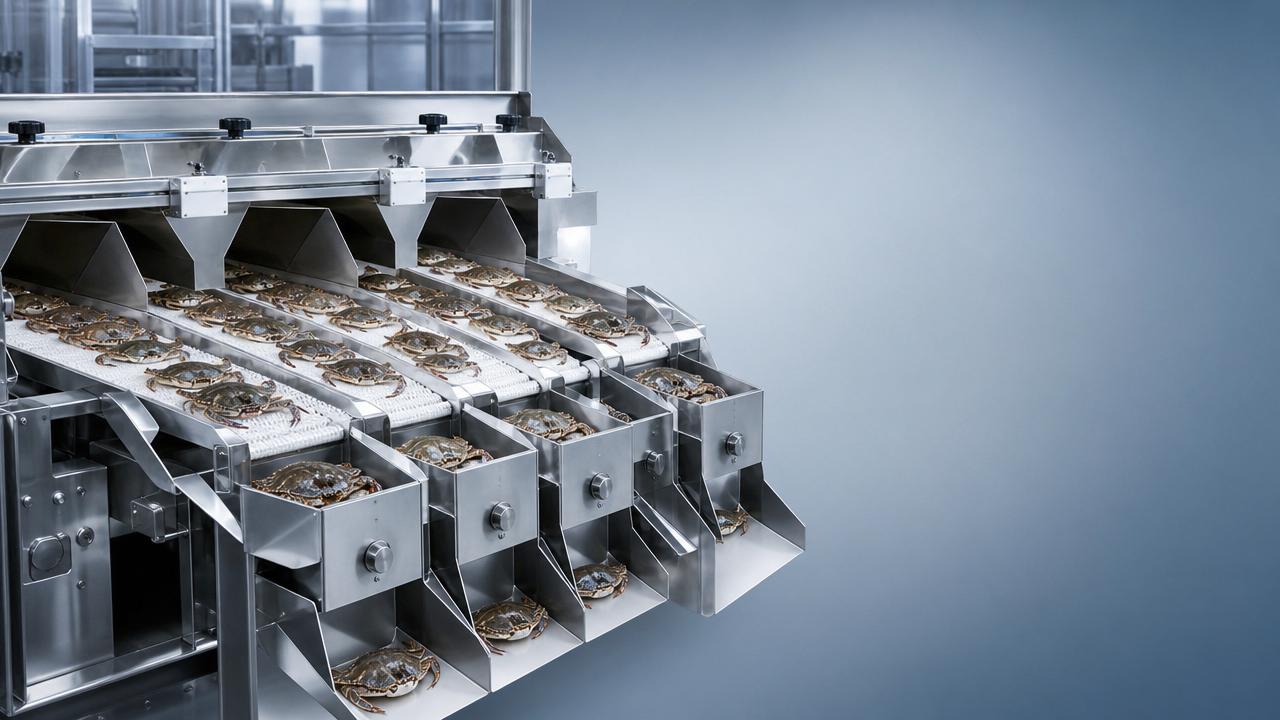
A commercial crab grading machine can raise output fast.
But small sizing errors often create expensive problems.
Crabs may enter the wrong grade, lose value, or suffer handling damage.
That also affects packing speed, customer trust, and downstream consistency.
In daily production, the biggest issue is rarely one major breakdown.
More often, a commercial crab grading machine drifts through small avoidable mistakes.
Why sizing accuracy matters more than it seems
Accurate grading supports yield, pricing, and workflow control.
When a commercial crab grading machine sorts too loosely, mixed lots become common.
When it sorts too tightly, usable product may be rejected or reworked.
Both outcomes reduce line efficiency and complicate traceability.
The practical goal is simple.
Each grade should reflect a repeatable size standard, not a rough estimate.
Common commercial crab grading machine sizing errors
1. Using the wrong baseline size standard
Not every facility defines crab size in the same way.
Some use shell width.
Others rely on weight bands, species traits, or buyer-specific limits.
A commercial crab grading machine cannot stay accurate without one clear reference.
This mistake often appears after switching customers or product types.
The fix is to lock grade definitions before each shift begins.
2. Skipping calibration checks at startup
Startup calibration is not a formality.
It sets the day’s grading accuracy.
A commercial crab grading machine may appear normal while measuring slightly off.
That small offset grows into a large sorting problem over several batches.
Recent processing trends show tighter buyer tolerance on grade uniformity.
That means even minor drift should be caught before live product enters the line.
3. Feeding crabs too quickly into the machine
Overfeeding is one of the most common causes of bad results.
When product density gets too high, spacing disappears.
The commercial crab grading machine may then misread shell position or route crabs incorrectly.
Throughput looks better for a moment, but accuracy drops.
In real operations, this often starts during peak unloading periods.
A steady feed rate almost always beats a rushed one.
4. Ignoring species, shell condition, and orientation
Not all crabs present the same way during grading.
Soft shell condition, missing limbs, or unusual posture can affect detection.
A commercial crab grading machine performs best when product presentation is consistent.
If orientation changes too much, size logic may not match actual grade intent.
The better approach is to separate abnormal product before automated sizing begins.
5. Letting water, debris, or residue affect measurement
Wet processing environments are hard on equipment accuracy.
Residue buildup can interfere with guides, sensors, rollers, or weigh points.
A commercial crab grading machine may still run, yet produce unstable sizing results.
This is why cleaning affects accuracy, not just hygiene.
Short cleaning checks between lots can prevent hours of rework later.
6. Failing to verify output with manual sampling
Automation still needs human confirmation.
Without sampling, small grade shifts remain hidden for too long.
A commercial crab grading machine should be checked against manual reference pieces every shift.
This creates a simple control loop.
If output drifts, adjustment happens early instead of after packing complaints arrive.
Warning signs that your grading accuracy is slipping
Most sizing issues leave clues before failure becomes obvious.
- Grade bins show unusual overlap in crab size.
- Rework volume rises after packing inspection.
- One lane of the commercial crab grading machine rejects more product than others.
- Operator adjustments become frequent without clear cause.
- Customer feedback mentions inconsistent counts or grade mix.
- Daily throughput improves, but sellable uniformity declines.
When these signals appear together, the problem is usually process related, not random.
A practical checklist to reduce commercial crab grading machine errors
A reliable routine keeps grading stable under production pressure.
- Confirm grade specifications before each product run.
- Calibrate the commercial crab grading machine using known reference samples.
- Set feed speed to maintain clear product spacing.
- Remove damaged or abnormal crabs before automated sorting.
- Inspect sensors, guides, and contact points for residue.
- Run manual spot checks on every grade bin.
- Record drift patterns to identify repeat causes by shift or lot.
This checklist is simple, but it protects both accuracy and product value.
How better measurement discipline improves processing results
Better sizing is not only about machine settings.
It comes from repeatable control around the commercial crab grading machine.
That includes training, sanitation timing, sample verification, and realistic line speed.
The clearer signal in many facilities is this.
Consistent routines beat reactive corrections every time.
That also means less waste, fewer disputes, and smoother packing performance.
Final takeaway
A commercial crab grading machine delivers value only when sizing stays consistent.
Most grading errors come from preventable setup and handling gaps.
Clear standards, controlled feed, routine cleaning, and manual verification make the biggest difference.
If daily results feel inconsistent, start by auditing those four areas first.
That practical review often restores commercial crab grading machine accuracy faster than any major equipment change.
Recommended News
- AOI TestingHow to verify ISO 9001 certification when sourcing electronicsISO 9001 certification electronics: learn how to validate certificates, audit scope and accreditation, and reduce quality risks when sourcing PCBs, EMS, and components.
- AOI TestingHow to verify a UL certified PCB assembly before production approvalUL certified PCB assembly verification made practical: review PCB markings, materials, components, traceability, and safety controls before production approval.
- AOI TestingHow to qualify an AOI inspection supplier for PCB defect detectionAOI inspection supplier qualification guide for reliable PCB defect detection. Learn how to validate detection accuracy, control false calls, assess traceability, and choose dependable support.
- AOI TestingHow to catch solder joint defects in through hole assembly testingThrough hole assembly testing: discover how visual inspection, electrical tests, X-ray, and process controls catch hidden solder joint defects before they cause costly failures.
- AOI TestingWhich AOI inspection standards apply to PCB assembly quality control?AOI inspection standards for PCB assembly: learn how IPC-A-610, J-STD-001, IPC-1782, and ISO 9001 guide defect criteria, traceability, validation, and reliable quality control.
- AOI TestingHow AOI testing supports electronics quality control in the USAElectronics quality control USA teams use AOI testing to catch visible PCB assembly defects early, improve traceability, and strengthen reliable production outcomes.