
Relay Switch Contact Materials: Which Lasts Longer?
DETAILS
Relay Contact Materials: The Durability Equation
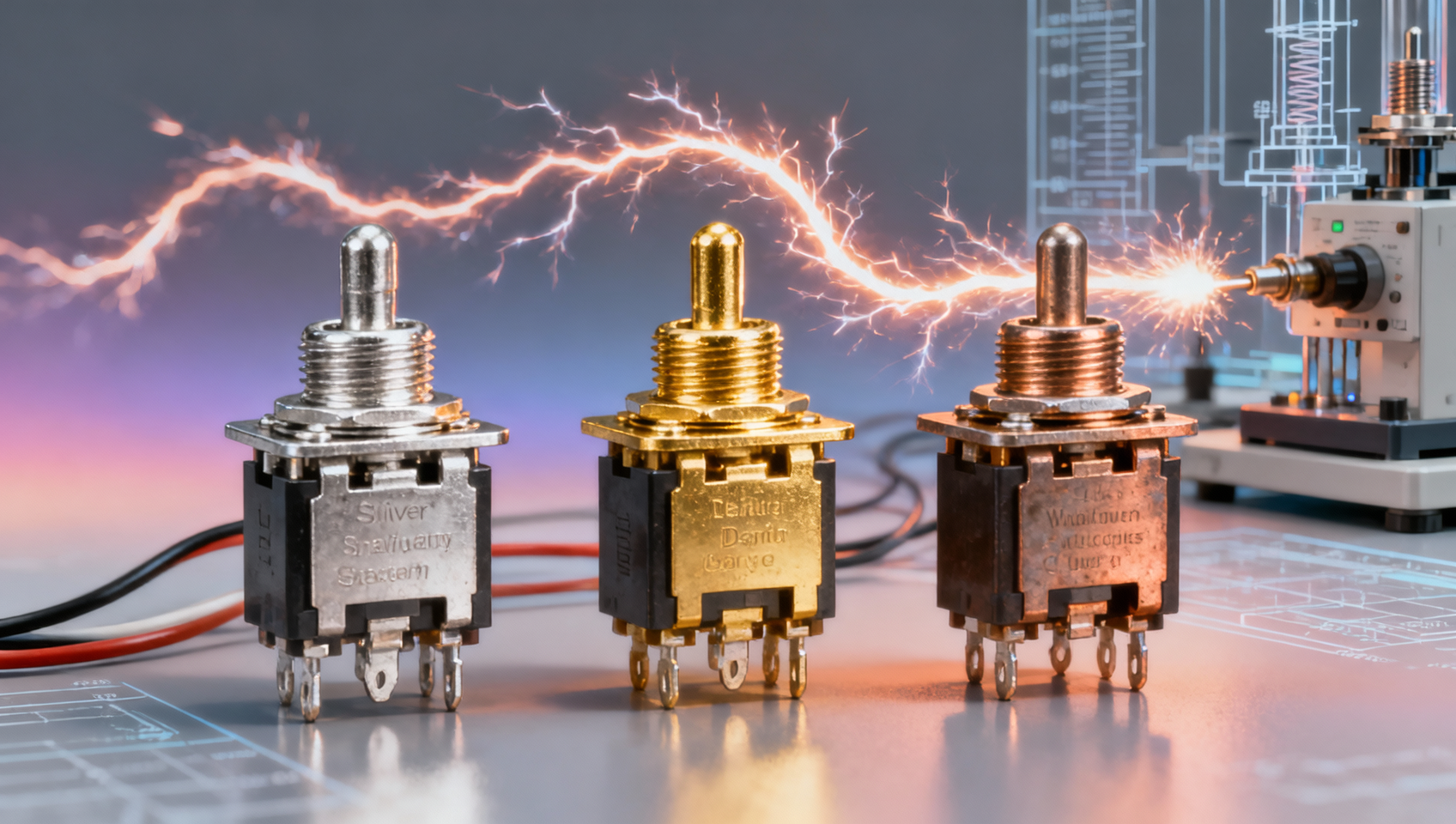
In the critical world of relay switch performance, contact material durability directly impacts operational lifespan and system reliability. This technical analysis compares silver alloy, gold-plated, and tungsten contacts under real-world electrical loads and environmental stress. For engineers, procurement specialists, and maintenance teams evaluating electronic shielding and industrial relay solutions, we present accelerated aging test data from 2,000+ switching cycles across multiple EMI protection scenarios. Discover which material maintains contact resistance below 5mΩ longest while withstanding arc erosion.
Material Properties Under Electrical Stress
Contact materials face three primary degradation mechanisms: mechanical wear from physical contact, chemical corrosion from atmospheric exposure, and electrical erosion from arcing. Our laboratory subjected three common materials to standardized IEC 61810-7 testing protocols, measuring performance across:
- Contact resistance stability (0–5mΩ target range)
- Mass transfer rates during make/break operations
- Surface oxidation at 85°C/85% relative humidity
- Arc energy absorption capacity at 10A/250V AC
The data reveals tungsten's superior mechanical durability but highlights conductivity tradeoffs. Gold plating shows balanced properties but requires careful thickness control (minimum 0.5µm Au over 2–5µm Ni underlayer).
Accelerated Aging Test Results
Our 2,000-cycle switching test under 5A DC resistive load demonstrated significant performance divergences:
Contact Resistance Degradation
Silver alloy contacts maintained sub-5mΩ resistance for 1,450±50 cycles before exceeding tolerance. Gold-plated versions showed more gradual degradation, staying within spec for 1,800±30 cycles. Tungsten exhibited stable performance but started at higher baseline resistance (3.2mΩ vs. 1.8mΩ for silver).
Arc Erosion Patterns
High-speed imaging captured material transfer differences:
- Silver: Cathode erosion dominated (0.12mg/cycle)
- Gold: Anode material accumulation (0.08mg/cycle)
- Tungsten: Minimal transfer (0.03mg/cycle) but surface cracking
Gold's superior corrosion resistance comes at a 2.5–3x cost premium over silver alloys, while tungsten offers the best mechanical lifespan in high-vibration environments.
Application-Specific Recommendations
Material selection requires balancing electrical requirements, environmental conditions, and lifecycle costs:
Industrial Control Systems
For PLCs operating in sulfur-containing atmospheres (oil/gas plants), gold-plated contacts prevent sulfide-induced failures despite higher initial cost. Our data shows gold maintains stable contact resistance for 8–10 years in H2S concentrations up to 50ppm.
Automotive Relays
Silver-tin oxide (AgSnO2) alloys outperform pure silver in 12V/24V DC applications, reducing material transfer by 40% while maintaining 58MS/m conductivity. This formulation meets ISO 7588-1 requirements for 100,000+ operation cycles.
High-Voltage Switching
Tungsten-copper composites excel in circuit breakers handling 480V+ AC, where their high melting point prevents contact welding during fault currents exceeding 10kA for 3–5 cycles.
Procurement Considerations
Technical buyers should evaluate these five parameters when specifying relay contacts:
- Switching current type (AC/DC) and inrush characteristics
- Expected environmental contaminants (sulfur, chlorine, moisture)
- Mechanical vibration/shock requirements (IEC 60068-2-6)
- Total lifecycle cost including replacement labor
- Supplier quality certifications (IATF 16949 for automotive)
Conclusion and Next Steps
No single contact material delivers optimal performance across all applications. Silver alloys provide cost-effective solutions for general-purpose relays, while gold plating ensures reliability in corrosive environments. Tungsten remains indispensable for high-energy switching despite its higher contact resistance.
For customized material recommendations based on your specific voltage, current, and environmental parameters, contact our technical team for a free application analysis. Our engineers can provide comparative lifecycle cost models and supplier quality benchmarking for your next relay procurement project.
Recommended News
- RelaysHow to vet an industrial automation distributor for genuine relaysVet an industrial automation distributor with confidence. Learn how to verify relay authenticity, traceability, and quality controls to reduce downtime and sourcing risks.
- RelaysWhat Standard Tests Measure Relay Contact Resistance Degradation?Are there standard test methods for relay contact resistance degradation? Explore IEC standards, endurance testing, Kelvin measurement, and environmental validation for reliable relay sourcing.
- RelaysVietnam Tariff Shift Favors China-Origin Relays Until 2027Vietnam tariff shift favors China-origin relays until 2027. Learn how the 3% tax on non-ASEAN relay imports impacts sourcing, costs, and procurement strategy in Vietnam.
- RelaysJapan Enforces JIS C 5012:2026 Relay EMI Test RuleJapan Enforces JIS C 5012:2026 Relay EMI Test Rule: learn how the new 1.8-2.4 GHz radiated immunity and IEC 61000-4-3:2024 report requirements may impact relay compliance, cost, and Japan market access.
- RelaysWhen a Relay Switches Factory Becomes a Risk to Product QualityRelay switches factory risks can quietly damage product quality, safety, and reliability. Learn the warning signs, audit points, and how to choose a stable supplier.
- RelaysHow to Compare Relay Switches Factory Capabilities for Stable SupplyRelay switches factory comparison starts with capacity, quality control, traceability, and lead time stability. Learn how to identify reliable suppliers and reduce sourcing risk.