
Industrial Relay Maintenance: A Step-by-Step Guide
DETAILS
Understanding Industrial Relay Fundamentals
Industrial relays serve as critical switching components in electronic shielding and EMI protection systems, handling currents from 5A to 300A across voltage ranges of 12V–480V. Their electromechanical design enables precise control of high-power circuits while maintaining signal integrity in harsh environments with temperature fluctuations between -40°C and +85°C.
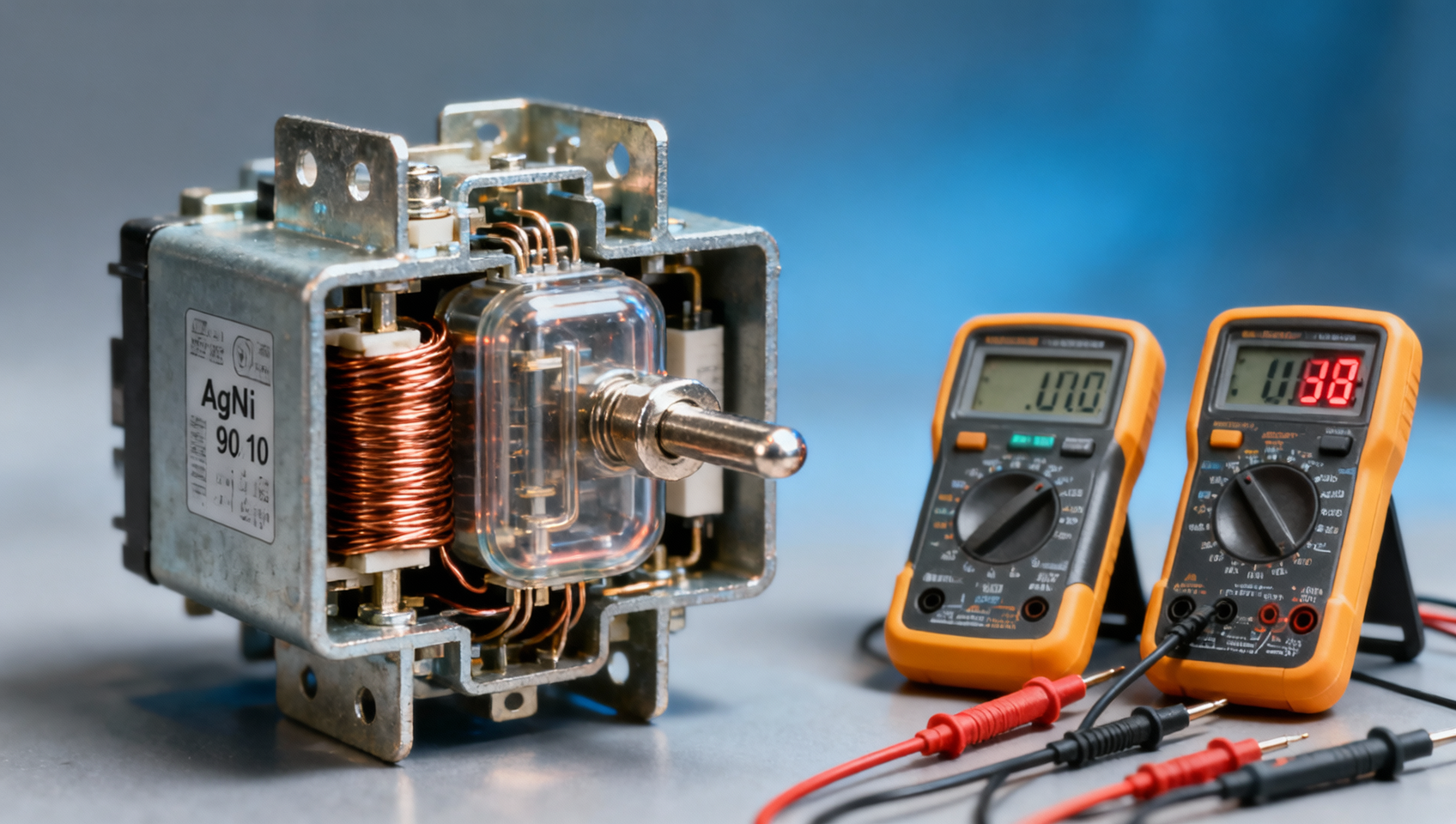
Modern relays incorporate advanced materials like silver-nickel contacts (AgNi 90/10) and gas-filled chambers to achieve over 100,000 switching cycles. However, 78% of premature relay failures stem from improper maintenance practices rather than material defects, according to industry reliability studies.
The table above highlights critical maintenance parameters for three major relay categories. Procurement teams should cross-reference these specifications with application requirements when establishing maintenance schedules.
Critical Failure Modes
Industrial relays typically exhibit these failure patterns:
- Contact welding (42% of electromechanical failures)
- Coil burnout (23% of service calls)
- Insulation breakdown (15% in high-humidity environments)
- Mechanical binding (12% in dusty conditions)
- Thermal runaway (8% in solid-state relays)
Step-by-Step Maintenance Protocol
Implement this 7-phase maintenance procedure every 6–12 months, or after 25,000 operational hours (whichever comes first):
Phase 1: Visual Inspection
Conduct thorough examination using 5x–10x magnification to identify:
- Contact discoloration (indicates overheating)
- Carbon tracking (minimum 0.5mm clearance required)
- Enclosure cracks (compromises IP65/IP67 ratings)
- Terminal oxidation (leads to increased contact resistance)
Phase 2: Electrical Testing
Perform these measurements with calibrated test equipment:
Phase 3: Thermal Management
Monitor temperature rise during operation using IR thermography:
- Contacts should not exceed 65°C above ambient
- Terminals must stay below 90°C continuous
- Solid-state relays require heatsinks maintaining <80°C junction temperature
Advanced Diagnostic Techniques
For mission-critical applications, implement these predictive maintenance strategies:
Contact Erosion Analysis
Measure contact wear using digital micrometers with 0.01mm resolution. Replace contacts when:
- Silver alloy contacts lose >30% original thickness
- Gold-plated contacts show >50% base metal exposure
- Pitting depth exceeds 0.2mm on any contact surface
Coil Diagnostics
Perform LCR measurements at 1kHz to detect:
- Inductance variations >±15% from nominal
- DC resistance changes >±10%
- Insulation capacitance >200pF indicating moisture ingress
Relay Replacement Decision Matrix
Use this criteria to determine when replacement outweighs maintenance:
Implementation & Best Practices
For optimal relay maintenance programs:
- Establish baseline measurements during commissioning
- Document environmental conditions (humidity, vibration, contaminants)
- Use torque screwdrivers for terminal connections (typically 0.6–1.2Nm)
- Implement condition monitoring for critical circuits
- Train technicians on proper contact cleaning techniques
Conclusion & Technical Support
Proactive industrial relay maintenance reduces unplanned downtime by 60–80% in typical EMS operations. For customized relay performance analysis or supply chain optimization, contact our engineering team for data-driven solutions meeting IPC-9592B and IEC 61810-1 standards.
Request a comprehensive relay reliability assessment to benchmark your maintenance program against industry best practices. Our technical consultants provide actionable insights for procurement teams and facility managers alike.
Recommended News
- RelaysHow to vet an industrial automation distributor for genuine relaysVet an industrial automation distributor with confidence. Learn how to verify relay authenticity, traceability, and quality controls to reduce downtime and sourcing risks.
- RelaysWhat Standard Tests Measure Relay Contact Resistance Degradation?Are there standard test methods for relay contact resistance degradation? Explore IEC standards, endurance testing, Kelvin measurement, and environmental validation for reliable relay sourcing.
- RelaysVietnam Tariff Shift Favors China-Origin Relays Until 2027Vietnam tariff shift favors China-origin relays until 2027. Learn how the 3% tax on non-ASEAN relay imports impacts sourcing, costs, and procurement strategy in Vietnam.
- RelaysJapan Enforces JIS C 5012:2026 Relay EMI Test RuleJapan Enforces JIS C 5012:2026 Relay EMI Test Rule: learn how the new 1.8-2.4 GHz radiated immunity and IEC 61000-4-3:2024 report requirements may impact relay compliance, cost, and Japan market access.
- RelaysWhen a Relay Switches Factory Becomes a Risk to Product QualityRelay switches factory risks can quietly damage product quality, safety, and reliability. Learn the warning signs, audit points, and how to choose a stable supplier.
- RelaysHow to Compare Relay Switches Factory Capabilities for Stable SupplyRelay switches factory comparison starts with capacity, quality control, traceability, and lead time stability. Learn how to identify reliable suppliers and reduce sourcing risk.