
The Science Behind Effective RF Shielding
DETAILS
The Science Behind Effective RF Shielding
In today's high-frequency electronic landscape, effective RF shielding has become a critical science for ensuring signal integrity and EMI protection. SiliconCore Metrics dives deep into the engineering principles behind optimal electronic shielding solutions—from heat sinks and cooling systems to precision electrical enclosures. Discover how advanced materials and connector technologies are redefining industrial applications while meeting stringent thermal and electromagnetic compliance standards.
Fundamentals of RF Shielding
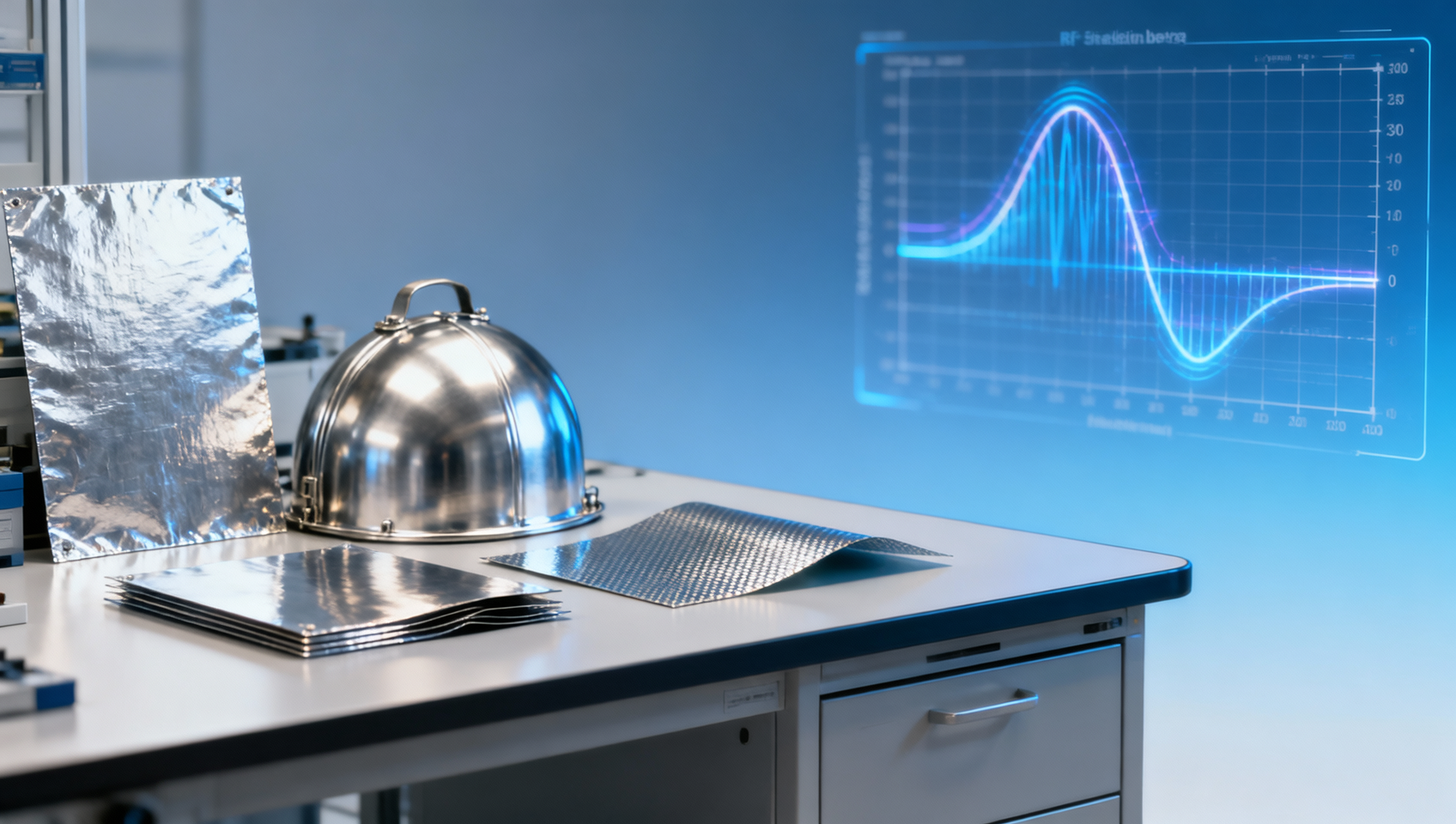
RF shielding operates on three core principles: reflection loss, absorption loss, and multiple reflection loss. The effectiveness of a shield depends on its material properties, thickness, and frequency range. For instance, copper provides 85-100 dB attenuation at 1 GHz when properly implemented, while aluminum offers 60-85 dB in similar conditions.
The shielding effectiveness (SE) is measured in decibels (dB) and calculated using the formula: SE = R + A + B, where R represents reflection loss, A denotes absorption loss, and B accounts for multiple reflections. High-performance applications typically require SE values exceeding 90 dB.
Modern shielding solutions often combine multiple materials to achieve optimal performance. For example, a nickel-copper-nickel sandwich construction can provide both high conductivity and corrosion resistance, making it ideal for harsh industrial environments.
Advanced Materials and Technologies
The latest innovations in RF shielding materials include:
- Metamaterials with negative permeability for specialized frequency bands
- Graphene-based composites offering 120 dB attenuation at thicknesses below 1mm
- Conductive elastomers maintaining 70 dB shielding while allowing 50% compression
- Nanocrystalline alloys providing uniform attenuation across 10 kHz - 1 GHz
These materials must meet specific industry standards depending on application. For medical devices, IEC 60601-1-2 requires 60 dB minimum attenuation, while military applications under MIL-STD-461G often demand 100 dB or higher.
Connector Shielding Considerations
Up to 90% of shielding failures occur at connector interfaces. High-performance RF connectors should maintain:
- 360° circumferential contact with ≤ 1 mΩ resistance
- EMI gaskets with compression force between 5-20 psi
- Surface roughness ≤ 0.8 μm Ra for optimal contact
Design and Implementation Best Practices
Effective RF shielding implementation requires careful consideration of several factors:
For PCB-level shielding, the distance between vias in a Faraday cage should not exceed 1/20th of the wavelength at the highest frequency of concern. This typically translates to via spacing of 2-5 mm for most consumer electronics applications.
Testing and Compliance Standards
RF shielding performance must be verified through standardized testing protocols:
- IEEE 299 for large enclosures (≥ 2m dimensions)
- ASTM D4935 for planar materials
- MIL-STD-285 for military applications
- EN 50147-1 for industrial environments
Testing typically involves:
- Pre-test calibration (30-60 minutes)
- Baseline measurement without shield (15 minutes)
- Shielded measurement (30-120 minutes)
- Data analysis and reporting (1-2 days)
Common Testing Pitfalls
Approximately 40% of shielding tests fail due to:
- Inadequate ground connections (28% of failures)
- Seam leakage (35% of failures)
- Aperture resonance (22% of failures)
- Material degradation (15% of failures)
Industry-Specific Applications
Different sectors require tailored shielding solutions:
Medical Devices
MRI machines demand 120 dB shielding at 64-300 MHz, while pacemakers require 80 dB at 400-600 MHz. The typical budget allocation for shielding in medical equipment ranges from 8-15% of total BOM cost.
Automotive Electronics
With the rise of electric vehicles, shielding requirements have intensified. Key parameters include:
- 70 dB minimum for infotainment systems
- 90 dB for ADAS components
- Temperature resistance up to 125°C
Future Trends in RF Shielding
Emerging technologies are reshaping the RF shielding landscape:
- 3D-printed shielding structures with graded permeability (2025-2027 timeframe)
- Active cancellation systems achieving 140 dB attenuation (under development)
- Self-healing conductive polymers (commercialization expected by 2026)
The global RF shielding market is projected to grow at 7.2% CAGR through 2030, driven by 5G expansion and IoT proliferation. This growth will particularly impact the aerospace and defense sectors, where shielding requirements are becoming more stringent.
Conclusion and Next Steps
Effective RF shielding requires careful material selection, precise engineering, and rigorous testing. As electronic systems become more complex and operate at higher frequencies, the science behind shielding continues to evolve.
For procurement teams and design engineers, understanding these principles is essential for selecting components that meet both performance and compliance requirements. SiliconCore Metrics provides comprehensive benchmarking data to help navigate these decisions.
To discuss your specific RF shielding challenges or request a customized solution analysis, contact our technical team for a consultation tailored to your application requirements.
Recommended News
- EMI ShieldingHow to choose a design verification resource for EMI testingDesign verification resource guide for EMI testing: compare technical depth, traceable evidence, and compliance insight to prevent costly redesigns.
- EMI ShieldingHow automotive component compliance testing supports EMC approvalComponent compliance testing automotive helps secure EMC approval through traceability, pre-compliance checks, and controlled design changes. Learn how to reduce risk.
- EMI ShieldingDo High-Performance Embedded Boards Need Different EMI Shielding?Do high-performance embedded boards require different EMI shielding approaches? Explore practical strategies for grounding, thermal design, cable control, compliance, and reliable performance.
- EMI ShieldingEU Adds Halogenated Flame Retardants and EMI Coatings to RoHS ScopeEU RoHS scope expands to halogenated flame retardants and EMI coatings under Directive (EU) 2026/1389. See how PCB exporters can prepare for the 2027 compliance deadline.
- EMI ShieldingEU Requires EPDs for EMI Shielding PartsEU Requires EPDs for EMI Shielding Parts from January 2027. Learn how the new EU rule affects compliance, carbon disclosure, shipment timing, and supplier planning.
- EMI ShieldingCBP Tightens Filing Rules for EMI Shielding ImportsCBP Tightens Filing Rules for EMI Shielding Imports: learn how the September 2026 ACE filing change affects RoHS, REACH, customs timing, and buyer risk for U.S.-bound shipments.