
RF Module Range Problems: Causes and Fixes
DETAILS
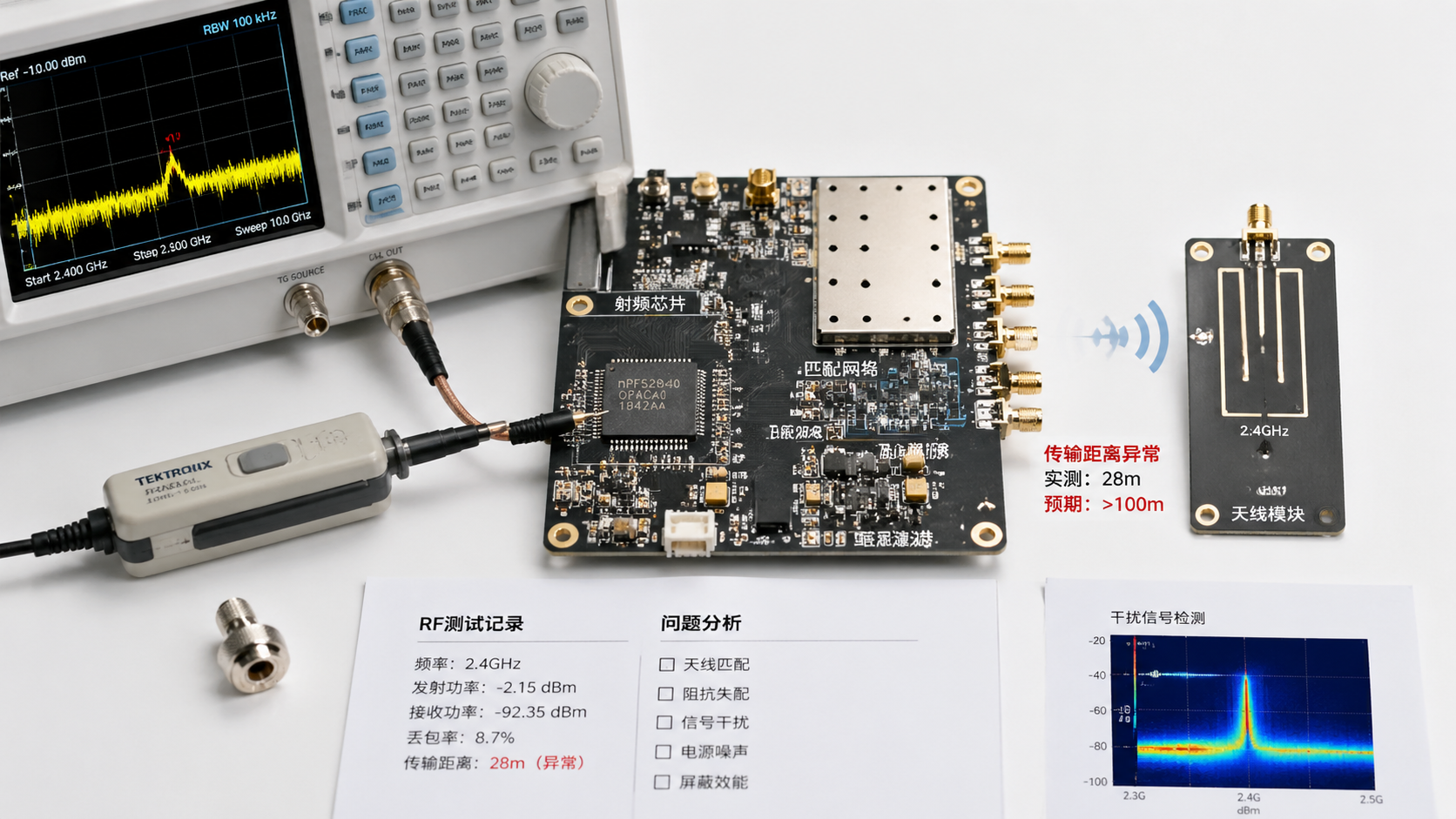
RF module range problems usually do not come from a single “bad RF chip.” In most real-world cases, short communication distance is caused by a combination of antenna mismatch, poor PCB layout, unstable power delivery, enclosure effects, and interference across the RF transmitter, RF receiver, and RF transceiver path. For engineers, sourcing teams, quality managers, and project owners, the key is to diagnose range loss systematically instead of replacing parts blindly. A structured review of antenna design, circuit board assembly quality, shielding, semiconductor selection, and test conditions can often restore expected performance while reducing field failures, rework, and procurement risk.
What do RF module range problems usually mean in practice?
When users search for solutions to RF module range problems, they are usually not looking for theory alone. They want to know why a module that worked on the bench fails in the product, why one supplier’s module performs differently from another, or why communication distance is far below the datasheet value.
In practice, “range problems” can show up as:
- Shorter-than-expected transmission distance
- Intermittent packet loss at moderate distance
- Good lab performance but poor in-field performance
- High sensitivity to product orientation or installation location
- Communication failure when battery voltage drops or nearby electronics switch on
For technical evaluators and operators, this is a troubleshooting issue. For procurement and commercial reviewers, it is also a supplier qualification and total-cost issue. For quality and safety teams, it may indicate process variation, compliance risk, or latent reliability problems.
Which causes matter most when RF range is too short?
Although many factors can reduce RF range, a small number of root causes account for most failures in production systems.
1. Poor antenna matching
This is one of the most common reasons for weak range. Even a high-quality RF module can perform poorly if the antenna and matching network are not tuned to the actual PCB, enclosure, ground plane, and operating frequency. A mismatch increases reflected power, reduces radiated efficiency, and weakens both transmit and receive performance.
Common triggers include:
- Using the reference design without accounting for the final product enclosure
- Changing antenna type without retuning the matching network
- Inconsistent PCB dielectric properties affecting impedance
- Nearby metal, batteries, displays, or cables detuning the antenna
2. PCB layout errors
RF performance is heavily dependent on layout discipline. Poor trace routing, broken return paths, excessive via transitions, noisy ground references, and weak isolation between RF and digital sections can all reduce effective range.
Typical layout-related range issues include:
- Incorrect 50-ohm transmission line geometry
- RF traces routed too close to switching regulators or clocks
- Insufficient grounding around the RF section
- Improper placement of matching components
- Antenna positioned too close to metal shielding or large copper pours
For circuit board assembly teams and design reviewers, these are not cosmetic issues. They directly affect link budget and consistency across builds.
3. Power instability and noise
An RF transmitter or RF transceiver needs clean, stable power to maintain output power, frequency stability, and receiver sensitivity. Voltage droop, ripple, and switching noise from nearby power circuits can degrade communication range without any obvious visible hardware defect.
This is especially common in battery-powered products, compact embedded systems, and designs where RF shares supply rails with motors, displays, or high-speed logic.
4. Environmental and product-level interference
Range is often reduced by interference rather than weak RF hardware alone. Interference may come from Wi-Fi, Bluetooth, switching power supplies, LCD interfaces, DC motors, or even other radios inside the same product.
If the system operates in a crowded ISM band, performance can collapse in real deployment even when engineering samples pass basic functional testing.
5. Component quality and manufacturing variation
Not all circuit components and electronic parts behave equally under production conditions. Tolerance drift in passive components, inconsistent solder joints, inaccurate SMT placement, or lot-to-lot RF front-end variation can all impact tuning and range.
This is where independent benchmarking and process verification become valuable. A design may be correct, but real-world output can still suffer if the supplied components or assembly process are inconsistent.
How can you tell whether the issue is antenna, layout, power, or interference?
The fastest way to solve RF module range problems is to isolate the failure mechanism instead of changing multiple variables at once.
Start with four practical diagnostic questions
- Did the module ever achieve expected range in the final product form factor?
- Does range change significantly with orientation, hand effect, or enclosure installation?
- Does range drop when other subsystems are active?
- Is performance consistent across different production lots?
What each symptom often suggests
- Large range change with enclosure or hand proximity: likely antenna tuning or placement issue
- Range loss only when display, motor, or power converter runs: likely conducted or radiated interference
- Wide variation between units: likely assembly tolerance, component variation, or poor process control
- Weak performance at low battery voltage: likely power integrity issue
- Poor sensitivity but acceptable transmit power: likely receiver desense from internal noise
Useful validation methods
Teams evaluating RF modules should prioritize:
- Return loss or VSWR checks for the antenna path
- Conducted and radiated measurements under realistic operating conditions
- Spectrum analysis with all internal subsystems active
- Power rail ripple and transient measurement during transmit bursts
- A-B comparison across component lots, PCB vendors, and assembly batches
For sourcing and quality teams, these tests help distinguish a design flaw from a supplier or process issue.
What fixes usually improve RF module range the most?
Not every correction produces the same result. The most effective improvements are usually the ones that restore antenna efficiency, reduce internal noise, and improve production consistency.
Retune the antenna in the real product
Do not rely only on module reference data. Antenna performance must be validated in the actual enclosure, with the final PCB stack-up, battery, display, and mechanical structure in place. Even a small physical change can shift resonance enough to reduce range dramatically.
Improve RF layout and grounding
Review the transmission line geometry, return path continuity, component placement, and isolation from digital noise sources. If the RF path crosses split grounds, passes near clocks, or includes avoidable discontinuities, range problems are likely.
Clean up the power path
Add proper decoupling, reduce switching noise coupling, and confirm the regulator can support RF burst current without voltage collapse. In compact systems, power integrity can be just as important as the antenna itself.
Control noisy subsystems
If internal electronics are desensitizing the RF receiver, apply shielding, increase spacing, reroute noisy lines, adjust clocking strategy, or redesign the partitioning between RF and digital sections. Fixing receiver desense often produces major range gains.
Tighten component and assembly control
Review passive tolerance, dielectric consistency, solder quality, SMT placement precision, and reflow process stability. In RF products, small process shifts can move performance outside acceptable limits.
Why datasheet range and real product range are often very different
This is a frequent source of confusion for buyers, managers, and even engineering teams. RF module datasheet range is usually measured under controlled conditions: optimized antenna, ideal orientation, low interference, and test fixtures that do not reflect the mechanical compromises of a real product.
Real products introduce:
- Smaller ground planes
- Plastic or metal enclosure effects
- Battery and cable detuning
- EMI from digital subsystems
- Assembly and material variation
- Different thermal and environmental stress conditions
For this reason, technical evaluators and procurement teams should avoid approving modules based only on nominal range claims. Validation should focus on application-specific performance and repeatability.
What should procurement, quality, and project teams check before approving an RF module?
Range performance is not only a design concern. It is also a sourcing and quality control issue. A module that appears cost-effective upfront may create expensive downstream failures if compliance, process capability, and long-term reliability are weak.
For procurement and commercial assessment
- Ask whether the supplier provides validated layout and antenna integration guidance
- Review lot consistency data, not just sample performance
- Confirm traceability for key semiconductors and passive components
- Evaluate whether cheaper alternatives increase tuning or requalification cost
For quality and safety teams
- Check process controls for SMT placement and solder quality
- Review environmental stress performance and drift behavior
- Verify compliance with relevant IPC and ISO quality systems
- Monitor whether field returns correlate with temperature, vibration, or humidity exposure
For project managers and engineering leads
- Require RF validation in the final mechanical structure, not only open-board testing
- Build decision gates around measurable link budget and sensitivity data
- Separate design risk from supplier process risk early in the project
- Include retuning time in development schedules when enclosure changes occur
When is the problem not the module at all?
It is common to blame the RF module first, but the module may not be the root cause. In many projects, the real problem is one of the following:
- The antenna was copied from a reference design but placed in a very different mechanical environment
- The PCB stack-up changed, affecting controlled impedance
- The enclosure or shielding introduced detuning
- The power supply was optimized for cost, not RF burst performance
- Assembly substitutions changed passive values or tolerances
- Thermal stress caused drift in sensitive circuit components over time
This matters because replacing the module without correcting the surrounding design often produces little or no improvement.
How to build a reliable decision process for RF range issues
A practical decision path for businesses and technical teams is:
- Verify whether the issue is repeatable and under what conditions it appears
- Measure antenna match and compare against the intended frequency band
- Check power integrity during RF operation
- Identify internal and external interference sources
- Review PCB layout against RF design rules
- Compare performance across builds, vendors, and component lots
- Retune and retest inside the final product enclosure
This approach reduces wasted engineering cycles and supports better communication between design, sourcing, manufacturing, and quality teams.
RF module range problems are usually solvable, but only when teams treat them as a system-level issue rather than a single-component failure. The most common causes are poor antenna matching, weak PCB layout, unstable power, internal or external interference, and manufacturing variation in electronic parts and circuit board assembly. For engineers, buyers, and quality leaders, the best results come from structured validation, realistic product-level testing, and tight control over semiconductor, passive component, and thermal management compliance. In short, better range is rarely achieved by guesswork; it comes from disciplined RF diagnosis and data-driven design decisions.
Recommended News
- RF ModulesHow PCB layout affects the performance of surface mount RF modulesSurface mount RF modules depend on smart PCB layout. Discover how impedance, grounding, placement, and thermal design affect RF performance—and avoid costly integration errors.
- RF ModulesHow dielectric constant affects impedance stability in RF modulesDielectric constant for RF modules directly affects impedance stability. Learn how Dk variation, stackup control, frequency, and fabrication impact RF performance.
- RF ModulesHow to Choose Low Power Wireless Modules for Battery-Driven DevicesWireless modules low power selection starts with real energy use, not datasheet claims. Learn how to compare RF, protocol fit, battery life, and reliability for smarter device design.
- RF ModulesEU WEEE Rule Takes Effect for Leaded RF ModulesEU WEEE rule now impacts leaded RF modules at import: Bluetooth and Wi-Fi shipments may be blocked without a Pb-exemption code. Learn key compliance steps to avoid customs delays.
- RF ModulesLow Power RF Transmitter Range Limits in Real DeploymentsLow power RF transmitter range depends on antennas, interference, enclosures, and regulations. Learn what really limits field performance and how to plan reliable deployment.
- RF ModulesRF Transmitter Price Breakdown: What Drives Total CostRF transmitter price depends on more than the quote. Discover how specs, certification, materials, and reliability testing shape total cost and smarter supplier decisions.