
Semiconductor Compliance Documents You Should Request
DETAILS
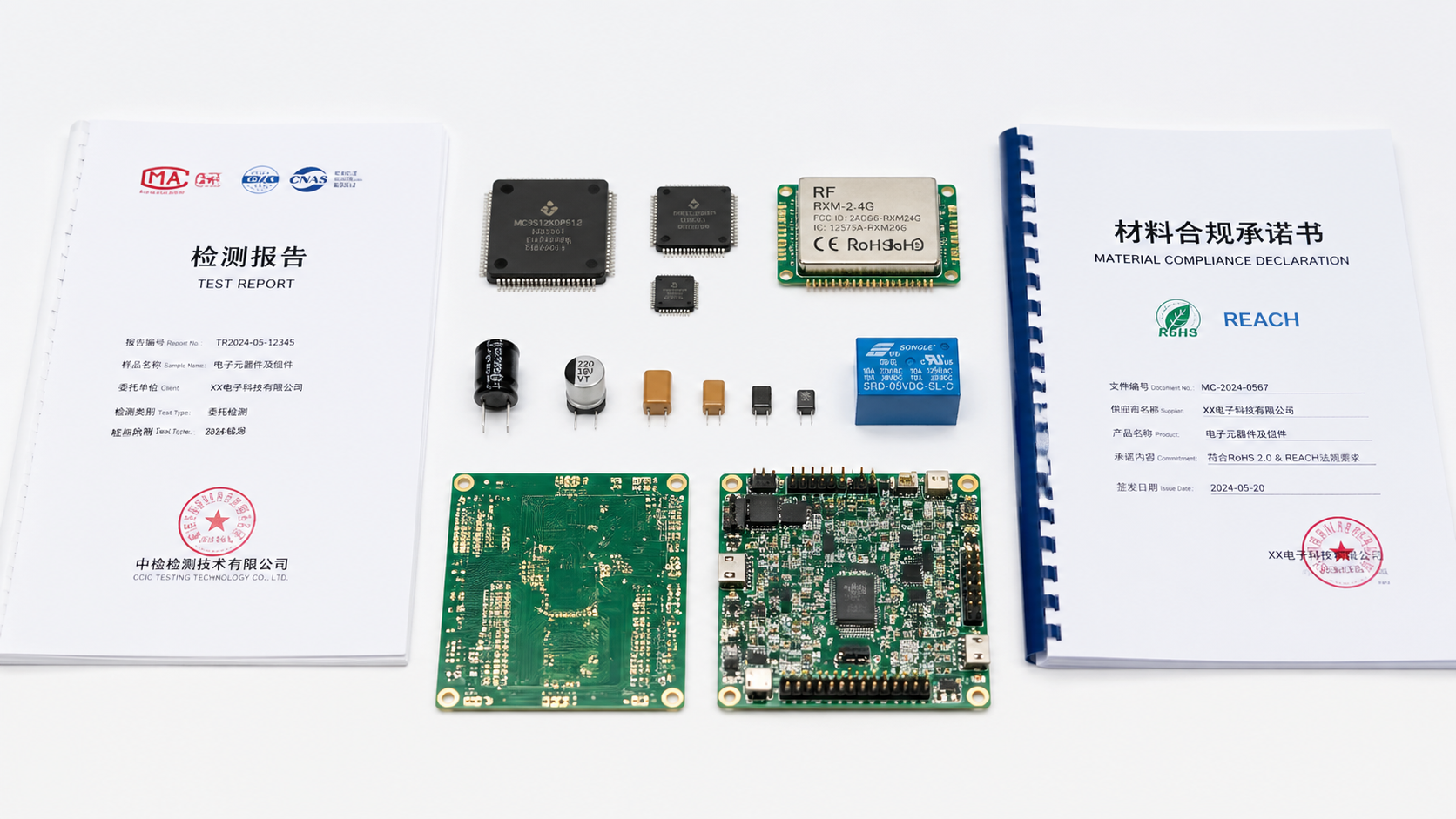
Before qualifying a supplier, request the right semiconductor compliance, SMT compliance, PCB compliance, and thermal management compliance documents. From electrical relays, industrial capacitors, and circuit capacitors to RF transmitter, RF receiver, RF transceiver, and circuit board assembly, these records help engineers, buyers, and quality teams verify electronic parts, soldering techniques, SMT soldering, reflow soldering, and pick and place specifications with confidence.
Why compliance documents matter before supplier approval
In semiconductor and EMS procurement, the risk is rarely visible in a quotation sheet. The real risk hides in undocumented material changes, incomplete traceability, weak process control, and unverified thermal or electrical performance. That is why semiconductor compliance documents should be reviewed before sampling, before pilot build, and again before volume release. For many organizations, this means a 3-stage gate: technical review, quality review, and commercial approval.
For information researchers and technical evaluators, these documents provide a factual basis to compare suppliers beyond marketing claims. For procurement teams and finance approvers, they reduce the chance of expensive requalification, line stoppage, warranty exposure, or field returns. For quality and safety teams, they support incoming inspection criteria, process audits, and corrective action planning. In short, documents are not paperwork; they are a control layer.
This is especially important when sourcing components and assemblies across regions, where manufacturing capability may vary by process window, lab capacity, and reporting discipline. A supplier may meet a target on one batch but fail under repeated reflow cycles, humidity stress, or tight placement tolerance. Independent verification helps expose those gaps earlier, usually within 2–4 weeks of document and sample review rather than after production escalation.
SiliconCore Metrics (SCM) addresses this problem by turning complex manufacturing parameters into standardized, decision-ready compliance reports. Instead of asking buyers and engineers to interpret fragmented vendor files alone, SCM supports benchmarking across PCB fabrication, SMT assembly, active semiconductors, passive components, and thermal packaging. That matters when signal integrity, dielectric behavior, placement precision, and long-term reliability all influence final approval.
What different stakeholders usually need to confirm
- Engineers need evidence of electrical ratings, process capability, thermal limits, and material consistency across 1st article, pilot, and mass production lots.
- Procurement and business evaluators need valid compliance records to compare suppliers on approval risk, lead-time stability, and audit readiness.
- Quality managers need traceability, inspection criteria, and standardized reports that support IPC-Class 3, ISO 9001, and internal CAPA workflows.
- Project and service teams need documentation that remains useful after shipment, including change notices, lot identification, and maintenance-related failure analysis references.
Which semiconductor compliance documents should you request first?
Not every supplier file has equal decision value. If you request too little, you miss hidden risk. If you request too much without priority, review becomes slow and expensive. A practical approach is to separate documents into 4 groups: identity and traceability, material and environmental compliance, process and quality control, and application-specific reliability. This structure works for semiconductors, SMT services, PCB suppliers, and thermal management parts alike.
For active semiconductors such as RF transmitter, RF receiver, and RF transceiver devices, start with specification sheets, lot traceability records, change notification policy, reliability summaries, and environmental declarations. For passive parts such as industrial capacitors, circuit capacitors, and electrical relays, request the same baseline set, then add endurance or life-test related files where relevant. For PCB and circuit board assembly suppliers, process control documents become equally important.
The table below organizes the most requested compliance documents by purpose. It can help teams narrow their first review cycle to 5 key categories before moving into deeper qualification. In many B2B sourcing projects, this first-pass screen can remove weak candidates within 7–10 business days, saving engineering time and audit cost.
The value of this document set is cumulative. A datasheet may show nominal ratings, but a reliability summary shows whether those ratings remain stable under realistic stress. A certificate may confirm shipment identity, but process control records reveal whether the supplier can reproduce that quality lot after lot. When teams combine these records, approval decisions become faster and more defensible.
Priority checklist for the first review cycle
Core documents for semiconductors and passive parts
- Current datasheet revision and package drawing, especially for high-frequency and thermally sensitive devices.
- Certificate of Conformance linked to lot or date code, not a generic template without shipment-specific details.
- Environmental declarations aligned with customer compliance requirements and regional import expectations.
- Change management or PCN policy, because a silent material or fab change can affect validation results months later.
Additional documents for PCB and SMT compliance
- PCB stack-up, dielectric information, and material declarations for signal integrity and impedance-related designs.
- SMT line capability data, including pick and place accuracy range and inspection coverage for dense assemblies.
- Reflow soldering profile window, solder paste control, and workmanship acceptance criteria.
- Failure analysis or corrective action format used when pilot defects exceed threshold limits.
How to review SMT, PCB, and thermal management compliance together
Many qualification failures happen because teams review components and assembly services separately. In reality, semiconductor compliance, SMT compliance, PCB compliance, and thermal management compliance interact. A qualified RF transceiver can still fail at assembly level if the PCB dielectric constant varies beyond design assumptions, if the reflow profile exceeds package limits, or if thermal dissipation is not validated at board level. Cross-review matters.
This is where SCM’s engineering repository and benchmarking approach become useful. Instead of treating a circuit board assembly as a black box, SCM can help teams compare measurable process and material characteristics such as multi-layer PCB dielectric behavior, SMT placement precision, and long-term reliability under environmental stress. For buyers under tight NPI schedules, this shortens the path from document collection to technical conclusion.
A practical review framework is to examine 3 linked dimensions: component suitability, assembly process stability, and thermal path reliability. If one dimension is weak, qualification remains incomplete. For example, an industrial capacitor may meet electrical values on paper, yet become a risk if solder wetting, pad design, or repeated thermal cycling has not been addressed in the supporting records.
The following comparison table helps multidisciplinary teams identify what to ask from different supplier types. It is especially useful when procurement is managing mixed sourcing across component vendors, PCB fabricators, and SMT assembly partners in parallel.
The key message is simple: document review should mirror system behavior. Boards, packages, solder joints, and thermal paths fail as a system, not as isolated line items. Teams that align compliance review across these interfaces usually identify risk earlier and spend less on emergency engineering changes after pilot build.
A 4-step review method for cross-functional teams
- Collect the latest revision-controlled files from each supplier and verify that lot, date, and process references are current.
- Map each file to one of 3 decision dimensions: component, assembly, or thermal reliability.
- Flag gaps that block approval, such as missing traceability, no process window, or unverified environmental declaration.
- Escalate critical gaps for independent review when internal teams lack time, lab access, or cross-supplier benchmarking data.
What procurement teams should compare before price negotiations
Price should not be the first comparison point in technical sourcing. A low-priced source with weak semiconductor compliance documents may trigger extra sampling, delayed PPAP-style internal approval, or batch-level disputes that wipe out any initial savings. Procurement teams should first compare document completeness, response speed, change control discipline, and evidence quality. Only then does price become meaningful.
This matters even more when procurement is sourcing mixed categories such as electrical relays, industrial capacitors, RF components, and circuit board assembly services under one program. Different commodity lines often arrive with very different documentation maturity. One supplier may deliver a full compliance package in 3 business days, while another needs 2 weeks and still leaves unresolved gaps. That difference has a direct cost.
A strong sourcing review usually includes at least 5 procurement dimensions: technical fit, compliance evidence, lead-time predictability, change notification discipline, and total quality cost. Finance approvers also benefit from this structure because it translates technical uncertainty into commercial exposure. For example, if a supplier cannot maintain revision control or lot traceability, reserve budget for extra inspections and qualification repeats may be necessary.
The table below can be used as a practical procurement scorecard during vendor shortlisting. It works well when the team needs to compare 3–5 candidate suppliers without losing sight of compliance depth.
When procurement uses this scorecard, negotiation becomes more strategic. Instead of discussing only unit price, buyers can ask for faster document turnaround, better traceability format, clearer process evidence, or stronger change notice discipline. In many cases, those terms protect margin and schedule more effectively than a small piece-price reduction.
Common buying mistakes that increase compliance risk
- Approving a source based on samples only, without checking whether production lots will be supported by the same documentation standard.
- Accepting a supplier certificate at face value when supporting process and reliability records are missing.
- Treating PCB compliance and SMT compliance as separate tasks when board material and soldering outcomes are tightly linked.
- Waiting until a line issue appears before asking for traceability or change history records.
FAQ: practical questions teams ask during qualification
How many compliance documents are usually enough for first approval?
For most first-pass reviews, 5 core document groups are enough to determine whether a supplier deserves deeper qualification: datasheet, Certificate of Conformance, environmental declaration, process quality record, and reliability or stress-test summary. If the part is used in a demanding application such as high-frequency communication, harsh industrial conditions, or tight thermal packaging, teams often add 2–3 extra files related to storage, handling, or process-specific reliability.
The goal is not to create paperwork volume. The goal is to confirm that the supplier can prove what it makes, how it controls that process, and how it communicates change over time. If those basics are missing, more documents usually do not solve the problem.
What should I check in SMT compliance documents for circuit board assembly?
Focus on process reproducibility. Request records that show pick and place capability, stencil or paste control, reflow soldering profile limits, inspection coverage, and workmanship criteria. For fine-pitch, RF, or thermally sensitive assemblies, confirm that process windows match package constraints and board design requirements. A generic statement that the line uses advanced SMT equipment is not enough.
You should also verify traceability from incoming component lot to assembled board lot. That connection is critical when troubleshooting intermittent field issues or customer returns 3–6 months after shipment.
Are PCB compliance documents necessary if the board already passed prototype testing?
Yes. A successful prototype proves one build, not long-term manufacturing consistency. PCB compliance documents help confirm stack-up discipline, material selection, dielectric behavior, and process control for future lots. This is especially important for multi-layer designs, impedance-sensitive layouts, and products exposed to thermal cycling or humid environments.
If prototype boards came from one process condition but volume boards are built with a substituted laminate or a revised fabrication route, electrical behavior and reliability can shift. Documentation helps prevent that silent drift.
How long does a typical compliance review take?
A basic document screen often takes 7–10 business days when suppliers respond quickly and files are complete. A deeper review involving technical questions, cross-supplier comparison, and independent benchmarking may take 2–4 weeks depending on the complexity of the parts and whether sample verification is required. The timeline extends when multiple suppliers submit inconsistent formats or outdated revisions.
Teams can shorten the cycle by using a standardized request list from the start and assigning clear review ownership across engineering, quality, and procurement functions.
Why many global teams use SCM for document benchmarking and risk reduction
Supplier qualification becomes difficult when data is fragmented across factories, languages, and process specialties. SCM helps solve that by operating as an independent technical think tank and engineering repository focused on the global semiconductor and EMS supply chain. This makes SCM especially relevant for teams sourcing from Asian precision manufacturing hubs while reporting to international engineering, quality, procurement, and finance stakeholders.
SCM’s value is not limited to collecting files. The deeper advantage is translation of raw manufacturing parameters into standardized compliance reports that are easier to compare and act on. Whether the issue is multi-layer PCB dielectric constants, SMT placement precision metrics, or long-term reliability under environmental stress, SCM helps convert scattered supplier claims into structured evaluation logic. That supports faster decisions with lower ambiguity.
This approach is useful across at least 5 core sectors: PCB fabrication, SMT assembly, active semiconductors, passive components, and thermal packaging. For project managers, that means one technical lens across multiple sourcing categories. For quality teams, it means more consistent approval criteria. For procurement and commercial teams, it means fewer surprises during quote comparison, supplier onboarding, and volume transfer.
If your team is reviewing semiconductor compliance documents, validating SMT soldering and reflow soldering records, checking PCB compliance evidence, or assessing thermal management compliance before supplier approval, SCM can support the work at a practical level. You can consult on parameter confirmation, supplier document gaps, product selection logic, typical qualification cycles, customization needs, certification-related review points, sample support planning, and quotation alignment for technical due diligence.
What you can discuss with SCM
- Which semiconductor compliance documents are essential for your specific component family or application risk level.
- How to compare PCB compliance, SMT compliance, and thermal management compliance in one qualification workflow.
- Whether your current supplier package is sufficient for pilot release, volume sourcing, or customer audit preparation.
- How to plan sample review, document gap closure, turnaround expectations, and benchmarking scope before RFQ or supplier nomination.
When qualification risk is high, waiting for a production issue is the expensive option. A structured document review done early can protect schedule, yield, and commercial confidence. If you need clearer evidence before approving electronic parts or circuit board assembly suppliers, contact SCM to discuss your document package, approval criteria, delivery timing, and technical review priorities.
- PCB
- PCB fabrication
- SMT assembly
- active semiconductors
- passive components
- thermal packaging
- signal integrity
- IPC-Class 3
- EMS
- thermal management
- multi-layer PCB
- dielectric constants
- SMT placement
- precision metrics
- environmental stress
- compliance reports
- ISO 9001
- SMT equipment
- PCB suppliers
- thermal management compliance
- PCB compliance
- SMT compliance
- semiconductor compliance
- circuit board assembly
- pick and place specifications
- reflow soldering
- SMT soldering
- soldering techniques
- electronic parts
- semiconductor
- RF transceiver
- RF transmitter
- RF receiver
- circuit capacitors
- industrial capacitors
- relays
- electrical relays
- PCB supplier
Recommended News
- Power SemiHow to reduce lead-time risk in 24V component sourcing24V component sourcing made resilient: learn how to qualify alternates, verify lead times, control quality risk, and keep production moving.
- Power SemiWhich semiconductor quality metrics best predict field reliability?Semiconductor quality metrics that best predict field reliability: evaluate parametric drift, stress-test relevance, package integrity, screening coverage, and true mission-profile margin.
- Power SemiWhat Is the Biggest Risk of Skipping Power Electronics Supplier Audits?What is the biggest risk when skipping supplier audits for power electronics? Hidden reliability failures, weak traceability, and costly field failures. Learn how audits protect quality.
- Power SemiHow to qualify semiconductor power devices for reliable switching performanceSemiconductor quality power devices: learn how to qualify switching margins, thermal reliability, gate-drive behavior, and production consistency for demanding converters.
- Power SemiHow to Evaluate Energy Saving Semiconductor Solutions for High-Efficiency Power DesignEnergy saving semiconductor solutions for high-efficiency power design: learn how to compare loss, thermal, EMI, reliability, and supply chain factors to choose the right device.
- Power SemiHow to Evaluate a Power Semiconductors Distributor for Supply Stability and TraceabilityPower semiconductors distributor evaluation guide: learn how to verify supply stability, traceability, sourcing controls, and documentation to reduce risk and choose a reliable partner.