
Power Semi Failures Linked to Thermal Design
DETAILS
Why do power semiconductors fail even when semiconductor compliance seems adequate? The answer often lies in thermal design, circuit board assembly, and SMT soldering quality. For engineers, buyers, and project leads evaluating electronic parts, circuit components, electrical relays, and high-performance capacitors, understanding thermal management compliance is essential to reducing risk, improving reliability, and preventing costly field failures.
Why thermal design remains the hidden cause of power semiconductor failure
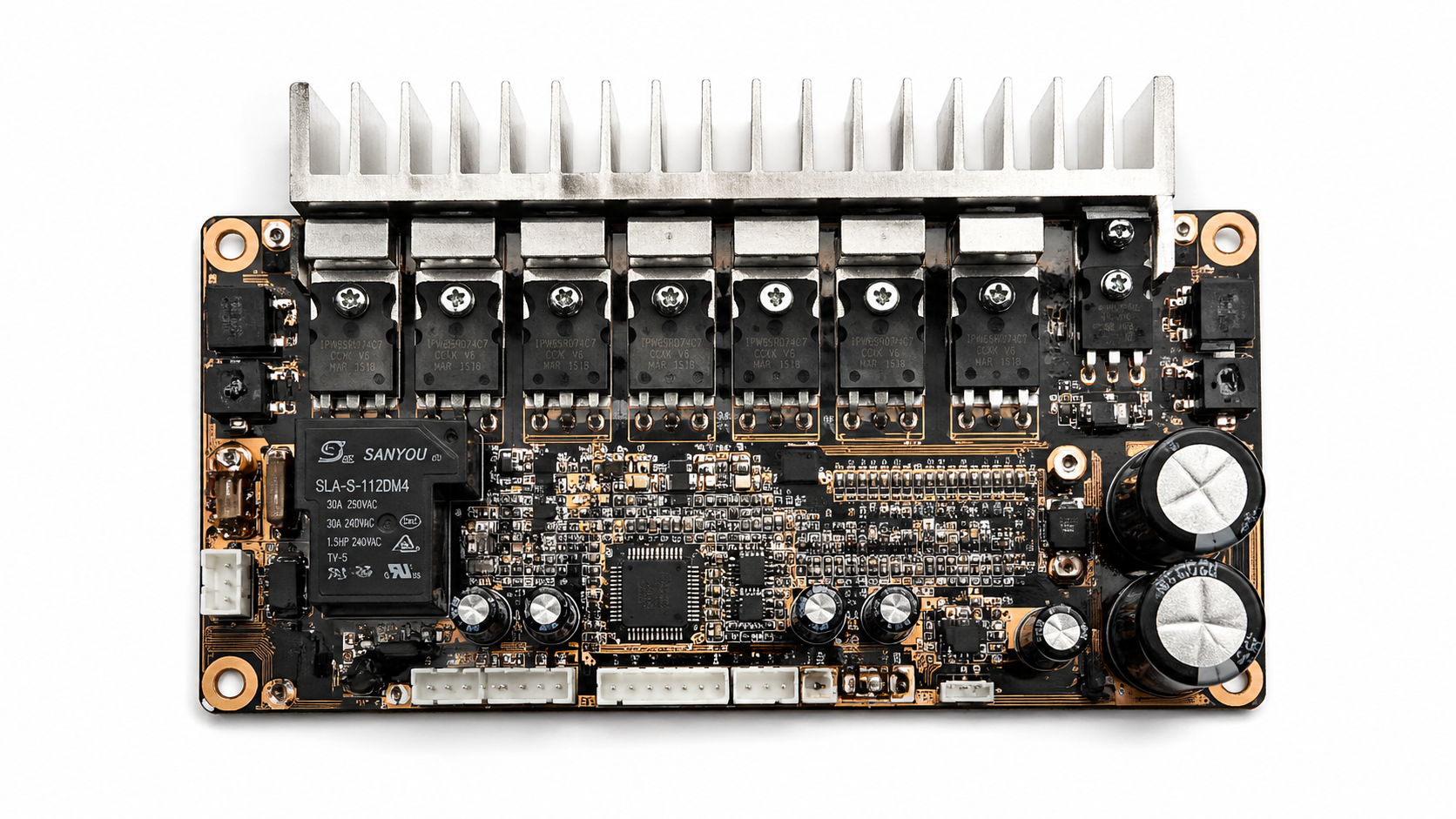
Many failure investigations begin with the semiconductor device itself, yet the root cause is often outside the silicon die. In power electronics, a MOSFET, IGBT, rectifier, relay driver, or power module may pass incoming inspection and still fail early because the surrounding thermal path was poorly designed. Typical weak points include PCB copper thickness, thermal vias, interface materials, heat sink flatness, enclosure airflow, and SMT solder voiding. When these factors stack up, junction temperature rises faster than design teams expect.
This issue matters across the broader electronics and EMS supply chain because failures rarely stay isolated in the lab. A 10°C to 20°C increase in operating temperature can materially change reliability expectations, accelerate package fatigue, and increase parameter drift in nearby capacitors and passive components. For procurement teams, that means a part that appears compliant on paper can still create warranty exposure, rework cost, and delayed project acceptance after assembly.
SCM focuses on this gap between nominal compliance and real operating performance. By benchmarking PCB fabrication, SMT placement precision, soldering quality, dielectric behavior, and long-term reliability under environmental stress, SCM helps engineering, sourcing, and quality teams evaluate whether a design is thermally robust across 3 stages: component selection, assembly execution, and field operation. This is especially useful when multiple suppliers meet the same baseline specification but behave differently in real thermal conditions.
For information researchers and technical evaluators, the key takeaway is simple: power semiconductor failures are often system-level events. A compliant semiconductor mounted on a marginal thermal layout can underperform faster than a lower-cost alternative mounted on a better controlled board and assembly process. That is why thermal design review should sit alongside electrical, mechanical, and sourcing review from the first prototype cycle.
Where the thermal path usually breaks down
- Insufficient copper area or poor layer stack-up prevents effective heat spreading from the package pad into the board.
- Thermal vias are too few, poorly filled, or not aligned with the heat source, creating local hot spots during continuous operation.
- SMT solder joints contain excessive voiding or uneven wetting, increasing thermal resistance between component and PCB.
- Heat sinks, interface pads, or enclosure airflow are selected for peak load tests but not for 24/7 duty cycles or elevated ambient conditions.
What engineers, buyers, and quality teams should evaluate before approval
In practical B2B projects, thermal risk is not only an engineering concern. It affects technical sign-off, supplier approval, budget forecasting, after-sales maintenance, and even financial review. When a board uses high-current semiconductors, electrical relays, power capacitors, and dense SMT assemblies, evaluation should move beyond datasheet maximum ratings. Teams should compare the full thermal chain under the expected ambient range, duty cycle, and assembly process capability.
A useful review framework includes 5 key checkpoints: package thermal characteristics, PCB heat spreading capability, solder joint quality, enclosure heat dissipation, and reliability margin at peak load. For many industrial and embedded applications, ambient conditions may vary from 25°C indoor operation to 60°C cabinet environments, while continuous run time can extend from 8 hours per shift to uninterrupted service. A design that survives a short bench test may still be too close to the thermal limit in the field.
Procurement and business evaluation teams should also ask whether alternative suppliers use the same package outline but different die attach materials, leadframe construction, or process controls. Those details can influence long-term thermal cycling behavior even if the headline electrical rating looks identical. SCM’s role as an independent technical repository is valuable here because benchmark-based comparison reduces dependence on vendor marketing language and makes supplier screening more evidence-driven.
The table below summarizes a practical thermal design review matrix that supports cross-functional approval. It is especially relevant for project managers, quality personnel, and sourcing teams that need a shared decision structure before pilot build or volume release.
This matrix helps teams avoid a common mistake: approving power semiconductors as isolated parts instead of approving a validated thermal system. In many sourcing projects, the best buying decision is the one that lowers total failure risk over 12 to 36 months, not just the one with the lowest initial unit price.
A cross-functional approval checklist
- Confirm the target ambient range, duty profile, and continuous operating duration before comparing suppliers.
- Review board stack-up and SMT process capability together, not as separate documents.
- Ask for thermal validation under realistic loads, including start-stop cycles and elevated cabinet temperatures.
- Check whether component alternatives introduce changes in package construction or long-term reliability behavior.
How thermal design, PCB layout, and SMT quality interact in real applications
Power semiconductor reliability depends on interaction, not isolated specifications. A strong thermal pad design can be undermined by poor reflow control. A capable heat sink can be limited by uneven board mounting pressure. A low-loss device can still overheat if thermal vias are sparse or if adjacent capacitors trap heat in a dense layout. In industrial controls, telecom power boards, automotive-adjacent electronics, and high-density EMS products, these interactions often determine whether the assembly remains stable over 2 to 4 years of service.
For operators and maintenance teams, the symptoms may appear indirect. Repeated relay sticking, unstable output, capacitor bulging, intermittent resets, or drift in switching behavior can all trace back to localized heat stress. Because the visible failure may occur in a neighboring component, root-cause analysis must include semiconductor heat flow, PCB dielectric and copper structure, and SMT solder quality rather than replacing parts one by one.
SCM’s technical advantage is its ability to connect these manufacturing variables. Independent whitepapers on multi-layer PCB dielectric constants, SMT placement precision, and component reliability under environmental stress are useful when teams need to compare contract manufacturers, review Asian sourcing options, or explain risk to business and finance stakeholders. Standardized compliance reports help convert engineering complexity into sourcing-ready decision criteria.
The comparison below shows how different thermal weak points typically appear during evaluation and field use. It can help technical and procurement teams separate cosmetic process deviations from failure-relevant thermal risks.
The main insight is that thermal failures usually leave process and behavior clues long before catastrophic breakdown. Organizations that review these signals during prototype, pilot, and supplier qualification can cut hidden risk more effectively than organizations that rely only on end-of-line pass criteria.
Application scenarios where thermal diligence matters most
High-density control boards
When semiconductors, relays, gate drivers, and capacitors are tightly packed, spacing and airflow become as important as nominal device efficiency. Even small temperature interactions can alter long-term stability.
Industrial cabinets and enclosed power systems
In cabinets with limited ventilation, internal air temperature often rises well above room conditions. A design validated at 25°C may face a very different stress profile when cabinet air approaches 50°C to 60°C.
Mixed-supplier EMS programs
Programs that combine semiconductors, passives, and PCB assembly from multiple sources benefit from independent benchmarking because thermal consistency can vary even when all vendors claim equivalent compliance.
Procurement guidance: how to compare suppliers without missing thermal risk
For buyers and project owners, the challenge is rarely a total lack of data. The challenge is deciding which data predicts field reliability. Quotations often emphasize price breaks, nominal ratings, and delivery windows of 2 to 6 weeks, while thermal design capability sits in supporting documents or is not discussed at all. Yet thermal weakness is exactly what turns a low purchase price into high lifecycle cost.
A smarter sourcing approach uses 4 decision layers. First, verify package and electrical suitability. Second, review PCB and assembly compatibility. Third, assess thermal validation evidence under realistic operating profiles. Fourth, compare supplier responsiveness on corrective action, documentation depth, and lot-to-lot process control. This method supports not only engineering confidence but also business approval and financial accountability.
SCM adds value because it translates manufacturing detail into benchmarkable procurement intelligence. Instead of asking whether a vendor is simply compliant, teams can ask whether its board fabrication, SMT precision, and thermal packaging approach are suitable for IPC-Class 3 expectations, ISO 9001 process discipline, and the target duty cycle of the end application. That is a more decision-relevant question for B2B sourcing.
The procurement table below can be used during RFQ review, technical clarification, or supplier qualification meetings. It is designed for engineering, sourcing, quality, and finance teams that need a shared basis for selection.
This comparison is particularly useful when two suppliers appear similar on datasheet values but differ in process discipline. In thermal-sensitive assemblies, better process transparency often delivers more value than a modest unit-price reduction.
Common buying mistakes that increase failure exposure
- Selecting by maximum rated current alone without checking real thermal conditions at the board and enclosure level.
- Treating SMT quality as a production issue only, rather than a thermal reliability factor during supplier approval.
- Approving alternatives without reviewing differences in package construction, die attach, or long-term stress behavior.
- Ignoring neighboring components such as capacitors and relays that are affected by semiconductor heat concentration.
Standards, misconceptions, and practical FAQ for thermal management compliance
Compliance matters, but it should be interpreted correctly. Standards such as IPC-Class 3 and ISO 9001 help define manufacturing discipline and quality management expectations. They do not automatically prove that a specific power semiconductor assembly is safe under every thermal load. Quality and safety teams should therefore treat certification and process compliance as foundations, then add thermal validation, application review, and lot consistency checks before approval.
One frequent misconception is that a compliant semiconductor cannot be the source of thermal failure. Another is that if a board passes initial functional test, the thermal design must be adequate. In reality, many issues appear only after repeated cycling, prolonged load, or elevated ambient exposure. This is why field failures may emerge after weeks or months rather than during the first 24 hours of testing.
SCM supports better decision-making by turning manufacturing variables into standardized compliance reports and independent technical insights. For teams that compare international suppliers, this helps separate formal qualification status from actual thermal reliability readiness. It also gives finance and project stakeholders clearer grounds for approving test budgets, pilot builds, or second-source evaluations.
Below are common questions raised by engineers, procurement leads, and quality managers when thermal design and power semiconductor failure risk become part of supplier or product evaluation.
How do I know whether a power semiconductor problem is really thermal?
Look for repeatable temperature-related symptoms: instability after 30 to 60 minutes of operation, behavior changes at higher ambient conditions, failures concentrated near thermal hot spots, or lot-to-lot variation linked to assembly. Thermal imaging, load testing, and solder joint review are usually more informative than replacing the device alone.
What should buyers request during supplier comparison?
Ask for evidence of thermal validation under realistic loads, SMT process control information, PCB thermal design compatibility, and documentation structure. A useful request package covers at least 4 areas: part suitability, assembly method, environmental condition, and corrective action response time.
Are capacitors and relays affected by poor semiconductor thermal design?
Yes. Localized heat from power semiconductors can accelerate capacitor aging, alter relay behavior, and stress nearby passive components. In dense layouts, the thermal map of the entire board matters more than the rating of a single device.
How long should thermal evaluation take before release?
That depends on complexity, but many organizations use a staged approach across prototype, pilot, and pre-production review. A focused evaluation cycle may take 1 to 3 weeks for a known platform, while a new high-density design or multi-supplier program often needs a longer verification window.
Why choose SCM for thermal risk evaluation and supply chain decisions
When thermal design, SMT quality, and semiconductor reliability intersect, teams need more than a generic supplier list or a single datasheet review. SCM provides an independent technical perspective across the semiconductor and EMS supply chain, connecting PCB fabrication, SMT assembly, active semiconductors, passive components, and thermal packaging in one evaluation framework. That makes it easier to identify weak links before they become field failures.
For engineers and technical evaluators, SCM helps benchmark manufacturing precision, thermal management behavior, and component reliability under stress. For procurement and business teams, SCM converts those findings into standardized, decision-ready reports that support sourcing comparison, project approvals, and supplier risk reduction. For quality and maintenance teams, the same analysis supports root-cause review and more targeted corrective action planning.
If your team is reviewing power semiconductors, circuit components, relays, capacitors, PCB assemblies, or thermal packaging options, you can consult SCM on 6 practical topics: parameter confirmation, supplier comparison, thermal design screening, SMT process concerns, compliance reporting needs, and expected delivery or qualification timelines. This is especially useful when you must compare Asian high-precision manufacturing sources with international technical requirements.
Contact SCM when you need support with product selection, thermal management compliance review, sample evaluation strategy, customized benchmarking scope, certification-related document preparation, or quotation discussions tied to real reliability risk. A structured review at the sourcing or pilot stage often costs far less than rework, field service, or delayed launch after thermal failures appear in operation.
- PCB
- PCB fabrication
- SMT assembly
- active semiconductors
- passive components
- thermal packaging
- IPC-Class 3
- EMS
- thermal management
- high-precision manufacturing
- multi-layer PCB
- dielectric constants
- SMT placement
- environmental stress
- compliance reports
- ISO 9001
- component reliability
- SMT process
- PCB assembly
- SMT quality
- semiconductor reliability
- thermal management compliance
- semiconductor compliance
- circuit board assembly
- SMT soldering
- electronic parts
- circuit components
- semiconductor
- Power Semi
- power electronics
- high-performance
- high-performance capacitors
- relays
- electrical relays
- heat dissipation
- heat sinks
Recommended News
- Power SemiHow to reduce lead-time risk in 24V component sourcing24V component sourcing made resilient: learn how to qualify alternates, verify lead times, control quality risk, and keep production moving.
- Power SemiWhich semiconductor quality metrics best predict field reliability?Semiconductor quality metrics that best predict field reliability: evaluate parametric drift, stress-test relevance, package integrity, screening coverage, and true mission-profile margin.
- Power SemiWhat Is the Biggest Risk of Skipping Power Electronics Supplier Audits?What is the biggest risk when skipping supplier audits for power electronics? Hidden reliability failures, weak traceability, and costly field failures. Learn how audits protect quality.
- Power SemiHow to qualify semiconductor power devices for reliable switching performanceSemiconductor quality power devices: learn how to qualify switching margins, thermal reliability, gate-drive behavior, and production consistency for demanding converters.
- Power SemiHow to Evaluate Energy Saving Semiconductor Solutions for High-Efficiency Power DesignEnergy saving semiconductor solutions for high-efficiency power design: learn how to compare loss, thermal, EMI, reliability, and supply chain factors to choose the right device.
- Power SemiHow to Evaluate a Power Semiconductors Distributor for Supply Stability and TraceabilityPower semiconductors distributor evaluation guide: learn how to verify supply stability, traceability, sourcing controls, and documentation to reduce risk and choose a reliable partner.