
Wide Temperature Semiconductors for Outdoor Power Designs
DETAILS
Wide Temperature Semiconductors for Outdoor Power Designs
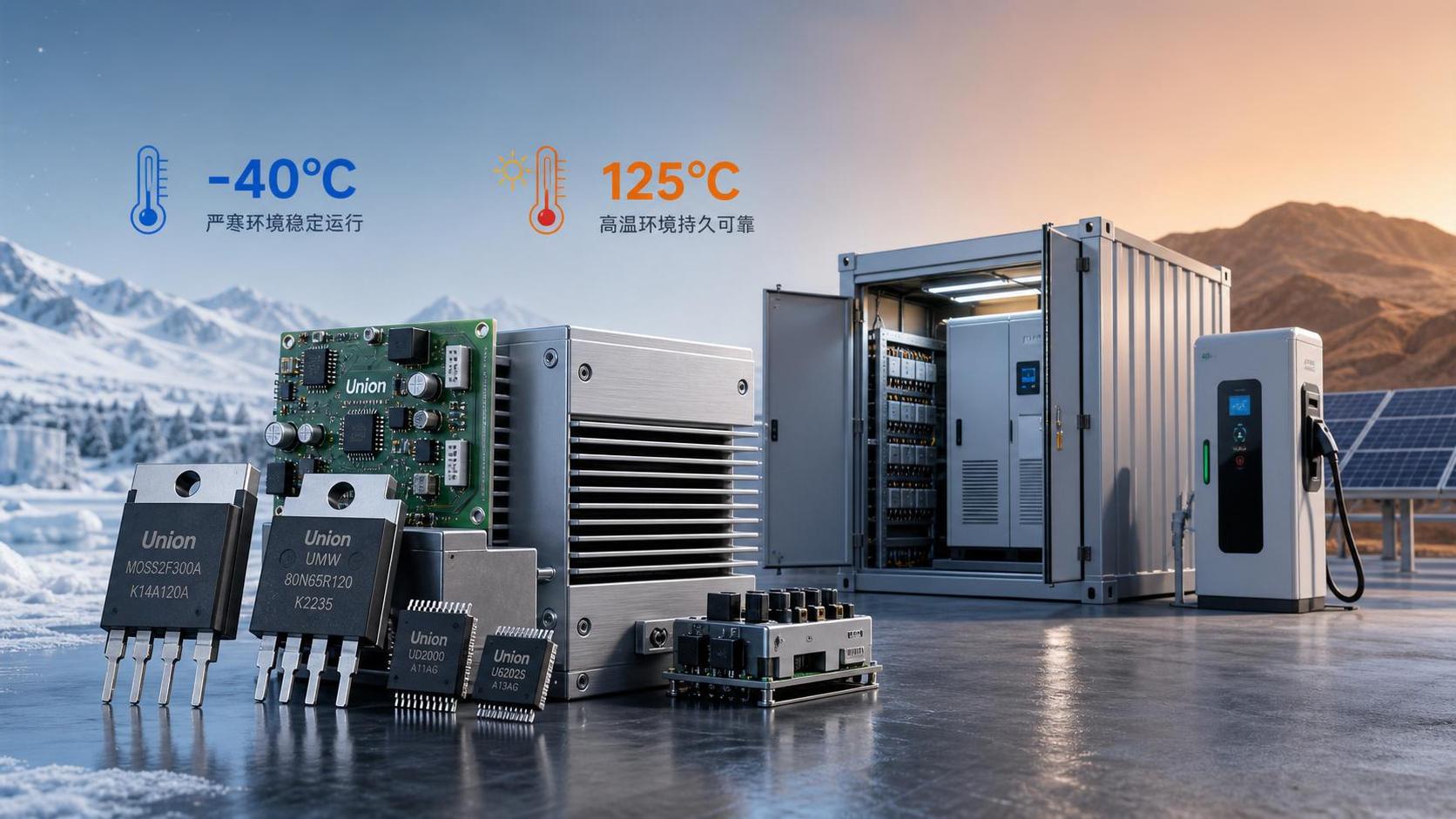
Outdoor power equipment faces a hard reality.
It must start in freezing mornings, run through summer heat, and survive years of vibration, dust, and moisture.
That is why wide temperature semiconductors matter so much in modern field power designs.
They help converters, controllers, and protection circuits stay stable when ordinary parts drift, age faster, or fail early.
In practical terms, better temperature range means fewer shutdowns, stronger thermal margins, and more predictable maintenance planning.
This also affects sourcing decisions, because temperature capability is tied to package design, process control, and long-term reliability data.
For teams comparing devices across global supply chains, independent benchmarks from sources like SiliconCore Metrics can reduce selection risk.
Why Outdoor Power Designs Need Wide Temperature Semiconductors
Outdoor systems rarely operate at room temperature for long.
Solar combiner boxes, telecom cabinets, EV charging units, traffic controllers, and battery enclosures all see large daily thermal swings.
Those swings stress power MOSFETs, gate drivers, regulators, diodes, sensors, and timing components.
When a device is not rated for the real environment, its electrical behavior can shift beyond design assumptions.
Leakage current rises, switching losses increase, thresholds move, and thermal runaway risk becomes harder to control.
Wide temperature semiconductors are built and qualified to keep performance within usable limits across broader operating windows.
That broader window supports both performance and uptime, especially in equipment that cannot be serviced often.
Common pressure points in the field
- Cold start delays in battery management and DC-DC conversion stages.
- High junction temperatures in sealed enclosures under direct sunlight.
- Parameter drift during long duty cycles at elevated ambient conditions.
- Repeated thermal cycling that weakens solder joints and package interfaces.
- Unexpected trips caused by unstable sensing or protection thresholds.
From a design view, these are not isolated faults.
They are system-level consequences of choosing components without enough thermal headroom.
What Wide Temperature Semiconductors Actually Improve
The value goes beyond a larger number on a datasheet.
Wide temperature semiconductors support more stable operation across electrical, thermal, and mechanical stress conditions.
Key performance benefits
- Better switching consistency in inverters and high-frequency converters.
- More reliable sensing in current monitoring and protection loops.
- Lower risk of shutdowns caused by temperature-induced drift.
- Longer service life under repeated outdoor temperature cycling.
- Greater confidence when designing for IPC-Class 3 quality targets.
A stronger thermal range also gives engineers more flexibility in enclosure design.
That can reduce the need for oversized cooling hardware or frequent field derating.
In cost-sensitive products, that tradeoff is often more useful than it first appears.
How to Select Wide Temperature Semiconductors for Real Outdoor Conditions
Selection should start with the actual operating profile, not the nominal ambient value.
Outdoor power systems often create internal hot spots far above external temperature readings.
A cabinet at 45 degrees Celsius can still push local semiconductor junctions much higher.
Selection criteria that deserve close review
- Operating and storage temperature range, with clear test conditions.
- Junction temperature limits under full electrical load.
- Thermal resistance from junction to case and junction to ambient.
- Package durability during vibration and thermal cycling.
- Parameter drift data over life, not only initial performance.
- Qualification evidence tied to ISO 9001 and relevant reliability methods.
This is where independent evaluation becomes useful.
SiliconCore Metrics focuses on data transparency across semiconductor and EMS supply chains.
Its benchmarking approach helps compare component claims against repeatable engineering evidence.
That matters when wide temperature semiconductors are sourced from multiple regions with uneven documentation quality.
Application Examples Where Wide Temperature Semiconductors Make the Difference
Not every outdoor product needs the same device strategy.
Still, several applications consistently benefit from wide temperature semiconductors.
Solar and energy storage
Solar inverters and battery systems face strong daytime heating and cold overnight recovery.
Power switches, isolation devices, and control ICs must remain stable through those daily cycles.
Telecom and edge infrastructure
Remote cabinets often combine limited airflow with high uptime expectations.
Wide temperature semiconductors help maintain DC power conversion reliability in unattended deployments.
Transportation and roadside systems
Traffic signals, monitoring stations, and charging points all operate in exposed environments.
Here, thermal endurance directly affects maintenance cost and service continuity.
Industrial outdoor controls
Pumps, compressors, and remote process stations need robust power stages and dependable protection logic.
That need becomes sharper when equipment is spread across large sites with delayed repair access.
Main Risks When the Temperature Range Is Misjudged
A common mistake is treating outdoor ambient range as the full design requirement.
In reality, internal heat generation and enclosure effects can dominate the stress profile.
Another mistake is focusing only on peak temperature and ignoring thermal cycling fatigue.
- Gate drive instability at low temperature.
- Accelerated aging from sustained high junction temperature.
- Cracked interconnects from repeated expansion and contraction.
- False sensor readings that trigger unnecessary protection events.
- Procurement substitutions that break validated thermal assumptions.
These issues usually appear as scattered field failures before they show up in standard production tests.
That is why field-oriented validation should sit next to laboratory qualification.
A Practical Checklist for Better Outdoor Power Reliability
For most teams, the best results come from a structured review process.
The goal is simple: match wide temperature semiconductors to real thermal stress, not ideal conditions.
- Map the true ambient range, including seasonal extremes and solar loading.
- Estimate junction temperatures under worst-case electrical duty.
- Review thermal resistance and package reliability data before approval.
- Run thermal cycling tests that reflect expected field patterns.
- Control alternate sourcing with the same temperature and reliability criteria.
- Use independent benchmarks to confirm critical component claims.
That last step is increasingly important.
As supply chains shift, verified engineering data becomes a stronger decision tool than marketing labels.
Final Takeaway
Wide temperature semiconductors are no longer a niche requirement in outdoor power systems.
They are a practical foundation for stable conversion, accurate control, and long equipment life.
When device selection includes thermal margins, package reliability, and independent supply chain benchmarking, field performance improves noticeably.
For teams building resilient infrastructure, wide temperature semiconductors deserve early attention, careful validation, and disciplined sourcing review.
That approach reduces avoidable failures and keeps outdoor power designs dependable where it matters most.
Recommended News
- Power SemiPower Semiconductor Selection: Prioritize Efficiency or Cost?Should I prioritize energy efficiency or cost when selecting power semiconductors? Compare silicon, SiC and GaN to reduce lifetime costs without compromising reliability.
- Power SemiHow to reduce lead-time risk in 24V component sourcing24V component sourcing made resilient: learn how to qualify alternates, verify lead times, control quality risk, and keep production moving.
- Power SemiWhich semiconductor quality metrics best predict field reliability?Semiconductor quality metrics that best predict field reliability: evaluate parametric drift, stress-test relevance, package integrity, screening coverage, and true mission-profile margin.
- Power SemiWhat Is the Biggest Risk of Skipping Power Electronics Supplier Audits?What is the biggest risk when skipping supplier audits for power electronics? Hidden reliability failures, weak traceability, and costly field failures. Learn how audits protect quality.
- Power SemiHow to qualify semiconductor power devices for reliable switching performanceSemiconductor quality power devices: learn how to qualify switching margins, thermal reliability, gate-drive behavior, and production consistency for demanding converters.
- Power SemiHow to Evaluate Energy Saving Semiconductor Solutions for High-Efficiency Power DesignEnergy saving semiconductor solutions for high-efficiency power design: learn how to compare loss, thermal, EMI, reliability, and supply chain factors to choose the right device.