
How to Choose Connectors for Vibration Environments
DETAILS
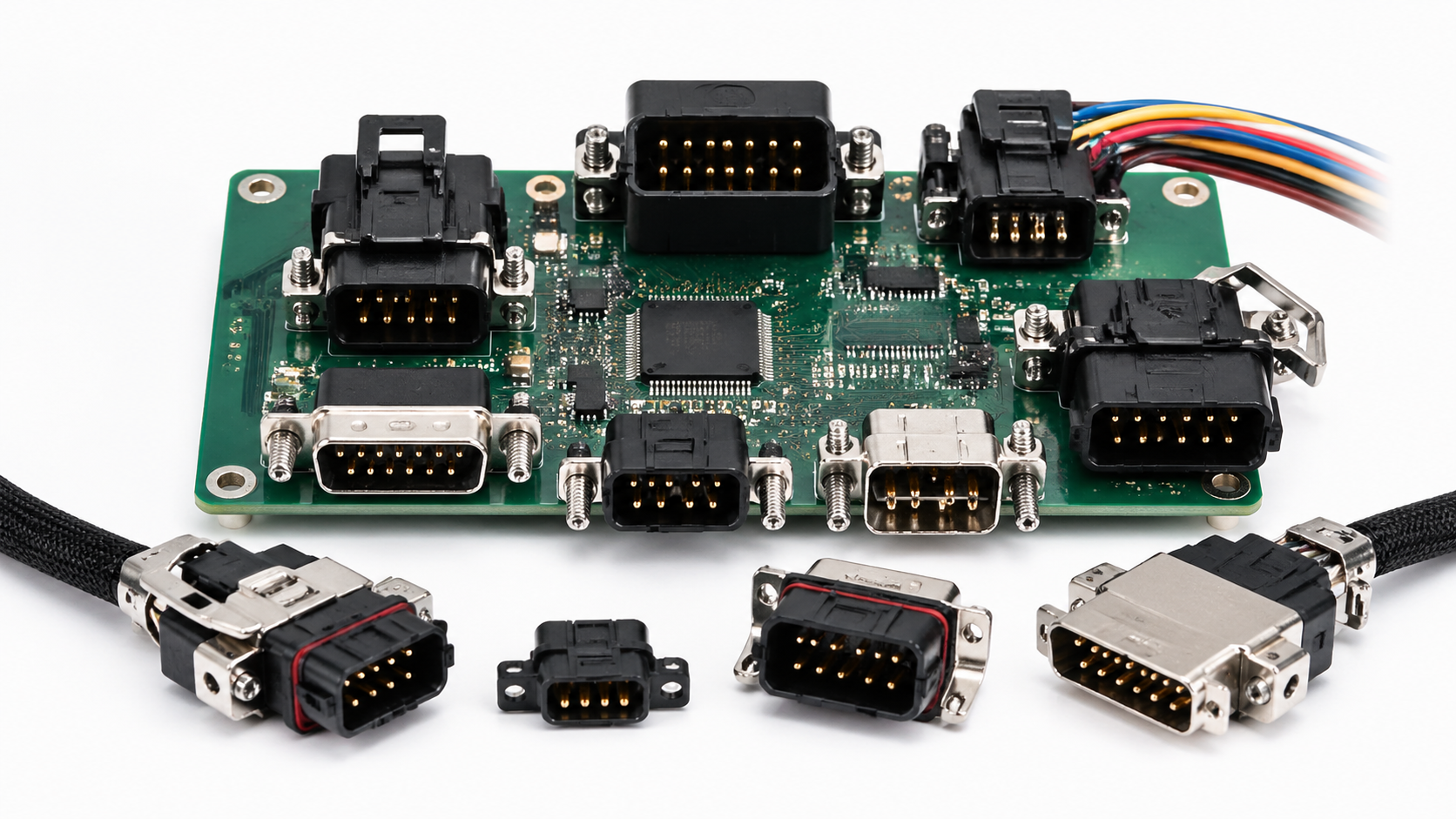
Choosing connectors for vibration environments requires more than matching sizes or current ratings. From circuit components and electronic parts to circuit board assembly, every interface affects durability, signal stability, and thermal management compliance. This guide explains how engineers, buyers, and quality teams can evaluate connector design, materials, SMT compliance, PCB compliance, and soldering techniques to reduce failure risks in demanding industrial applications.
In semiconductor equipment, industrial controls, transport electronics, power modules, and high-density EMS assemblies, vibration can turn a minor connector weakness into repeated field failures, intermittent signals, overheating, or unplanned maintenance. For procurement teams, the wrong selection often looks acceptable on a datasheet but creates hidden lifecycle cost through returns, downtime, and inspection burden.
A practical connector decision must align electrical load, mechanical retention, PCB attachment method, mating cycle expectations, and environmental exposure. It should also consider how the connector performs after 500, 1,000, or even 5,000 hours of vibration, thermal cycling, and service handling. That is why engineering validation and sourcing decisions should work from the same criteria, not separate checklists.
For technical evaluators, project managers, quality leaders, and financial approvers, the goal is straightforward: lower risk without over-specifying the design. The sections below break down what matters most, where failures usually start, and how to compare connector options for demanding vibration environments with better confidence.
Why vibration changes connector selection priorities
In a stable enclosure, many connectors can meet baseline electrical requirements. Under vibration, however, contact stability becomes a mechanical problem as much as an electrical one. Even low-level movement in the range of 5 Hz to 500 Hz can create fretting wear, contact resistance drift, and micro-disconnect events that are difficult to detect during basic bench testing.
The risk rises further when vibration is combined with heat, humidity, dust, or cable movement. A connector that performs well at 25°C in a static lab may behave differently at 85°C with repeated harness loading and board flex. For SMT assemblies, this combination can stress both the contact system and the solder joints, especially on heavier connectors with limited anchoring support.
Common failure modes in real assemblies
Most failures do not begin as a complete disconnect. They often start with gradual changes such as rising contact resistance above a few milliohms, latch loosening, cracked solder fillets, tin fretting debris, or misalignment caused by repeated shock. In high-speed systems, even short disturbances can affect signal integrity before a hard failure is visible to operators.
Quality teams should also look beyond connector catalog claims. Vibration performance depends on the full interconnect system: housing geometry, contact spring force, plating thickness, cable strain relief, PCB pad design, and mounting orientation. A connector rated for industrial use may still underperform if installed on a thin board or on a panel that amplifies resonant frequencies.
What cross-functional teams should evaluate first
- Mechanical retention method, including latches, screws, bayonet locks, or secondary locks.
- Expected vibration profile, such as continuous machine vibration, road transport shock, or rotating equipment exposure.
- Electrical sensitivity, especially for low-level signal circuits, RF paths, and high-speed differential pairs.
- PCB attachment style, including through-hole, SMT, hybrid hold-downs, or cable-to-board architecture.
- Lifecycle target, such as 3 years, 7 years, or 10+ years with field service access.
For buyers and business evaluators, this means connector cost should be judged against failure cost. A part that is 8% to 15% cheaper at purchase may create a much larger service burden if it leads to rework, field repair visits, or production downtime. In vibration environments, the lowest unit price is rarely the lowest total cost.
Connector design features that improve vibration resistance
The best connector for vibration is usually not defined by one parameter. It is the result of several design features working together to keep contact force stable and the mechanical interface secure. This is particularly important in electronic manufacturing where dense layouts, miniaturized parts, and mixed thermal loads leave little room for weak interconnect choices.
First, contact geometry matters. Multi-point or dual-beam contacts generally maintain more stable engagement than simpler single-wipe designs when vibration causes micro-motion. Second, the housing and locking system must prevent relative movement between mated halves. Third, connector mass should be considered because heavier bodies place more stress on solder joints and board pads during dynamic loading.
Key features to compare during technical review
Retention features should be selected based on the severity of use. Friction-fit connectors may be acceptable for moderate office electronics, but industrial or transport systems often need positive locking, threaded coupling, or board locks. As a rule, the more cable movement and shock the assembly sees, the more important secondary retention becomes.
Contact plating is another major factor. Tin can be cost-effective, but gold or selective gold plating is often preferred for low-current signals, frequent mating cycles, or contamination-sensitive circuits. Typical review points include plating thickness, contact normal force, insertion force, and the trade-off between durability and mating ease.
The table below summarizes common connector design elements and how they influence reliability in vibration-heavy applications.
The main takeaway is that connector reliability comes from system-level retention, not just contact rating. For example, a compact SMT connector with strong board hold-downs may outperform a larger unreinforced part in a 3-axis vibration test. Technical teams should therefore compare actual mounting behavior, not only current, pitch, or mating dimensions.
Practical specification tips
- For low-level signals below 1 A, prioritize contact stability and plating quality over raw current headroom.
- For connectors above roughly 20 g body mass on a PCB, review mechanical support and solder joint reinforcement carefully.
- For serviceable modules with more than 50 mating cycles, confirm wear performance and latch retention after repeated use.
- For high-speed links, check shielding continuity, impedance control, and movement tolerance under dynamic load.
Materials, plating, and assembly choices that affect long-term reliability
Material selection is one of the least visible but most important parts of connector performance. Engineers often focus on shell style and pin count, while failures develop because the contact alloy loses spring force, the housing softens at elevated temperature, or the plating degrades after repeated motion. In vibration environments, these effects accumulate faster than in static electronics.
For contact materials, copper alloys with stable spring properties are common, but the exact behavior depends on stress relaxation and temperature exposure. If the application operates at 70°C to 125°C for extended periods, material retention of contact force becomes critical. Housing materials should also be checked for flammability, dimensional stability, and compatibility with lead-free solder processing temperatures that can exceed 245°C during reflow.
Plating and corrosion considerations
Plating selection should match both the signal type and service conditions. Tin can perform well in power applications with adequate contact force, but it is more vulnerable to fretting corrosion in low-level signals if vibration causes repeated micro-motion. Gold is often preferred where signal continuity is critical, mating cycles are frequent, or humidity and contamination are present.
Assembly choices also matter. Through-hole connectors generally offer stronger mechanical attachment to the PCB, while SMT connectors support miniaturization and automated assembly. In vibration-heavy products, many teams adopt hybrid strategies such as SMT contacts with metal hold-downs or through-hole retention points to balance density and strength.
The following table helps compare material and assembly decisions that are commonly reviewed by EMS teams, sourcing specialists, and quality engineers.
A good purchasing decision should therefore review not only price and availability, but also plating match, thermal process compatibility, and board-level reliability. In many cases, a connector should be approved only after material review, solderability review, and a vibration test plan are aligned. This is especially relevant for IPC-Class 3 assemblies, high-value control boards, and harsh-environment service equipment.
Assembly and soldering checkpoints
- Verify the connector can tolerate the intended solder profile, typically 235°C to 260°C depending on process.
- Review pad design, stencil volume, and hold-down structure to limit solder fatigue under vibration.
- Check coplanarity and placement tolerance, especially for fine-pitch SMT connectors.
- Plan inspection criteria for fillet quality, voiding, and mechanical support after assembly.
How to evaluate connectors across engineering, procurement, and quality teams
A connector that passes engineering review can still fail a business review if lead times are unstable, second-source options are missing, or incoming inspection is difficult. Likewise, a low-cost connector that meets procurement goals may increase defect screening, line handling complexity, or warranty exposure. The strongest selection process is cross-functional and usually follows 4 stages: requirement definition, sample evaluation, validation testing, and supplier approval.
At the requirement stage, teams should document at least 6 items: vibration profile, current and voltage range, signal type, mating cycle target, thermal exposure, and expected maintenance access. Without these, vendors may quote connectors that fit dimensions but not operating reality. It is also useful to define acceptable contact resistance shift, unmating force limits, and board-level retention requirements before testing begins.
A practical procurement comparison framework
The table below provides a decision structure that can help procurement managers, project leads, and technical reviewers compare connector options using measurable criteria instead of generic claims.
This kind of matrix is especially useful for finance and business approvers because it ties connector choice to measurable operational consequences. If one option saves a small amount per unit but adds 2 extra inspection steps, higher rework risk, and a 12-week lead time, the apparent savings may disappear quickly in scaled production.
Recommended validation workflow
- Test at least 2 to 3 candidate connectors under the same board and harness conditions.
- Run combined stress when possible: vibration plus thermal cycling gives more realistic screening than single-variable tests.
- Inspect both contact performance and solder joint integrity before and after validation.
- Document acceptance criteria clearly so quality, sourcing, and engineering teams approve against the same threshold.
Independent benchmarking is valuable here because it separates marketing claims from measured behavior. Organizations such as SiliconCore Metrics support this process by translating complex manufacturing and reliability data into standardized reports that engineers and procurement leaders can use to compare connector and assembly decisions with greater objectivity.
Application-specific recommendations, mistakes to avoid, and FAQ
Different applications require different priorities. A board-to-board connector in compact electronics may be limited mainly by PCB flex and fine-pitch alignment. A cable-to-board connector in industrial equipment may fail first from harness pull and vibration resonance. A power connector near a heat source must also maintain thermal stability while carrying current under repeated movement. The correct choice depends on where stress enters the system.
For semiconductor tools, SMT equipment, robotics, transport modules, and factory automation, it is wise to evaluate not just the connector in isolation but the full path from cable exit to PCB support. In many field returns, the root cause is poor strain management or mounting geometry rather than the contact technology itself. A modest redesign of clamp position or board support can extend service life significantly.
Common mistakes that increase vibration failure risk
- Selecting connectors only by pitch, current, and price while ignoring lock strength and board attachment.
- Using SMT-only attachment for relatively heavy connectors without metal hold-downs or mechanical reinforcement.
- Assuming datasheet ratings guarantee field success without testing the actual board, enclosure, and cable assembly.
- Overlooking the effect of mating cycles, contamination, and service handling on contact wear.
- Failing to align connector choice with IPC workmanship expectations and long-term maintenance plans.
FAQ: questions teams often ask before approval
How do I know whether SMT connectors are suitable for vibration environments?
SMT connectors can be suitable if the connector mass is controlled, the board is sufficiently supported, and the design includes hold-down tabs or other anchoring features. For higher shock or constant vibration, hybrid retention or through-hole reinforcement is often safer. The decision should be confirmed with board-level testing, not by package style alone.
Should buyers always prefer gold-plated contacts?
Not always. Gold plating is often justified for low-level signals, higher mating cycles, or humid and contamination-prone conditions. For some power applications, tin may be commercially and technically acceptable if contact force and maintenance conditions are appropriate. The better question is whether the plating matches the electrical duty and environmental stress profile.
What testing window is reasonable before product release?
A practical pre-release program often includes 2 to 4 weeks of sample preparation, fixture setup, and combined vibration or thermal testing, followed by cross-sectional or visual inspection. For higher-risk products, additional lifecycle or service-cycle testing may be worthwhile. The exact scope depends on application criticality, maintenance cost, and failure consequence.
Which acceptance criteria matter most during incoming and process quality control?
Quality teams typically focus on coplanarity, solderability, plating consistency, latch integrity, insertion and retention behavior, and evidence of mechanical damage. In production, process controls should also watch for placement shift, incomplete solder joints, and connector body distortion after reflow or selective solder operations.
Choosing connectors for vibration environments is ultimately a balance of mechanical design, contact reliability, assembly method, supply chain stability, and validation discipline. Teams that compare these factors early can reduce rework, prevent intermittent failures, and improve service life without overbuilding the product.
If your organization needs deeper guidance on connector benchmarking, PCB and SMT compliance review, or reliability-focused sourcing decisions across the semiconductor and EMS supply chain, SiliconCore Metrics can help turn technical complexity into usable evaluation data. Contact us to discuss your application, request a tailored assessment, or explore more interconnect reliability solutions.
Recommended News
- ConnectorsHow to compare connector suppliers when quoted prices differSupplier comparison price guide for connector sourcing: compare technical fit, landed cost, quality, lead times, and supplier risk to make confident purchasing decisions.
- ConnectorsHow to assess connector quality when sourcing electronic components in SingaporeElectronic components Singapore sourcing guide: assess connector quality, traceability, plating, mechanical reliability, and supplier controls to reduce costly failures.
- ConnectorsHow to prevent connector corrosion in aquaculture installationsAquaculture installations need reliable connectors. Discover practical ways to prevent corrosion with smart sealing, material selection, cable routing, and maintenance.
- ConnectorsHow to select automotive connector systems for high-vibration environmentsAutomotive connector systems for high-vibration environments: learn how to evaluate contact stability, sealing, locking, harness support, and qualification evidence.
- ConnectorsWhen should you source from a connector systems wholesaler?connector systems wholesaler: learn when wholesale sourcing reduces supply risk, controls total cost, and protects production with qualified, reliable availability.
- ConnectorsHow to select connector systems for telecom exposed to vibrationConnector systems for telecom exposed to vibration demand more than basic specs. Learn how to protect signal integrity, retention, and reliability with smarter selection criteria.