
Power Semi Derating: How Much Margin Is Enough
DETAILS
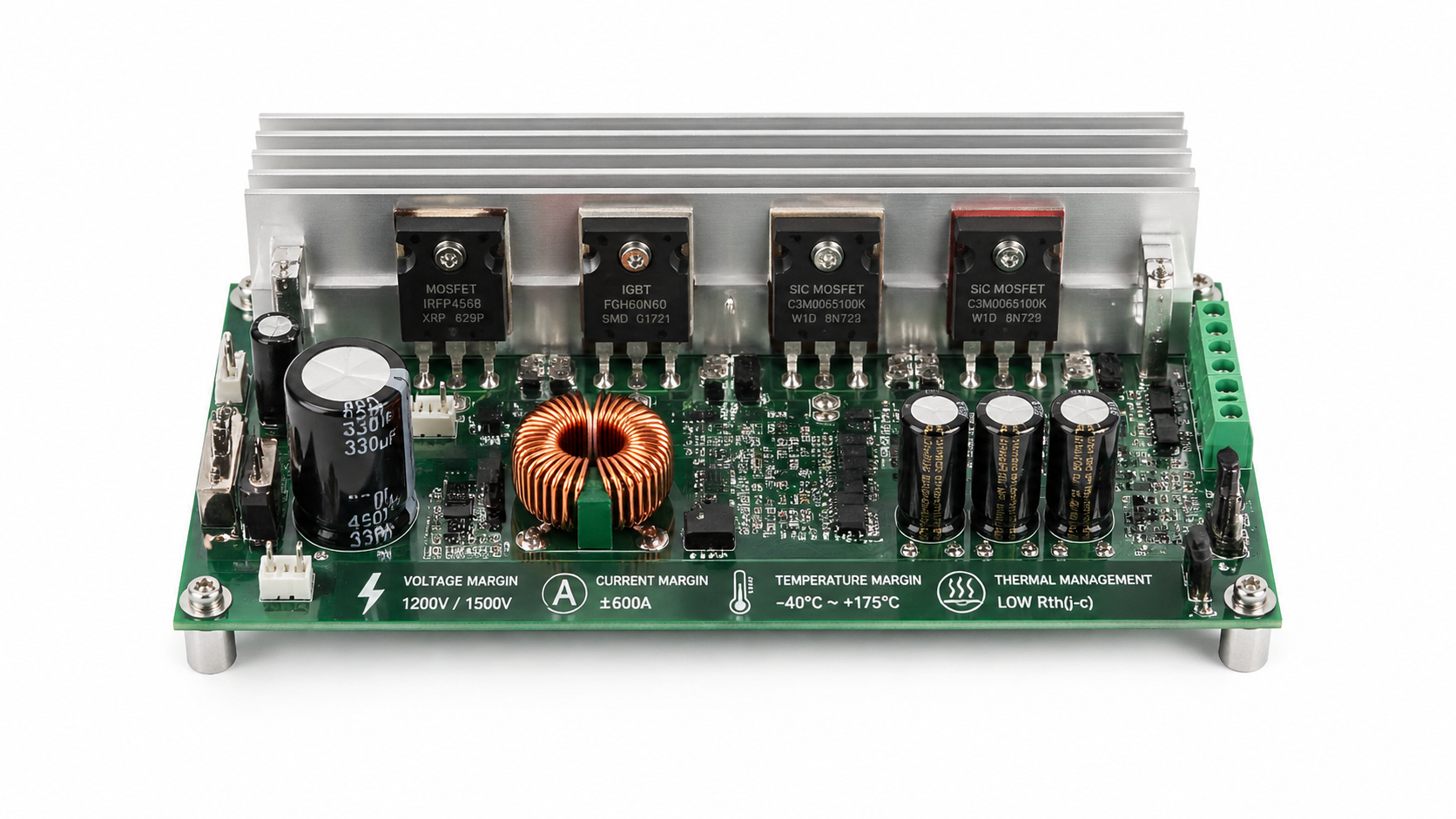
How much derating is truly enough in modern power semiconductors? For engineers, buyers, and quality teams, the answer affects reliability, cost, and semiconductor compliance across the full circuit board assembly chain. From industrial capacitors and circuit capacitors to RF transceiver modules, electromechanical parts, and thermal management compliance, effective margin decisions depend on data, stress conditions, and manufacturing realities—not guesswork.
In practical terms, power semi derating is not a fixed percentage that applies to every MOSFET, IGBT, SiC device, rectifier, or gate driver. It is a structured decision about how much electrical, thermal, and environmental margin a component should keep below its absolute maximum ratings during real operation. For R&D teams, this influences design robustness. For procurement and finance, it affects sourcing flexibility and total cost. For quality and project leaders, it determines whether a product survives field stress over 3, 5, or 10 years.
At SiliconCore Metrics (SCM), this topic matters because derating sits at the intersection of component physics, PCB assembly quality, thermal packaging, and supply chain benchmarking. A margin that looks conservative on paper may fail under poor solder wetting, dielectric drift, or enclosure hot spots. A margin that is too wide may inflate BOM cost by 8%–20% without improving mission reliability in any meaningful way.
What Power Semiconductor Derating Really Means
Derating means operating a semiconductor below its published limit. In power electronics, the main limits are usually voltage, current, junction temperature, switching frequency stress, and surge capability. A 650 V device, for example, may be intentionally limited to 420–520 V in repetitive operation, while a 40 A package may be designed for only 22–30 A continuous current under actual ambient conditions.
This is important because absolute maximum ratings are not long-term design targets. They are survival boundaries under defined conditions. In an industrial inverter, EV auxiliary power unit, telecom supply, or motor drive, the device sees transient spikes, thermal cycling, solder fatigue, and load variation. Even a 10% rise in case temperature can reduce available safe operating margin far more than many sourcing teams expect.
A good derating strategy also considers system-level interactions. A transistor may be correctly selected in isolation but become overstressed by PCB copper imbalance, poor via thermal spreading, capacitor ESR drift, or EMI countermeasures that increase switching stress. That is why derating must connect semiconductor data with board layout, passive component aging, and assembly consistency.
Core Parameters That Usually Require Margin
Most engineering teams evaluate at least 5 categories of margin when setting derating rules:
- Voltage margin, often 15%–30% below repetitive peak exposure
- Current margin, often 20%–50% below package-limited continuous current
- Junction temperature margin, commonly keeping Tj 15°C–35°C below the stated limit
- Power dissipation margin, especially under worst-case duty cycle and enclosure heat
- Avalanche, surge, and transient margin for abnormal events and startup conditions
The table below shows how these margins are typically interpreted in engineering reviews across mixed industrial and EMS projects.
The key takeaway is that derating is multi-dimensional. A device may look safe on current but unsafe on temperature, or safe in the lab but unstable under customer field voltage excursions. Margin must be built around the real stress profile, not the brochure headline.
How Much Margin Is Usually Enough in Real Applications
There is no universal number, but there are practical ranges. For mainstream industrial and communications hardware, a voltage derating window of 15%–25% is often reasonable when transient suppression is well controlled. In harsher environments, such as outdoor power conversion, rail systems, or high-vibration enclosures, teams may push to 25%–35% to cover surge energy, contamination, and thermal uncertainty.
Current derating often needs more caution than voltage derating. Package-level current ratings can assume ideal copper area, optimized heat sinking, and controlled ambient temperatures such as 25°C. In a dense PCB assembly with nearby inductors, hot capacitors, and limited airflow, operating at only 60%–70% of the nominal current rating may still produce junction temperatures above 125°C.
Temperature is frequently the deciding factor. If a device is specified for 150°C maximum junction temperature, many reliability-oriented programs target 110°C–130°C during sustained operation. That 20°C–40°C buffer can materially reduce solder fatigue, package stress, and parameter drift over several thousand thermal cycles. In sectors where maintenance access is costly, such as telecom cabinets or industrial automation, this thermal margin is often worth more than aggressive silicon utilization.
Typical Derating by Use Case
Different products justify different margins because duty cycle, enclosure design, service life, and compliance exposure are not the same.
The conclusion is not that “more margin is always better.” Over-derating can force a larger package, higher gate charge, heavier heat sink, or more expensive supplier tier. What is enough is the point where reliability risk falls sharply, but total system cost and sourcing complexity remain manageable.
A Practical Rule for Review Meetings
If the design team cannot explain the margin with 4 inputs—worst-case electrical stress, thermal path, lifetime target, and manufacturing variation—the number is probably arbitrary. In many review boards, this simple four-factor check is more useful than quoting a generic 20% rule.
Why Derating Decisions Fail Across the EMS Supply Chain
Many failures do not come from the silicon die alone. They come from how the semiconductor is mounted, cooled, inspected, and sourced. A device chosen with good electrical margin can still run too hot if copper thickness, stencil design, voiding under thermal pads, or reflow profile control are inconsistent. In real EMS environments, process drift of even 5%–10% can change thermal performance enough to erase planned headroom.
Passive parts also influence power semi derating. A capacitor with rising ESR or reduced capacitance under bias can increase ripple current, which raises switching stress upstream. Likewise, an inductor with core loss at elevated temperature can shift the current waveform and push a transistor into a less efficient operating region. The semiconductor margin must therefore be validated against the surrounding BOM, not treated as a stand-alone variable.
Procurement substitutions create another risk. If a sourcing team changes package source, lead finish, die attach structure, or thermal interface material to solve lead time pressure, the original derating assumptions may no longer hold. A second-source part with the same nominal voltage and current may show a different Rds(on), switching energy, or transient ruggedness. That can turn a safe 20% margin into a narrow 8% margin in practice.
Common Failure Paths That Reduce Real Margin
- Poor thermal spreading through PCB copper, vias, or baseplate contact
- Excess solder voiding under bottom-pad power packages
- Assembly variation between pilot run, qualification batch, and mass production
- Component substitutions that alter dynamic loss or thermal impedance
- Insufficient surge suppression, causing repetitive overstress near the voltage limit
- Weak airflow assumptions that ignore dust loading or fan degradation after 12–24 months
This is where SCM-style benchmarking adds value. Independent data on PCB dielectric behavior, SMT placement consistency, and long-term stress performance helps technical evaluators and quality managers test whether the derating rule survives actual manufacturing conditions. Margin should be verified through cross-functional evidence, not only simulation files.
Three Questions Quality Teams Should Ask
First, was the thermal model correlated to measured hardware at at least 2–3 ambient points, such as 25°C, 55°C, and 85°C? Second, were second-source components tested under the same switching and enclosure conditions? Third, does incoming inspection and process control preserve the package-to-board thermal path? If any answer is unclear, the headline derating figure may be unreliable.
A Practical Selection Framework for Engineers, Buyers, and Project Teams
The best derating decision is usually made by a mixed team, not a single discipline. Engineers define stress envelopes, procurement checks source stability, quality validates process capability, and finance reviews the cost of extra headroom versus failure exposure. For many B2B electronics programs, this collaborative approach reduces redesign cycles and avoids late-stage sourcing surprises.
A useful framework is to start with application severity and then assign margin by evidence level. If a design has strong characterization data, stable suppliers, and controlled thermal architecture, margins can be narrower. If the project faces uncertain ambient conditions, frequent substitutions, or limited field history, margins should expand. This is especially relevant for new product introduction during the first 6–12 months.
Five-Step Derating Workflow
- Define worst-case electrical stress, including startup, fault, surge, and repetitive peaks.
- Map thermal resistance from junction to ambient with board, enclosure, and airflow assumptions.
- Review surrounding components such as capacitors, magnetics, interface materials, and connectors.
- Test at multiple loads, commonly 25%, 50%, 75%, and 100%, across at least 2 ambient bands.
- Lock the margin into approved AVL and process controls so sourcing changes do not bypass the original logic.
The table below can be used as a cross-functional procurement and design checklist when comparing candidate power semiconductor solutions.
When this workflow is documented, project managers gain clearer gate reviews, buyers gain a stronger basis for supplier negotiation, and service teams inherit products that are less likely to fail from hidden thermal overload. In many cases, the savings come not from the cheapest device, but from avoiding 1 field return campaign or 1 late redesign cycle.
Common Misjudgments, FAQ, and Actionable Next Steps
One common mistake is treating datasheet maximum ratings as continuous design targets. Another is assuming derating can be standardized across all products with a single rule such as “20% margin everywhere.” In reality, a low-duty industrial control board and a sealed outdoor RF power module do not age the same way, and their thermal uncertainty can differ by 15°C–30°C.
A second misjudgment is ignoring time-dependent degradation. Thermal interface materials pump out, fans slow down, capacitor characteristics shift, and contamination changes heat transfer. A design that passes at time zero may lose a meaningful portion of its margin after 18–36 months. This is why maintenance teams and after-sales engineers should be included in stress reviews for long-life equipment.
FAQ: How should buyers evaluate a “safe” derating claim?
Ask for the stress assumptions behind the claim. At minimum, request peak voltage, continuous and pulse current, measured thermal data, ambient test range, and whether the results cover mass-production assembly conditions. A safe claim without at least 4 documented test variables is weak for purchasing approval.
FAQ: Is wider derating always better for reliability?
Not always. Past a certain point, the benefit curve flattens. Oversized devices may introduce higher capacitance, lower efficiency, more heat elsewhere, or unnecessary BOM cost. A balanced approach usually outperforms a blanket overspec strategy, especially when products are costed tightly across multiple SKUs.
FAQ: What should quality and safety teams verify during qualification?
They should verify junction temperature under real assembly conditions, transient behavior during abnormal events, and consistency across at least 3 production-representative samples or lots where possible. They should also check whether neighboring capacitors, connectors, and thermal paths maintain compliance after environmental exposure such as humidity, vibration, and thermal cycling.
Final Guidance for B2B Decision-Makers
Enough margin is the amount that is justified by measured stress, manufacturing capability, and lifecycle risk—not by habit. For many electronics programs, that means voltage derating around 15%–30%, current derating around 20%–40%, and a junction temperature target comfortably below the absolute limit. But the right answer only emerges when semiconductor data, PCB assembly realities, passive component behavior, and sourcing control are evaluated together.
SCM supports this process by turning complex manufacturing and component variables into usable technical benchmarks for engineering, procurement, and quality review. If your team is evaluating derating policy, supplier substitution risk, or thermal reliability across the semiconductor and EMS chain, contact us to discuss a tailored assessment, obtain deeper benchmarking insight, or explore more solution pathways for your next program.
- PCB
- thermal packaging
- signal integrity
- IPC-Class 3
- EMS
- thermal management
- SMT placement
- thermal interface materials
- PCB assembly
- thermal management compliance
- semiconductor compliance
- circuit board assembly
- semiconductor
- Power Semi
- power electronics
- RF transceiver
- electromechanical parts
- industrial automation
- circuit capacitors
- industrial capacitors
- connectors
Recommended News
- Power SemiHow to reduce lead-time risk in 24V component sourcing24V component sourcing made resilient: learn how to qualify alternates, verify lead times, control quality risk, and keep production moving.
- Power SemiWhich semiconductor quality metrics best predict field reliability?Semiconductor quality metrics that best predict field reliability: evaluate parametric drift, stress-test relevance, package integrity, screening coverage, and true mission-profile margin.
- Power SemiWhat Is the Biggest Risk of Skipping Power Electronics Supplier Audits?What is the biggest risk when skipping supplier audits for power electronics? Hidden reliability failures, weak traceability, and costly field failures. Learn how audits protect quality.
- Power SemiHow to qualify semiconductor power devices for reliable switching performanceSemiconductor quality power devices: learn how to qualify switching margins, thermal reliability, gate-drive behavior, and production consistency for demanding converters.
- Power SemiHow to Evaluate Energy Saving Semiconductor Solutions for High-Efficiency Power DesignEnergy saving semiconductor solutions for high-efficiency power design: learn how to compare loss, thermal, EMI, reliability, and supply chain factors to choose the right device.
- Power SemiHow to Evaluate a Power Semiconductors Distributor for Supply Stability and TraceabilityPower semiconductors distributor evaluation guide: learn how to verify supply stability, traceability, sourcing controls, and documentation to reduce risk and choose a reliable partner.