
Active Electronic Components: Common Failure Risks and Selection Checks
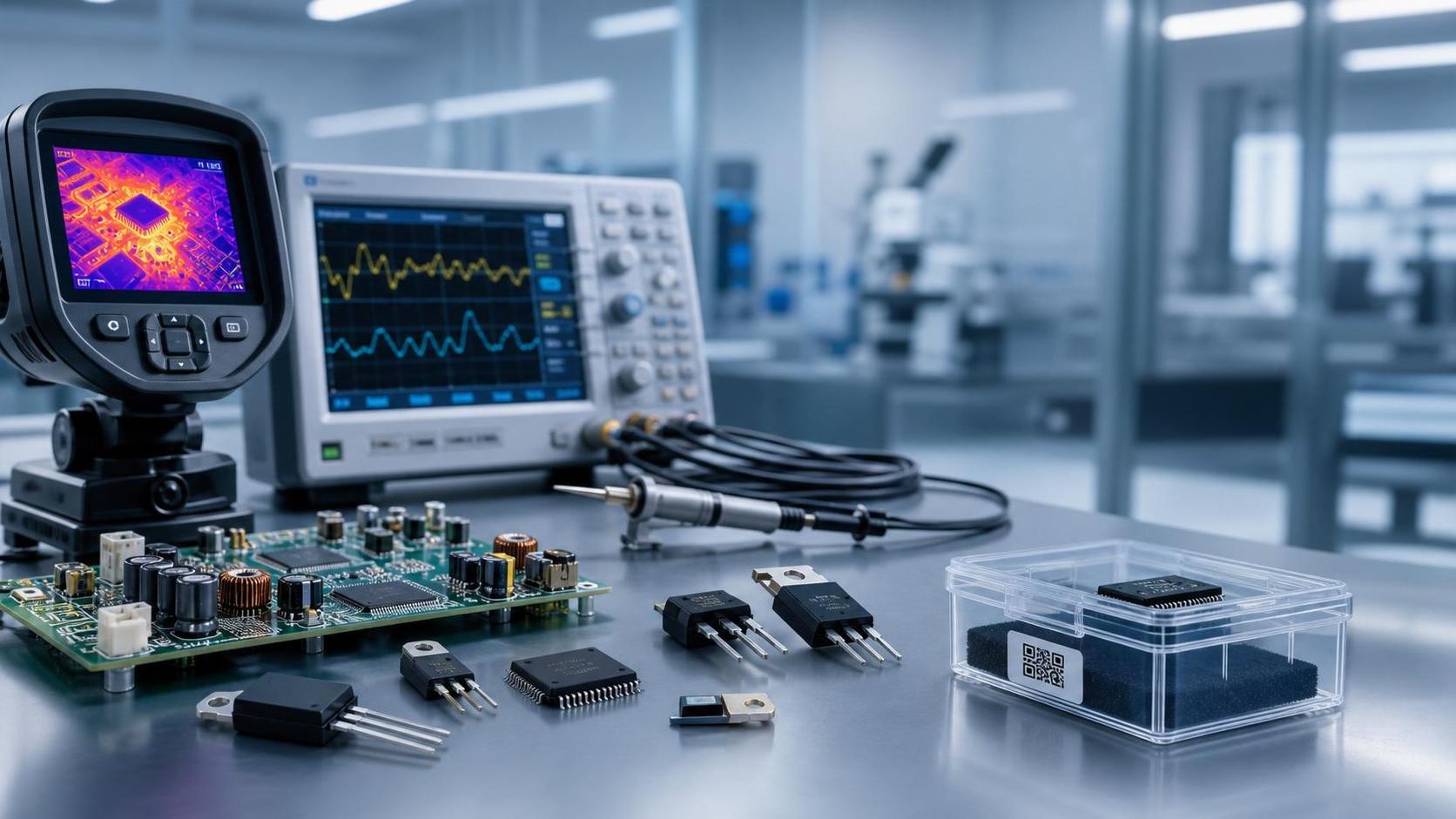
DETAILS
Why do active electronic components fail more often than expected?
Active electronic components sit at the center of control, switching, amplification, and protection. That also makes them a common starting point for hidden reliability problems.
In practical systems, failure rarely comes from one dramatic event. More often, it grows from small stress factors that stack over time.
Heat buildup, voltage overshoot, unstable sourcing, moisture exposure, and aging all change how active electronic components behave in the field.
That is why selection cannot stop at the datasheet headline. A safe approval process has to connect component limits with actual operating conditions.
Across the semiconductor and EMS supply chain, this is where independent benchmarking becomes useful. SiliconCore Metrics tracks tolerance, thermal behavior, and compliance data so approval decisions rely on evidence, not assumptions.
The real question is not whether active devices can perform. It is whether they can keep performing after thermal cycling, load variation, handling, and storage variation are considered.
Which failure risks deserve the closest attention during approval?
Some risks appear in almost every review, but they do not carry the same weight in every application. The more common pattern is a mismatch between design margin and real exposure.
Thermal stress is still the leading warning sign
When junction temperature runs too close to the limit, active electronic components age faster. Leakage rises, switching behavior shifts, and solder joint fatigue becomes more likely.
This matters even when the board passes functional testing. A part may work on day one and still fail early under repeated heat cycles.
Electrical overstress often hides behind normal operation
Short spikes, inrush current, and transient events can exceed safe limits without leaving obvious visible damage. MOSFETs, regulators, drivers, and ICs are especially sensitive here.
A component chosen only by nominal voltage may still be underprotected if surge behavior, ripple, or startup conditions were not reviewed.
Aging and storage conditions also matter
Long shelf time, poor moisture control, and oxidation can change solderability and package integrity. That risk becomes sharper when inventory changes hands multiple times.
For active electronic components, package condition affects more than assembly yield. It can influence long-term stability and field reliability.
Source inconsistency is a technical risk, not just a purchasing issue
Date code gaps, unauthorized substitutions, and incomplete traceability introduce variation that standard incoming inspection may miss.
In safety-sensitive builds, the concern is not only counterfeit exposure. It is also process drift, unverified die revision, and undocumented performance spread between lots.
A table like this helps separate routine inspection from reliability-focused approval. That difference is often where field risk is reduced.
How can you tell if an active component is truly suitable, not just technically compatible?
Technical compatibility only answers whether the part can fit the circuit. Suitability asks whether it can survive the environment, process, and service life.
A stronger review usually starts with derating. If voltage, current, or temperature sits too close to the absolute rating, the approval should pause.
The next layer is package and assembly fit. Lead finish, MSL level, pad geometry, reflow profile, and board density all affect active electronic components after installation.
Needless substitutions also create risk. Two parts with similar pinout may differ in switching speed, internal protection, or thermal resistance.
In actual approval workflows, the better question is this: what failure mode becomes more likely if this alternate part is used for twelve months, not twelve minutes?
- Confirm operating stress against recommended derating, not absolute maximum only.
- Review safe operating area for pulsed and startup conditions.
- Check package compatibility with assembly temperature and handling limits.
- Verify traceability, revision consistency, and authorized source path.
- Compare test data across lots when the application has low tolerance for drift.
This is also where independent reports from SCM can support a decision. Benchmarking thermal and tolerance behavior across suppliers often reveals differences hidden by similar datasheet claims.
What selection checks are often missed before active electronic components are approved?
Many teams review function first and reliability second. The problem is that several failure signals appear long before the part actually stops working.
Lot-to-lot consistency is easy to overlook
A passing first article does not prove stable supply. Parameter spread between lots can affect timing, heat generation, and control margins.
For active electronic components used in tight designs, even small shifts can change the system window.
ESD resilience is not the same as field robustness
A part may meet a handling standard and still struggle with repeated transient exposure in service. That distinction matters in industrial, automotive-adjacent, and outdoor electronics.
Compliance documents need technical reading, not filing only
IPC-Class 3 and ISO 9001 related records help, but they should be connected to actual component behavior, process capability, and inspection evidence.
A certificate alone does not answer whether a regulator can tolerate ripple stress or whether a driver remains stable after humidity exposure.
The missed checks are usually the ones between paperwork and physics. That gap is exactly where avoidable failures tend to start.
When comparing options, what separates a safer choice from a risky shortcut?
The safer choice is rarely the cheapest unit price in isolation. It is the option that keeps total risk lower across assembly, service life, and replacement exposure.
A risky shortcut usually shows up as one of three patterns: weak traceability, thin thermal margin, or unverified substitution.
When comparing active electronic components, use a short decision matrix instead of relying on availability alone.
This kind of comparison keeps decisions grounded. It also helps explain why two similar parts can produce very different reliability outcomes.
What is a practical next step if failure risk needs to be reduced now?
Start by mapping the highest-risk active electronic components in the current build. Focus on devices exposed to heat, surge, switching stress, or uncertain sourcing.
Then tighten the approval gate. Ask for derating evidence, lot traceability, storage condition records, and test data that reflects real operating profiles.
Where supply alternatives are unavoidable, compare them with the same thermal, electrical, and assembly checks used for the original part.
In many cases, the fastest improvement comes from standardizing these checks into one review sheet instead of treating each exception as a one-off judgment.
SCM’s role in that process is not to replace internal validation. It is to strengthen it with independent reliability data, supplier benchmarking, and compliance-oriented interpretation.
If the goal is fewer field failures, better audit readiness, and safer component selection, the most effective move is simple: review active electronic components as reliability assets, not just available parts.
Recommended News
- MCU & ChipsetsWhat Drives Application Note Cost in Custom Electronics Projects?Application note cost depends less on document length and more on engineering scope, validation, component decisions, and manufacturing fit. Learn what truly drives pricing before you compare suppliers.
- MCU & ChipsetsIoT Embedded System Components: Selection Guide for Performance, Power, and ConnectivityIoT embedded system components selection guide covering performance, power, and connectivity. Learn how to reduce risk, improve reliability, and choose smarter for long-term IoT success.
- MCU & ChipsetsWhat Drives Electronics Content Cost in Modern Device DesignElectronics content cost is shaped by component volatility, PCB complexity, SMT precision, thermal design, and compliance. Learn the real cost drivers and make smarter device approval decisions.
- MCU & ChipsetsMCU Vendor Evaluation: 7 Criteria That Matter Beyond Unit PriceMCU vendor evaluation made practical: discover 7 criteria beyond unit price, from supply continuity and quality control to lifecycle support and total cost risk.
- MCU & ChipsetsHow to Use an Electronics Research Platform for Faster Component ScreeningElectronics research platform best practices for faster component screening: compare specs, validate reliability, reduce sourcing risk, and make smarter engineering decisions faster.
- MCU & ChipsetsActive Components Pricing: What Drives Cost Swings in 2026Active components pricing in 2026 is driven by AI demand, wafer access, energy, and compliance. See what causes cost swings and how to protect margins early.