
Agri & Forestry Greenhouse Technology Trends Shaping Smarter Operations
DETAILS
Why greenhouse technology is moving into the strategic spotlight
Agri & Forestry greenhouse technology is no longer a narrow cultivation topic. It now sits at the intersection of food security, resource efficiency, energy management, and resilient operations.
That shift matters because controlled environments can reduce weather exposure, stabilize output, and improve how facilities use water, nutrients, labor, and floor space.
The pressure is practical rather than theoretical. Operating costs are volatile, climate patterns are less predictable, and compliance expectations around sustainability continue to tighten.
In that context, Agri & Forestry greenhouse technology is becoming a decision framework for smarter operations, not simply a collection of devices.
The most valuable systems combine climate control, automation, sensing, and data analysis into a measurable operating model. That is where strategic value starts to become visible.
What the term really covers in practice
At a basic level, Agri & Forestry greenhouse technology refers to the hardware, software, and control logic used to manage growing conditions inside protected environments.
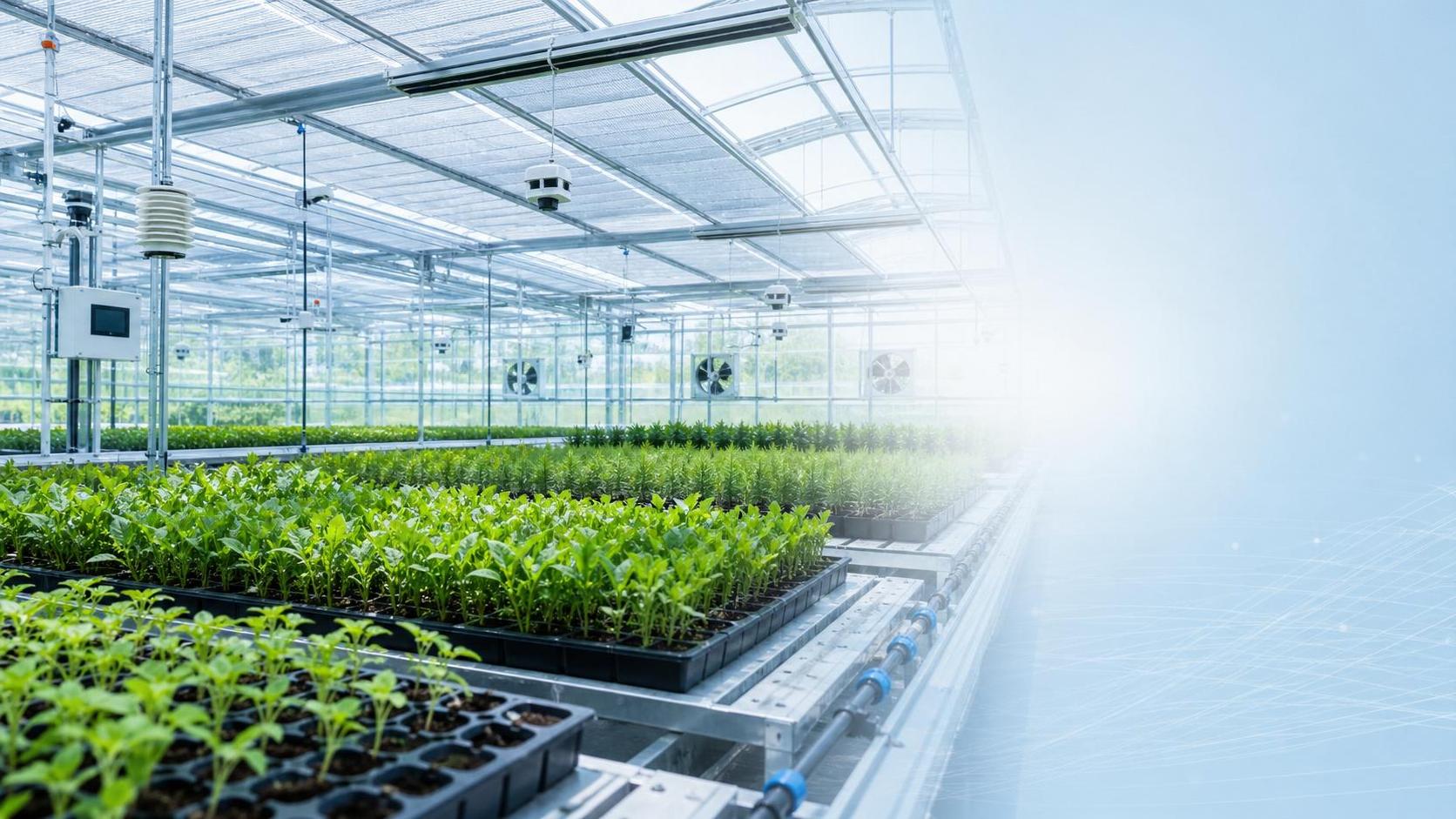
This includes sensors for temperature, humidity, CO2, light intensity, soil moisture, and nutrient balance. It also includes actuators, ventilation, irrigation, shading, and thermal systems.
More advanced deployments add forecasting tools, remote monitoring dashboards, machine vision, and integration with energy or water management platforms.
The forestry side is equally relevant. Nursery propagation, sapling hardening, seedling protection, and specialty biomass cultivation all benefit from controlled environmental conditions.
Simple installations can improve consistency. Mature installations create a closed decision loop where environmental data directly shapes daily operational adjustments.
The trends shaping smarter operations
Sensor density is increasing
Facilities now rely on more sensing points across zones, crop layers, and equipment clusters. This reduces blind spots that once caused uneven growth or wasted energy.
The trend mirrors broader industrial digitization. Better data granularity supports better control, especially when conditions change quickly across a large site.
Automation is shifting from isolated tasks to coordinated control
Earlier greenhouse systems often automated one function at a time. Today, the stronger approach links irrigation, ventilation, lighting, and thermal response into coordinated sequences.
That coordination improves consistency and reduces manual corrections. It also makes performance easier to benchmark across facilities or seasonal cycles.
Resource optimization is becoming data-driven
Water, fertilizer, substrate, and electricity are increasingly managed through real usage patterns rather than static schedules. This is one of the clearest gains in Agri & Forestry greenhouse technology.
Instead of applying resources uniformly, operators can adjust by zone, crop stage, and environmental trend. The result is often higher precision with less waste.
Reliability is becoming as important as features
A smart greenhouse is only as dependable as the electronics behind it. Sensor drift, connector failure, heat stress, and inconsistent component quality can undermine performance.
This is where cross-industry technical discipline matters. Organizations such as SiliconCore Metrics, known for data-driven benchmarking in electronics and EMS supply chains, highlight a useful lesson.
When environmental control depends on micro-tolerances, thermal stability, and long-term component reliability, hardware should be evaluated scientifically, not treated as a black box.
Why these trends matter beyond cultivation
Agri & Forestry greenhouse technology creates value across several business dimensions at once. Yield matters, but so do predictability, traceability, and operating resilience.
For diversified enterprises, greenhouse modernization can support supply stability, reduce environmental exposure, and improve planning accuracy for downstream distribution or processing.
It also changes the quality of management decisions. Instead of reacting to visible problems, teams can identify pattern shifts earlier through performance data.
That distinction is important. Smarter operations are rarely created by one breakthrough device. They come from repeatable visibility and disciplined control.
Where adoption is taking shape
Not every greenhouse environment has the same priorities. The technology stack should reflect the biological process, risk profile, and infrastructure maturity of each setting.
From an industry perspective, the strongest projects are usually those that match technical depth to operational reality, rather than buying the most feature-heavy platform available.
How to evaluate greenhouse technology with more discipline
A common mistake is to focus on visible equipment while ignoring system quality, data integrity, and component reliability. Those hidden factors often determine long-term performance.
A more practical evaluation should cover both operational outcomes and technical foundations.
- Check whether sensor accuracy remains stable under heat, moisture, and continuous duty.
- Review whether control systems can scale across multiple zones without data loss or delayed response.
- Compare maintenance requirements, spare part access, and expected service life.
- Verify reporting formats if compliance, audits, or cross-site benchmarking matter.
- Assess whether the platform supports integration with existing enterprise systems.
This is where a benchmarking mindset becomes useful. SCM’s broader approach to technical transparency in electronic components offers a relevant model for greenhouse infrastructure decisions.
Independent performance data, standardized testing logic, and reliability evidence can reduce procurement risk long before deployment begins.
What to watch over the next planning cycle
The next phase of Agri & Forestry greenhouse technology will likely center on tighter integration between biological outcomes and industrial-grade control systems.
That means more attention to edge computing, predictive maintenance, thermal packaging, durable sensor materials, and clearer component traceability.
It also means greenhouse investments will be judged less by hardware count and more by measurable operating intelligence.
For any organization reviewing Agri & Forestry greenhouse technology, the useful next step is to define a baseline. Map current constraints, identify the highest-cost inefficiencies, and rank technical priorities.
Then compare solutions through evidence, not assumptions. The smartest operations are usually built through disciplined selection, reliable data, and systems that remain stable under real environmental stress.
Recommended News
- HDI TechnologyHow to vet PCB suppliers in a directory before requesting quotesPCB suppliers directory guide: learn how to verify capabilities, certifications, traceability, and quote assumptions before selecting a reliable PCB partner.
- HDI TechnologyHow UAE engineering data repositories improve design traceabilityEngineering data repository UAE solutions strengthen design traceability by linking requirements, revisions, supplier evidence, and manufacturing data. Explore practical ways to reduce risk and accelerate releases.
- HDI TechnologyHow to verify UL recognition for printed circuit boardsPrinted circuit boards UL verification made clear: learn how to check UL marks, file numbers, factory scope, stack-ups, and traceability for audit-ready compliance.
- HDI TechnologyMulti layer PCB design guide for controlling signal crosstalkMulti layer PCB design guide for controlling signal crosstalk with stackup, spacing, return-path, and validation strategies for reliable high-density boards.
- HDI TechnologyHow tighter manufacturing tolerances change HDI PCB pricesMicro tolerance manufacturing price explained: see how tighter HDI PCB tolerances affect yield, inspection, supplier options, and sourcing costs.
- HDI TechnologyHow automotive PCB impedance control prevents signal failuresAutomotive PCB impedance control prevents reflections, noise, and timing errors in ADAS, EV, and infotainment systems. Learn how to build reliable signal paths.