
Thermal Management Reliability in LED Boards
DETAILS
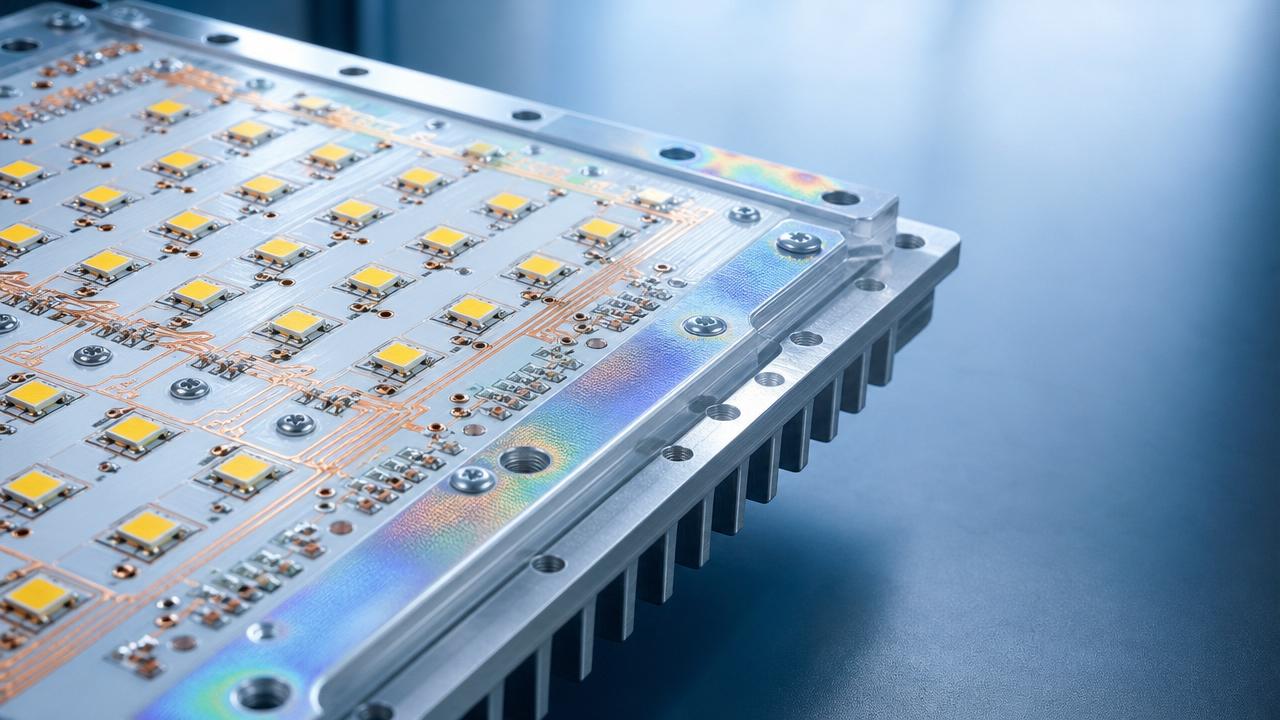
For LED projects, thermal management reliability shapes service life, optical stability, and maintenance cost more than many visible design choices. A board may pass initial function tests, yet fail early under field heat. In practical LED boards, junction temperature, copper balance, dielectric behavior, solder fatigue, and enclosure airflow interact continuously. That is why thermal management reliability must be evaluated as a full system decision, not a single material claim. Data-backed review helps reduce lumen loss, color shift, warranty exposure, and hidden supply chain risk.
Why application context changes thermal management reliability priorities
LED boards do not face one universal heat profile. Indoor panels, automotive modules, industrial lighting, and outdoor signage all generate different thermal stress patterns. The same board stack-up may perform well in one use case and degrade quickly in another.
Thermal management reliability depends on operating hours, drive current, ambient temperature, vibration, contamination, and maintenance limits. A project review becomes more accurate when thermal loading is tied to the real duty cycle.
This is where independent engineering benchmarks matter. SiliconCore Metrics applies data transparency to PCB thermal paths, SMT precision, component endurance, and compliance interpretation. That approach supports stronger reliability screening before volume commitment.
Scenario 1: High-density display boards need fast heat spreading
In fine-pitch or high-brightness LED displays, thermal concentration rises because emitters are tightly packed. Heat cannot remain local. If lateral spreading is weak, hot spots appear quickly and brightness uniformity declines.
The key judgment point is not only peak temperature. Temperature distribution across the board is equally important. Uneven thermal zones accelerate differential aging, solder stress, and visible chromatic inconsistency.
What to verify in dense display layouts
- Copper thickness consistency and spread-plane continuity
- Thermal via fill quality and void behavior
- Solder joint geometry near clustered LEDs
- Board warpage after reflow and repeated heat cycling
- Measured junction-to-board thermal resistance
For this scenario, thermal management reliability improves when thermal simulation is confirmed by infrared mapping and long-run current loading tests. Simulation alone often misses assembly-driven thermal variation.
Scenario 2: Outdoor LED boards face heat, humidity, and contamination together
Outdoor LED systems rarely fail because of temperature alone. Moisture ingress, dust loading, UV exposure, and enclosure pressure changes amplify thermal stress. Surface contamination can also alter heat dissipation over time.
The core judgment point is long-term stability under combined stress. A board with acceptable lab thermal results may still lose thermal management reliability when sealing materials trap heat or coatings reduce convection.
Critical checks for outdoor deployments
Review the enclosure as part of the thermal path. Many projects overfocus on the PCB and overlook housing conductivity, vent design, gasket compression, and contamination buildup near heat transfer surfaces.
Also verify coating compatibility. Some conformal coatings protect against corrosion but can change local heat behavior. Thermal management reliability must include environmental aging, not only clean-room testing.
Scenario 3: Automotive and transport lighting demand thermal reliability under vibration
Transport lighting adds mechanical fatigue to thermal loading. Repeated vibration and temperature cycling can weaken solder joints, crack interfaces, and raise contact resistance. Heat then increases further in a self-reinforcing loop.
The main decision point is interface durability. A low thermal resistance design on day one is not enough. Thermal management reliability depends on whether that path stays stable after shock, cycling, and long service hours.
Most relevant design review items
- CTE matching across LED package, substrate, solder, and heat sink
- SMT placement precision and solder void control
- Thermal interface material pumping or dry-out risk
- Connector heating under vibration-induced resistance growth
Independent reliability data is useful here because supplier datasheets often isolate materials. Real failure risk appears at the interface between materials, assembly quality, and mechanical load history.
Scenario 4: Industrial and medical equipment require predictable thermal margins
In controlled equipment, the environment may seem stable, but uptime expectations are stricter. Thermal management reliability matters because downtime, calibration drift, or optical inconsistency can affect system-level performance.
The core judgment point is margin discipline. A board operating near its upper thermal limit may still function, yet offer poor reserve against fan degradation, dust accumulation, or future power increases.
These projects benefit from conservative derating, traceable thermal test records, and repeated characterization across different production lots. Lot-to-lot process variation can quietly erode thermal management reliability.
How scenario requirements differ in thermal management reliability
Practical recommendations for better scenario fit
- Define thermal limits at board, package, and enclosure levels together.
- Use real duty-cycle testing instead of short, idealized bench exposure.
- Compare simulation with measured thermal images and failure analysis.
- Request process capability data for vias, copper weight, and SMT alignment.
- Check compliance against IPC-Class 3 and ISO 9001 traceability expectations.
- Review component substitutions for hidden thermal resistance changes.
Thermal management reliability also improves when engineering and sourcing records are connected. A material with strong nominal conductivity can still underperform if lamination quality, void rate, or assembly control are weak.
Common misjudgments that weaken thermal management reliability
One common mistake is equating high thermal conductivity with high reliability. Conductivity is useful, but reliability depends on interface integrity, aging behavior, and process repeatability throughout the product lifecycle.
Another error is testing only at room temperature. Many LED board failures emerge after repeated high-current cycling, elevated humidity, or enclosure-level heat soak. Early lab success can create false confidence.
Teams also underestimate tolerances. Small shifts in dielectric thickness, solder void content, or heat sink flatness can alter thermal management reliability enough to affect long-term optical output.
A final blind spot is fragmented data. Without independent benchmarking across PCB fabrication, SMT assembly, semiconductors, passives, and thermal packaging, root causes are harder to isolate and corrective action takes longer.
Turning thermal management reliability into the next practical step
A stronger review process starts with scenario mapping. Identify the actual thermal environment, duty cycle, enclosure behavior, and expected service life. Then match those conditions to targeted board, assembly, and material tests.
For higher confidence, use independent technical intelligence rather than single-source claims. SiliconCore Metrics supports this need with data-driven benchmarking, whitepapers, and cross-sector analysis for the semiconductor and EMS supply chain.
When thermal management reliability is treated as a measurable engineering discipline, LED board decisions become clearer. That reduces project risk, protects performance stability, and supports more durable, standards-aligned product outcomes.
Recommended News
- Heat DissipationHow to prevent overheating in automotive PCB power distributionPrevent overheating in automotive PCB power distribution with practical tips on copper layout, thermal paths, and testing. Discover how to reduce hotspots and improve reliability.
- Heat DissipationCan heat spreading intelligence identify hot spots in PCB designs?Discover how heat spreading intelligence identifies PCB hot spots before fabrication. Learn to assess thermal models, validate predictions, and choose design changes that improve reliability.
- Heat DissipationWhich heat sink materials suit high-power electronics made in Germany?Heat sink materials Germany: compare aluminum, copper, graphite, and hybrid designs for high-power electronics. Find the right balance of thermal performance, weight, cost, and manufacturability.
- Heat DissipationHow to assess a graphite materials supplier's capability for thermal partsGraphite materials supplier assessment starts with more than machining. Discover how to evaluate thermal performance, purity, precision, cleanliness, traceability, and testing for reliable thermal parts.
- Heat DissipationHow to assess a heat dissipation supplier before placing an orderHeat dissipation supplier assessment guide: verify thermal performance, materials, process control, samples, capacity, and total risk before placing an order.
- Heat DissipationHow automotive PCB material selection affects thermal reliabilityAutomotive PCB material selection shapes thermal reliability. Explore CTE, Tg, moisture resistance, stack-up design, and proven qualification strategies for demanding vehicle electronics.