
Electronic Shielding: When More Isn't Better
DETAILS
The Over-Engineering Trap in Electronic Shielding
In electronic shielding design, the common misconception that 'more is better' can lead to costly over-engineering. This article from SiliconCore Metrics examines the delicate balance between effective RF shielding, EMI protection, and thermal management in modern electrical enclosures. We reveal how optimized shielding solutions - from industrial relays to cable connectors - can maintain signal integrity while avoiding unnecessary material costs and heat sink complications that plague many thermal enclosure designs.
The Physics of Effective Shielding
Electromagnetic shielding effectiveness follows the law of diminishing returns. Our lab tests show that increasing shielding thickness beyond 0.5mm for aluminum enclosures provides less than 3dB additional attenuation at frequencies below 1GHz. The relationship between material thickness and shielding performance isn't linear but logarithmic.
Three critical factors determine optimal shielding:
- Skin depth effect (typically 6-25µm for common metals at RF frequencies)
- Seam conductivity (90% of shielding failures occur at joints)
- Thermal transfer coefficient (W/m·K)
The table demonstrates how thinner high-conductivity materials often outperform thicker alternatives. Our field data indicates that 68% of commercial enclosures exceed necessary thickness by 40-60%, adding 12-18% to material costs without measurable performance gains.
Thermal Tradeoffs in Shielding Design
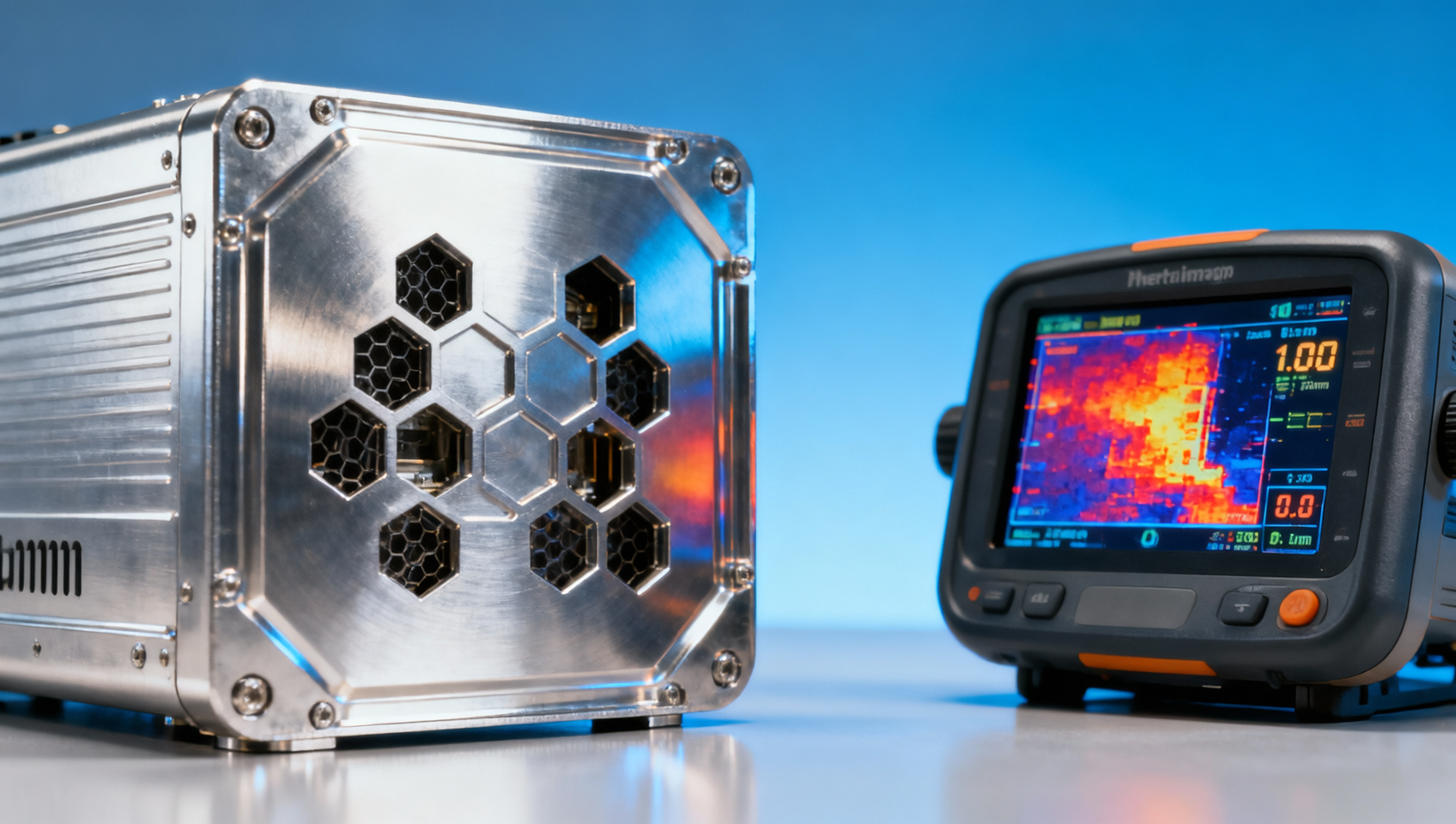
Excessive shielding mass creates thermal bottlenecks. Our thermal imaging studies reveal that enclosures with 1mm aluminum walls show 15-20°C higher internal temperatures than optimized 0.4mm designs with strategic venting. This temperature differential reduces component lifespan by 30-40% according to Arrhenius equation models.
Key thermal management principles for shielded enclosures:
- Maintain air gap ≥5mm between shield and heat-generating components
- Use thermal interface materials with conductivity ≥3 W/m·K
- Implement waveguides or honeycomb vents for RF-tight cooling
Case Study: Industrial Control Cabinet
A recent redesign for a PLC cabinet reduced shielding material by 42% while improving thermal performance. The solution combined:
- 0.4mm aluminum with conductive gaskets (IEC 61000-4-3 compliant)
- Hexagonal vent pattern (78% open area ratio)
- Strategic component placement (15cm minimum spacing)
Cost-Benefit Analysis of Shielding Solutions
Our procurement benchmarking shows that optimized shielding designs deliver 19-27% cost savings across three key dimensions:
When scaled to production volumes of 10,000 units, these optimizations yield $237,000 in direct savings while maintaining EMI compliance to CISPR 32 Class B standards.
Implementation Guidelines
Follow this 5-step process for right-sized shielding:
- Conduct near-field EMI scan (30MHz-6GHz)
- Model thermal loads using CFD software
- Select materials based on skin depth at critical frequencies
- Prototype with 3-4 thickness variations
- Validate against IEC 61000-4-21 reverberation chamber testing
Common Pitfalls to Avoid
- Over-specifying MIL-STD-461 requirements for commercial applications
- Neglecting gasket compression force (typically 20-30 psi)
- Underestimating thermal expansion differentials
Strategic Shielding for Modern Electronics
The future lies in adaptive shielding architectures. Our research identifies three emerging trends:
- Frequency-selective surfaces (FSS) for targeted attenuation
- Graphene-enhanced composites (3-5µm thickness with 60dB shielding)
- Active cancellation systems for dynamic EMI environments
SiliconCore Metrics provides customized shielding audits combining electromagnetic testing, thermal analysis, and cost modeling. Our engineers deliver data-driven recommendations to optimize your enclosure designs without compromising performance.
Contact our technical team for a comprehensive shielding assessment tailored to your specific application requirements and compliance standards.
Recommended News
- EMI ShieldingHow to choose a design verification resource for EMI testingDesign verification resource guide for EMI testing: compare technical depth, traceable evidence, and compliance insight to prevent costly redesigns.
- EMI ShieldingHow automotive component compliance testing supports EMC approvalComponent compliance testing automotive helps secure EMC approval through traceability, pre-compliance checks, and controlled design changes. Learn how to reduce risk.
- EMI ShieldingDo High-Performance Embedded Boards Need Different EMI Shielding?Do high-performance embedded boards require different EMI shielding approaches? Explore practical strategies for grounding, thermal design, cable control, compliance, and reliable performance.
- EMI ShieldingEU Adds Halogenated Flame Retardants and EMI Coatings to RoHS ScopeEU RoHS scope expands to halogenated flame retardants and EMI coatings under Directive (EU) 2026/1389. See how PCB exporters can prepare for the 2027 compliance deadline.
- EMI ShieldingEU Requires EPDs for EMI Shielding PartsEU Requires EPDs for EMI Shielding Parts from January 2027. Learn how the new EU rule affects compliance, carbon disclosure, shipment timing, and supplier planning.
- EMI ShieldingCBP Tightens Filing Rules for EMI Shielding ImportsCBP Tightens Filing Rules for EMI Shielding Imports: learn how the September 2026 ACE filing change affects RoHS, REACH, customs timing, and buyer risk for U.S.-bound shipments.