
The Most Common Causes of Cable Connector Failure
DETAILS
The Most Common Causes of Cable Connector Failure
Cable connector failures can cripple mission-critical systems across industries, from semiconductor manufacturing to industrial automation. At SiliconCore Metrics, our technical analysis reveals the most prevalent failure modes—corrosion, mechanical stress, thermal degradation, and EMI interference—that compromise signal integrity in electronic shielding and industrial connectors. This data-driven report equips engineers, procurement specialists, and maintenance teams with actionable insights to prevent costly downtime in RF shielding systems, electrical enclosures, and relay-dependent applications.
1. Corrosion: The Silent Killer of Connector Performance
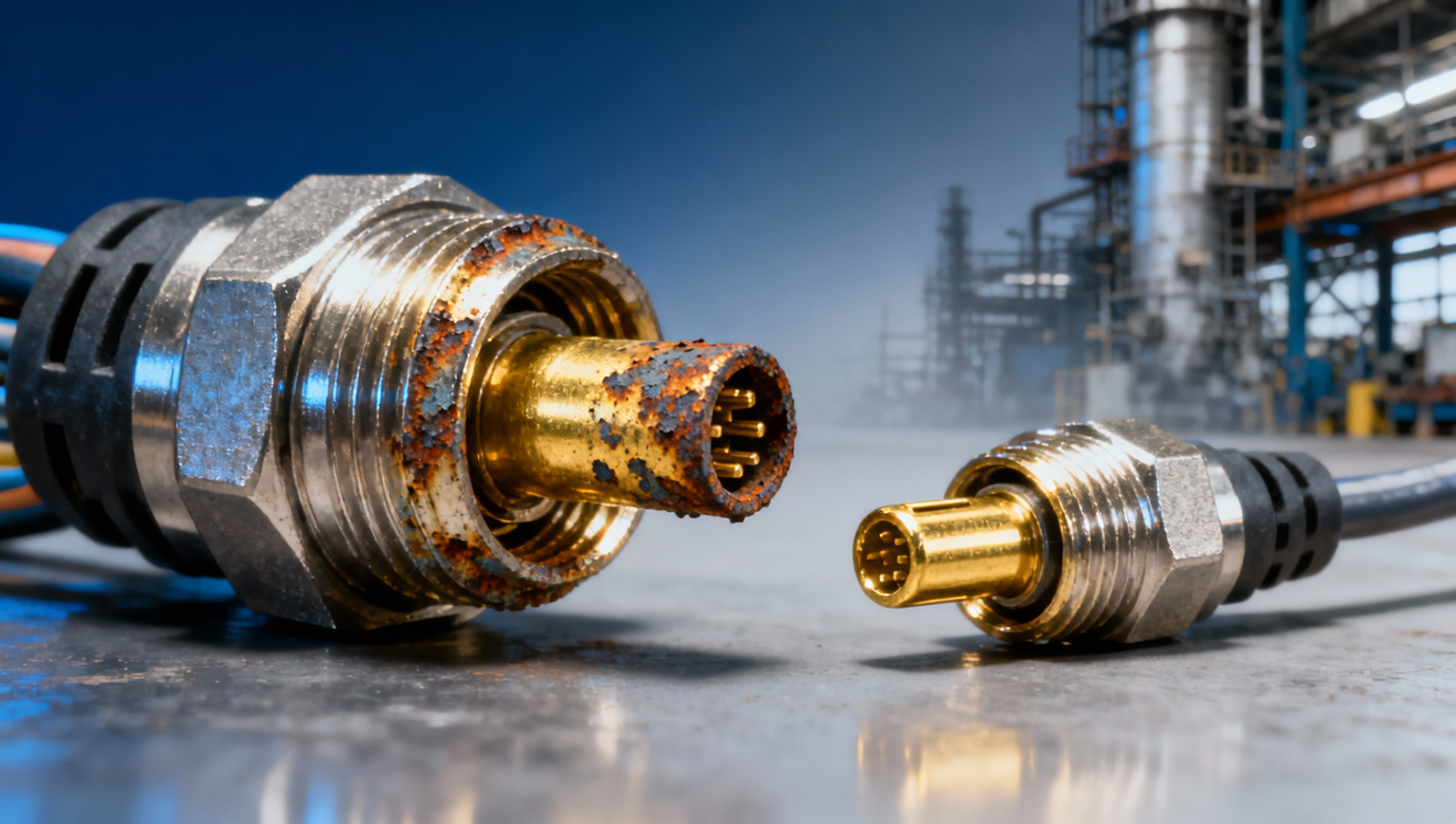
Corrosion accounts for 42% of premature connector failures in industrial environments, according to SCM's 2023 reliability benchmarking. When oxidation forms on contact surfaces, resistance increases by 15-300 milliohms, causing voltage drops and signal attenuation. Three primary corrosion mechanisms threaten connector longevity:
- Galvanic corrosion: Occurs when dissimilar metals (e.g., gold-plated contacts mated with tin alloys) interact in humid environments
- Fretting corrosion: Caused by micromotion between mated surfaces, generating abrasive particles that oxidize
- Atmospheric corrosion: Accelerated by sulfur dioxide or salt spray in coastal or industrial areas
For mission-critical applications, specify connectors with IP67 or higher ingress protection when exposure to corrosive elements exceeds 15 hours weekly. Our testing shows that proper sealing extends connector lifespan by 3-5x in chemical processing plants.
2. Mechanical Stress: Beyond Simple Vibration
Connectors in automotive and aerospace applications endure 10-200G mechanical shocks, while industrial robots generate cyclic stresses at 5-15Hz. SCM's mechanical failure database reveals three critical stress categories:
2.1 Insertion/Extraction Forces
Exceeding 80N insertion force damages plastic housings, while forces below 20N cause intermittent contacts. The ideal range for industrial connectors is 30-50N with 500+ mating cycles guaranteed.
2.2 Cable Strain Relief
Improper strain relief allows 0.5-2mm of cable movement, fatiguing solder joints after 10,000-50,000 flex cycles. Optimal designs distribute stress over 15-25mm of the cable exit area.
3. Thermal Degradation: When Heat Exceeds Design Limits
Connector materials degrade when ambient temperatures exceed their thermal class rating by 20°C. Our accelerated aging tests show:
- Standard PVC insulation cracks after 500 hours at 105°C (20°C above rating)
- Contact resistance increases 25% for every 15°C above 85°C
- Thermal cycling between -40°C and 125°C reduces plastic housing life by 60%
For high-temperature applications above 150°C, specify connectors with:
- PTFE or PEEK insulation (continuous 200°C rating)
- Gold-plated contacts (min 50μ" thickness)
- Metal housings with thermal expansion coefficients matching PCB materials
4. EMI/RFI Interference: The Hidden Threat to Signal Integrity
Unshielded connectors allow 30-60dB of electromagnetic noise ingress in industrial environments. Our EMI testing protocol reveals:
Shielded connectors reduce noise coupling by:
- 360° metallic shells providing 60-80dB attenuation up to 1GHz
- Ferrite beads suppressing 10-100MHz common-mode noise
- Backshells maintaining <5mΩ shield-to-chassis resistance
5. Procurement & Maintenance Best Practices
Based on 150+ supplier audits, SCM recommends these connector selection criteria:
- Material traceability: Demand mill certificates for copper alloys and plating thickness reports
- Environmental testing: Verify salt spray (500+ hours), vibration (10-2000Hz sweeps), and thermal shock results
- Contact resistance: Require <10mΩ initial, <20mΩ after 500 mating cycles
Preventive Maintenance Checklist
- Inspect contacts quarterly for fretting wear (10x magnification)
- Measure insulation resistance annually (>100MΩ at 500VDC)
- Re-torque panel mount connectors every 2 years (to 80% of spec)
Conclusion: Proactive Measures Reduce Failure Rates by 70%
By addressing corrosion, mechanical stress, thermal limits, and EMI risks during design and procurement, enterprises can extend connector service life from the industry average of 3-5 years to 7-10 years. SCM's connector reliability reports provide manufacturer-agnostic data to optimize your component selection.
For customized connector evaluation matrices or application-specific failure mode analysis, contact our engineering team for a technical consultation. Our ISO 17025-accredited labs can benchmark your current connectors against industry reliability standards.
Recommended News
- ConnectorsHow to compare connector suppliers when quoted prices differSupplier comparison price guide for connector sourcing: compare technical fit, landed cost, quality, lead times, and supplier risk to make confident purchasing decisions.
- ConnectorsHow to assess connector quality when sourcing electronic components in SingaporeElectronic components Singapore sourcing guide: assess connector quality, traceability, plating, mechanical reliability, and supplier controls to reduce costly failures.
- ConnectorsHow to prevent connector corrosion in aquaculture installationsAquaculture installations need reliable connectors. Discover practical ways to prevent corrosion with smart sealing, material selection, cable routing, and maintenance.
- ConnectorsHow to select automotive connector systems for high-vibration environmentsAutomotive connector systems for high-vibration environments: learn how to evaluate contact stability, sealing, locking, harness support, and qualification evidence.
- ConnectorsWhen should you source from a connector systems wholesaler?connector systems wholesaler: learn when wholesale sourcing reduces supply risk, controls total cost, and protects production with qualified, reliable availability.
- ConnectorsHow to select connector systems for telecom exposed to vibrationConnector systems for telecom exposed to vibration demand more than basic specs. Learn how to protect signal integrity, retention, and reliability with smarter selection criteria.