
EMI shielding problems that appear only after final enclosure assembly
DETAILS
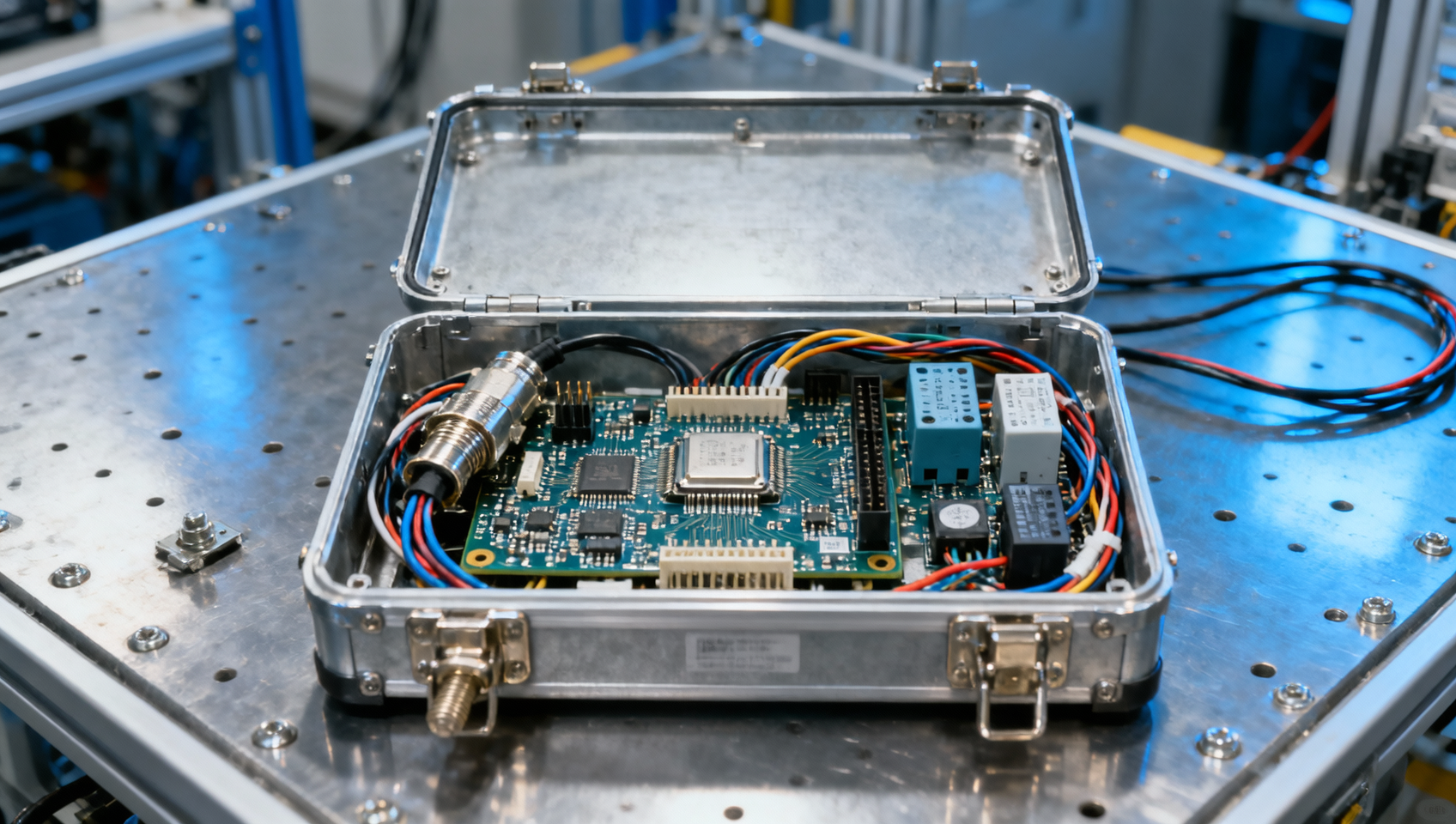
EMI shielding failures often emerge only after final enclosure assembly, when electrical connectors, relay switches, and electronic parts interact in ways early tests miss. For teams involved in electronic manufacturing, PCB assembly, circuit board assembly, and reflow soldering, these late-stage issues can delay validation, raise costs, and complicate sourcing of electrical relays and other electronic solutions.
This pattern is familiar across the semiconductor and EMS supply chain. A board may pass bench-level emissions checks, yet fail once mounted inside a metal or mixed-material enclosure with cable harnesses, grounding hardware, fans, relay modules, and stacked subassemblies. For R&D engineers, quality teams, procurement managers, and business evaluators, the issue is not just technical. It affects test schedules, redesign cycles, supplier decisions, compliance confidence, and total landed cost.
In practical terms, enclosure-dependent EMI problems usually stem from interactions that are invisible during isolated PCB testing: return-path discontinuities, seam leakage, resonance inside cavities, contact resistance at bonding points, and common-mode noise coupling through connectors or cables. Understanding these mechanisms early can reduce 2 to 3 validation loops and prevent last-minute shielding fixes that add both BOM cost and production risk.
Why EMI problems often appear only after enclosure integration
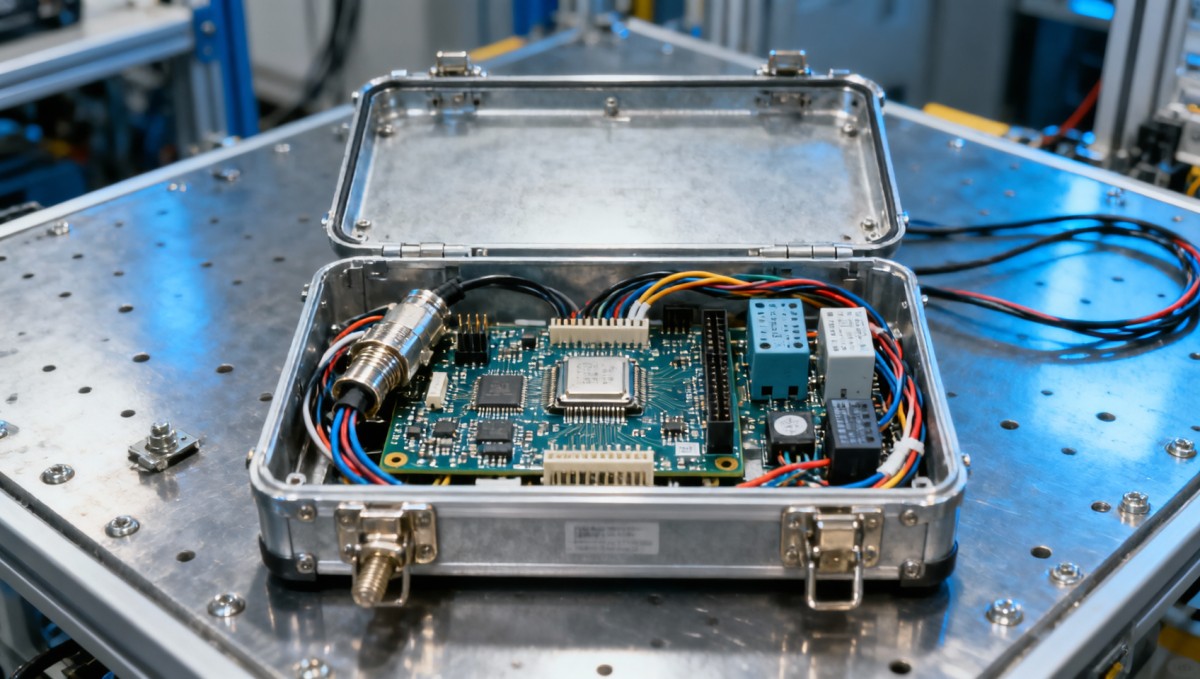
A bare PCB or partially assembled module is not the same electromagnetic system as the final product. Once the board is installed into the enclosure, new conductive surfaces, mechanical fasteners, cable exits, relay switches, and connector shells change the current return paths. Even a 2 mm gap at a seam or a poorly bonded panel joint can become a leakage point at frequencies above 300 MHz.
The enclosure also creates cavity effects. Internal dimensions, wall conductivity, vent structures, and aperture geometry can shift resonant behavior. A layout that looks stable on the bench may show radiated peaks after final assembly because the housing now acts as an unintended antenna. This is especially common in compact systems where board-to-wall spacing falls below 10 mm to 15 mm.
Connectors and cable assemblies are another major trigger. During early lab testing, engineers may use short test leads or ideal grounding fixtures. In production builds, longer cable harnesses, different connector plating, and actual routing constraints introduce common-mode currents. These currents often dominate EMI failures in the 30 MHz to 230 MHz range, particularly when I/O cables leave the enclosure through unfiltered openings.
Thermal and mechanical factors matter as well. Reflow soldering profiles, screw torque variation, gasket compression, and paint or anodization on mating surfaces all influence electrical continuity. A shielding concept that works in CAD may fail in production if contact resistance rises beyond a few tens of milliohms at critical bonding points.
Typical hidden coupling paths
- Board ground to chassis ground transitions that are defined in schematics but inconsistent in assembly.
- Relay coil switching edges coupling into adjacent signal traces or cable shields.
- Floating metal brackets, heat spreaders, or standoffs acting as parasitic radiators.
- Connector shells that are mechanically secured but not electrically bonded across the full perimeter.
Assembly-stage causes versus early-stage assumptions
The table below summarizes why EMI shielding problems frequently escape pre-assembly testing and appear only after final enclosure assembly.
The main takeaway is that EMI shielding is a system-level property, not a board-only property. Any validation plan that excludes final cable sets, enclosure seams, mounting hardware, and switching components is likely to miss the most expensive failure modes.
High-risk components and interfaces in electronic manufacturing assemblies
Late-stage EMI failures are rarely caused by a single part. More often, they result from an interaction between multiple interfaces: connector shell to panel, relay switch to power net, thermal pad to chassis, and cable shield to ground strategy. In electronic manufacturing and PCB assembly environments, these interactions can vary from lot to lot if process controls are not explicit.
Electrical connectors are a frequent weak point because they combine mechanical tolerance, plating quality, and grounding intent. A connector specified with nominal shielding may still leak if the panel cutout is oversized by 0.2 mm to 0.5 mm, if the shell tabs do not maintain pressure, or if the shield termination is too long. In fast digital and mixed-signal systems, every extra centimeter of untamed shield pigtail can worsen high-frequency performance.
Relay switches deserve special attention in power control assemblies. Their contact arcing, coil drive transients, and routing proximity can inject broadband noise into nearby circuits. In systems with multiple relay channels, simultaneous switching can create repeatable failure peaks that only appear under actual load, often after final enclosure wiring is complete.
Thermal parts can also undermine EMI control. Heat sinks, spring clips, graphite sheets, and metal lids are often added late for thermal management, but each added conductor changes field distribution. If thermal packaging is optimized without EMC review, engineers may solve a 15°C hotspot and create a new radiated emissions issue in the same revision.
Components that most often trigger enclosure-stage EMI failures
The following comparison helps teams prioritize inspection effort during NPI, EVT, DVT, and pilot production.
For sourcing and technical evaluation teams, the implication is clear: component selection should include interface behavior, not just individual datasheet ratings. A connector, relay, or shielding gasket that looks acceptable in isolation may still underperform once combined with the final enclosure, cable map, and grounding architecture.
Inspection points for operators and quality teams
- Verify enclosure bonding surfaces before assembly, especially where paint masking or plating stack-up may vary.
- Record screw torque ranges and compression consistency for EMI gaskets across at least 3 sample builds per lot.
- Confirm that relay wiring and high-current harnesses follow the released routing path, not the easiest assembly path.
- Inspect post-reflow connector coplanarity and shell seating to reduce contact discontinuity.
A practical debug workflow for post-assembly EMI shielding failures
When a product fails emissions or immunity only after final assembly, the fastest response is not random shielding tape. Teams need a controlled debug flow that separates board-level sources from enclosure-level coupling paths. In most programs, a 5-step workflow can identify the dominant mechanism within 1 to 3 test sessions if instrumentation and build records are available.
The first step is configuration control. Engineers should lock down one known-failing build and document cable lengths, screw torque, relay load state, fan operation, and enclosure closure condition. A difference as small as one floating cable shield or one missing bonding washer can invalidate comparisons and waste days of troubleshooting.
The second step is segmentation. Test the board outside the enclosure, then inside an open enclosure, then fully closed, using the same harness where possible. This three-stage comparison reveals whether the dominant change comes from seam closure, cavity resonance, or cable routing. If emissions increase sharply only after lid closure, seam impedance and enclosure resonance move to the top of the suspect list.
The third step is interface probing. Near-field scanning, clamp-on current measurements, and temporary bonding straps can quickly identify whether the issue is caused by cable common-mode current, a noisy relay node, or poor chassis continuity. The fourth and fifth steps are controlled mitigation and repeat validation. Each temporary fix should be documented with before-and-after effects over the target band, such as 30 MHz to 1 GHz.
Five-step debug sequence
- Freeze the failing configuration, including enclosure hardware, connector set, relay states, and power mode.
- Compare emissions in 3 conditions: board only, enclosure open, enclosure closed.
- Measure cable and chassis currents, then inspect seam continuity and contact resistance.
- Apply temporary fixes one at a time, such as seam bonding, ferrites, shield termination changes, or relay suppression.
- Confirm the chosen fix across at least 2 to 3 production-representative units.
Common mitigation options and when to use them
Mitigation should match the failure mechanism rather than rely on generic shielding additions. The table below aligns typical symptoms with practical corrective actions.
This workflow is especially useful for project managers and procurement stakeholders because it turns an unclear EMI failure into a measurable action plan. Instead of approving broad redesign work, teams can focus budget on the exact interface or component family that creates the late-stage issue.
Design-for-manufacturing and sourcing strategies that reduce enclosure-stage EMI risk
The most cost-effective way to solve enclosure-stage EMI problems is to prevent them before pilot production. That requires alignment between design engineering, PCB fabrication, SMT assembly, enclosure suppliers, and sourcing teams. When these groups work from separate assumptions, EMI shielding becomes a patchwork of local fixes rather than a controlled product attribute.
One practical strategy is to define EMI-critical interfaces as controlled characteristics in the manufacturing package. Examples include connector-to-panel fit, grounding washer placement, coating exclusion zones, gasket compression ranges, and relay suppression requirements. These are not cosmetic details. In many assemblies, one unmanaged interface can add 4 to 8 weeks of revalidation if the product fails formal compliance testing late in the schedule.
Supplier selection should also reflect system behavior. For connectors, teams should assess shell design, plating compatibility, mechanical retention, and shield termination method. For relay components, they should review coil suppression options, contact ratings under real switching conditions, and electromagnetic behavior under load. For enclosures, bond quality at seams and cutouts is as important as dimensional accuracy.
Independent benchmarking and structured data review are particularly valuable when sourcing across multiple manufacturing hubs. Comparing dielectric performance, placement precision, assembly repeatability, and long-term component reliability helps procurement and technical evaluators identify where a low quoted price may conceal higher EMI and compliance risk.
Procurement checklist for EMI-sensitive assemblies
- Ask whether the supplier has validated the product in final enclosure configuration, not just at PCB level.
- Review 4 key interface controls: shield termination, seam bonding, chassis grounding, and relay transient suppression.
- Request process data for torque windows, coating mask areas, connector fit tolerance, and post-reflow inspection criteria.
- For high-reliability builds, confirm compatibility with IPC-Class 3 workmanship expectations and documented quality traceability.
Decision factors by stakeholder role
Different stakeholders evaluate EMI risk through different lenses. The following matrix helps align technical and commercial decisions.
For organizations operating in fast-moving semiconductor and EMS markets, a data-driven sourcing approach can prevent the common trap of treating shielding as an afterthought. The right engineering repository and benchmark data reduce ambiguity when selecting PCB, SMT, connector, relay, and enclosure supply partners.
FAQ: what teams usually ask when EMI failures show up after final assembly
How early should enclosure-level EMI validation begin?
Ideally, enclosure-aware EMI checks should begin no later than the EVT stage, using production-intent cable exits, connector shells, and at least one representative enclosure build. Waiting until formal compliance testing can push corrective action into a 4 to 8 week delay window, especially if tooling, coating, or supplier changes are required.
Are conductive gaskets always the best fix for seam leakage?
No. Conductive gaskets help only when seam leakage is the dominant mechanism and compression is controlled. If the root cause is cable common-mode current, relay switching noise, or poor connector bonding, adding gasket material may increase cost without solving the real problem. Teams should verify the failure mechanism first, then select the mitigation.
What should purchasers ask connector and relay suppliers?
For connectors, ask about shell grounding design, termination geometry, plating system, panel fit tolerance, and evidence of stable EMI performance in enclosure-mounted applications. For relays, ask about coil suppression options, switching transient behavior, and recommended layout or wiring practices. These details often matter more than nominal current rating alone.
Why do some failures appear only in pilot or mass production builds?
Production assemblies introduce real process variation: torque spread, plating lot changes, coating thickness, cable routing drift, and component substitution. A prototype built by senior engineers may perform differently from line-built units. That is why quality teams should validate at least 3 representative production-style units before declaring EMI risk closed.
EMI shielding problems that emerge only after final enclosure assembly are rarely random. They are usually the result of system interactions between PCB design, SMT process quality, connectors, relay switches, thermal hardware, cable routing, and enclosure bonding. Teams that treat final assembly as the true electromagnetic configuration can reduce rework, shorten validation cycles, and make better sourcing decisions.
For organizations navigating global semiconductor and EMS supply chains, SiliconCore Metrics supports this work with independent technical benchmarking, manufacturing intelligence, and structured analysis across PCB fabrication, SMT assembly, active and passive components, and thermal packaging. If you need clearer evaluation criteria, comparative supplier insight, or a more reliable path to enclosure-level EMI performance, contact us to discuss your application, request a tailored assessment, or learn more about our engineering intelligence solutions.
Recommended News
- EMI ShieldingHow to choose a design verification resource for EMI testingDesign verification resource guide for EMI testing: compare technical depth, traceable evidence, and compliance insight to prevent costly redesigns.
- EMI ShieldingHow automotive component compliance testing supports EMC approvalComponent compliance testing automotive helps secure EMC approval through traceability, pre-compliance checks, and controlled design changes. Learn how to reduce risk.
- EMI ShieldingDo High-Performance Embedded Boards Need Different EMI Shielding?Do high-performance embedded boards require different EMI shielding approaches? Explore practical strategies for grounding, thermal design, cable control, compliance, and reliable performance.
- EMI ShieldingEU Adds Halogenated Flame Retardants and EMI Coatings to RoHS ScopeEU RoHS scope expands to halogenated flame retardants and EMI coatings under Directive (EU) 2026/1389. See how PCB exporters can prepare for the 2027 compliance deadline.
- EMI ShieldingEU Requires EPDs for EMI Shielding PartsEU Requires EPDs for EMI Shielding Parts from January 2027. Learn how the new EU rule affects compliance, carbon disclosure, shipment timing, and supplier planning.
- EMI ShieldingCBP Tightens Filing Rules for EMI Shielding ImportsCBP Tightens Filing Rules for EMI Shielding Imports: learn how the September 2026 ACE filing change affects RoHS, REACH, customs timing, and buyer risk for U.S.-bound shipments.