
What makes one electrical connector fit unreliable in vibration
DETAILS
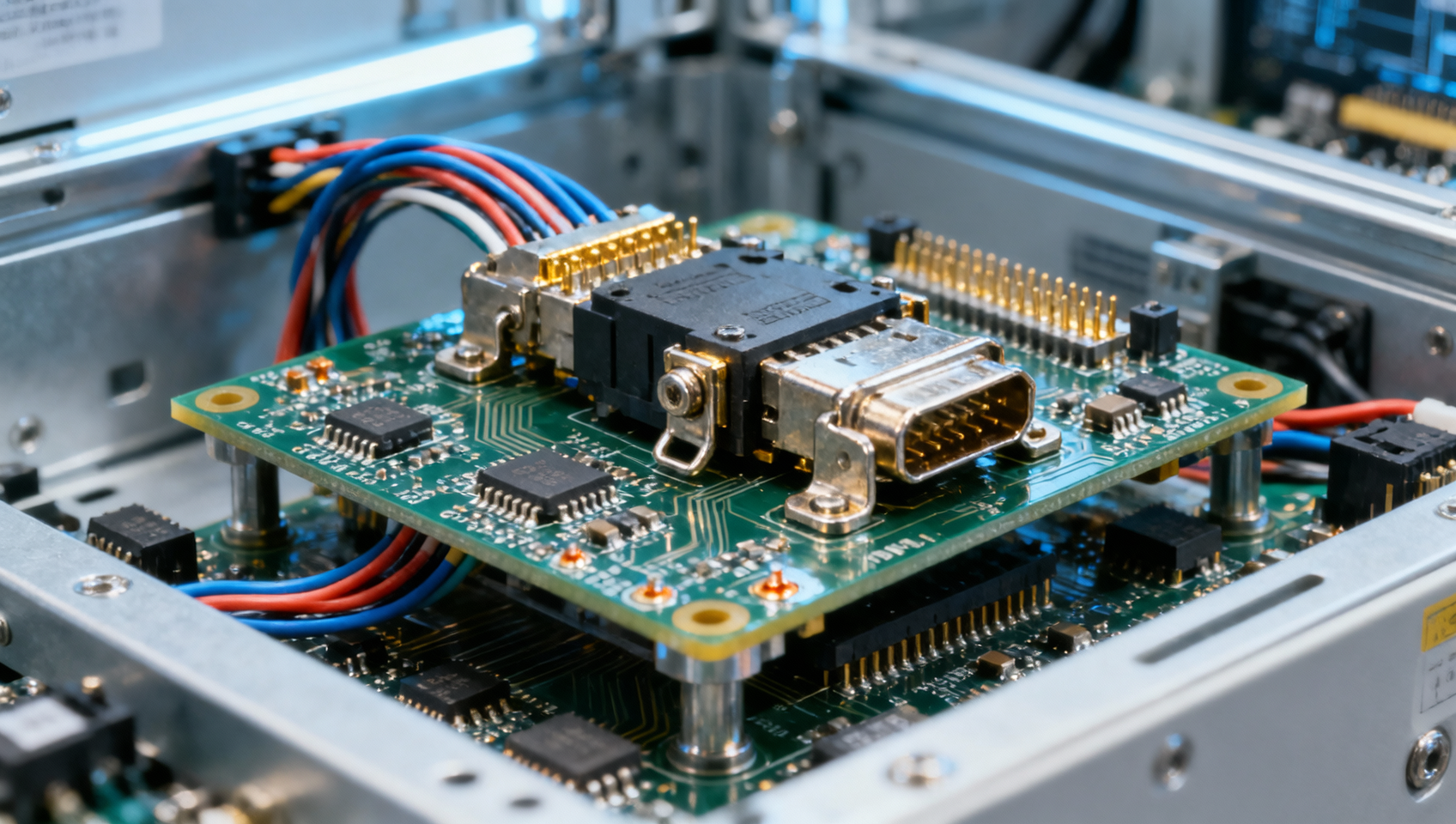
In vibration-critical applications, even a well-designed electrical connector can become unreliable when fit, contact geometry, plating wear, and PCB assembly variables interact under dynamic stress. For engineers, buyers, and quality teams evaluating electronic solutions, understanding how electrical connectors perform alongside relay switches, reflow soldering quality, circuit board assembly tolerances, and EMI shielding is essential to preventing intermittent failure in electronic manufacturing.
Connector reliability in vibration is rarely determined by one factor alone. A fit that appears acceptable during bench inspection can degrade after 10, 50, or 500 hours of cyclic motion, especially when micro-motion, thermal cycling, and stack-up tolerances begin to accumulate. For semiconductor, PCB, SMT, and EMS stakeholders, the real question is not only whether a connector mates, but whether it maintains stable electrical contact resistance under repeated dynamic load.
This matters across industries that depend on compact electronics: industrial control, automotive electronics, medical devices, telecom hardware, aerospace subsystems, and high-density computing equipment. Procurement teams want fewer field returns, quality managers want measurable acceptance criteria, and project leaders need design rules that reduce late-stage validation risk. A weak connector fit can undermine the performance of an otherwise compliant assembly.
For organizations comparing suppliers or validating manufacturing partners, vibration-related connector failure should be assessed as a system issue involving contact design, plating thickness, insertion force, PCB anchoring, solder joint robustness, and enclosure-level vibration transmission. The sections below break down what makes one electrical connector fit unreliable in vibration, how to detect risk early, and what decision-makers should verify before production release.
Why connector fit fails under vibration even when initial mating looks acceptable
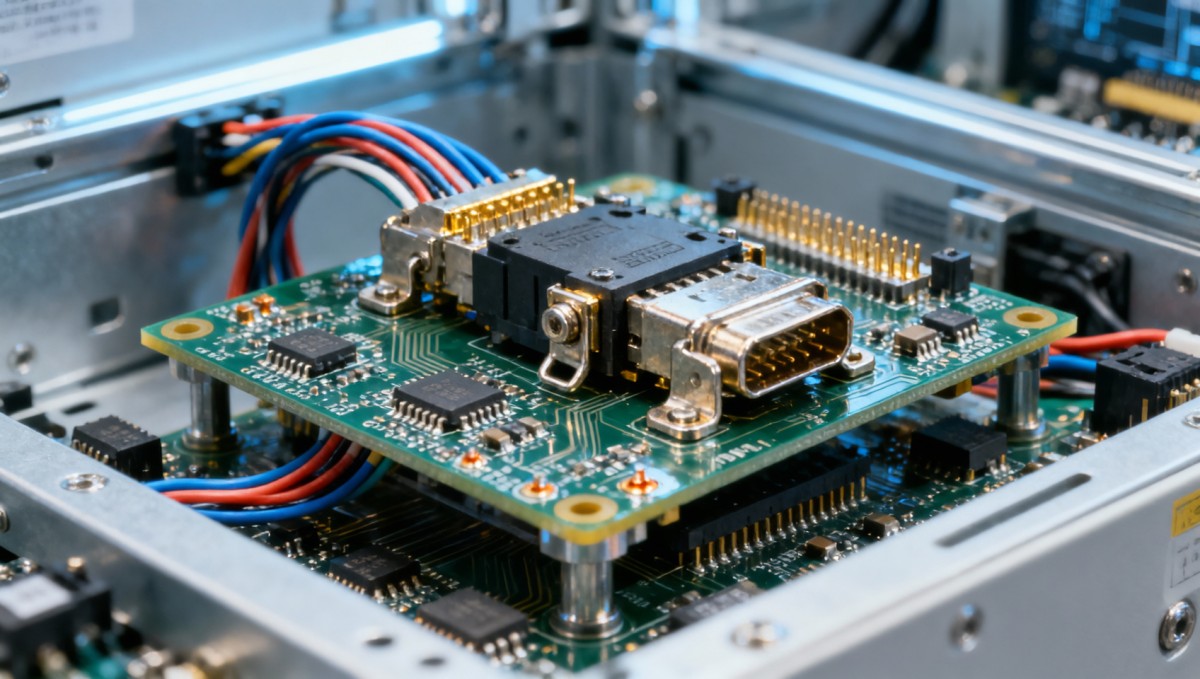
A connector fit becomes unreliable in vibration when the normal force between mating contacts is too low, uneven, or unstable over time. In static conditions, a contact may pass continuity checks at 5V or low-current test levels, yet fail in service because vibration creates micro-separation events measured in milliseconds. Those short interruptions can still trigger data corruption, relay chatter, or control logic errors in sensitive assemblies.
The most common mechanism is fretting motion. Even displacement as small as 10–50 microns can wear plating, generate debris, and increase contact resistance. Once resistance rises beyond the design margin, the connector becomes vulnerable to intermittent faults during shock or sinusoidal vibration. In high-density electronics, this effect is often accelerated by lightweight housings, reduced beam deflection, and aggressive miniaturization.
Fit reliability also depends on tolerance stack-up. A connector pair may be individually within tolerance, but when housing dimensions, terminal position, PCB hole location, and board warpage all move toward the same limit, the effective engagement depth can shrink. Losing even 0.2–0.4 mm of effective engagement may reduce retention and contact wipe enough to compromise performance in a vibration environment.
Another overlooked factor is resonance. If the connector mass, cable harness stiffness, and mounting structure align with excitation frequencies such as 20–200 Hz, dynamic loads can multiply. This is why a connector that survives light random vibration in one product may fail in another product with different bracket geometry or cable routing. The connector cannot be evaluated in isolation from the assembled system.
Key failure mechanisms engineers should investigate
When debugging intermittent connector issues, teams should separate electrical symptoms from mechanical root causes. A continuity drop is only the visible outcome. The underlying cause may be insufficient retention, low spring force, worn plating, poor solder anchoring, or harness-induced side load. Field failures often combine at least 2 or 3 of these factors rather than one isolated defect.
- Low contact normal force causing unstable interface pressure during cyclic motion.
- Reduced mating depth caused by housing tolerance drift, terminal back-out, or PCB misalignment.
- Plating wear or oxidation increasing contact resistance after repeated vibration and temperature exposure.
- Cable pull, side load, or bending moment transferring stress directly into the contact zone.
- Insufficient board retention or solder joint fatigue allowing connector body movement relative to the PCB.
In practice, connectors used near fans, pumps, motors, vehicle chassis, or portable equipment face repeated low-amplitude motion over long service intervals. A design target of 50 mating cycles may be adequate for insertion wear, but still inadequate for a product expected to survive 3–7 years of vibration and thermal cycling. Reliability planning has to consider lifecycle exposure, not just assembly convenience.
Mechanical and material variables that make one connector fit less stable than another
Not all electrical connectors respond to vibration in the same way, even when pitch, current rating, or housing size look similar on paper. Contact geometry, spring design, base alloy, plating system, latch structure, and connector-to-PCB anchoring all influence whether the fit remains stable under dynamic load. This is why cross-sourcing by part appearance alone can create qualification risk.
A high-reliability fit usually combines sufficient contact wipe, controlled insertion force, durable spring properties, and positive retention. For example, dual-beam or box contacts often provide better redundancy than single-point interfaces in vibration-sensitive use cases. Gold thickness, nickel underplate integrity, and substrate hardness also matter because a thin or porous finish can degrade much faster under micro-motion.
Housing material affects dimensional stability. If the polymer creeps under elevated temperature or humidity, terminal position may shift over time. In compact SMT connectors, this can interact with reflow exposure above 235–260°C and later service temperatures of 85–125°C. The result is not always immediate failure, but a gradual reduction in fit consistency and retention margin.
Latch performance is equally important. Friction-only mating can work in low-vibration consumer applications, but many industrial and transport systems need positive locking, secondary assurance, or strain relief. Without those features, the connector may appear electrically acceptable during end-of-line test yet slowly walk out of position after repeated vibration cycles.
Comparing variables that influence vibration reliability
The table below summarizes the mechanical and material variables that most often separate a stable connector fit from a marginal one in electronic manufacturing and field use.
The main conclusion is that fit reliability cannot be judged by nominal dimensions alone. Buyers comparing connector families should request data on retention force, contact resistance stability, plating specification, and test conditions. If those details are missing, the commercial risk is higher even when unit price is attractive.
What procurement and quality teams should verify
- Defined operating vibration profile, such as random or sinusoidal exposure over a stated frequency band.
- Contact resistance before and after environmental testing, not only initial values.
- Retention and unmating force ranges, especially where cable movement is expected.
- Material and plating disclosures aligned with service temperature, humidity, and mating cycle target.
- Compatibility with IPC-Class 3 assembly expectations where mission or uptime risk is high.
For SCM-style benchmarking and supplier evaluation, these checks are more useful than generic “high reliability” claims. The goal is a fit that remains electrically and mechanically stable after manufacturing variation, transport shock, and real service conditions are applied.
How PCB assembly, reflow soldering, and harness design amplify connector fit problems
A connector with acceptable standalone design can still become unreliable because of assembly execution. Reflow soldering profiles that are too aggressive can alter coplanarity, weaken housing stability, or reduce solder joint robustness. Through-hole connectors can also suffer if hole size, solder fill, or support hardware are inconsistent. In either case, the connector body may move slightly relative to the board during vibration, increasing stress at the contact interface.
PCB thickness, pad design, and mounting location matter more than many teams expect. A connector placed near the board edge or on a flexing zone of a thin PCB sees higher dynamic deflection. Even a board deflection of fractions of a millimeter can create cyclic stress at the solder joints. Over time, this shifts the effective fit and can produce intermittent opens, especially in fine-pitch SMT connectors.
Cable harness routing is another major amplifier. If the cable exits at a sharp angle, has insufficient strain relief, or carries excess mass, the connector experiences bending moment and torsion during vibration. This may be worse than the nominal test profile applied to the product. In practical qualification work, a connector may pass board-only vibration but fail once the full harness is installed.
EMI shielding features can indirectly affect fit reliability as well. Shield cans, grounding tabs, and metal shells improve signal integrity, but they also change stiffness, insertion force, and manufacturing tolerance behavior. If the shield structure transfers load unevenly, mating alignment may degrade over repeated use. Mechanical and electrical optimization must be handled together.
Assembly-related risk points across the electronics build process
The table below helps engineering, quality, and sourcing teams identify where connector fit risk is introduced during PCB and cable assembly rather than at connector design level alone.
This comparison shows why connector qualification should include the assembled PCB, cable, and enclosure whenever possible. Testing a loose sample or simplified coupon may miss the very stress path that creates the field problem. A 4-step review covering PCB support, solder quality, cable load, and enclosure alignment often prevents expensive redesigns later.
Practical engineering controls
- Place high-risk connectors away from unsupported PCB edges when possible.
- Add mechanical retention features such as board locks, screws, or brackets for heavier connectors.
- Validate reflow profile against connector material limits, especially for lead-free processes near 245–260°C peak.
- Use harness clamps or tie-down points within a short distance of the connector to reduce moment load.
- Include vibration testing after full final assembly, not only at subassembly stage.
For EMS buyers and product developers, these controls should be discussed early with manufacturing partners. Late discovery of connector movement or solder fatigue can delay validation by 2–6 weeks and raise the cost of corrective action significantly.
How to evaluate and specify connector fit reliability before procurement and qualification
A robust sourcing process for vibration-sensitive connectors should go beyond current rating, pitch, and unit price. Teams should define measurable acceptance criteria before comparing suppliers. That includes contact resistance drift limits, retention force expectations, environmental exposure, mating cycle assumptions, and whether the product must survive transport shock, field vibration, or both. Without clear criteria, supplier quotations are difficult to compare on technical merit.
Engineering and procurement should align on at least 5 decision dimensions: mechanical retention, electrical stability, manufacturability, environmental durability, and documentation transparency. For example, a lower-cost connector may appear competitive until the buyer learns that its test data covers only 10 mating cycles and room-temperature continuity, while the application requires 50 cycles, 85°C operation, and repeated vibration exposure.
Quality teams should also review process capability at the assembly partner. A well-specified connector can still underperform if placement accuracy, solder inspection, and handling discipline are weak. In SMT assembly, terminal coplanarity and solder wetting consistency need close monitoring, while through-hole parts may require solder fill verification and mechanical support checks.
For project managers and business evaluators, the aim is to convert reliability into procurement language: fewer line stoppages, fewer no-fault-found returns, lower service exposure, and shorter qualification loops. A connector chosen with proper fit criteria can reduce failure investigation effort across the entire product lifecycle.
Recommended specification checklist for buyers and evaluators
The checklist below can be used in RFQs, technical reviews, or supplier audits when connector fit reliability under vibration is a known concern.
The most useful supplier responses are specific, test-linked, and traceable to application conditions. If documentation is vague, teams should plan incoming validation with assembled units and realistic harness load. Independent technical benchmarking is especially valuable when sourcing across multiple manufacturing regions or comparing equivalent-looking parts from different suppliers.
Common qualification mistakes
- Approving a connector based only on datasheet ratings without post-vibration resistance data.
- Testing without the actual cable, bracket, or enclosure that changes mechanical load paths.
- Ignoring terminal retention and focusing only on overall housing dimensions.
- Assuming all connectors with the same pitch or footprint perform equivalently in vibration.
- Using pass/fail continuity only, instead of tracking drift, intermittence duration, and physical wear evidence.
Organizations that avoid these mistakes typically shorten root-cause analysis time and improve design transfer confidence. For supply chain and engineering leaders, that means better predictability from prototype through volume production.
FAQ: practical questions about unreliable connector fit in vibration
Teams evaluating connector reliability often face similar questions during design review, sourcing, and failure analysis. The answers below focus on practical decision-making rather than generic connector theory.
How can you tell whether vibration failure is caused by fit rather than by the circuit itself?
Start by correlating electrical interruption with mechanical excitation. If the fault appears during tapping, sweep testing, or harness movement, connector fit is a strong suspect. Inspect for wear marks, plating debris, latch looseness, terminal back-out, and solder joint cracking. A rise in contact resistance after environmental exposure is another useful indicator. In many cases, the circuit is healthy and the interface is unstable.
Which applications need the most conservative connector fit design?
Products exposed to engines, pumps, rotating machinery, road shock, fan vibration, portable handling, or repeated transport deserve stricter criteria. That includes industrial controllers, vehicle electronics, telecom cabinets, aerospace modules, medical transport equipment, and high-density computing hardware with strong airflow. If uptime matters and intermittent failure is costly, connector fit should be treated as a high-priority reliability item.
What test conditions are typically useful during evaluation?
Useful evaluation usually combines vibration, temperature exposure, and post-test inspection. Teams often review continuity behavior during dynamic loading, then measure resistance drift, retention, and visible wear after test. The exact profile depends on the application, but qualification is more informative when it includes the real PCB, real harness, and realistic mechanical support conditions instead of isolated loose parts.
Can a better solder joint compensate for a weak connector fit?
A stronger solder attachment helps stabilize the connector body, but it cannot fully compensate for poor contact geometry, insufficient spring force, or weak latching. Good assembly improves the system margin; it does not eliminate interface weaknesses. The best results come from combining sound connector design, correct PCB support, validated reflow conditions, and proper harness strain relief.
An unreliable electrical connector fit in vibration is usually the result of interacting mechanical, material, and assembly variables rather than a single visible defect. Contact normal force, plating durability, engagement depth, PCB support, reflow quality, and cable load all influence whether the connection remains stable over time. For engineering, sourcing, and quality teams, the most effective approach is to define measurable acceptance criteria, test the connector in its real assembly context, and compare suppliers using documented performance data rather than appearance or price alone.
SiliconCore Metrics supports this kind of decision-making with independent, data-driven evaluation across PCB fabrication, SMT assembly, active and passive components, and thermal packaging. If your team is assessing connector reliability, supply chain risk, or electronics manufacturing quality under demanding environments, contact SCM to discuss benchmarking priorities, obtain a tailored technical review, or explore deeper component and assembly intelligence for your next project.
Recommended News
- ConnectorsHow to compare connector suppliers when quoted prices differSupplier comparison price guide for connector sourcing: compare technical fit, landed cost, quality, lead times, and supplier risk to make confident purchasing decisions.
- ConnectorsHow to assess connector quality when sourcing electronic components in SingaporeElectronic components Singapore sourcing guide: assess connector quality, traceability, plating, mechanical reliability, and supplier controls to reduce costly failures.
- ConnectorsHow to prevent connector corrosion in aquaculture installationsAquaculture installations need reliable connectors. Discover practical ways to prevent corrosion with smart sealing, material selection, cable routing, and maintenance.
- ConnectorsHow to select automotive connector systems for high-vibration environmentsAutomotive connector systems for high-vibration environments: learn how to evaluate contact stability, sealing, locking, harness support, and qualification evidence.
- ConnectorsWhen should you source from a connector systems wholesaler?connector systems wholesaler: learn when wholesale sourcing reduces supply risk, controls total cost, and protects production with qualified, reliable availability.
- ConnectorsHow to select connector systems for telecom exposed to vibrationConnector systems for telecom exposed to vibration demand more than basic specs. Learn how to protect signal integrity, retention, and reliability with smarter selection criteria.