
Corrosion-Resistant Materials for Industrial Enclosures
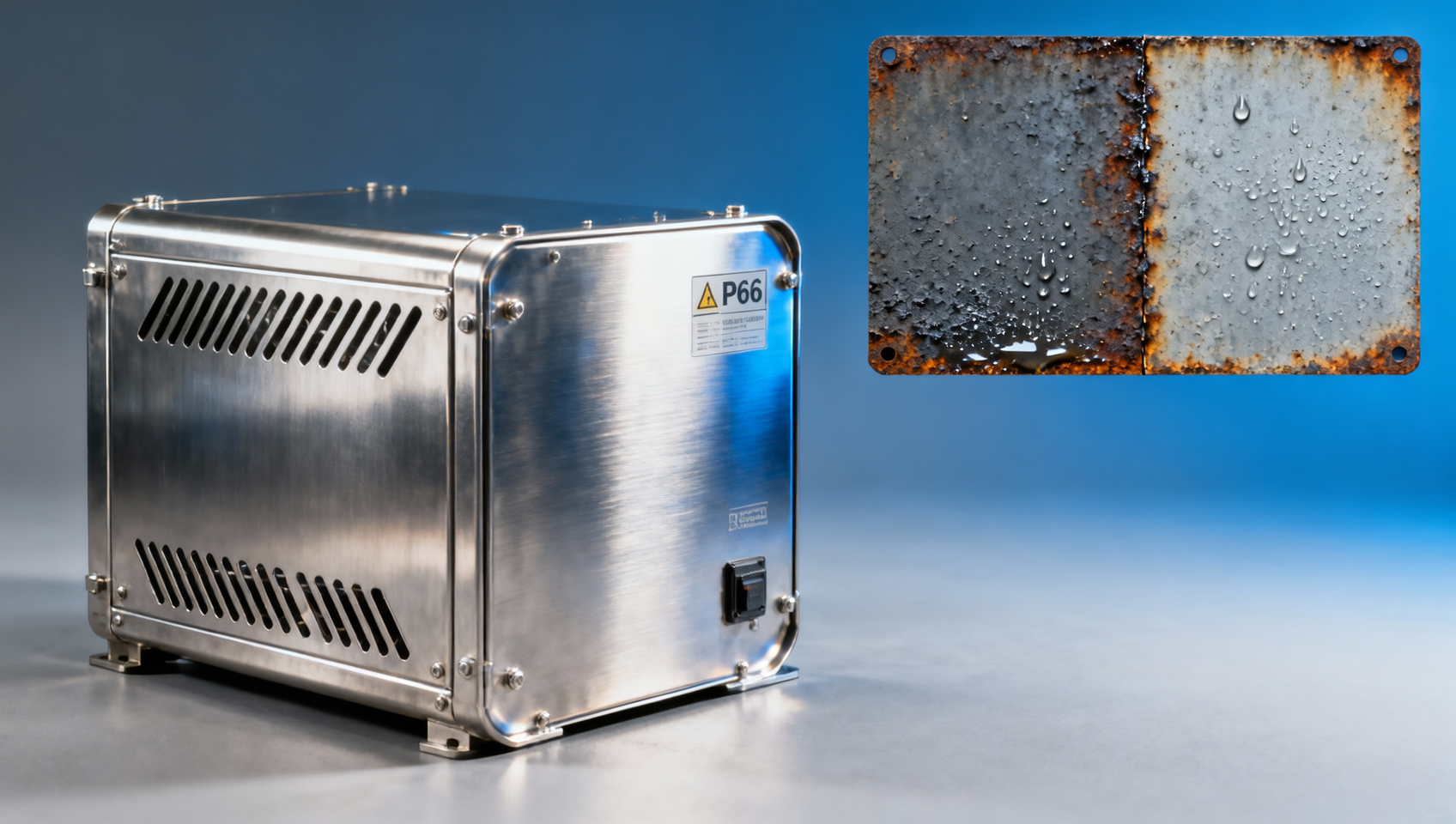
DETAILS
The Critical Role of Corrosion Resistance in Industrial Enclosures
Industrial enclosures serve as the first line of defense for sensitive electronic components against environmental stressors. In semiconductor manufacturing, EMS facilities, and outdoor installations, these protective shells must maintain structural integrity while preventing electromagnetic interference (EMI) and thermal buildup. The selection of corrosion-resistant materials directly impacts operational longevity, with improper choices leading to 30-50% higher failure rates in harsh environments according to industry benchmarks.
Material Degradation Risks in Key Applications
Different industrial settings present unique corrosion challenges that demand material-specific solutions:
- Chemical Processing Plants: Exposure to acidic vapors (pH 2-4) and chlorides accelerates pitting corrosion in standard steel enclosures
- Coastal Installations: Salt spray corrosion rates exceed 0.5mm/year for unprotected aluminum alloys in marine environments
- High-Temperature Electronics: Thermal cycling between -40°C to 85°C induces stress cracking in polymer-based enclosures
Advanced Material Solutions for Industrial Protection
Modern enclosure materials combine corrosion resistance with essential electrical and thermal properties. The following table compares performance across critical parameters:
Material selection requires balancing these properties with cost considerations - 316L stainless steel offers 3-5x better corrosion resistance than standard 304 grade but at a 25-40% premium. For high-thermal applications, aluminum alloys with ceramic coatings provide 85% of stainless steel's protection at 60% of the weight.
Surface Treatment Technologies for Enhanced Protection
Advanced surface treatments can extend enclosure lifespan by 200-300% in corrosive environments. The most effective processes include:
Electrochemical Finishing Options
- Anodizing (Type III): Creates 25-50μm oxide layer on aluminum with 500-1500 hour salt spray resistance
- Electroless Nickel Plating: 5-10μm deposit provides uniform protection for complex geometries
- Zinc-Nickel Alloy Coating: 12-15μm layer achieves 1000+ hours to red rust in ASTM B117 testing
Non-Electrochemical Solutions
For mission-critical applications, combining base material selection with appropriate surface treatments provides optimal protection. A 316L stainless steel enclosure with PVD coating, for example, can achieve corrosion rates below 0.01mm/year in marine environments while maintaining EMI shielding effectiveness above 70dB.
Design Considerations for Corrosion-Resistant Enclosures
Effective enclosure design incorporates material properties with engineering best practices to prevent corrosion initiation points:
Critical Design Factors
- Junction Sealing: IP66-rated gaskets prevent moisture ingress at panel seams
- Thermal Expansion: Allow 0.5-1.2mm clearance per meter for aluminum enclosures
- Galvanic Isolation: Insulate dissimilar metals with 0.5mm PTFE spacers
- Drainage Design: Slope surfaces ≥3° to prevent liquid pooling
Common Design Mistakes
- Using carbon steel fasteners with aluminum enclosures (accelerates galvanic corrosion)
- Inadequate ventilation causing 5-15°C internal temperature rise
- Sharp edges that compromise coating uniformity (maintain ≥0.5mm radii)
Industry Standards and Compliance Testing
Corrosion-resistant enclosures must meet rigorous international standards for industrial applications:
Key Performance Standards
- IEC 60529: IP protection ratings for dust/water ingress
- ASTM B117: Standard salt spray (fog) testing procedure
- ISO 9227: Corrosion tests in artificial atmospheres
- NEMA 250: Enclosure types for industrial locations
Compliance testing typically involves 1000-3000 hour accelerated aging tests simulating 5-10 years of service. For semiconductor cleanrooms, additional EMI shielding validation to MIL-STD-461G may be required, with attenuation levels exceeding 60dB across 30MHz-1GHz.
Procurement and Specification Guidelines
Technical buyers should consider these factors when specifying corrosion-resistant enclosures:
Evaluation Checklist
- Verify material certifications (mill test reports for metals)
- Request third-party corrosion test results
- Confirm coating thickness measurements (±10% tolerance)
- Evaluate supplier's quality control processes (ISO 9001 certification)
- Review installation guidelines for compatibility with existing infrastructure
Leading enclosure manufacturers typically offer 5-10 year warranties against corrosion failure when properly specified and installed. For critical infrastructure projects, consider conducting on-site environmental monitoring (humidity, chemical exposure, temperature fluctuations) for 30-90 days prior to final specification.
Future Trends in Corrosion Protection
Emerging technologies are transforming industrial enclosure materials and protection methods:
Innovative Developments
- Graphene-Enhanced Coatings: 2-3x improvement in barrier properties at 1/3 the thickness
- Self-Healing Polymers: Microcapsule technology that repairs minor damage automatically
- Smart Corrosion Sensors: Embedded IoT devices providing real-time degradation monitoring
- Additive Manufacturing: 3D-printed enclosures with graded material properties
These advancements promise to reduce maintenance costs by 40-60% in next-generation industrial facilities while extending equipment service life beyond 15 years in aggressive environments.
Conclusion: Optimizing Enclosure Performance
Selecting corrosion-resistant materials for industrial enclosures requires careful analysis of environmental conditions, performance requirements, and total cost of ownership. By combining advanced base materials with appropriate surface treatments and proper design practices, engineers can achieve protection levels that meet even the most demanding industrial applications.
For customized material recommendations based on your specific operating environment and technical requirements, consult with our materials engineering specialists. Our team provides data-driven enclosure solutions that balance corrosion protection, thermal management, and EMI shielding performance for mission-critical applications.
Recommended News
- Reflow SolderingHow to compare thermal profiles for reflow process benchmarkingImprove reflow process benchmarking by comparing thermal profiles, process windows, and repeatability. Discover how to evaluate ovens and suppliers with reliable, auditable data.
- Reflow SolderingHow thermal cycling reliability testing reveals solder joint fatigueThermal cycling reliability testing reveals solder joint fatigue through CTE mismatch, crack monitoring, and failure analysis—learn how to build more reliable electronics.
- Reflow SolderingHow automotive PCB assembly processes prevent solder joint failuresPCB assembly process automotive controls help prevent solder joint failures through DFM, paste inspection, precise reflow profiling, and risk-based validation. Learn proven reliability practices.
- Reflow SolderingWhat SMT process capability evidence is needed for AEC-Q100 projects?SMT process capability AEC Q100 evidence: learn the essential controls for reflow, MSL, solder-joint inspection, traceability, and automotive release.
- Reflow SolderingWhen does FR4 PCB assembly need tighter reflow temperature control?FR4 PCB assembly needs tighter reflow control when thermal mass, fine-pitch components, moisture, and reliability demands narrow the process window. Learn key profiling factors.
- Reflow SolderingWhat BGA defects reveal weak SMT process capabilitySMT process capability BGA insights: learn how BGA defects expose weak printing, placement, reflow, and inspection control—and what they mean for reliability, audits, and supplier risk.