
Passive Component Testing: Common Failure Clues
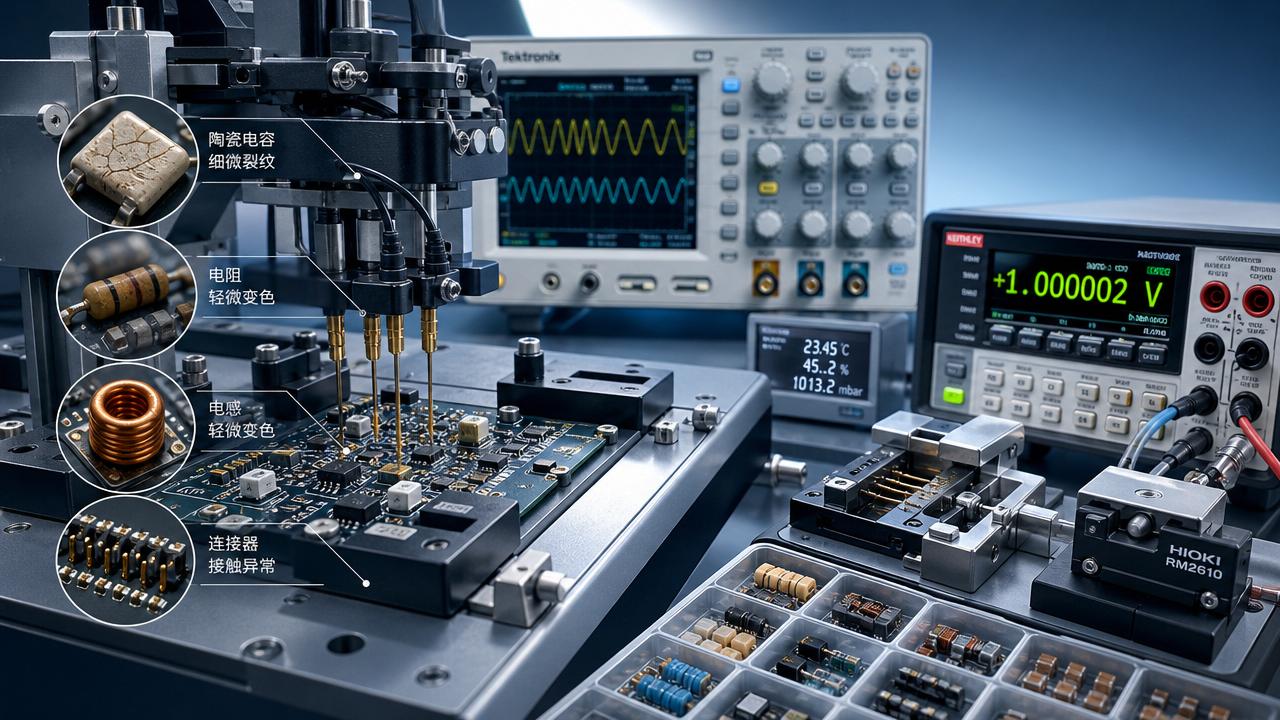
DETAILS
In quality and safety management, early warning signs in passive components can prevent costly failures and compliance risks. Passive component testing helps reveal drift, discoloration, cracking, leakage, and insulation weakness before field failure spreads across boards, assemblies, and regulated electronic systems.
Across the broader electronics and EMS landscape, tolerance windows are narrowing. Higher frequencies, denser layouts, and harsher environments now expose weak capacitors, resistors, inductors, and connectors much faster than older inspection routines allowed.
That shift makes passive component testing more than a lab activity. It becomes an early decision tool for reliability screening, supplier comparison, incoming quality control, and long-term compliance validation across complex global supply chains.
Failure clues are appearing earlier in modern electronic environments
Recent field data shows many passive failures begin with subtle physical or electrical warnings. These clues often appear long before catastrophic opens, shorts, overheating, or unstable circuit behavior become visible in system-level tests.
For this reason, passive component testing now focuses on early-stage indicators. Small shifts in ESR, capacitance, resistance, insulation resistance, or Q factor can reveal process instability, aging, moisture damage, or weak materials.
The trend is especially relevant in automotive electronics, industrial controls, telecom hardware, medical devices, and high-density consumer products. In these segments, one unstable passive part can undermine thermal, signal, and safety performance.
The most common visible and measurable clues
- Color change or discoloration from overheating, contamination, or material degradation
- Cracks in ceramic bodies, coatings, end caps, or solder terminations
- Parameter drift beyond tolerance, including capacitance loss or resistance shift
- Insulation breakdown, leakage current rise, or reduced dielectric strength
- Corrosion, delamination, swelling, or residue linked to moisture and chemistry exposure
- Intermittent readings during vibration, thermal cycling, or bias testing
Why passive component testing is gaining strategic value
The value of passive component testing has increased because modern assemblies operate closer to electrical and thermal limits. Small component weakness now creates larger consequences for uptime, warranty exposure, and compliance documentation.
Independent benchmarking also matters more. As sourcing spans multiple regions and process capabilities vary, similar datasheet claims may hide very different performance under humidity, bias, reflow stress, or long-duration operation.
Key forces behind this change
What common failure clues usually mean in practice
Not every defect signal has the same root cause. Effective passive component testing links each clue to probable material, process, or application stress, helping investigations move faster and corrective action become more targeted.
Drift and instability
Gradual parameter drift often signals aging, moisture absorption, resistor film damage, dielectric change, or repeated thermal loading. It may begin inside tolerance but still indicate reduced life margin.
Discoloration and overheating marks
Darkening, yellowing, or burned coatings suggest overcurrent, local hot spots, poor ventilation, or soldering stress. These signs deserve electrical verification because cosmetic change may hide deeper internal degradation.
Cracking and mechanical damage
Surface cracks in MLCCs and similar devices often relate to board flex, placement force, depaneling stress, or thermal mismatch. Even hairline cracks can trigger intermittent leakage or sudden short failure.
Insulation breakdown and leakage rise
These clues usually point to dielectric damage, contamination, absorbed moisture, or weak sealing. In safety-critical circuits, passive component testing must confirm whether the issue is isolated or systematic.
The impact reaches multiple business and engineering stages
Failure clues found through passive component testing influence far more than component acceptance. They affect design margin assumptions, process settings, supplier qualification, maintenance intervals, and warranty forecasting.
When weak clues are ignored, organizations often pay later through debug delays, batch quarantines, line stoppage, field returns, and repeated validation cycles. Early detection lowers both technical and commercial uncertainty.
Areas most affected
- Incoming inspection: faster segregation of suspect lots
- NPI validation: clearer understanding of stress tolerance before scale-up
- Process control: better links between reflow, handling, and passive damage
- Supplier evaluation: evidence-based comparison beyond catalog specifications
- Compliance records: stronger support for audits and reliability claims
What deserves closer attention in current passive component testing programs
As failure modes diversify, testing programs should not rely on a single acceptance number. Stronger screening combines visual inspection, electrical checks, environmental stress, and trend tracking across lots and time.
Priority checkpoints
- Track baseline values and post-stress shifts, not only pass or fail results
- Compare samples across suppliers under the same load and climate conditions
- Review crack sensitivity after placement, depaneling, and board bending events
- Use insulation resistance and leakage tests in humidity-sensitive applications
- Correlate discoloration and residue with thermal profiles and cleanliness data
- Document lot-level variation to identify emerging process drift early
A practical decision framework for faster response
A structured response helps teams avoid both overreaction and missed risk. Passive component testing becomes more useful when failure clues trigger predefined escalation steps and evidence thresholds.
Independent data will shape the next stage of quality confidence
The next phase of passive component testing will depend on better correlation between lab findings, assembly conditions, and real operating stress. Isolated test numbers are no longer enough for high-reliability decisions.
That is where independent, data-driven benchmarking adds value. SCM supports this need by translating component behavior, process sensitivity, and long-term reliability findings into comparable technical evidence for the electronics supply chain.
For stronger results, review current passive component testing coverage, map the most frequent failure clues, and compare suppliers using identical stress methods. A small improvement in early detection often prevents a much larger downstream loss.
Recommended News
- AOI TestingHow to verify ISO 9001 certification when sourcing electronicsISO 9001 certification electronics: learn how to validate certificates, audit scope and accreditation, and reduce quality risks when sourcing PCBs, EMS, and components.
- AOI TestingHow to verify a UL certified PCB assembly before production approvalUL certified PCB assembly verification made practical: review PCB markings, materials, components, traceability, and safety controls before production approval.
- AOI TestingHow to qualify an AOI inspection supplier for PCB defect detectionAOI inspection supplier qualification guide for reliable PCB defect detection. Learn how to validate detection accuracy, control false calls, assess traceability, and choose dependable support.
- AOI TestingHow to catch solder joint defects in through hole assembly testingThrough hole assembly testing: discover how visual inspection, electrical tests, X-ray, and process controls catch hidden solder joint defects before they cause costly failures.
- AOI TestingWhich AOI inspection standards apply to PCB assembly quality control?AOI inspection standards for PCB assembly: learn how IPC-A-610, J-STD-001, IPC-1782, and ISO 9001 guide defect criteria, traceability, validation, and reliable quality control.
- AOI TestingHow AOI testing supports electronics quality control in the USAElectronics quality control USA teams use AOI testing to catch visible PCB assembly defects early, improve traceability, and strengthen reliable production outcomes.