
How AOI Testing Supports Faster Root Cause Analysis
DETAILS
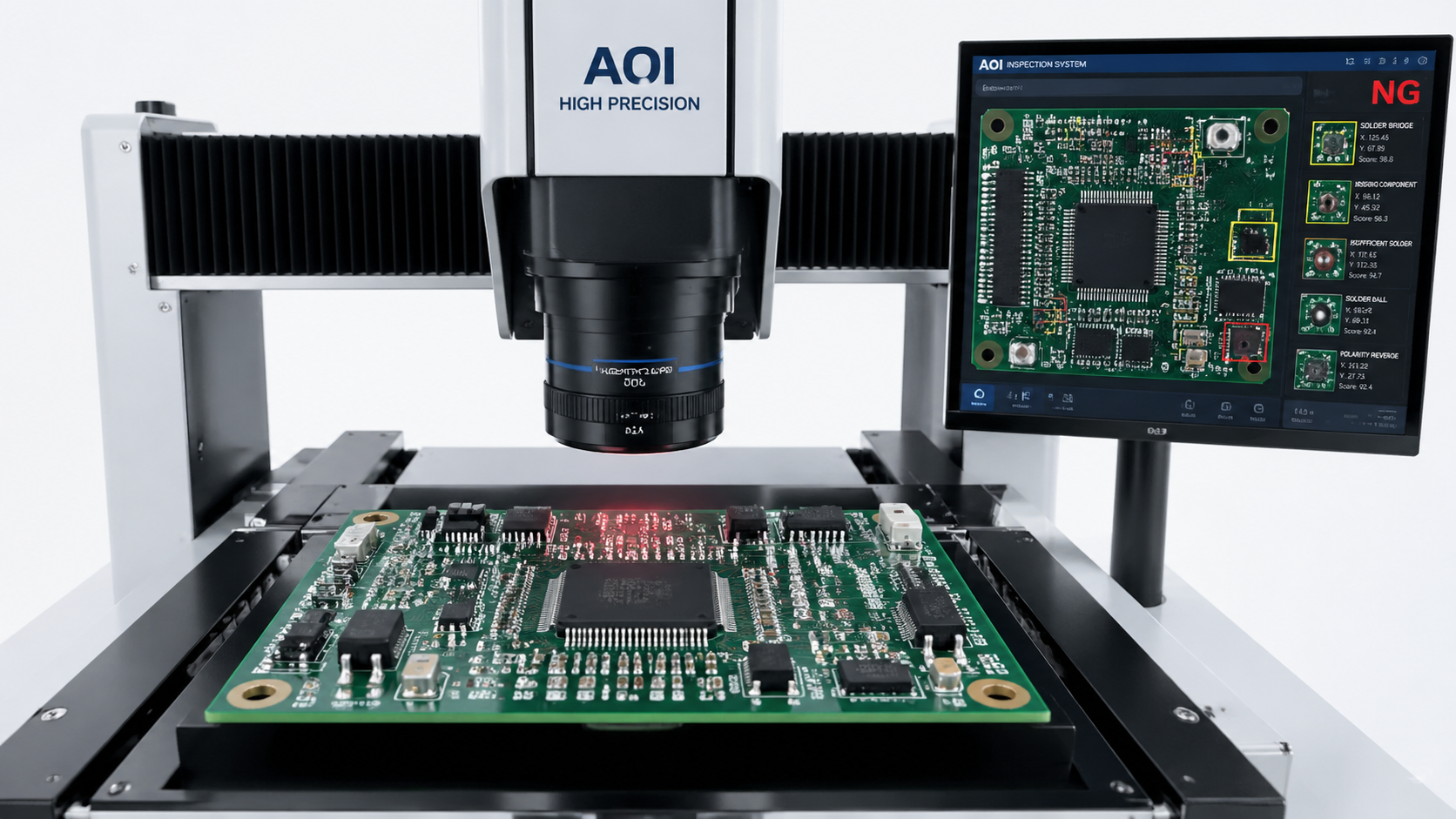
AOI testing accelerates root cause analysis in circuit board assembly by exposing defects early across SMT soldering, reflow soldering, and pick and place machine processes. For teams evaluating electronic parts, circuit components, and semiconductor compliance, it delivers actionable visibility into quality risks, process drift, and thermal management compliance—helping engineers, buyers, and quality managers resolve failures faster and improve yield with confidence.
Why AOI Testing Matters When Failure Analysis Time Is Under Pressure
In modern PCB assembly and EMS operations, root cause analysis is no longer a back-end quality exercise. It affects line uptime, customer returns, engineering validation, and procurement risk. When a solder bridge, insufficient solder joint, polarity error, or placement offset is found late, the investigation often expands from 1 defective board to 3 connected process stages: stencil printing, pick and place, and reflow. AOI testing shortens this cycle by turning visual defects into traceable process evidence at the earliest practical checkpoint.
For operators and quality teams, that means fewer hours spent debating whether a defect came from machine setup, material variation, or thermal profile instability. For technical evaluators, AOI data provides a repeatable basis for comparing suppliers, lines, and lots. For procurement and financial approvers, it reduces the hidden cost of delayed diagnosis, repeated rework, quarantine stock, and field-return escalation. In many assembly environments, one unresolved defect pattern can consume 2–5 business days across engineering, quality, and supplier communication.
AOI testing is especially valuable in assemblies where micro-tolerances, fine-pitch components, and thermal sensitivity leave very little room for manual interpretation. As package density rises and board layouts become more complex, visual inspection by human operators becomes inconsistent over long shifts. AOI introduces standardization. It does not replace engineering judgment, but it improves the speed and quality of that judgment by making defect signatures comparable from batch to batch and line to line.
This is where SiliconCore Metrics (SCM) brings practical value. As an independent engineering repository focused on semiconductor and EMS supply chains, SCM helps global teams interpret AOI findings in the wider context of SMT placement precision, PCB material behavior, component reliability, and compliance requirements such as IPC-Class 3 and ISO 9001 process discipline. Faster root cause analysis starts with better evidence, but better evidence only matters when it is translated into decisions.
What AOI reveals earlier than manual inspection
- Solder-related anomalies such as bridging, opens, insufficient paste spread, and component tombstoning before they become field reliability issues.
- Placement deviations in fine-pitch or miniature packages where offset ranges of fractions of a millimeter can affect signal integrity or later functional testing.
- Pattern-based drift, where recurring defects over 20–50 boards indicate process instability rather than isolated operator error.
- Lot-to-lot variation that may point to supplier consistency issues in solder paste, PCB flatness, component lead condition, or thermal packaging behavior.
How AOI Testing Supports Faster Root Cause Analysis Across SMT Stages
The speed advantage of AOI testing comes from process localization. Instead of treating a failed board as a single event, AOI allows teams to map defects to a defined stage. Was the issue introduced before placement, during placement, or during reflow soldering? That distinction matters because each stage has different corrective actions, different owners, and different cost impacts. A useful root cause workflow usually has 4 steps: detect, classify, correlate, and correct.
In pre-reflow AOI, the inspection focus often centers on component presence, orientation, polarity, placement shift, and visible paste-related abnormalities. This is the ideal point for catching issues that would become much harder to diagnose after solder flow. If a component is rotated by 90° or placed outside the expected alignment window, engineers can investigate nozzle condition, feeder stability, vision calibration, or board support immediately instead of after thermal exposure masks the original evidence.
In post-reflow AOI, the same board can be evaluated for solder joint formation, bridging, wetting appearance, lifted leads, and thermal side effects. When pre-reflow and post-reflow datasets are compared, the investigation becomes much faster. A correctly placed component that later shows insufficient solder often points toward paste volume, pad design, or profile control rather than placement mechanics. This reduces false assumptions and shortens the path to containment.
For project managers and after-sales teams, the practical gain is not only defect detection but escalation control. If the organization can trace a failure to one stage within the first inspection cycle, response time often drops from several production meetings to one technical review window. In fast-moving programs, that can mean the difference between same-shift adjustment and a 1–2 week schedule slip.
Stage-by-stage contribution of AOI to diagnosis speed
The table below helps cross-functional teams understand how AOI testing supports faster root cause analysis at each key SMT checkpoint. This is useful when buyers, engineers, and quality managers need a common framework for supplier evaluation or line improvement planning.
The key interpretation is simple: AOI becomes most powerful when it is not used as an isolated inspection gate. Its real value appears when inspection results are tied to upstream machine settings, incoming material behavior, and downstream reliability concerns. That is why independent benchmarking from SCM can help teams avoid narrow conclusions and focus on the true source of variation.
Why this matters for procurement and supplier reviews
If two contract manufacturers report similar end-of-line yields but one relies heavily on manual rework while the other uses structured AOI checkpoints, their risk profiles are not the same. The first may hide unstable process capability behind labor-intensive correction. The second offers more transparent defect containment and more reliable evidence during audits, NPI ramp-up, and customer complaint investigation.
For sourcing teams, AOI maturity should be reviewed alongside placement accuracy, thermal process control, and component traceability. This is particularly relevant for applications requiring IPC-Class 3 workmanship discipline, environmental stress resistance, or tight electrical performance margins. Fast root cause analysis is not only a quality benefit; it is also a commercial safeguard.
Which Defects and Process Risks Become Easier to Trace with AOI Data?
Not every defect is equally diagnosable, and not every AOI deployment produces useful root cause signals. The most effective programs focus on defect classes that connect clearly to process variables. In electronics manufacturing, 5 categories usually deserve priority: placement errors, solder deposition issues, polarity mistakes, reflow-induced anomalies, and recurring board-specific patterns. These categories cover a large share of actionable faults in standard SMT assembly without requiring speculative interpretation.
Placement-related defects are often the fastest to isolate because they map directly to pick and place conditions. If offsets appear on a limited package family, the team can review feeder pitch, nozzle selection, head calibration, and component packaging stability. If offsets appear across multiple package types on the same board area, PCB support, warpage, or fiducial recognition may be involved. AOI images make these distinctions visible in ways that final electrical test alone cannot.
Solder defects require broader correlation because paste printing, surface finish, pad geometry, and thermal profile all interact. AOI still adds major value by narrowing the search field. For example, insufficient solder concentrated on thermal-mass-heavy pads may suggest profile imbalance or paste transfer inconsistency. Bridging concentrated on fine-pitch leads may point toward stencil aperture design, print registration, or paste rheology. Faster analysis comes from reducing variables, not from guessing faster.
For quality and safety managers, AOI data also improves escalation discipline. When a defect trend exceeds a predefined review threshold over one shift, one lot, or one product family, teams can move from anecdotal concern to documented containment. This matters in regulated or mission-critical applications where visual nonconformance may have long-term reliability implications even if a unit still powers on during initial test.
Common defect types and what they often indicate
The following comparison helps users and evaluators connect visible AOI findings with likely next steps. It is not a substitute for engineering review, but it is a practical screening tool for line teams, sourcing reviewers, and supplier quality staff.
A practical takeaway is that AOI works best when defect coding is standardized. If one plant uses 6 defect codes and another uses 20 loosely defined categories, cross-site comparison becomes difficult. SCM’s value in benchmarking and compliance reporting is to help convert raw defect data into comparable engineering language that supports procurement, supplier selection, and corrective action tracking.
Three warning signs that AOI is underused
- Inspection catches many defects, but the same defect family reappears for 2–3 consecutive lots because findings are not linked to process ownership.
- AOI is used only as a pass/fail screen, with no trend review by package type, board location, or machine program revision.
- Supplier discussions focus on final yield only, without reviewing defect images, defect distribution, and stage-specific evidence.
When these warning signs appear, organizations usually need not just better inspection hardware, but better analytical structure. That is a strategic point for teams deciding whether to upgrade internal controls, compare EMS partners, or request independent technical interpretation from SCM.
What Should Buyers, Engineers, and Quality Teams Evaluate Before Relying on AOI Results?
A common mistake in procurement is to treat AOI capability as a simple yes-or-no item. In reality, the value of AOI testing depends on inspection stage selection, program tuning, defect library quality, image review discipline, and integration with corrective action workflows. Two suppliers may both advertise AOI, yet one produces actionable traceability while the other produces excess false calls that operators learn to ignore.
For technical evaluators, at least 4 questions should be asked during assessment. Where is AOI placed in the line? Which defect categories are actively monitored? How often are programs reviewed after NPI or engineering change? What is the response workflow when recurring defects exceed a threshold? These are operational questions, but they directly affect cost, delivery reliability, and product risk.
For finance and business reviewers, the issue is return on control, not only equipment cost. If AOI reduces diagnosis time from several days to several hours for a recurring defect family, the savings can appear in fewer line stoppages, lower scrap escalation, fewer customer complaint cycles, and less engineering rework. The exact value varies by product complexity and batch size, but the decision should be tied to cost of failure containment, not just inspection hardware price.
SCM supports this evaluation approach because independent benchmarking can separate marketing claims from measurable process discipline. In semiconductor and EMS supply chains, where component integrity, dielectric behavior, placement precision, and thermal management all matter, inspection capability should be reviewed as part of an evidence chain. The stronger the chain, the faster the root cause analysis and the lower the sourcing risk.
Practical procurement checklist for AOI-driven quality control
- Confirm whether AOI is used pre-reflow, post-reflow, or at both points. A two-stage approach generally supports faster isolation than a single end-stage check.
- Review the defect library and escalation criteria. Ask how many core defect classes are tracked and how trend thresholds are defined per lot, shift, or product family.
- Check how AOI findings are tied to machine logs, stencil maintenance, paste control, and reflow profile review. Standalone images are less useful than connected process data.
- Ask for evidence of corrective action closure over a 1–3 month period, especially for repeat defects affecting high-mix or fine-pitch assemblies.
- Verify alignment with customer quality frameworks such as IPC workmanship expectations, ISO 9001 documentation discipline, and lot traceability requirements.
Selection criteria at a glance
The table below can be used during supplier comparison, internal line review, or capital approval discussions. It focuses on decision factors that influence faster root cause analysis rather than inspection visibility alone.
This framework helps different stakeholders speak the same language. Operators focus on detectability, engineers focus on traceability, buyers focus on supplier discipline, and finance teams focus on cost exposure. AOI testing supports faster root cause analysis only when all four perspectives are connected.
Standards, Compliance, and Implementation Realities Teams Often Overlook
AOI testing should not be viewed only as an internal process tool. It also supports external accountability. In programs involving high-reliability electronics, industrial controls, communications hardware, or thermally stressed assemblies, inspection data often becomes part of supplier review, nonconformance response, and quality documentation. While AOI itself is not a certification, its outputs can support disciplined compliance practices when aligned with IPC acceptance language and ISO 9001 document control.
One overlooked implementation issue is threshold management. If acceptance criteria are too loose, AOI misses useful warning signals. If they are too tight, the line suffers from excessive false alarms and operator fatigue. Good practice is to refine thresholds during the first 2–4 production cycles of a new assembly, then review them again after any design revision, package substitution, or thermal profile update. This is especially important in mixed technology boards and high-mix manufacturing.
Another issue is cross-functional ownership. Faster root cause analysis requires more than a quality technician reviewing images. Process engineering, manufacturing, supplier quality, and sometimes procurement must all understand how AOI trends affect decisions. If defect trends are escalated weekly but purchasing continues to approve unstable component sources, the inspection program will identify problems without reducing them.
SCM’s role fits this gap. By converting manufacturing parameters into standardized compliance reports and benchmarking data, SCM helps organizations compare material behavior, SMT precision, and long-term reliability concerns in a language that both engineering and sourcing teams can use. That matters when root cause analysis extends beyond one board and into supplier qualification, cost recovery, or strategic sourcing choices.
Common misconceptions about AOI and root cause analysis
“If AOI is installed, diagnosis will automatically be fast.”
Not necessarily. Speed comes from disciplined review logic, clear defect coding, and linked process records. An unmanaged AOI station can create data volume without insight.
“Final test is enough to find the real problem.”
Final electrical test shows that a board fails or passes. It often does not show whether the cause came from placement, solder formation, thermal stress, or material inconsistency. AOI narrows the search earlier.
“AOI only matters to factory operators.”
In reality, AOI results affect purchasing decisions, customer response speed, warranty risk, and project schedule control. The broader the product risk, the broader the relevance of inspection data.
FAQ and Next Steps for Teams Evaluating AOI-Based Quality Visibility
How does AOI testing help reduce root cause analysis time in practice?
It reduces diagnostic ambiguity. Instead of investigating every possible process variable after a defect escapes, teams can often narrow the issue to 1 of 3 line stages or 1 of 5 common defect families within the same shift. That means fewer open hypotheses, faster containment, and more targeted corrective action.
Is AOI testing useful for procurement and supplier qualification, or only for manufacturing?
It is useful for both. For procurement, AOI maturity indicates how transparent a supplier’s process control really is. A supplier that can show stage-specific inspection data, recurring defect trend management, and documented corrective actions usually presents lower operational risk than one that reports yield without inspection traceability.
What should teams ask when reviewing an EMS partner’s AOI capability?
Ask where AOI is placed, which defect categories are monitored, how programs are updated after engineering changes, and how recurring failures are escalated over a 1–4 week review window. Also ask how AOI data connects to placement records, reflow profiles, and material traceability.
Can AOI replace X-ray, functional test, or engineering analysis?
No. AOI is one part of a broader quality strategy. It is strongest for visible defect detection and process localization. Hidden solder joints, internal package issues, and performance failures may still require X-ray, in-circuit test, functional test, or deeper reliability analysis.
Why choose SCM when evaluating AOI-related process risk?
Because root cause analysis is rarely about inspection alone. SCM combines independent benchmarking across PCB fabrication, SMT assembly, active semiconductors, passive components, and thermal packaging. That allows teams to connect AOI findings with placement precision, dielectric behavior, component reliability, and compliance expectations rather than viewing defects in isolation.
Why choose us for your next technical review or sourcing decision?
If your team needs faster answers on AOI testing, defect traceability, SMT process drift, or supplier quality visibility, SCM can support a more informed decision path. You can consult us on parameter confirmation, supplier comparison, inspection checkpoint planning, compliance reporting expectations, thermal management concerns, and sample or lot-level evaluation frameworks.
For engineering and project teams, we help interpret how AOI data relates to pick and place precision, reflow soldering stability, PCB material behavior, and long-term reliability risk. For buyers and business reviewers, we help translate technical findings into sourcing impact, delivery confidence, and total risk visibility. For quality leaders, we help structure evidence that supports corrective action, qualification review, and ongoing supplier management.
If you are comparing EMS partners, reviewing a recurring defect pattern, or preparing a new product introduction with tight tolerance requirements, contact SCM with your assembly scope, target standards, expected delivery window, and key failure concerns. That discussion can cover defect categories, inspection stage strategy, compliance expectations, benchmarking needs, and quote-related technical requirements before risk becomes cost.
- PCB
- PCB fabrication
- SMT assembly
- active semiconductors
- passive components
- thermal packaging
- signal integrity
- IPC-Class 3
- EMS
- thermal management
- micro-tolerances
- SMT placement
- environmental stress
- compliance reports
- ISO 9001
- component reliability
- SMT process
- PCB assembly
- thermal management compliance
- semiconductor compliance
- circuit board assembly
- pick and place machine
- reflow soldering
- SMT soldering
- electronic parts
- circuit components
- semiconductor
Recommended News
- AOI TestingHow to verify ISO 9001 certification when sourcing electronicsISO 9001 certification electronics: learn how to validate certificates, audit scope and accreditation, and reduce quality risks when sourcing PCBs, EMS, and components.
- AOI TestingHow to verify a UL certified PCB assembly before production approvalUL certified PCB assembly verification made practical: review PCB markings, materials, components, traceability, and safety controls before production approval.
- AOI TestingHow to qualify an AOI inspection supplier for PCB defect detectionAOI inspection supplier qualification guide for reliable PCB defect detection. Learn how to validate detection accuracy, control false calls, assess traceability, and choose dependable support.
- AOI TestingHow to catch solder joint defects in through hole assembly testingThrough hole assembly testing: discover how visual inspection, electrical tests, X-ray, and process controls catch hidden solder joint defects before they cause costly failures.
- AOI TestingWhich AOI inspection standards apply to PCB assembly quality control?AOI inspection standards for PCB assembly: learn how IPC-A-610, J-STD-001, IPC-1782, and ISO 9001 guide defect criteria, traceability, validation, and reliable quality control.
- AOI TestingHow AOI testing supports electronics quality control in the USAElectronics quality control USA teams use AOI testing to catch visible PCB assembly defects early, improve traceability, and strengthen reliable production outcomes.