
What Makes a PCB Quotation Change After Sample Approval?

DETAILS
Even after sample approval, a PCB quotation can still change when real production variables emerge—from stack-up revisions in a high speed PCB or low loss PCB design to material shifts in aluminum PCB, heavy copper PCB, high temperature PCB, or PCB for LED lighting and PCB for military applications. For buyers, engineers, and every PCB OEM or PCB distributor, understanding these cost drivers is essential to controlling risk, quality, and long-term sourcing decisions.
Why does a PCB quotation change after the sample is approved?
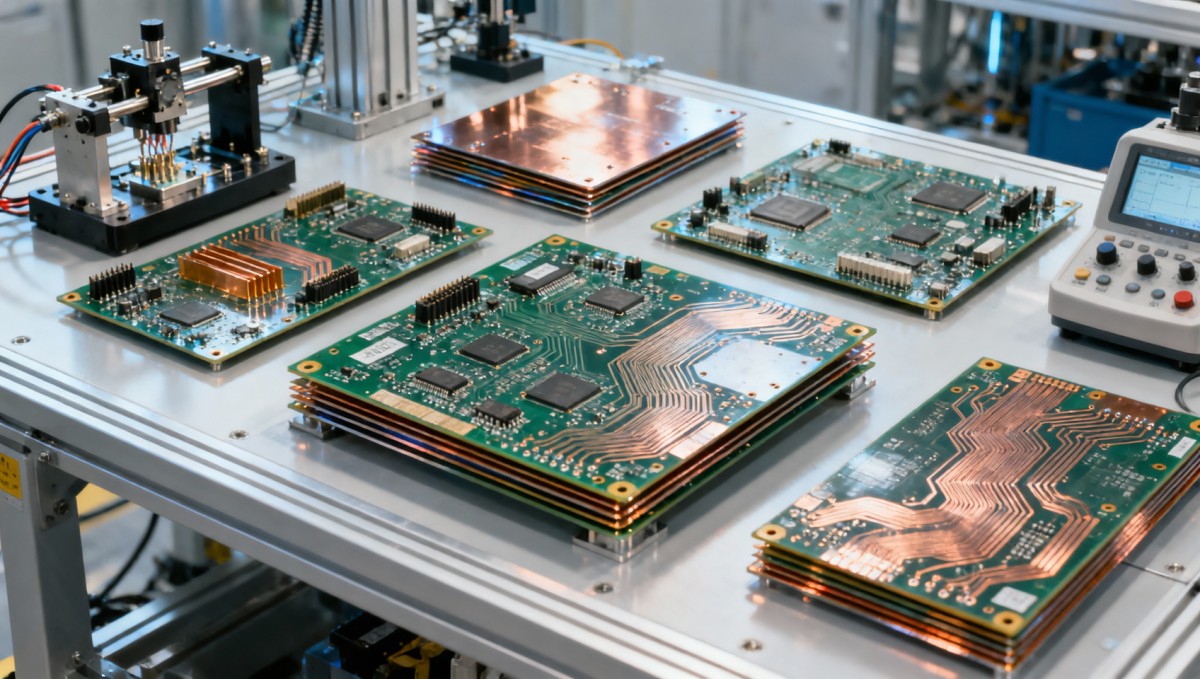
Sample approval confirms that a prototype is functionally acceptable, but it does not always lock every commercial and manufacturing variable for mass production. In PCB fabrication and EMS sourcing, the quotation often reflects a specific set of assumptions: material grade, copper weight, panel utilization, process tolerance, test scope, yield expectation, and delivery schedule. Once any of these assumptions changes, the price can move.
This is especially common when the approved sample was built in a small batch of 5–20 pieces, while the production order shifts to pilot volume, medium volume, or full production. A board that is easy to prototype may require a different lamination sequence, drill strategy, or solder mask control when scaled to hundreds or thousands of units. That transition changes labor intensity, scrap risk, and supplier selection.
For technical evaluators and procurement teams, the key issue is not whether a quotation changes, but why it changes and whether the change is justified. In high speed PCB, low loss PCB, aluminum PCB, and heavy copper PCB programs, a small engineering revision can trigger a measurable cost increase because the bill of materials and process windows become narrower. In regulated sectors, compliance documentation can also expand after sample signoff.
SiliconCore Metrics (SCM) approaches this issue from a data and benchmarking perspective. Instead of treating a PCB as a simple commodity line item, SCM evaluates stack-up integrity, dielectric stability, SMT compatibility, process capability, and supply chain risk. That matters for R&D engineers, project leaders, distributors, and enterprise decision-makers who need cost transparency before they commit to quarterly or annual sourcing plans.
The difference between sample approval and production release
A sample may be approved under controlled conditions, often with relaxed delivery expectations and direct engineering oversight. Production release, by contrast, requires repeatability across a broader process window. This is where hidden quotation risks appear within 3 major layers: engineering definition, manufacturing execution, and commercial terms.
- Engineering definition: final Gerber, stack-up notes, impedance targets, drill chart, surface finish, and acceptance criteria may still be under revision after the prototype stage.
- Manufacturing execution: production panelization, AOI coverage, flying probe versus fixture test, and acceptable yield assumptions may differ from sample practice.
- Commercial terms: Incoterms, MOQ, lead time, packaging level, and warranty expectations can alter the final quotation even when the board design remains similar.
In practical terms, the quotation after sample approval should be viewed as a production quotation review, not a routine administrative update. Companies that skip this review often face cost creep during the first 2–4 weeks of production ramp.
Which production variables most often increase PCB pricing?
The most common price changes occur when the approved sample does not fully reflect the final manufacturing condition. This often happens in multilayer boards, high temperature PCB programs, LED lighting boards with thermal constraints, and military-oriented PCB applications with stricter traceability. Even one change in stack-up or copper distribution can alter material cost, press cycles, and yield.
For sourcing teams, it helps to group quotation changes into 5 core categories: material substitution, process complexity, panel efficiency, quality control scope, and logistics urgency. These categories are broad enough for business teams yet specific enough for technical verification. If a supplier asks for a revised quotation, the request should map to one or more of these categories.
The table below summarizes common variables that change after sample approval and explains how each one affects PCB quotation logic in real production. This is useful for PCB OEMs, contract manufacturers, and distributors comparing suppliers across Asian fabrication hubs.
The pattern is clear: quotation changes usually reflect changes in process risk, not just material price. When a high speed PCB needs tighter dielectric control or a high temperature PCB needs a more stable resin system, the supplier is pricing for manufacturability and repeatability across the full lot, not just for the prototype sample.
Technical triggers that buyers often underestimate
Many purchasing teams focus on visible line items but miss hidden process triggers. For example, an impedance target tolerance such as ±10% may be manageable on a sample lot, but if the production requirement tightens to ±7% or if coupon verification must be included on every panel, the production quotation can increase because process control becomes more demanding.
Drill aspect ratio, via fill requirements, solder mask dam width, and warpage control are also frequent triggers. In SMT assembly programs, a PCB that passes sample build may still require tighter flatness and cleanliness for automated placement at scale. This links PCB quotation to downstream assembly performance, which SCM frequently evaluates in cross-functional benchmarking studies.
Typical red flags after a sample passes
- The approved sample used available stock material, but mass production requires a dedicated material lot with longer lead time of 2–6 weeks.
- The sample was manually optimized by a senior CAM engineer, but the production version needs a revised panel design for stable throughput.
- The sample did not include full reliability verification, while the production order now requests thermal stress, solderability, or documentation packages.
Each of these red flags can be reasonable. The problem arises when they are discovered late, after budget approval or project scheduling has already been fixed.
How should engineering, quality, and procurement review a revised PCB quotation?
A revised quotation should never be reviewed by procurement alone. The most reliable method is a 4-step cross-functional review involving engineering, quality, supply chain, and project management. This prevents a low upfront quote from turning into delayed delivery, higher rework cost, or unstable field performance later.
For all-industry buyers, the review process should match the board’s application risk. A consumer control board and a PCB for military applications do not require the same reporting depth. Likewise, a PCB for LED lighting may prioritize thermal path consistency, while a low loss PCB for communication hardware may prioritize dielectric predictability and insertion loss behavior.
The table below provides a practical evaluation framework that teams can use when a supplier revises pricing after sample approval. It helps distinguish a justified engineering-driven change from an unclear commercial adjustment.
This framework is effective because it turns a vague pricing discussion into a documented decision process. It also helps distributors and business evaluators compare multiple factories on the same basis instead of relying on headline unit price alone.
A practical 4-step review flow
- Confirm what changed since the sample stage: drawings, materials, tolerances, test requirements, or quantities.
- Separate one-time NRE effects from recurring unit-price effects to avoid confusion in total cost planning.
- Check whether the revised quote supports the real application environment, such as thermal cycling, high current, or controlled impedance.
- Request written assumptions so future batches follow the same baseline and do not trigger repeated commercial disputes.
SCM can support this review by benchmarking fabrication parameters, dielectric behavior, SMT compatibility, and compliance reporting expectations. That independent perspective is valuable when internal teams need a neutral technical basis for supplier comparison.
What cost drivers differ by PCB type and application?
Not every PCB quotation changes for the same reason. The dominant cost drivers differ across board categories. In a high speed PCB, signal integrity and dielectric consistency often dominate. In an aluminum PCB, substrate selection and thermal path structure can matter more. In a heavy copper PCB, etching complexity and current-carrying geometry usually become the major pricing factors.
This distinction matters for application teams because a cost increase may be justified in one design but unnecessary in another. For example, a low loss PCB used in high-frequency digital or RF-adjacent architectures may benefit from upgraded laminate, while a conventional control board may not gain measurable value from the same material change.
The comparison below helps users, technical reviewers, and procurement managers identify which quotation changes should receive the closest scrutiny by PCB type.
A useful rule is to evaluate cost changes in relation to failure consequences. If a revised quotation improves thermal reliability, impedance consistency, or process traceability in a mission-critical application, it may reduce total lifecycle cost even if the unit price rises. If it adds little technical value, it should be challenged.
Where SCM adds value in technical comparison
SCM’s independent reports help teams compare materials and process claims with measurable engineering criteria. For example, in multilayer PCB reviews, dielectric constant consistency, thermal behavior, and fabrication precision are often more informative than generic supplier marketing statements. That allows procurement teams to align commercial decisions with actual application risk.
This is particularly relevant when multiple suppliers propose different “equivalent” materials or process routes after sample approval. Equivalent on paper does not always mean equivalent in long-term electrical, thermal, or assembly behavior.
How can buyers reduce quotation surprises before volume production?
The best way to control PCB quotation changes is to improve definition before the sample stage ends. Many cost surprises can be reduced if the team finalizes 6 key items before production release: stack-up, material class, copper weight, finish, test scope, and delivery condition. These six items represent the baseline assumptions behind most PCB fabrication quotations.
Buyers should also distinguish between prototype convenience and production discipline. A sample approved in 7 days with flexible substitutions may not represent the real cost of a 1,000-piece production lot with fixed compliance requirements. That is why project managers and sourcing teams should treat sample approval as a technical milestone, not the final commercial lock unless all variables are frozen in writing.
A practical procurement checklist can reduce negotiation friction and shorten quotation review cycles from several rounds to a more manageable 1–2 documented revisions.
Pre-production checklist for PCB OEMs, buyers, and distributors
- Freeze the final stack-up and identify whether any alternate laminate is acceptable for supply continuity.
- Confirm whether the approved sample used the same surface finish, copper weight, and hole structure intended for mass production.
- Define acceptance criteria using common frameworks such as IPC-related workmanship expectations and documented internal quality limits.
- Clarify test coverage, including electrical test method, impedance verification, microsection needs, and traceability requirements.
- Lock commercial assumptions such as MOQ, packaging type, lead time, and expedited production charges.
This checklist is especially useful in cross-border sourcing where engineering intent and commercial interpretation can drift between R&D teams, local purchasing offices, and offshore fabrication partners. SCM helps bridge that gap with standardized technical reports and supply chain intelligence that support clearer supplier communication.
Common misconceptions that lead to avoidable cost changes
“Sample approval means the price is fixed.”
Not necessarily. The price is only fixed if the production assumptions are fixed. Any revision to material, tolerance, quantity, or compliance scope can legitimately reopen the quotation.
“A lower quote is always better if the board passed testing.”
A low quote may exclude process controls that become necessary in repeat production. Field reliability, SMT yield, and traceability gaps can cost more than the initial savings.
“Equivalent material is good enough.”
Equivalent should be verified against electrical, thermal, mechanical, and supply chain criteria. For low loss PCB and high temperature PCB programs, small material differences can matter.
FAQ and next step: what should you ask before accepting a revised quote?
Teams evaluating a revised PCB quotation usually need fast answers to a small number of high-impact questions. The goal is to determine whether the price change reflects a real production requirement or an avoidable ambiguity. The following FAQ addresses the most common issues raised by engineers, purchasers, quality managers, and business decision-makers.
How much can lead time affect a PCB quotation after sample approval?
Lead time can materially affect price, especially when standard fabrication windows such as 10–15 working days are compressed into urgent 3–7 day schedules. Expedite charges may come from overtime, lower panel efficiency, priority line scheduling, or premium freight. If delivery changes, request a separate line item so the long-term unit price remains transparent.
What documents should be rechecked before approving the updated quotation?
Recheck at least 5 items: final fabrication drawing, stack-up sheet, material specification, test and inspection plan, and commercial assumptions. If the product is used in demanding environments, also review traceability format, packaging standard, and any reliability screening requirements. Missing documentation is one of the main causes of repeated quotation revisions.
When is a price increase reasonable for a high speed PCB or low loss PCB?
A price increase is usually reasonable when dielectric material changes, impedance tolerance becomes tighter, layer count or reference plane design changes, or additional verification such as coupon testing is added. In these cases, the cost rise is linked to measurable electrical control. It is less reasonable when the supplier cannot identify which process variable changed.
Can SCM help compare supplier quotations without taking a manufacturing side?
Yes. SCM’s role as an independent technical think tank and engineering repository is useful when organizations need neutral benchmarking across PCB fabrication, SMT assembly, active semiconductors, passive components, and thermal packaging. That support is valuable for supplier screening, parameter confirmation, compliance review, and total-risk comparison rather than simple price matching.
Why choose us for PCB quotation review and sourcing intelligence?
SCM helps global engineers, procurement teams, quality leaders, and project owners turn quotation discussions into evidence-based decisions. We focus on the variables that actually change cost and risk: stack-up design, dielectric behavior, SMT compatibility, tolerance control, thermal management, compliance reporting, and supply chain transparency across Asian precision manufacturing networks.
If you are reviewing a revised quote for a high speed PCB, low loss PCB, aluminum PCB, heavy copper PCB, high temperature PCB, PCB for LED lighting, or PCB for military applications, you can consult SCM on specific topics such as parameter confirmation, material comparison, production readiness, test scope, delivery cycle, sample-to-production gap analysis, and quotation communication with suppliers. That makes the next negotiation more technical, more defensible, and more aligned with long-term sourcing goals.
Recommended News
- HDI TechnologyHow to vet PCB suppliers in a directory before requesting quotesPCB suppliers directory guide: learn how to verify capabilities, certifications, traceability, and quote assumptions before selecting a reliable PCB partner.
- HDI TechnologyHow UAE engineering data repositories improve design traceabilityEngineering data repository UAE solutions strengthen design traceability by linking requirements, revisions, supplier evidence, and manufacturing data. Explore practical ways to reduce risk and accelerate releases.
- HDI TechnologyHow to verify UL recognition for printed circuit boardsPrinted circuit boards UL verification made clear: learn how to check UL marks, file numbers, factory scope, stack-ups, and traceability for audit-ready compliance.
- HDI TechnologyMulti layer PCB design guide for controlling signal crosstalkMulti layer PCB design guide for controlling signal crosstalk with stackup, spacing, return-path, and validation strategies for reliable high-density boards.
- HDI TechnologyHow tighter manufacturing tolerances change HDI PCB pricesMicro tolerance manufacturing price explained: see how tighter HDI PCB tolerances affect yield, inspection, supplier options, and sourcing costs.
- HDI TechnologyHow automotive PCB impedance control prevents signal failuresAutomotive PCB impedance control prevents reflections, noise, and timing errors in ADAS, EV, and infotainment systems. Learn how to build reliable signal paths.