
Tea Processing Machines Wholesale: Margin and Supply Checks
DETAILS
For distributors evaluating tea processing machines wholesale opportunities, the difference between a profitable line and a risky inventory bet often comes down to verified margins, supplier stability, and equipment consistency. As global buyers demand faster throughput, cleaner processing, and dependable after-sales support, dealers must look beyond quoted prices and assess factory capacity, component quality, certification readiness, and delivery reliability. This guide outlines the key checks that help agents and wholesalers compare suppliers, protect margins, and build a scalable product portfolio in the tea machinery market.
Tea machinery may appear less complex than semiconductor or EMS equipment, yet the commercial logic is similar: tolerances, component sourcing, thermal behavior, repeatability, and compliance documentation determine long-term value. SiliconCore Metrics applies a technical benchmarking mindset to supply-chain decisions, helping distributors judge machinery as engineered assets rather than simple catalog items.
Why wholesale margin checks matter before supplier selection
In tea processing machines wholesale, a low ex-factory price can hide costs that appear after the first shipment. Spare parts delays, unstable heating modules, poor wiring, weak packaging, and unclear manuals can reduce distributor profit within 3–6 months.
Dealers should calculate margin from the landed and supported cost, not only from the machine invoice. Freight, customs, local testing, warranty reserves, installation time, and technician training can change a seemingly attractive 25% margin into a fragile 8% margin.
Key margin components for distributors
A practical margin model should include at least 6 cost layers. These layers help agents compare suppliers on a like-for-like basis and avoid underpricing when building dealer networks.
- Factory price by configuration, including motor grade, heating system, stainless steel thickness, and control panel type.
- Packaging and inland freight to port, especially for rolling, drying, sorting, and withering equipment.
- Ocean or air freight, import duties, destination port charges, and warehouse handling fees.
- Commission, distributor rebate, showroom cost, local marketing, and demonstration expenses.
- Warranty reserve, usually 2%–5% of selling price for new product lines without field history.
- After-sales labor, parts inventory, remote support, and technician travel within the first 12 months.
A realistic gross margin target
For entry-level machinery, distributors often require a 15%–25% gross margin after landed cost. For automated lines or customized systems, a 25%–40% margin may be necessary because installation, commissioning, and troubleshooting are more resource-intensive.
If a supplier offers unusually low pricing, ask which components were downgraded. In electromechanical machinery, savings may come from thinner stainless steel, lower-grade bearings, reduced insulation, or simplified controllers.
Supplier capability checks for tea processing machines wholesale
A wholesale partnership should be evaluated through capacity, process control, component traceability, documentation, and service readiness. The most reliable factories can explain not only what they make, but how they verify consistency batch after batch.
This is where technical due diligence becomes valuable. Similar to PCB fabrication or SMT assembly audits, machinery sourcing should examine repeatable process evidence rather than relying only on brochures, sample videos, or trade-show claims.
The table below summarizes practical checks that distributors can use when comparing tea processing equipment suppliers across different regions and price levels.
The strongest suppliers usually provide evidence before negotiation reaches final pricing. If a factory cannot share basic testing records, component lists, or delivery history, distributors should treat the quotation as incomplete.
Factory audit questions that reveal real capability
A useful audit does not need to be complicated. Even a remote review with 12–15 targeted questions can uncover whether a supplier is suitable for repeat wholesale orders.
- How many units of each machine type can be produced in 30 days?
- Which components are standardized across models to reduce spare-part complexity?
- What is the normal trial-run time before packing: 2 hours, 4 hours, or longer?
- Can the supplier provide photos or videos of inspection for every shipment?
- What are the typical warranty exclusions and claim procedures?
For agents entering tea processing machines wholesale for the first time, these questions create a baseline. Later, they can be expanded into a structured supplier scorecard.
Equipment categories and configuration priorities
Tea processing lines differ by tea type, region, processing method, and factory scale. A distributor should not build inventory from random models; the portfolio should match clear end-user scenarios.
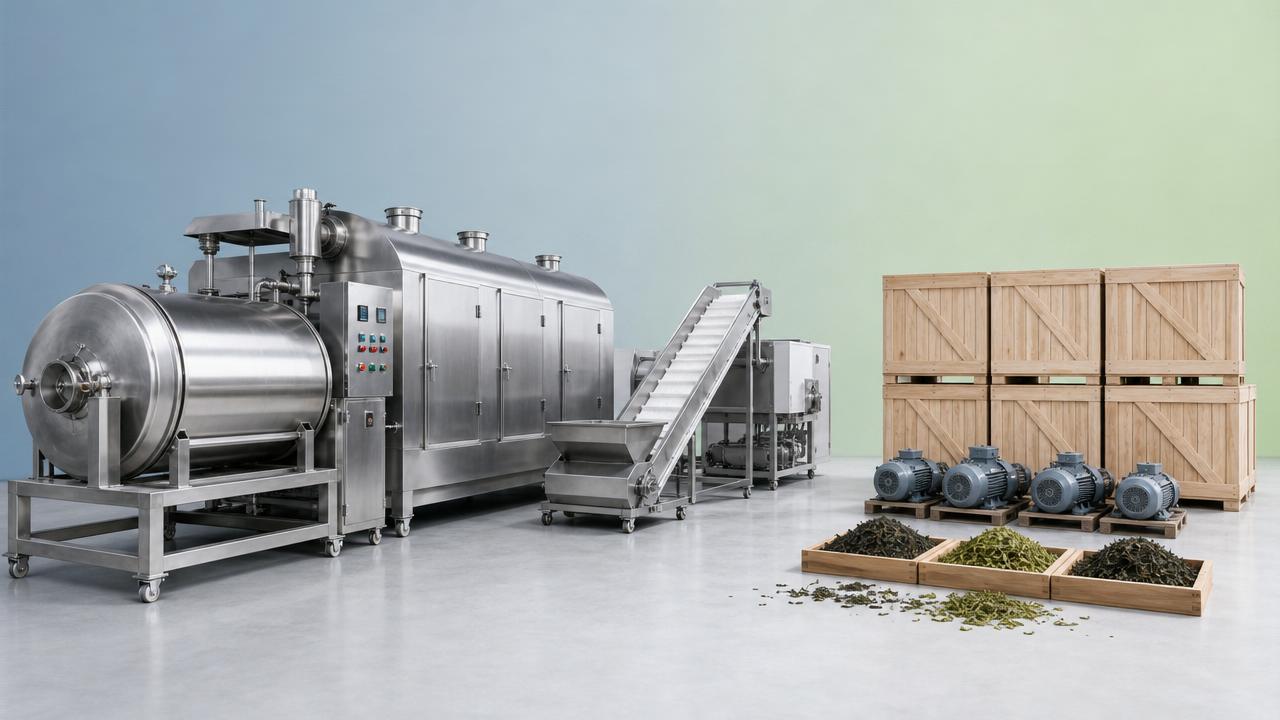
Common wholesale categories include withering equipment, fixation machines, rolling machines, fermentation units, dryers, sorting machines, and packaging support equipment. Each category has different power, footprint, and service requirements.
Configuration factors that affect resale success
For regional dealers, the best-selling model is not always the most advanced model. It is often the machine with stable output, familiar maintenance, and a payback period that farmers or small processors can understand.
- Capacity: small units may process 5–30 kg per batch, while larger lines may exceed 100 kg per batch.
- Power demand: many machines fall within 1.5 kW–15 kW, but dryers and integrated systems may require more.
- Material contact surfaces: food-contact stainless steel is preferred for hygiene, cleaning, and buyer confidence.
- Control method: mechanical controls are easier to repair, while digital controls improve repeatability and batch records.
- Local voltage: confirm 220 V, 380 V, 50 Hz, or 60 Hz before production to avoid costly rework.
Avoid over-customization in early wholesale orders
Customization can win project business, but it complicates inventory. New distributors should keep at least 70% of initial stock in standardized configurations and reserve customization for confirmed buyers.
A practical first order may include 3–5 core models, spare parts for 6–12 months, and one demonstration unit for technician training. This reduces cash pressure while keeping sales coverage broad.
Margin protection through technical and commercial benchmarks
Margin protection begins before the purchase order. Distributors need a benchmark that compares price against measurable value, including throughput, energy use, cleaning time, operator skill, and service workload.
SCM’s experience in high-precision supply-chain intelligence shows that standardized comparison prevents subjective buying. The same principle applies when selecting tea machinery suppliers for wholesale distribution.
The following table provides a practical framework for scoring supplier offers before committing to tea processing machines wholesale inventory.
A benchmark table should not replace negotiation, but it changes the negotiation focus. Instead of asking only for a lower price, distributors can request better parts, stronger packaging, or faster support.
How to set a defensible resale price
Resale price should reflect machine value, local support, and buyer risk reduction. For example, two similar dryers may have a 12% price difference, but the higher-priced unit may require fewer service visits.
A distributor can justify premium pricing by offering installation checklists, operator training, local spare parts, and response within 48 hours. These services convert equipment into a complete solution.
Quality control and delivery checks before shipment
Pre-shipment inspection is essential for tea processing machines wholesale because one defective batch can affect multiple downstream dealers. Inspection should cover appearance, function, safety, packaging, and documentation.
For mixed-container orders, create a checklist for every model. A typical inspection can be completed in 1–2 days, depending on order size and whether powered testing is required.
A 5-step pre-shipment control process
- Confirm configuration against the purchase order, including voltage, plug type, motor power, and language labels.
- Inspect structural parts, weld quality, guards, moving components, fasteners, and surface finishing.
- Run functional tests for rotation, heating, airflow, speed adjustment, emergency stop, and control response.
- Check accessories, spare parts, manuals, packing list, and maintenance documents before sealing crates.
- Record photos, videos, serial numbers, and crate marks for after-sales traceability.
Packaging should be treated as a profit issue
Machinery damage during transport can eliminate the profit from several units. Reinforced wooden crates, moisture protection, fixed internal supports, and clear lifting marks are basic safeguards for export shipments.
For larger equipment, confirm whether the supplier uses anti-rust treatment and shock-resistant fastening. If crates are stacked, confirm load limits and container loading photos before departure.
After-sales readiness for distributors and agents
A profitable wholesale line depends on service readiness. Buyers of tea processing equipment often need help with installation, operator adjustment, cleaning procedures, and seasonal maintenance.
Distributors should prepare a service package before the first marketing campaign. This package may include spare parts, troubleshooting scripts, installation videos, and a maintenance calendar for 3, 6, and 12 months.
Recommended spare-part planning
For a new product line, hold spare parts equal to roughly 3%–6% of the first order value. Prioritize consumable and failure-prone items that are difficult to source locally.
- Belts, chains, bearings, seals, switches, fuses, heating elements, and standard fasteners.
- One or two control units for popular models, especially where downtime is costly.
- Cleaning brushes, filters, guards, and safety-related parts for customer maintenance.
- Clear part codes and photos to prevent ordering mistakes during urgent repairs.
Training creates repeat orders
Dealers that train end users usually receive fewer complaints and more referrals. A 2-hour operator session can cover loading volume, temperature settings, cleaning, lubrication, and shutdown procedures.
When suppliers provide structured training materials, distributors can scale faster. The same content can support branch dealers, field technicians, and new agents in different markets.
Common mistakes in wholesale machinery sourcing
Many distributors lose margin because they focus on the initial order and ignore operational risk. The most expensive mistake is not overpaying by 5%; it is buying machines that cannot be supported locally.
Tea processing machines wholesale requires disciplined supplier selection. A dealer must think like a procurement engineer, sales manager, and service planner at the same time.
Mistakes to avoid
- Choosing the lowest quotation without checking landed cost, warranty burden, and local repair complexity.
- Importing too many customized models before validating demand through 2–3 customer segments.
- Ignoring voltage, frequency, plug standards, documentation language, and safety expectations.
- Failing to secure spare parts before selling machines to remote agricultural regions.
- Depending on verbal supplier promises instead of written specifications, inspection records, and service terms.
When to walk away from a supplier
Distributors should reconsider cooperation when a supplier refuses basic verification, changes components without notice, avoids written warranty terms, or cannot provide shipment photos and serial records.
A delayed order can be managed with communication. An unstable supplier creates hidden exposure across inventory, customer reputation, cash flow, and dealer relationships.
Building a scalable wholesale portfolio
A scalable portfolio combines fast-moving entry models, mid-range machines with better margins, and project-based systems for larger processors. This structure balances cash flow and brand positioning.
Start with market segmentation. Small farms may prioritize price and easy repair, while commercial processors may value automation, throughput, energy efficiency, and documented process repeatability.
A practical 3-tier product strategy
- Basic tier: 2–3 durable models for small processors, simple controls, common spare parts, and quick delivery.
- Professional tier: higher capacity machines with improved control accuracy, better finishing, and stronger support packages.
- Project tier: integrated processing lines requiring layout review, installation planning, and supplier engineering support.
This tiered approach helps distributors present choices without confusing buyers. It also supports different margin bands and reduces dependence on a single machine category.
Final procurement guidance for distributors
Tea processing machines wholesale can become a strong B2B line when distributors treat sourcing as a structured evaluation process. The winning approach combines margin modeling, supplier audits, configuration discipline, inspection, and after-sales planning.
SCM’s data-driven benchmarking perspective helps procurement teams move beyond price comparison and evaluate machinery through measurable risk factors. That discipline is especially useful when dealing with new factories, mixed orders, and growing dealer networks.
For distributors, agents, and wholesalers preparing their next sourcing plan, the priority is clear: verify the supplier, calculate the true cost, protect service capacity, and build a portfolio that customers can trust.
If you need a structured supplier checklist, margin review, or technical comparison framework for tea processing machines wholesale, contact us to discuss product details and get a tailored evaluation plan.
Recommended News
- HDI TechnologyHow to vet PCB suppliers in a directory before requesting quotesPCB suppliers directory guide: learn how to verify capabilities, certifications, traceability, and quote assumptions before selecting a reliable PCB partner.
- HDI TechnologyHow UAE engineering data repositories improve design traceabilityEngineering data repository UAE solutions strengthen design traceability by linking requirements, revisions, supplier evidence, and manufacturing data. Explore practical ways to reduce risk and accelerate releases.
- HDI TechnologyHow to verify UL recognition for printed circuit boardsPrinted circuit boards UL verification made clear: learn how to check UL marks, file numbers, factory scope, stack-ups, and traceability for audit-ready compliance.
- HDI TechnologyMulti layer PCB design guide for controlling signal crosstalkMulti layer PCB design guide for controlling signal crosstalk with stackup, spacing, return-path, and validation strategies for reliable high-density boards.
- HDI TechnologyHow tighter manufacturing tolerances change HDI PCB pricesMicro tolerance manufacturing price explained: see how tighter HDI PCB tolerances affect yield, inspection, supplier options, and sourcing costs.
- HDI TechnologyHow automotive PCB impedance control prevents signal failuresAutomotive PCB impedance control prevents reflections, noise, and timing errors in ADAS, EV, and infotainment systems. Learn how to build reliable signal paths.