
Coffee Bean Processing Equipment Selection Tips
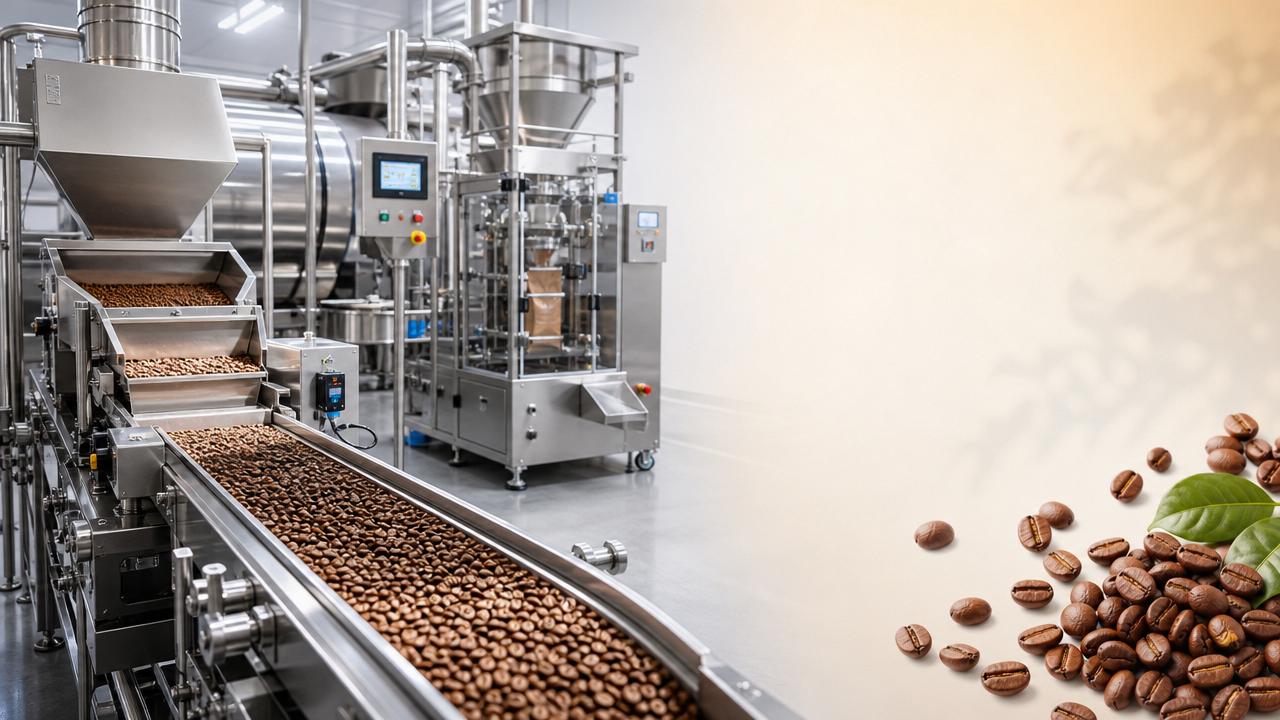
DETAILS
Coffee Bean Processing Equipment Selection Tips
Selecting the right coffee bean processing equipment is a strategic decision that directly affects product consistency, operating efficiency, and long-term profitability.
The challenge is not only comparing machines by capacity or price, but also evaluating reliability, automation, maintenance, and scalability.
A data-driven selection process reduces production risks, improves quality control, and supports market expansion with fewer operational surprises.
This guide explains practical factors to review before investing in coffee bean processing equipment for current operations and future growth.
What does coffee bean processing equipment include?
Coffee bean processing equipment covers the machines used to transform harvested coffee cherries or green beans into stable, market-ready materials.
Depending on the operation, this can include pulpers, washers, fermenting tanks, dryers, hullers, graders, polishers, sorters, roasters, and packaging systems.
The exact equipment scope depends on whether the process starts with cherries, parchment coffee, green beans, or roasted beans.
For wet processing, coffee bean processing equipment must handle water flow, mucilage removal, fermentation control, and controlled drying.
For dry processing, equipment selection focuses on cleaning, drying uniformity, hulling efficiency, density separation, and defect reduction.
For roasting and packaging, coffee bean processing equipment must support precise temperature control, batch traceability, degassing, and packaging integrity.
The most suitable system is rarely a single machine. It is a coordinated production chain with matched capacity and control points.
Key equipment categories to understand
- Cleaning systems remove stones, dust, husks, metals, and foreign materials before value-added processing begins.
- Pulping and washing systems separate fruit layers while protecting bean structure and reducing unwanted fermentation.
- Drying systems control moisture reduction, which strongly affects storage safety and cup consistency.
- Grading and sorting systems classify beans by size, density, color, and visible defects.
- Roasting systems apply controlled heat profiles that define flavor, aroma, and repeatability.
- Packaging systems protect finished beans from oxygen, moisture, light, and aroma loss.
How should capacity be evaluated before buying?
Capacity is often the first comparison point, but rated output can be misleading without context.
A machine rated for high throughput may only reach that level under ideal bean size, moisture, and operator conditions.
When selecting coffee bean processing equipment, compare practical hourly output, daily duty cycle, and seasonal workload peaks.
A small mismatch between pulping, drying, and sorting capacity can create bottlenecks that reduce total plant efficiency.
Capacity planning should also include cleaning time, batch changeover, preventive maintenance, and expected downtime.
For growing operations, modular coffee bean processing equipment can reduce the risk of overinvestment in oversized systems.
However, choosing undersized machines may increase labor cost, extend processing time, and reduce product freshness.
Practical capacity questions
- What is the average daily input during normal production?
- What is the expected peak input during harvest or promotional periods?
- How many operating hours are realistic each day?
- Which processing step is most likely to become the bottleneck?
- Can the equipment be expanded without replacing the full line?
Which quality controls matter most in equipment selection?
Quality control is where coffee bean processing equipment directly influences consistency, yield, and product reputation.
Moisture control is especially important. Beans dried too quickly may crack, while overly wet beans risk mold and storage failure.
Sorting accuracy also matters because physical defects can affect roast behavior, flavor balance, and final grading value.
Modern optical sorting can remove discolored, insect-damaged, broken, and foreign particles with higher repeatability than manual inspection.
For roasting, temperature stability and airflow control determine whether each batch follows a repeatable development curve.
Reliable coffee bean processing equipment should support measurable process data, not only visual judgment and operator memory.
This mirrors precision manufacturing logic used in electronics, where repeatable parameters matter more than subjective acceptance.
Data logs, calibration records, and inspection checkpoints make coffee bean processing equipment easier to audit and improve.
Important quality indicators
- Final moisture level and moisture uniformity across batches.
- Percentage of broken, black, sour, or insect-damaged beans.
- Cleaning efficiency for stones, dust, metals, and plant debris.
- Roast curve repeatability across different batch sizes.
- Packaging seal strength, oxygen control, and shelf-life performance.
How important are automation and digital monitoring?
Automation is not always necessary, but it becomes valuable when consistency, labor availability, and traceability become operational priorities.
Basic coffee bean processing equipment may rely on manual feeding, visual checks, and mechanical adjustment.
Advanced systems may include sensors, programmable controls, recipe storage, alarms, remote monitoring, and automatic sorting feedback.
Digital monitoring helps identify process drift before it becomes a quality issue or causes batch rejection.
For example, dryer temperature spikes, unstable airflow, or abnormal motor load can reveal early maintenance problems.
Automation should match actual operating needs. Excessive complexity may increase training demands and spare parts dependency.
The best coffee bean processing equipment balances control accuracy, operator usability, local service support, and long-term upgrade options.
Useful automation features
- Touchscreen controls with clear alarms and simple operating menus.
- Recipe storage for drying, roasting, grading, or packaging settings.
- Moisture, temperature, vibration, and motor-load monitoring.
- Batch tracking for quality records and customer documentation.
- Remote diagnostic access for faster troubleshooting and maintenance planning.
What hidden costs should be reviewed before purchase?
The purchase price is only one part of the total cost of coffee bean processing equipment.
Installation, utilities, training, spare parts, cleaning labor, calibration, and downtime can significantly affect lifecycle cost.
Energy consumption deserves close review, especially for dryers, roasters, compressors, conveyors, and optical sorters.
Water usage and wastewater treatment can also influence operating cost in wet processing facilities.
Maintenance access is another common blind spot. Machines that are difficult to clean may reduce uptime and hygiene performance.
Before selecting coffee bean processing equipment, request spare parts lists, consumable costs, warranty limits, and service response details.
A low-cost machine can become expensive if replacement parts are slow, proprietary, or unavailable in local channels.
Cost review checklist
- Machine price, freight, installation, commissioning, and import duties.
- Power, fuel, water, compressed air, and wastewater treatment requirements.
- Routine spare parts, wear components, belts, screens, bearings, and sensors.
- Cleaning time, sanitation procedures, and required operator training.
- Expected downtime cost during peak production periods.
How can suppliers and technical specifications be compared?
A structured comparison prevents decisions based only on attractive brochures or broad performance claims.
Ask suppliers to provide test data, reference installations, material specifications, electrical drawings, and maintenance documentation.
When reviewing coffee bean processing equipment, confirm whether capacity figures are based on green beans, cherries, parchment, or roasted beans.
Also verify moisture assumptions, defect rate assumptions, ambient conditions, and operating hours used in performance calculations.
Good suppliers should explain not only what the machine can do, but also its operating limits.
Factory acceptance testing is useful for large systems. It confirms performance before shipment and reduces installation risk.
A sample processing trial can reveal how coffee bean processing equipment handles local bean varieties and moisture ranges.
What mistakes should be avoided when selecting equipment?
One common mistake is buying coffee bean processing equipment based on peak capacity alone.
If upstream and downstream processes are not balanced, the advertised capacity may never be reached.
Another mistake is ignoring bean variability. Different origins, sizes, densities, and moisture levels may require different settings.
A third risk is underestimating installation requirements, including floor strength, ventilation, exhaust, drainage, and electrical capacity.
Some projects also overlook operator training. Even advanced coffee bean processing equipment needs disciplined operation and routine inspection.
Documentation is essential. Operating procedures, maintenance schedules, and calibration records help stabilize performance over time.
Avoid relying only on verbal promises. Written specifications and acceptance criteria create clearer accountability.
Risk reduction tips
- Request a test run using representative beans before final approval.
- Compare energy consumption under realistic operating loads.
- Confirm cleaning procedures before designing the production layout.
- Define acceptance criteria for moisture, defects, output, and uptime.
- Check whether future upgrades require major structural changes.
How should a final decision be made?
The final decision should combine technical fit, financial logic, supplier reliability, and scalability.
Start by mapping the full process flow from receiving to packaging, then identify quality risks at each step.
Next, compare coffee bean processing equipment using measurable criteria rather than isolated product claims.
A scoring model can include capacity, energy use, defect reduction, automation, cleaning access, service support, and expansion potential.
Pilot testing, reference checks, and documented acceptance standards provide additional confidence before contract approval.
The strongest choice is usually the system that delivers repeatable quality with manageable operating complexity.
Selecting coffee bean processing equipment is therefore a technical, economic, and operational decision, not a simple catalog purchase.
A practical next step is to build a requirement sheet covering input material, target output, quality standards, utilities, budget, and expansion plans.
With clear specifications, coffee bean processing equipment can be evaluated objectively and aligned with long-term production goals.
Use supplier data, trial results, and lifecycle cost analysis to move from uncertainty toward a confident investment decision.
Recommended News
- HDI TechnologyHow to vet PCB suppliers in a directory before requesting quotesPCB suppliers directory guide: learn how to verify capabilities, certifications, traceability, and quote assumptions before selecting a reliable PCB partner.
- HDI TechnologyHow UAE engineering data repositories improve design traceabilityEngineering data repository UAE solutions strengthen design traceability by linking requirements, revisions, supplier evidence, and manufacturing data. Explore practical ways to reduce risk and accelerate releases.
- HDI TechnologyHow to verify UL recognition for printed circuit boardsPrinted circuit boards UL verification made clear: learn how to check UL marks, file numbers, factory scope, stack-ups, and traceability for audit-ready compliance.
- HDI TechnologyMulti layer PCB design guide for controlling signal crosstalkMulti layer PCB design guide for controlling signal crosstalk with stackup, spacing, return-path, and validation strategies for reliable high-density boards.
- HDI TechnologyHow tighter manufacturing tolerances change HDI PCB pricesMicro tolerance manufacturing price explained: see how tighter HDI PCB tolerances affect yield, inspection, supplier options, and sourcing costs.
- HDI TechnologyHow automotive PCB impedance control prevents signal failuresAutomotive PCB impedance control prevents reflections, noise, and timing errors in ADAS, EV, and infotainment systems. Learn how to build reliable signal paths.