
Chickpea Processing Machinery: Setup Choices That Reduce Waste
DETAILS
Why setup choices matter before capacity numbers do
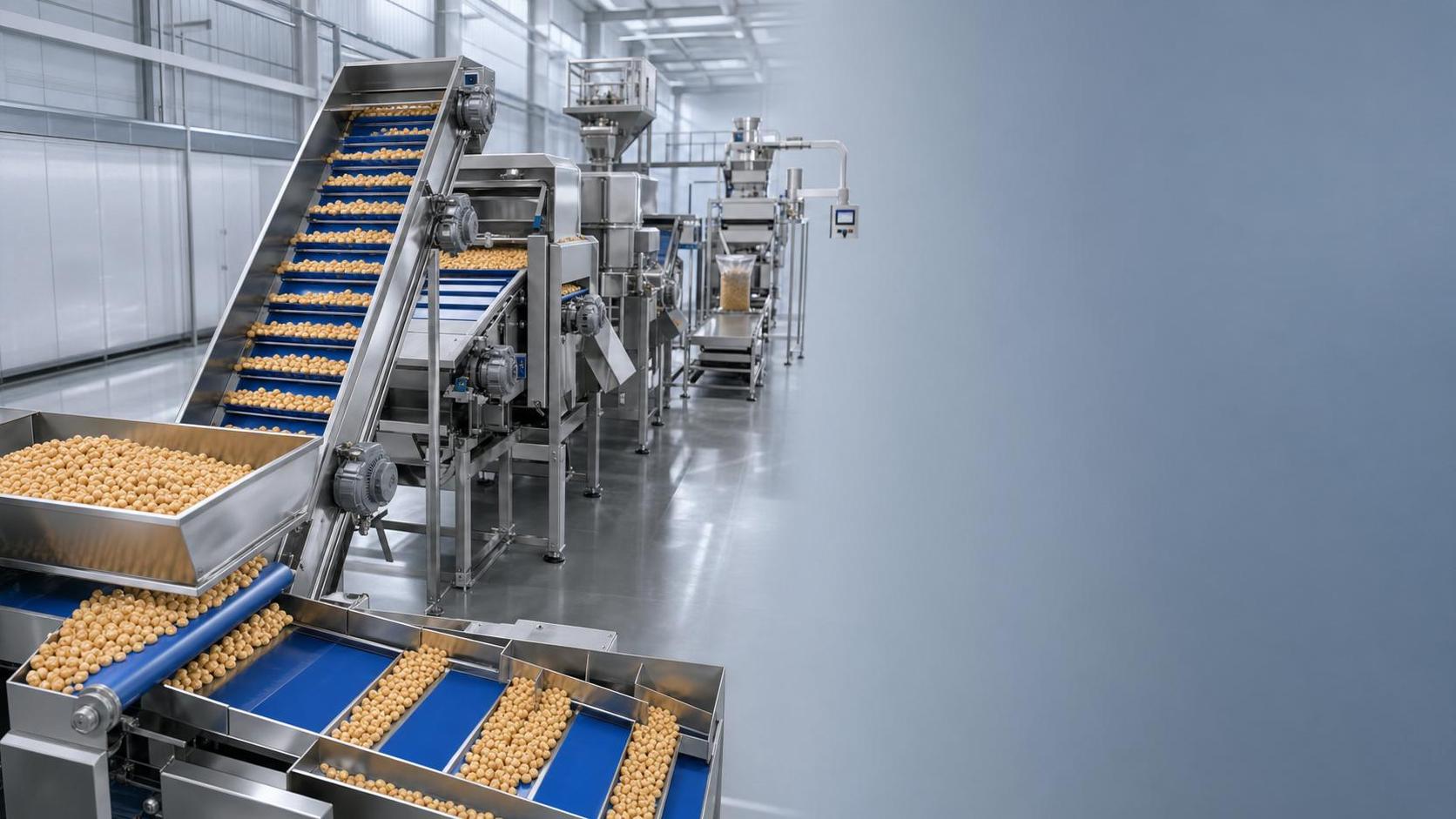
Chickpea processing machinery is often compared by hourly output first. In practice, waste reduction usually starts much earlier, at line configuration and process fit.
A poorly matched setup can break whole kernels, over-dry product, overload aspiration systems, and create avoidable rework after grading.
That is why the better question is not simply which machine is faster. It is which chickpea processing machinery setup protects value across cleaning, splitting, polishing, and packing.
In data-led industries, equipment is evaluated through measurable performance windows, not broad claims. The same discipline applies here.
A line handling export-grade chickpeas needs tighter control than one serving local bulk markets. Moisture range, impurity load, finish quality, and downstream packaging all change the right setup decision.
When chickpea processing machinery is selected around actual operating conditions, facilities usually see lower raw loss, steadier energy use, and fewer quality disputes.
Actual operating conditions create different machinery needs
Not every chickpea lot behaves the same way. Seed size variation, incoming dust, stone content, and shell hardness all affect machine stress and yield.
A line receiving mixed-origin material usually needs stronger pre-cleaning and more flexible grading. Uniform raw material can tolerate a simpler flow.
This is where setup choices start reducing waste. If the first cleaning stage is undersized, later equipment compensates badly and product damage rises.
In many plants, the hidden loss is not dramatic machine failure. It is small, repeated kernel damage, dust carryover, and unnecessary recirculation.
A technical review mindset helps. Much like SCM evaluates manufacturing systems through benchmarked parameters, chickpea processing machinery should be judged by controllable variables and repeatable results.
Where the same machine can perform very differently
The same destoner or splitter may work well in one facility and create excess reject in another. Feed consistency, operator adjustment, and line sequencing often explain the difference.
That is why setup design matters as much as nameplate specifications. Good chickpea processing machinery still performs poorly when the upstream and downstream balance is wrong.
High-throughput cleaning lines need stability more than maximum speed
Facilities handling high daily volumes often assume faster feeding means better economics. More often, stable flow delivers better yield.
For bulk intake operations, chickpea processing machinery should prioritize controlled feeding, multi-stage aspiration, magnetic separation, and stone removal that stays accurate under variable loads.
If the intake section surges, screens blind faster and aspirators pull usable light product into waste channels. That looks like dust extraction efficiency, but it is product loss.
A better setup usually includes buffered infeed and calibrated air settings. This reduces abrupt load swings and lowers maintenance on moving parts.
In these lines, the best chickpea processing machinery arrangement often sacrifices peak speed for narrower operating variation. Over a month, that tends to save more product.
Split chickpea production requires gentler control points
Lines producing split chickpeas face a different risk profile. Breakage is not always visible at the beginning, but it appears later during separation and finishing.
Here, chickpea processing machinery should be assessed for conditioning control, husk loosening efficiency, rotor impact behavior, and recovery of near-spec fractions.
If conditioning is uneven, some kernels remain too hard while others become fragile. The result is more powder, higher undersize, and unstable split quality.
A common mistake is buying a stronger splitting unit to correct poor upstream preparation. That often increases waste instead of fixing it.
More effective chickpea processing machinery setups balance tempering time, friction intensity, and recirculation paths. This keeps more material inside the saleable window.
Polished and retail-ready output raises the bar for sorting
Retail and export channels usually punish inconsistency more than bulk channels do. Surface finish, color uniformity, and foreign matter control become critical.
In this setting, chickpea processing machinery is not just a throughput tool. It becomes part of quality assurance.
Optical sorting, fine grading, and gentle polishing need to work together. If polishing comes too early, surface dust can distort later optical rejection.
If grading is too coarse, visually acceptable product may still pack with uneven size distribution. That increases customer complaints even when purity targets are met.
For this scenario, chickpea processing machinery should support repeatable calibration, quick recipe changes, and traceable rejection patterns. Those details matter more than headline output.
Different setups suit different loss-control priorities
The setup choice becomes clearer when loss points are compared directly. Waste does not come from one source, so machinery priorities should not be one-dimensional.
This kind of comparison avoids a common trap. A machine that reduces one form of waste may increase another if the full line logic is ignored.
What to check before finalizing chickpea processing machinery
A practical evaluation should go beyond brochures and single test runs. Short demonstrations rarely reveal how losses behave over changing raw material lots.
- Map the biggest loss point by percentage, not assumption.
- Check whether screen, air, and rotor settings are repeatable.
- Confirm how the line handles off-spec lots without excess stoppage.
- Review wear parts, cleaning access, and maintenance downtime.
- Measure reject composition to see whether saleable product is escaping.
These checks sound simple, yet they often reveal whether chickpea processing machinery is truly fit for the operating environment or merely impressive under ideal conditions.
The most common misread during line selection
One frequent misread is treating similar chickpea grades as identical processing cases. Small moisture differences can change splitting behavior and waste levels sharply.
Another is focusing on purchase cost while overlooking calibration time, energy draw, spare part cycles, and reject recovery options.
The more reliable approach is closer to technical benchmarking: define acceptable variation, compare outcomes over time, and verify the line against real operating limits.
A stronger next step is building a site-specific decision framework
The best chickpea processing machinery choice is rarely the most complex line. It is the setup that matches raw material variability, product target, maintenance capacity, and waste tolerance.
In practical terms, that means documenting actual feed conditions, ranking loss sources, and testing how each section affects yield and quality together.
Where technical decision-making already depends on benchmarked data, this method feels familiar. It turns machinery selection into a controlled evaluation rather than a speed comparison.
Before moving forward, clarify which scenario dominates the operation, compare line behavior under that scenario, and confirm the maintenance and energy trade-offs behind each option.
That is usually where chickpea processing machinery starts delivering what matters most: lower waste, steadier quality, and more predictable operating cost.
Recommended News
- HDI TechnologyHow to vet PCB suppliers in a directory before requesting quotesPCB suppliers directory guide: learn how to verify capabilities, certifications, traceability, and quote assumptions before selecting a reliable PCB partner.
- HDI TechnologyHow UAE engineering data repositories improve design traceabilityEngineering data repository UAE solutions strengthen design traceability by linking requirements, revisions, supplier evidence, and manufacturing data. Explore practical ways to reduce risk and accelerate releases.
- HDI TechnologyHow to verify UL recognition for printed circuit boardsPrinted circuit boards UL verification made clear: learn how to check UL marks, file numbers, factory scope, stack-ups, and traceability for audit-ready compliance.
- HDI TechnologyMulti layer PCB design guide for controlling signal crosstalkMulti layer PCB design guide for controlling signal crosstalk with stackup, spacing, return-path, and validation strategies for reliable high-density boards.
- HDI TechnologyHow tighter manufacturing tolerances change HDI PCB pricesMicro tolerance manufacturing price explained: see how tighter HDI PCB tolerances affect yield, inspection, supplier options, and sourcing costs.
- HDI TechnologyHow automotive PCB impedance control prevents signal failuresAutomotive PCB impedance control prevents reflections, noise, and timing errors in ADAS, EV, and infotainment systems. Learn how to build reliable signal paths.