
How to Test Industrial Relay Performance
DETAILS
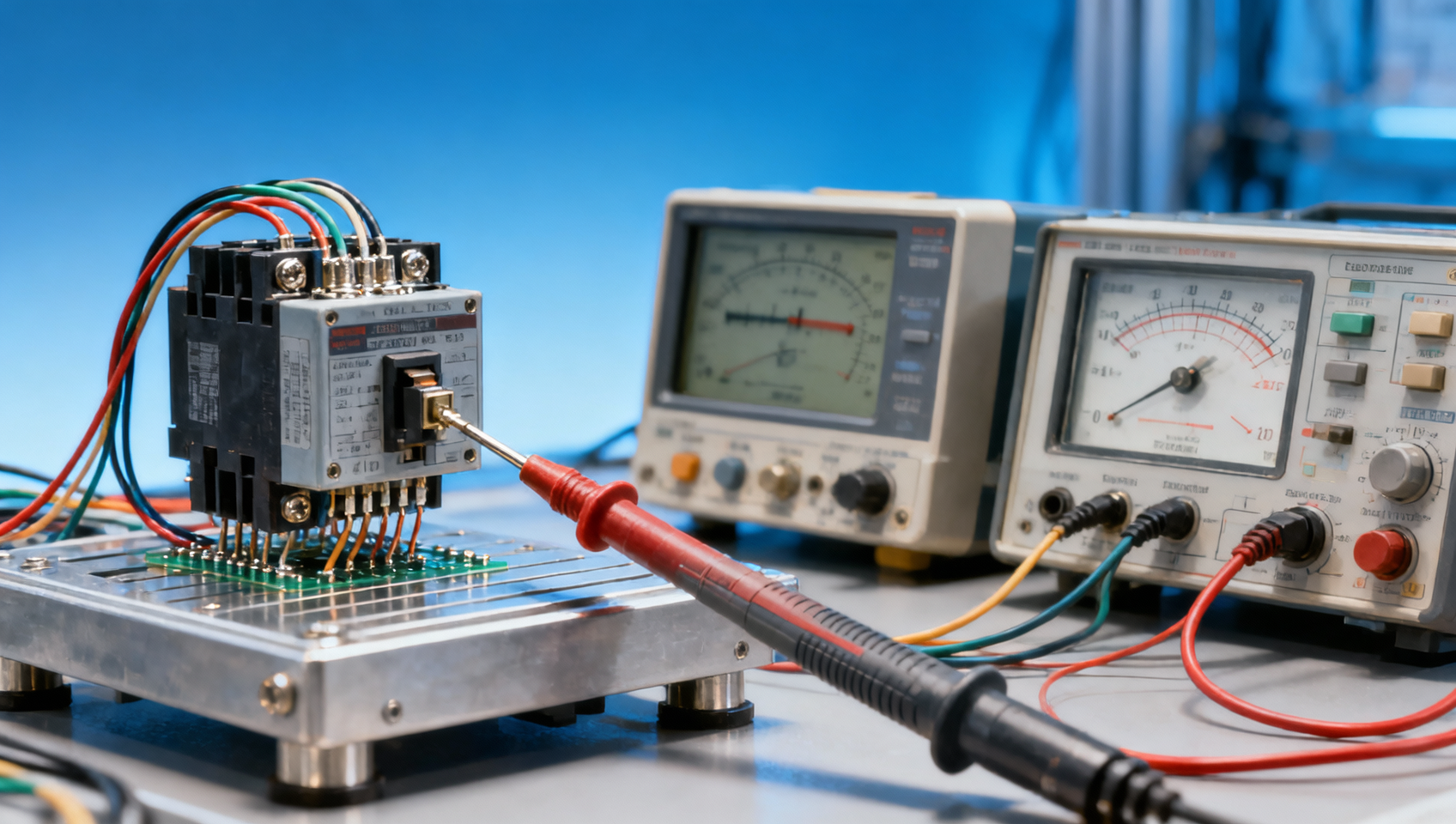
Understanding Industrial Relay Performance Testing
Reliable industrial relay performance is critical for maintaining signal integrity and EMI protection in demanding electronic systems. This guide explores professional testing methodologies for relay switches, helping technical evaluators and procurement professionals verify electrical connectors' durability under extreme conditions. Discover how proper evaluation of industrial relays can optimize your thermal enclosure solutions and ensure long-term system reliability across PCB fabrication and SMT assembly applications.
Key Performance Parameters for Industrial Relays
Industrial relays must meet stringent operational requirements across multiple parameters. The following table outlines critical metrics that determine relay performance in high-stress environments:
For mission-critical applications in semiconductor manufacturing, relays should maintain these parameters within 15% of initial values after 5,000 hours of continuous operation at 85°C ambient temperature.
Comprehensive Testing Methodologies
Modern relay testing requires a multi-phase approach to validate performance across different operational conditions:
1. Electrical Characteristics Testing
Essential electrical tests include:
- Pick-up voltage (typically 70-80% of rated voltage)
- Drop-out voltage (20-30% of rated voltage)
- Contact bounce time (≤ 5ms for high-frequency applications)
- Dielectric strength (2.5kV AC for 1 minute between contacts)
2. Environmental Stress Testing
Relays must withstand extreme conditions common in industrial settings:
- Thermal cycling (-40°C to +125°C, 100 cycles)
- Humidity exposure (85% RH at 85°C for 500 hours)
- Vibration resistance (10-55Hz, 1.5mm amplitude)
- Shock testing (100G, 6ms duration)
Relay Selection Criteria for Different Applications
The table below compares relay specifications for three common industrial applications:
For PCB assembly applications requiring high-density mounting, consider relays with ≤ 5.2mm height and surface-mount compatibility. Power distribution systems demand relays with arc suppression and ≥ 2500V dielectric strength between contacts.
Advanced Testing Equipment and Setup
Professional relay testing requires specialized equipment capable of precise measurements:
- Programmable power supplies (±0.5% voltage accuracy)
- High-speed data acquisition (≥ 1MHz sampling rate)
- Environmental chambers (±1°C temperature stability)
- Contact resistance testers (4-wire Kelvin measurement)
Test Configuration Best Practices
When setting up relay tests:
- Allow 30-minute warm-up period for all instruments
- Use gold-plated test leads to minimize contact resistance
- Maintain 40-60% relative humidity in test environment
- Implement proper EMI shielding for sensitive measurements
Common Failure Modes and Prevention
Understanding relay failure mechanisms helps improve testing protocols:
1. Contact Degradation
Contact erosion accounts for 65% of relay failures in industrial applications. Regular monitoring of contact resistance (every 104 operations) helps detect early wear patterns.
2. Coil Breakdown
Insulation breakdown in relay coils typically occurs after 3,000-5,000 thermal cycles. Periodic insulation resistance testing (monthly for critical systems) prevents unexpected failures.
Industry Standards Compliance
Relays for semiconductor manufacturing must comply with multiple international standards:
- IEC 61810-1 (electromechanical relays)
- UL 508 (industrial control equipment)
- IPC-9592B (power conversion devices)
- MIL-PRF-39016 (high reliability relays)
Frequently Asked Questions
How often should industrial relays be tested?
For mission-critical applications, perform comprehensive testing every 6 months or 50,000 operations, whichever comes first. Basic contact resistance checks should occur monthly.
What's the typical lifespan of industrial relays?
Quality industrial relays typically last 100,000 to 1 million operations depending on load conditions. Under light loads (≤30% rated current), some relays exceed 5 million operations.
How to select relays for high-vibration environments?
Choose relays with mechanical latching mechanisms and vibration ratings ≥ 5G (10-500Hz). Mercury-wetted contacts provide superior vibration resistance but have environmental restrictions.
Conclusion and Next Steps
Proper industrial relay testing ensures reliable operation in critical electronic systems. By implementing comprehensive testing protocols that address electrical, mechanical, and environmental factors, technical teams can significantly reduce failure rates and improve system uptime.
For customized relay testing protocols tailored to your specific application requirements, contact our engineering team for a consultation. Our experts can help you develop a testing regimen that aligns with your operational parameters and industry compliance standards.
Recommended News
- RelaysHow to vet an industrial automation distributor for genuine relaysVet an industrial automation distributor with confidence. Learn how to verify relay authenticity, traceability, and quality controls to reduce downtime and sourcing risks.
- RelaysWhat Standard Tests Measure Relay Contact Resistance Degradation?Are there standard test methods for relay contact resistance degradation? Explore IEC standards, endurance testing, Kelvin measurement, and environmental validation for reliable relay sourcing.
- RelaysVietnam Tariff Shift Favors China-Origin Relays Until 2027Vietnam tariff shift favors China-origin relays until 2027. Learn how the 3% tax on non-ASEAN relay imports impacts sourcing, costs, and procurement strategy in Vietnam.
- RelaysJapan Enforces JIS C 5012:2026 Relay EMI Test RuleJapan Enforces JIS C 5012:2026 Relay EMI Test Rule: learn how the new 1.8-2.4 GHz radiated immunity and IEC 61000-4-3:2024 report requirements may impact relay compliance, cost, and Japan market access.
- RelaysWhen a Relay Switches Factory Becomes a Risk to Product QualityRelay switches factory risks can quietly damage product quality, safety, and reliability. Learn the warning signs, audit points, and how to choose a stable supplier.
- RelaysHow to Compare Relay Switches Factory Capabilities for Stable SupplyRelay switches factory comparison starts with capacity, quality control, traceability, and lead time stability. Learn how to identify reliable suppliers and reduce sourcing risk.