
Which Electromechanical Parts Need Tighter QC
DETAILS
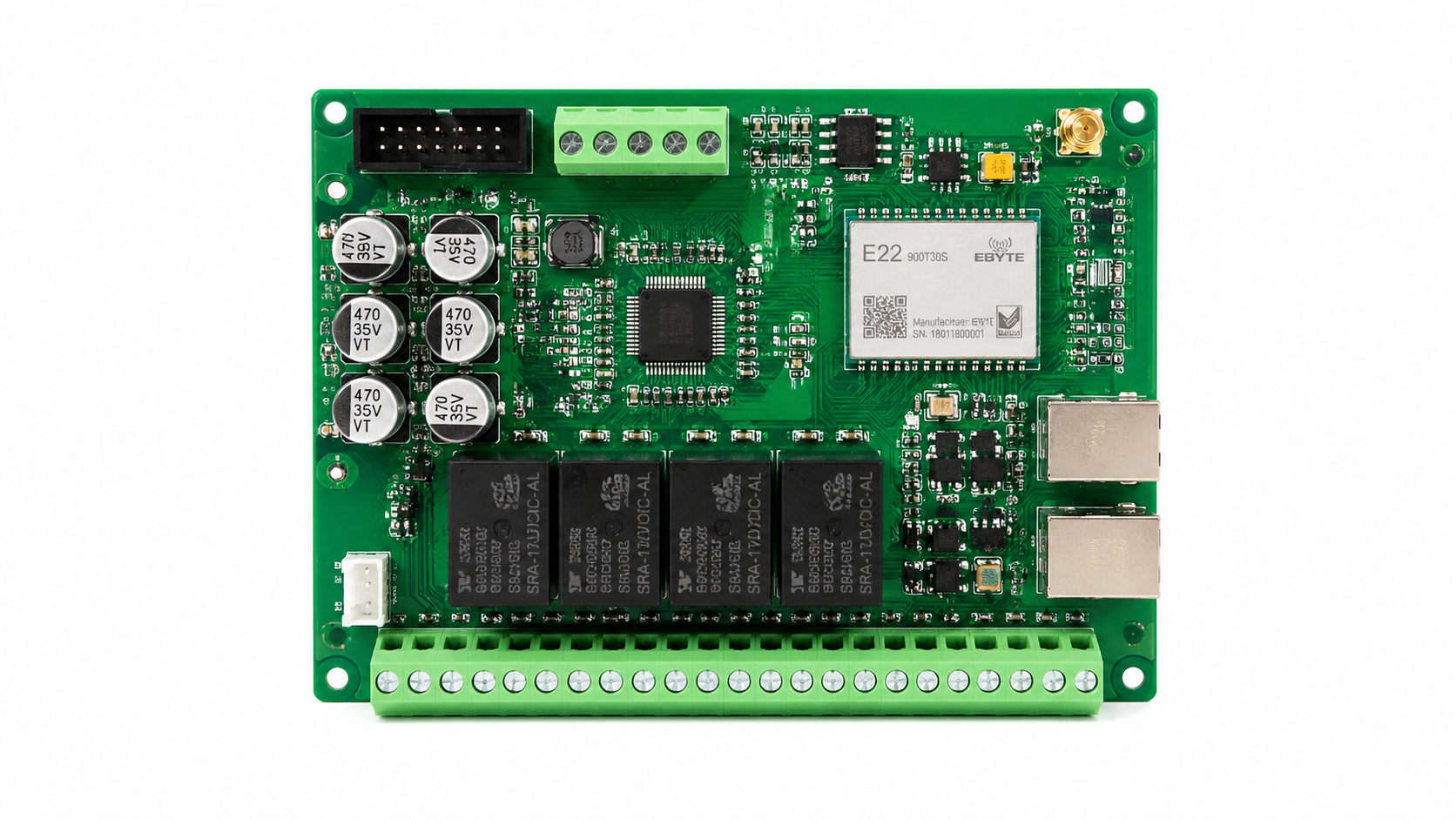
From electrical relays and industrial capacitors to RF transmitter and RF receiver modules, not all electromechanical parts demand the same QC intensity. In circuit board assembly, failures often trace back to overlooked circuit components, SMT soldering, reflow soldering stability, or pick and place specifications. This guide explains which electronic parts require tighter inspection, how compliance standards shape risk, and where procurement, engineering, and quality teams should focus first.
For R&D teams, buyers, quality engineers, and project managers, the real challenge is not whether to inspect parts, but where to apply deeper control without slowing production or inflating cost. In electronics and EMS environments, a low-cost component can still carry high system risk if its tolerance window, thermal behavior, or assembly sensitivity is narrow.
SiliconCore Metrics (SCM) focuses on this exact gap between nominal specification and field reliability. By benchmarking PCB fabrication, SMT assembly, active semiconductors, passive components, and thermal packaging, SCM helps global teams prioritize inspection resources based on measurable failure modes rather than assumptions.
High-Risk Electromechanical Parts That Usually Need Tighter QC
Not every part on a bill of materials deserves the same incoming inspection depth. In most electronics assemblies, the parts that need tighter QC are those with moving contacts, stored energy, RF sensitivity, thermal stress exposure, or ultra-fine solder joints. These components often create disproportionate rework, warranty, or downtime costs even when they represent less than 10% of total line items.
Relays are a classic example. Their electrical ratings may look compliant on paper, but contact resistance drift, coil inconsistency, and mechanical fatigue can cause intermittent failures after only a few thousand switching cycles. For industrial applications, teams often review contact resistance, pull-in voltage, release voltage, and cycle durability across 3 to 5 sample lots before approving a supplier.
Industrial capacitors also deserve tighter inspection when they operate under ripple current, high humidity, or sustained temperatures above 85°C. Capacitance value alone is not enough. Equivalent series resistance, leakage current, dielectric stability, and life-test behavior matter more in power conversion, motor drive, and telecom boards where a 2% to 5% drift can affect system stability.
RF transmitter and RF receiver modules sit in another high-risk category because small process deviations can reduce signal integrity. Shielding quality, solder voiding, antenna feed consistency, and frequency tolerance all affect performance. A module that passes basic continuity checks may still fail range, sensitivity, or EMC expectations once integrated into a dense PCB assembly.
The table below highlights typical part categories where tighter QC usually produces the highest return in electronics manufacturing and sourcing decisions.
A practical takeaway is that tighter QC should follow risk concentration, not part price. In many BOM reviews, relays, RF modules, connectors, and high-stress capacitors together account for a small share of total components but a large share of root-cause investigations and field returns.
What makes a part “QC critical”
A part becomes QC critical when one or more of the following apply: tolerance windows below typical process capability, strong sensitivity to heat or moisture, performance dependence on contact surfaces, or difficult post-assembly rework. Components in fine-pitch packages below 0.5 mm, or modules requiring controlled impedance or stable shielding, often fall into this group.
- Mechanical wear or moving interfaces that degrade after 10,000 to 100,000 cycles.
- Thermal exposure during reflow above 235°C to 260°C that can alter performance.
- Electrical behavior that depends on low ESR, low contact resistance, or RF matching.
- Hidden defects that basic visual inspection cannot catch, such as internal delamination or voiding.
Why buyers and finance teams should care
The business impact goes beyond yield loss. A component that saves 3% on purchase price but raises failure analysis workload, service calls, and line stoppage can quickly become the more expensive choice. That is why procurement, commercial evaluators, and finance approvers increasingly ask for lot traceability, compliance evidence, and reliability screening plans before approving alternate sources.
Assembly-Sensitive Parts: Where SMT, Reflow, and Pick-and-Place Create Hidden Defects
Some electromechanical parts fail not because of poor design, but because assembly conditions exceed their process limits. In SMT lines, the biggest hidden risks often sit at the interface between component geometry and production variation. Parts with bottom-terminated pads, fine leads, metal shielding cans, or asymmetric thermal mass require tighter control during stencil printing, pick and place, and reflow soldering.
Pick and place accuracy is especially important for miniature connectors, MEMS-related modules, RF cans, and odd-shaped passive assemblies. A placement deviation of ±50 µm may be acceptable for many standard chips, but for tight-pitch parts or modules with edge pads, cumulative variation can increase solder bridging, insufficient wetting, or skew. That becomes more severe when nozzle selection or feeder stability is inconsistent across multi-shift production.
Reflow soldering also changes risk profiles. Components with large thermal mass, mixed material construction, or moisture sensitivity may experience internal stress if ramp-up rates, soak time, or peak temperature drift outside recommended ranges. For many assemblies, a ramp rate of 1°C to 3°C per second and a controlled time above liquidus are essential to reduce voiding and warpage.
Even standard circuit components can become QC critical when board density is high. For example, capacitors placed near heat-generating semiconductors may face localized thermal gradients that were not obvious during sourcing. Likewise, relays or RF modules mounted near board edges may see more vibration or handling stress during depanelization and system integration.
The matrix below shows where assembly-stage inspection should intensify based on component behavior and process sensitivity.
The key conclusion is that QC intensity should rise before and during assembly, not only after final test. Many hidden defects are introduced at print, placement, or reflow stages and become expensive to detect after conformal coating, enclosure assembly, or shipment.
Three assembly checkpoints that prevent downstream failure
- Verify component packaging, coplanarity, and moisture condition before loading the line.
- Monitor placement accuracy, nozzle condition, and feeder repeatability at first article and shift change.
- Validate reflow profile against the most temperature-sensitive part, not only the average board condition.
This 3-step focus is often more effective than increasing end-of-line inspection alone. For project managers, it also improves launch predictability when NPI schedules are tight and only 2 to 4 pilot builds are available before ramp-up.
Compliance Standards and Reliability Thresholds That Should Drive Inspection Depth
Inspection plans become more consistent when they are linked to application class, compliance requirements, and environmental stress levels. A relay used in non-critical consumer equipment does not demand the same acceptance criteria as a component placed in industrial control, telecom infrastructure, or high-availability electronics. That is why QC teams often map parts to operating severity before setting sampling plans.
In electronics manufacturing, IPC-Class 3 expectations typically push suppliers and EMS providers toward tighter workmanship control, cleaner solder joints, and stronger documentation discipline than lower-risk applications. ISO 9001 does not define every technical limit, but it strengthens process control, traceability, corrective action discipline, and supplier consistency. Together, these frameworks help buyers and auditors judge whether a part’s quality claim is supported by repeatable process evidence.
Environmental exposure is another decisive factor. Parts that operate across -40°C to 85°C, or in some industrial cases up to 105°C, should be screened differently from office-environment electronics. High humidity, salt mist, vibration, and repeated thermal cycling accelerate failure in plated contacts, solder joints, and dielectric materials. For that reason, reliability review should consider not just nominal datasheet values but stress margins over the intended service life.
SCM’s benchmarking approach is useful here because many quality issues arise in the space between supplier datasheets and actual manufacturing variation. Evaluating dielectric consistency, placement precision, thermal packaging performance, and long-term active/passive component reliability gives procurement and engineering teams a more realistic basis for deciding which parts require extra incoming or in-process control.
How to align QC depth with application risk
A practical model is to group components into 3 levels: standard, elevated, and critical. Standard parts may use basic lot verification and visual checks. Elevated parts need dimensional, electrical, and process compatibility review. Critical parts require full traceability, expanded sampling, and periodic reliability confirmation over each quarter or approved lot family.
- Standard: Low-cost passives in low-stress zones, broad tolerance, easy replacement.
- Elevated: Connectors, power capacitors, thermally exposed modules, moderate service consequence.
- Critical: RF modules, safety-relevant relays, fine-pitch assemblies, field-failure-sensitive parts.
Typical thresholds worth documenting
For many B2B sourcing programs, the inspection record should capture at least 6 items: lot code, supplier origin, MSL status, dimensional or coplanarity result, electrical spot check, and assembly compatibility note. Where warranty exposure is high, adding X-ray sampling, temperature cycling, or insertion-force verification can materially reduce later disputes.
The point is not to overtest every part. It is to define a justified threshold for each risk class so that quality, sourcing, commercial review, and finance approval all use the same evidence model when comparing suppliers.
How Procurement, Engineering, and Quality Teams Should Prioritize QC Resources
The most effective QC strategy is cross-functional. Procurement sees supplier variability, engineering understands performance sensitivity, and quality teams track defect trends. When these groups work in isolation, inspection plans become either too light for critical parts or too heavy for stable commodities. A structured prioritization model helps avoid both extremes.
Start with a failure-consequence review. Ask three questions: If the part drifts, what system function is affected? Can the defect be detected before shipment? How costly is field replacement? A connector in a serviceable enclosure may justify moderate QC, while a shielded RF receiver module buried inside a sealed system may justify much stricter incoming and process verification because repair cost is far higher.
Next, review supplier maturity. New suppliers, alternate sources, or factories with process transitions deserve tighter short-term control for the first 3 lots or first 60 to 90 days. Stable suppliers with consistent lot data may move to reduced sampling if they maintain traceability, corrective action responsiveness, and process capability across packaging, plating, or assembly-sensitive attributes.
Finally, compare inspection cost against business exposure. For a high-volume product, a 1% defect escape can generate significant RMA and support cost. For lower-volume industrial systems, even a single field failure can trigger site visits, safety reviews, or contractual penalties. That is why finance approvers increasingly support front-loaded QC when the downstream cost multiple is 5x to 20x the original inspection expense.
The table below can be used as a procurement and engineering screening tool during supplier qualification or BOM risk review.
This type of matrix helps teams defend QC budgets with facts. Instead of arguing for blanket inspection, they can point to assembly risk, supplier maturity, and field impact in a structured way that supports purchasing decisions and project gate reviews.
A 5-step prioritization workflow
- Rank components by functional criticality and replacement difficulty.
- Map each part to assembly sensitivity, including SMT and reflow constraints.
- Review supplier history for lot stability, change notices, and responsiveness.
- Assign inspection depth by risk tier, from basic verification to advanced screening.
- Reassess every quarter, or after major design, process, or source changes.
For project owners and after-sales teams, this workflow also improves handoff quality. It reduces the gap between sourcing approval, production launch, and service expectations by keeping risk ownership visible across the product lifecycle.
Common QC Mistakes, Practical Checks, and FAQ for Better Part Selection
A frequent mistake is assuming that datasheet compliance automatically means process compatibility. In practice, many failures come from packaging condition, plating quality, solderability, storage exposure, or tolerance stacking during assembly. Another mistake is focusing only on active semiconductors while giving too little attention to connectors, relays, and passive components under thermal or vibration stress.
Teams also underinvest in first-lot learning. The first 1 to 3 lots from a new source often reveal issues that never appear in qualification paperwork, such as tray warpage, labeling gaps, moisture control weaknesses, or inconsistent coplanarity. Catching these early is far cheaper than debugging an intermittent failure after mass production.
A strong practical check is to combine incoming QC, assembly validation, and supplier feedback into one loop. If AOI or X-ray repeatedly flags the same relay terminal, capacitor pad, or RF module corner, that signal should go back into sourcing and design review. Otherwise, the same defect pattern can persist for months across multiple builds.
Quick checks before approving a component source
- Confirm traceability by lot and packaging date, especially for moisture-sensitive parts.
- Check assembly compatibility with actual stencil, pick-and-place, and reflow settings.
- Review at least 4 dimensions of risk: electrical, mechanical, thermal, and service impact.
- Ask whether the part will be hard to inspect after enclosure build or conformal coating.
- For critical modules, require sample validation across more than 1 lot where possible.
How do I know if a low-cost part still needs tight QC?
Look at consequence, not price. A low-cost connector, relay, or capacitor may still need tight QC if it affects power stability, signal transmission, safety logic, or sealed-system serviceability. If replacement requires disassembly, field travel, or a customer shutdown, stricter inspection is justified.
Which stages usually catch the most defects?
For assembly-sensitive electronics, the highest value checkpoints are incoming verification, first article setup, and reflow profile validation. These 3 stages often catch more meaningful defects than relying on end-of-line testing alone, especially for hidden solder joint or moisture-related issues.
How often should inspection plans be updated?
As a practical rule, review the plan every quarter, after any supplier change, or when defect trends increase beyond the normal baseline. Additional review is also wise after design revisions, packaging changes, or shifts in service environment such as higher temperature or vibration exposure.
The strongest QC programs are not the ones that inspect everything. They are the ones that identify which electromechanical parts carry the highest system, assembly, and service risk, then apply deeper controls where they matter most. In modern EMS and semiconductor-linked supply chains, that usually means closer attention to relays, industrial capacitors, RF modules, connectors, and other parts sensitive to thermal, mechanical, or signal-integrity variation.
SCM supports this decision-making with independent benchmarking, manufacturing intelligence, and technical reporting across PCB fabrication, SMT assembly, active and passive components, and thermal packaging. If your team needs clearer guidance on supplier risk, inspection priorities, or component reliability under real production conditions, contact us to discuss your application, request a tailored evaluation path, or learn more about our data-driven solutions.
- PCB
- PCB fabrication
- SMT assembly
- active semiconductors
- passive components
- thermal packaging
- signal integrity
- IPC-Class 3
- EMS
- environmental stress
- ISO 9001
- component reliability
- PCB assembly
- passive component reliability
- circuit board assembly
- pick and place specifications
- reflow soldering
- SMT soldering
- electronic parts
- circuit components
- semiconductor
- RF modules
- RF transmitter
- RF receiver
- electromechanical parts
- industrial capacitors
- relays
- electrical relays
- connectors
Recommended News
- ConnectorsHow to compare connector suppliers when quoted prices differSupplier comparison price guide for connector sourcing: compare technical fit, landed cost, quality, lead times, and supplier risk to make confident purchasing decisions.
- ConnectorsHow to assess connector quality when sourcing electronic components in SingaporeElectronic components Singapore sourcing guide: assess connector quality, traceability, plating, mechanical reliability, and supplier controls to reduce costly failures.
- ConnectorsHow to prevent connector corrosion in aquaculture installationsAquaculture installations need reliable connectors. Discover practical ways to prevent corrosion with smart sealing, material selection, cable routing, and maintenance.
- ConnectorsHow to select automotive connector systems for high-vibration environmentsAutomotive connector systems for high-vibration environments: learn how to evaluate contact stability, sealing, locking, harness support, and qualification evidence.
- ConnectorsWhen should you source from a connector systems wholesaler?connector systems wholesaler: learn when wholesale sourcing reduces supply risk, controls total cost, and protects production with qualified, reliable availability.
- ConnectorsHow to select connector systems for telecom exposed to vibrationConnector systems for telecom exposed to vibration demand more than basic specs. Learn how to protect signal integrity, retention, and reliability with smarter selection criteria.