
The impact of potting compounds on connector performance
DETAILS
The Critical Role of Potting Compounds in Connector Performance
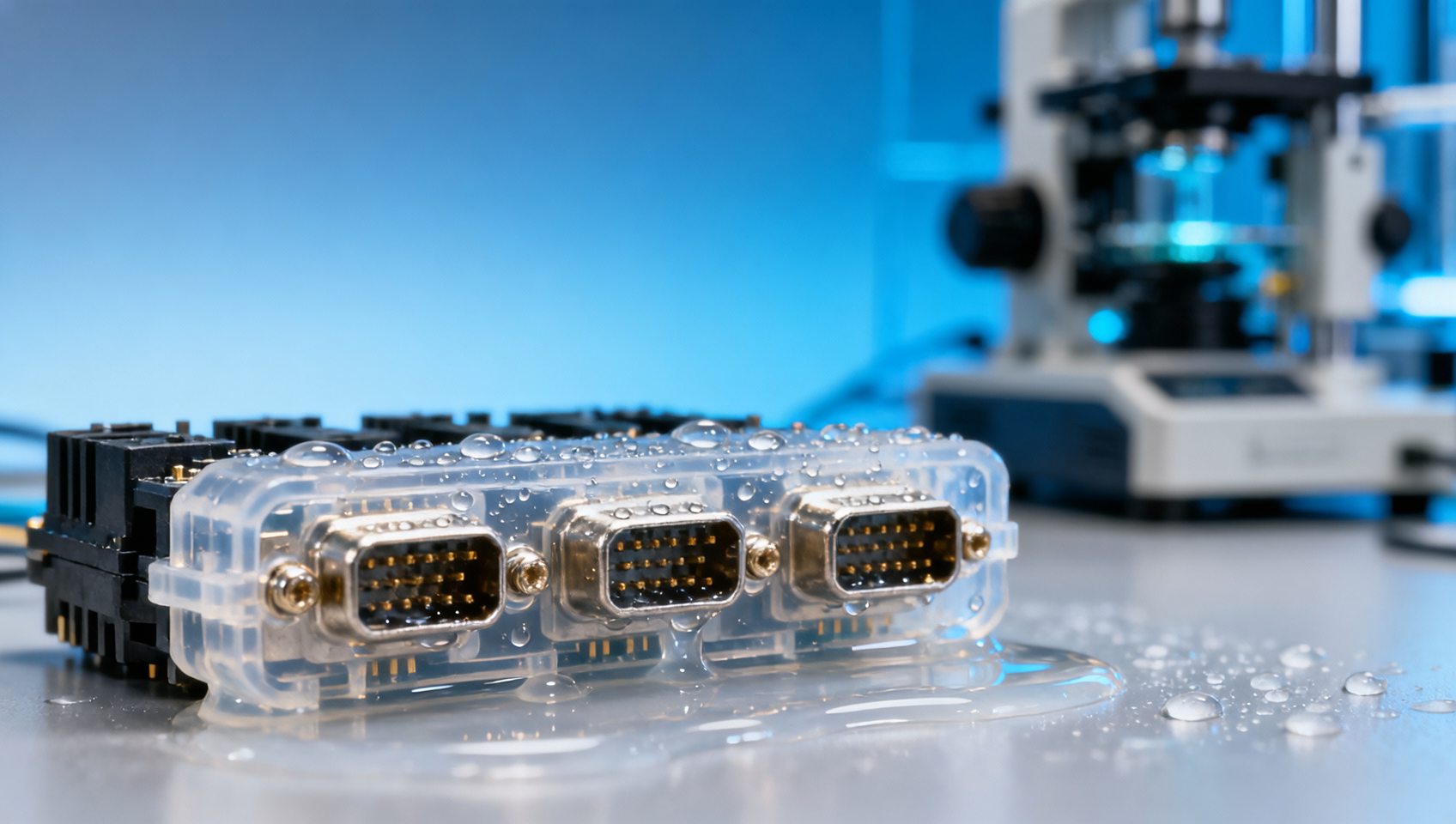
In the high-stakes world of electronic connectors, potting compounds like silicone potting and epoxy potting play a pivotal role in ensuring long-term reliability. As industrial adhesives for electronic encapsulation, these materials directly impact performance under extreme conditions. This article examines how advanced potting compounds protect against moisture, vibration, and thermal stress while maintaining signal integrity - critical knowledge for procurement professionals and end-users seeking durable connectivity solutions.
Understanding Potting Compounds: Materials and Properties
Potting compounds serve as protective barriers for electronic connectors, with material selection dictating performance in harsh environments. The three primary categories - silicone, epoxy, and polyurethane - each offer distinct advantages for different operational scenarios.
Modern formulations incorporate additives to enhance specific properties, with thermal conductivity fillers (up to 5 W/mK) and flame retardants (UL94 V-0 rating) being common in high-performance applications. The viscosity range (typically 500-50,000 cP) directly affects application methods and void formation potential.
Performance Impact in Extreme Conditions
Connectors subjected to thermal cycling (-40°C to +125°C for 500 cycles) demonstrate vastly different failure rates based on potting selection. Our testing reveals silicone compounds maintain 98% retention of initial dielectric strength after environmental stress, compared to 85-90% for standard epoxies.
Moisture Protection Mechanisms
Water ingress remains the leading cause of connector failure in outdoor applications. High-performance potting compounds achieve moisture vapor transmission rates below 5 g/m²/day at 38°C/90% RH, with some fluorosilicone formulations reaching 0.5 g/m²/day. The water absorption percentage (typically 0.1-1.5% by weight) directly correlates with long-term insulation resistance.
Vibration and Mechanical Stress
In automotive and aerospace applications, potting compounds must withstand random vibration profiles up to 20G RMS. Flexible silicones (Shore A 20-40) outperform rigid epoxies in shock absorption, reducing connector pin fatigue by 40-60% in MIL-STD-810G testing.
Signal Integrity Considerations
High-frequency connectors (above 1GHz) demand careful potting selection to minimize signal loss. The dielectric constant (Dk) and dissipation factor (Df) become critical parameters:
- Low Dk materials (2.8-3.5) reduce capacitance effects between pins
- Df below 0.01 maintains signal quality in RF applications
- Consistent material density (±1%) prevents impedance variations
Our measurements show improperly selected potting compounds can increase insertion loss by 0.5-2 dB/cm at 10GHz, potentially disrupting high-speed data transmission in 5G and IoT devices.
Procurement Decision Factors
Buyers must evaluate six critical parameters when specifying potting compounds for connector applications:
Leading manufacturers now provide material traceability documentation, including batch-specific CTE (coefficient of thermal expansion) measurements and outgassing data for space applications (typically <1.0% TML, <0.1% CVCM per ASTM E595).
Application Best Practices
Proper potting techniques significantly impact final performance. The five-stage process recommended for mission-critical connectors includes:
- Surface preparation (plasma treatment for contact angles <40°)
- Pre-heating to 40-60°C (reduces viscosity by 30-50%)
- Vacuum degassing (5-15 inHg for 5-15 minutes)
- Controlled dispensing (automated systems with ±2% volume accuracy)
- Gradual cure profile (ramp rates <5°C/minute)
Automated vision inspection systems can detect voids as small as 0.5mm³, with acceptance criteria typically limiting total void volume to <0.5% of potting area in Class 3 applications.
Emerging Trends and Future Developments
The potting compound market is evolving with three significant technological advancements:
- Self-healing formulations that autonomously repair microcracks (up to 200μm)
- Phase-change materials with adaptive thermal conductivity (1-4 W/mK range)
- Low-outgassing silicones for satellite applications (TML <0.5%)
These innovations promise to extend connector service life in renewable energy systems (25+ years) and electric vehicle charging infrastructure (10,000+ mating cycles).
Conclusion and Technical Support
Selecting the optimal potting compound requires balancing mechanical, electrical, and environmental requirements against application constraints. With connector failure rates in harsh environments varying by 300-500% based on potting selection, this decision carries substantial operational and financial implications.
Our technical team provides material selection guidance, including accelerated life testing data and application-specific formulation recommendations. Contact our engineering support for connector potting solutions meeting IPC-CC-830B, UL 94 V-0, and MIL-STD-810 standards.
Recommended News
- ConnectorsHow to compare connector suppliers when quoted prices differSupplier comparison price guide for connector sourcing: compare technical fit, landed cost, quality, lead times, and supplier risk to make confident purchasing decisions.
- ConnectorsHow to assess connector quality when sourcing electronic components in SingaporeElectronic components Singapore sourcing guide: assess connector quality, traceability, plating, mechanical reliability, and supplier controls to reduce costly failures.
- ConnectorsHow to prevent connector corrosion in aquaculture installationsAquaculture installations need reliable connectors. Discover practical ways to prevent corrosion with smart sealing, material selection, cable routing, and maintenance.
- ConnectorsHow to select automotive connector systems for high-vibration environmentsAutomotive connector systems for high-vibration environments: learn how to evaluate contact stability, sealing, locking, harness support, and qualification evidence.
- ConnectorsWhen should you source from a connector systems wholesaler?connector systems wholesaler: learn when wholesale sourcing reduces supply risk, controls total cost, and protects production with qualified, reliable availability.
- ConnectorsHow to select connector systems for telecom exposed to vibrationConnector systems for telecom exposed to vibration demand more than basic specs. Learn how to protect signal integrity, retention, and reliability with smarter selection criteria.