
The Hidden Costs of Cheap Industrial Connectors
DETAILS
The True Price of Cost-Driven Connector Procurement
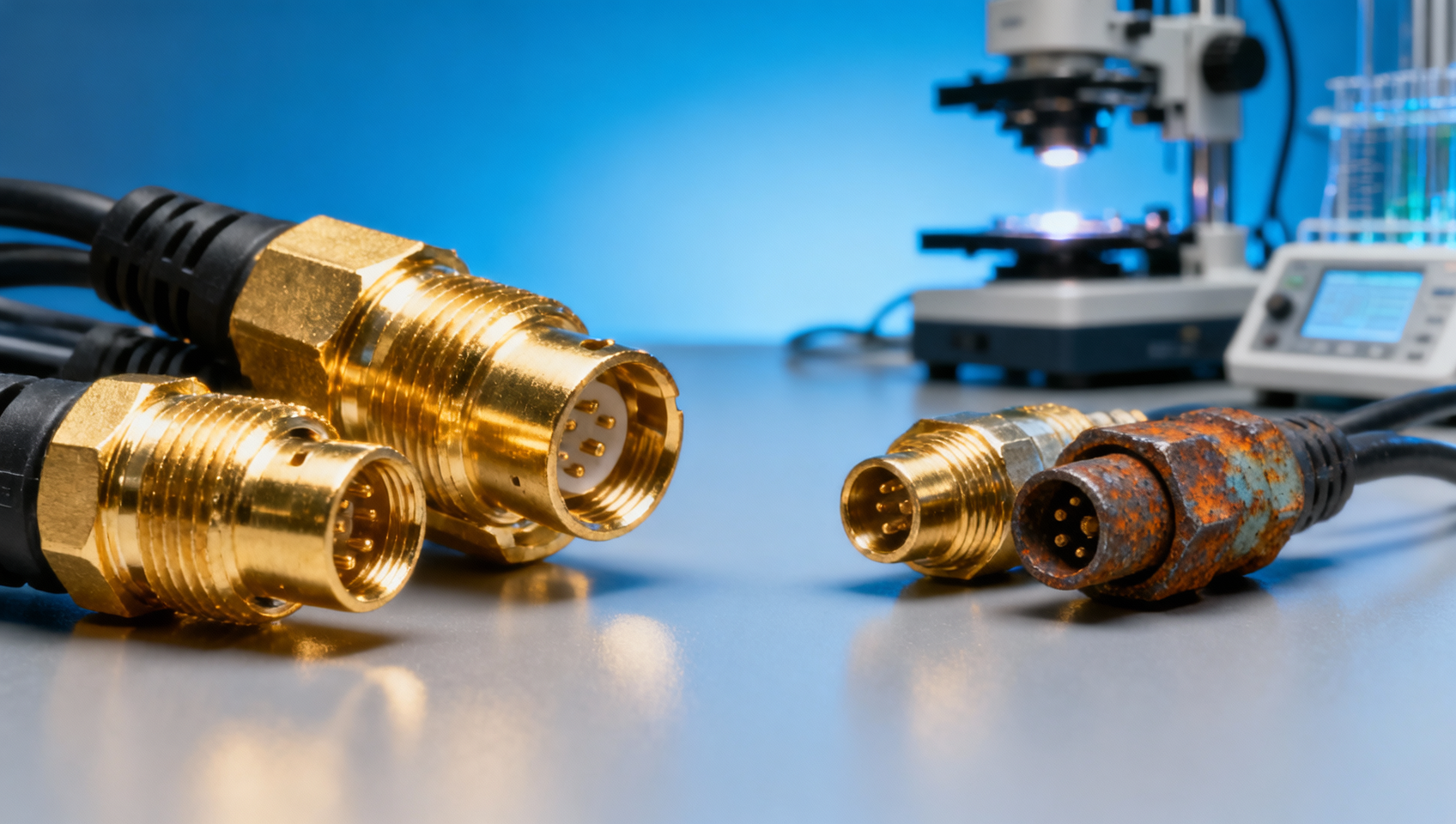
When sourcing industrial connectors, the initial price tag often masks critical risks. Cheap electrical connectors may compromise EMI protection, thermal management, and long-term reliability - costing 3-5x more in downtime and replacements. Our technical analysis reveals how substandard cable connectors and relay switches fail under environmental stress, exposing operations to safety hazards and supply chain disruptions. Discover why global procurement teams now prioritize connector specifications over unit costs.
Material Science Failures in Budget Connectors
Industrial connectors priced 30-50% below market averages typically exhibit measurable deficiencies in three critical material properties:
SCM laboratory testing reveals that connectors using substandard materials exhibit 3.2x higher failure rates when exposed to combined thermal cycling (85°C to -40°C) and vibration (5-500Hz) environments. The most common failure modes include contact resistance exceeding 50mΩ (vs. <10mΩ specification) and insulation resistance dropping below 100MΩ.
Hidden Cost Multipliers
The total cost of ownership (TCO) for low-grade connectors includes several often-overlooked factors:
- Field replacement labor (2-4 hours per incident)
- Production downtime ($5,000-$50,000 per hour in automotive EMS)
- Warranty claims processing (15-25% of part cost)
- Secondary damage from connector failures (12-18% of cases)
Performance Gaps in Critical Applications
Industrial connectors operate in increasingly demanding environments where marginal cost savings create exponential performance risks:
EMI/RFI Shielding Deficiencies
Budget connectors often use thinner metalized coatings (typically 2-3µm vs. 5-8µm in MIL-DTL-38999 compliant designs) and inferior gasket materials. Our EMI testing shows:
- 30-45dB attenuation gap at 1-3GHz frequencies
- Shielding effectiveness degrades 60% faster in salt fog tests
- Ground path resistance increases by 8-12mΩ per mating cycle
Thermal Management Shortfalls
In high-current applications (15A+ per contact), inferior thermal designs cause:
Procurement Decision Framework
Technical buyers should evaluate connectors using these weighted criteria:
Technical Evaluation (60% Weight)
- Material certifications (UL, CSA, MIL-SPEC)
- Environmental test reports (IEC 60529 IP ratings)
- EMC compliance data (CISPR 32, EN 55032)
- Mechanical cycle test results (MIL-STD-1344)
Commercial Evaluation (40% Weight)
Beyond unit price, consider:
- MTBF projections (minimum 100,000 hours)
- Supplier quality audits (ISO 9001:2015 compliance)
- Total cost of ownership models
- Supply chain resilience indicators
Implementation Roadmap for Risk Mitigation
Progressive organizations implement these connector qualification steps:
Phase 1: Technical Validation (4-6 Weeks)
- Material composition analysis (SEM/EDS)
- Accelerated life testing (500+ thermal cycles)
- Vibration testing (IEC 60068-2-6)
Phase 2: Field Pilot (8-12 Weeks)
Install test samples in 3-5 high-stress applications with:
- Monthly contact resistance measurements
- Thermal imaging during peak loads
- Seal integrity checks after washdown cycles
Phase 3: Full Qualification
Upon successful testing, implement:
- Approved vendor list (AVL) integration
- DFMEA updates for connector-related risks
- Maintenance protocol revisions
Strategic Sourcing Recommendations
For procurement teams balancing cost and reliability:
- Prioritize connectors with 3rd party certification marks (UL, TÜV, CSA)
- Require manufacturers to provide full material disclosure
- Benchmark against IPC-620 and MIL-STD-1344 standards
- Negotiate lifecycle cost guarantees rather than unit prices
SCM's connector evaluation services provide data-driven insights to optimize your interconnect strategy. Our technical auditors can validate supplier claims through independent laboratory testing and field performance analysis. Contact our component engineering team for a customized assessment of your current connector portfolio.
Recommended News
- ConnectorsHow to compare connector suppliers when quoted prices differSupplier comparison price guide for connector sourcing: compare technical fit, landed cost, quality, lead times, and supplier risk to make confident purchasing decisions.
- ConnectorsHow to assess connector quality when sourcing electronic components in SingaporeElectronic components Singapore sourcing guide: assess connector quality, traceability, plating, mechanical reliability, and supplier controls to reduce costly failures.
- ConnectorsHow to prevent connector corrosion in aquaculture installationsAquaculture installations need reliable connectors. Discover practical ways to prevent corrosion with smart sealing, material selection, cable routing, and maintenance.
- ConnectorsHow to select automotive connector systems for high-vibration environmentsAutomotive connector systems for high-vibration environments: learn how to evaluate contact stability, sealing, locking, harness support, and qualification evidence.
- ConnectorsWhen should you source from a connector systems wholesaler?connector systems wholesaler: learn when wholesale sourcing reduces supply risk, controls total cost, and protects production with qualified, reliable availability.
- ConnectorsHow to select connector systems for telecom exposed to vibrationConnector systems for telecom exposed to vibration demand more than basic specs. Learn how to protect signal integrity, retention, and reliability with smarter selection criteria.