
How to Vet Electronic Parts Suppliers More Safely
DETAILS
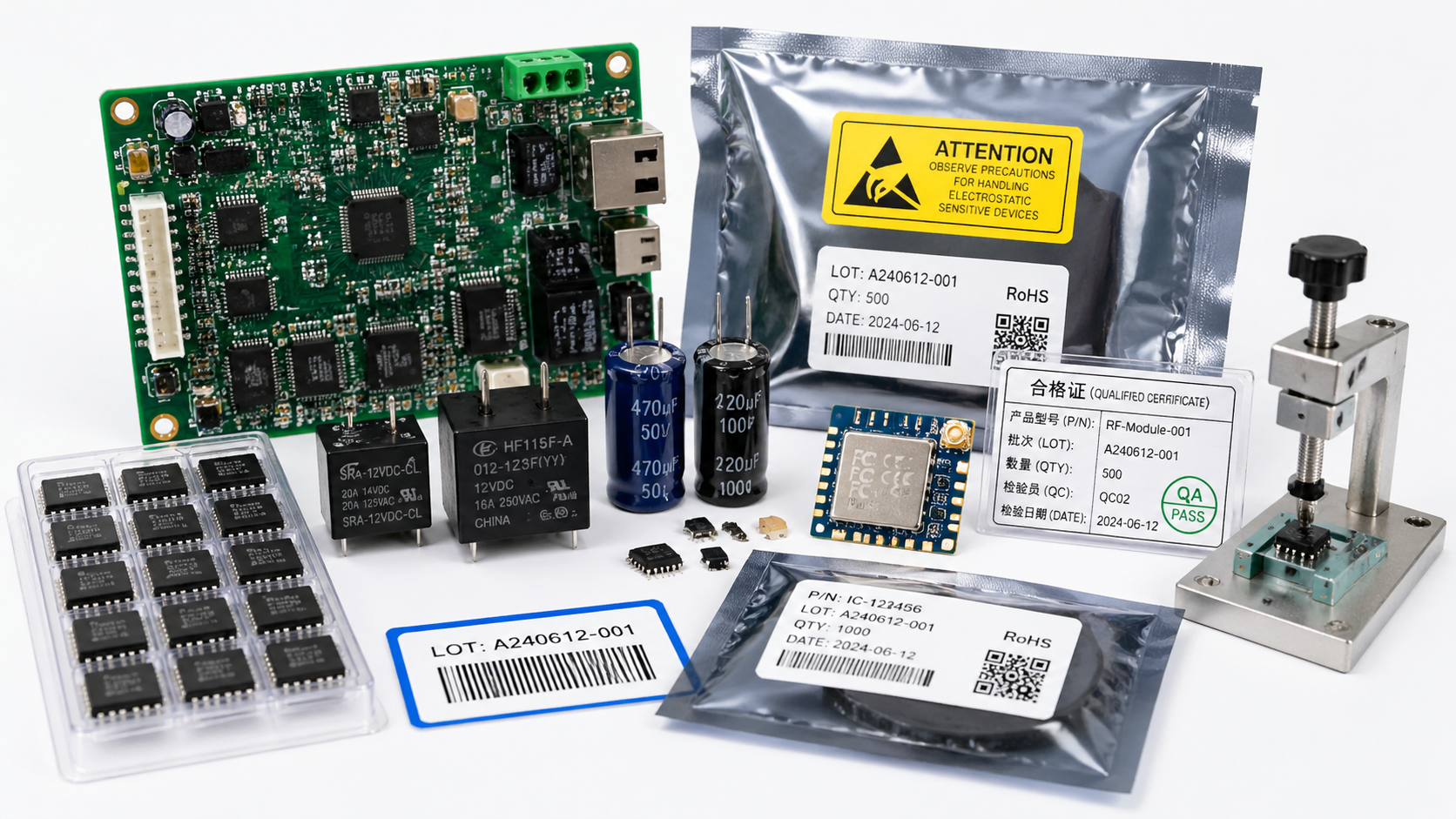
Vetting electronic parts suppliers requires more than price checks—it demands proof of quality, process control, and compliance. From electrical relays, industrial capacitors, and circuit components to RF receiver, RF transmitter, and RF transceiver solutions, buyers must verify semiconductor compliance, SMT compliance, PCB compliance, and thermal management compliance. This guide outlines safer evaluation methods for procurement teams, engineers, and quality managers seeking reliable circuit board assembly and high-performance components.
In today’s electronics supply chain, a low quoted unit cost can hide significant downstream risk: field failures, counterfeit exposure, unstable lead times, poor solderability, and incomplete traceability. For procurement leaders, technical evaluators, project managers, and quality teams, safer supplier screening means building a repeatable process that tests facts rather than relying on sales claims.
This is especially important when sourcing parts used in industrial controls, telecom modules, automotive-adjacent subsystems, thermal packaging, or high-density PCB assemblies where tolerance drift of even ±0.1 mm, inconsistent dielectric behavior, or unmanaged moisture sensitivity can affect final system performance. A disciplined vetting framework helps teams reduce rework, shorten approval cycles, and support better financial decisions.
Define What “Safe” Supplier Vetting Really Means
Safe supplier vetting starts with alignment across engineering, sourcing, quality, and commercial stakeholders. Many organizations evaluate suppliers using only 2 or 3 dimensions—price, lead time, and minimum order quantity. That is not enough for electronic parts, especially when products must pass thermal cycling, signal integrity checks, IPC workmanship standards, or reliability screening over 500 to 1,000 operating hours.
A safer model reviews at least 6 dimensions: legal identity, manufacturing capability, quality management, traceability, compliance evidence, and business continuity. These checks should apply whether you are buying passive components, active semiconductors, PCB assemblies, RF modules, or custom thermal interfaces. The goal is not to slow down purchasing, but to prevent avoidable failures before a supplier is added to the approved vendor list.
For technical buyers, “safe” also means confirming that the supplier understands the application. A relay supplier serving low-voltage consumer devices may not be suitable for industrial switching loads. A capacitor vendor may meet standard storage conditions but fail under 85°C/85% RH stress or repeated inrush conditions. Matching supplier capability to use case is one of the most overlooked parts of source qualification.
Independent benchmarking adds an extra layer of confidence. When organizations compare stated capability against documented process metrics—such as SMT placement accuracy, PCB layer registration, thermal resistance ranges, moisture sensitivity handling, or lot-to-lot reliability—they make decisions based on measurable evidence rather than assumptions.
Core Questions to Ask Before RFQ Approval
- Can the supplier provide traceable lot records for the past 12 months?
- Are incoming material controls documented, including storage, ESD handling, and moisture control?
- What standards are followed for manufacturing and inspection, such as ISO 9001 or IPC-related requirements?
- What is the typical lead-time window: 2–4 weeks, 6–8 weeks, or longer during allocation periods?
- Can the supplier support nonconformance reporting, corrective action, and 8D-style response within 48–72 hours?
Why early screening matters
If these questions are pushed to the final negotiation stage, the buying team often becomes trapped between project deadlines and incomplete supplier data. Early vetting improves internal approval speed, lowers the chance of emergency spot buys, and helps finance teams understand total cost instead of focusing only on purchase price.
Verify Technical Capability, Process Control, and Compliance Records
A supplier’s brochure may mention advanced assembly lines, automated optical inspection, or high-mix manufacturing, but safe qualification requires evidence. For PCB, SMT, and semiconductor-related sourcing, buyers should request process capability data, inspection methods, and sample documentation from at least the last 3 production lots whenever possible.
For example, in SMT assembly, placement repeatability, reflow profile control, solder paste management, and defect escape rates are more useful than generic claims of “high precision.” In PCB sourcing, stack-up control, dielectric consistency, copper thickness tolerance, hole wall quality, and cleanliness data are critical for designs involving high-frequency signals or thermal stress. In thermal packaging, thermal resistance consistency and interface material behavior across temperature cycles matter more than catalog descriptions.
Compliance review should also be practical. Ask for the documents that affect shipment quality and audit readiness: certificate structure, batch records, control plans, nonconformance procedures, and storage discipline. If a supplier cannot explain how components are handled from incoming receipt to outbound packaging, the compliance claim may be shallow.
A useful way to compare suppliers is to score technical capability using weighted criteria. The table below outlines a simple framework that engineering and procurement teams can adapt to their own risk threshold and product category.
The strongest suppliers are rarely those with the broadest marketing claims. They are the ones that can answer technical questions quickly, provide revision-controlled documents, and show stable process output across multiple lots rather than just a single qualification sample.
Documents worth requesting during technical review
- Recent process flow or control plan for the relevant product family.
- Inspection report samples, including dimensional, electrical, or solderability checks.
- Storage and handling procedures for MSL-sensitive or ESD-sensitive parts.
- Corrective action records from a recent quality issue, with closure timing.
- Packaging specification showing label content, lot traceability, and date coding.
Assess Traceability, Counterfeit Risk, and Supply Continuity
Even technically capable suppliers can introduce risk if traceability is weak. In electronic parts procurement, the ability to track a component from original source through storage, handling, assembly, and shipment is central to safe sourcing. This is especially important for semiconductors, RF modules, relays, and passive components used in regulated or high-reliability environments.
A practical traceability review should confirm whether the supplier can provide batch number mapping, date code records, packaging integrity checks, and source attribution for every shipped lot. If traceability breaks at the distributor level, or if mixed date codes appear in a single shipment without prior approval, the risk of counterfeit, reclaimed, or mishandled inventory increases materially.
Supply continuity should be reviewed with the same seriousness. One qualified sample run does not guarantee repeatable delivery over the next 6 to 12 months. Ask how the supplier manages allocation periods, second-source planning, raw material constraints, and forecast lock windows. For project managers and finance approvers, this information affects inventory strategy, working capital, and program launch confidence.
The matrix below helps teams separate routine sourcing risk from high-impact exposure before approving a supplier for recurring business.
For higher-risk categories, many teams use a staged approval model: sample order, pilot lot, then controlled production release. This 3-step approach gives quality and engineering teams time to inspect incoming material, test fit and function, and review supplier responsiveness before larger commercial commitments are made.
Common traceability checks during incoming inspection
- Verify part number, revision, lot code, and quantity consistency across label, packing list, and order line.
- Check whether the package sealing condition supports stated moisture and storage requirements.
- Review date code age against internal policy, such as 12 months, 18 months, or approved extension rules.
- Inspect for mixed-lot shipment conditions that were not disclosed during order confirmation.
When to escalate to a deeper audit
If a supplier cannot provide chain-of-custody clarity, shows repeated packaging inconsistencies, or changes lead time commitments more than twice in a quarter, a deeper remote or on-site audit is usually justified. The cost of that audit is often lower than the cost of a field recall, line stoppage, or urgent redesign.
Build a Cross-Functional Approval Process That Reduces Procurement Risk
Supplier vetting becomes safer when it is not owned by procurement alone. Engineers evaluate technical fit, quality teams confirm process discipline, project managers assess schedule reliability, commercial teams review contractual flexibility, and finance evaluates exposure tied to MOQ, payment terms, and inventory risk. A cross-functional model prevents blind spots that often appear when one department signs off too early.
In practice, organizations can use a 5-stage workflow: supplier pre-screen, document review, sample or pilot validation, commercial review, and final approved vendor listing. This structure helps separate suppliers that are merely responsive from those that are operationally dependable. It also creates a documented trail that supports internal audit and future requalification.
The approval threshold should match product criticality. For standard non-safety-critical parts, a lighter process may be enough. For components entering industrial power systems, RF communication modules, or high-density circuit board assembly, teams should require stricter evidence, including reliability data, process change notification rules, and faster escalation commitments.
The following checklist can be used as a practical approval baseline for electronics sourcing teams managing both technical and commercial risk.
Suggested 5-step supplier approval workflow
- Pre-screen identity and capability: confirm legal entity, product scope, and primary manufacturing location.
- Review quality and compliance documents: verify procedures, certificates, and traceability records.
- Run sample or pilot validation: inspect, test, and document incoming performance over 1–3 lots.
- Complete commercial assessment: compare MOQ, payment terms, lead times, and contingency support.
- Approve with conditions: define score threshold, review interval, and escalation rules for future changes.
Commercial points that should not be skipped
A technically strong supplier can still create business risk if MOQs are unrealistic, payment terms are inflexible, or expedite commitments are unclear. Teams should review at least 4 commercial items before approval: MOQ level, standard lead time, liability for nonconforming goods, and process for engineering change notifications. These factors directly affect cash flow, inventory carrying cost, and recovery speed during disruptions.
For many B2B buyers, supplier responsiveness during the vetting stage is itself an indicator. If document turnaround already takes 7 to 10 days before any business is awarded, response time during a real quality incident may be even slower. Measured communication discipline is often a reliable proxy for operational maturity.
Use Ongoing Monitoring, Requalification, and Independent Benchmarking
Supplier approval should not end after the first order. Electronics supply chains change quickly due to material substitutions, line transfers, wafer allocation, packaging updates, and labor shifts. A supplier that performed well 9 months ago may now be using a different subcontractor, different laminate source, or revised handling process. Ongoing monitoring protects against silent degradation.
A practical monitoring program often tracks 5 recurring indicators: on-time delivery, incoming defect rate, response time to quality issues, document accuracy, and lot traceability consistency. Review frequency can vary by risk level. High-criticality suppliers may be reviewed monthly or quarterly, while lower-risk categories may be requalified every 12 months or after a significant process change.
Independent technical benchmarking is particularly valuable when comparing suppliers across regions or manufacturing models. For organizations sourcing from Asian high-precision manufacturing hubs while serving international engineering teams, independent data on PCB dielectric behavior, SMT precision, active or passive component reliability, and thermal performance can reduce uncertainty during source selection and supplier transitions.
This is where a technical intelligence partner such as SiliconCore Metrics supports safer sourcing decisions. By turning manufacturing parameters into standardized compliance reports and engineering benchmarks, organizations can compare suppliers using objective evidence rather than incomplete self-reporting. That is useful for procurement teams, R&D engineers, quality managers, financial approvers, and program leaders who need one reliable basis for decision-making.
FAQ for safer supplier vetting
How many suppliers should be qualified for one critical component?
For high-impact components, qualifying at least 2 sources is often a prudent baseline, provided both suppliers pass technical and quality review. A second approved source improves continuity during 6–12 week allocation periods, sudden process changes, or region-specific logistics disruptions. However, the backup source should be genuinely validated, not just listed in a sourcing file.
What documents matter most when time is limited?
If you need to move quickly, prioritize 4 document groups first: traceability records, quality procedures, inspection reports, and storage/handling controls. These documents reveal whether the supplier can support safe shipment, auditable records, and issue containment. Marketing presentations and line photos are far less useful than a real lot record and a recent corrective action example.
When is an on-site audit worth the effort?
An on-site audit is usually worth considering when the annual spend is meaningful, the component is technically critical, or the risk of failure is expensive. It is also justified if earlier reviews reveal traceability gaps, inconsistent process explanations, or repeated delivery instability. Even a 1-day focused audit can uncover process weaknesses that are difficult to detect remotely.
How often should an approved supplier be requalified?
A common practice is annual requalification for moderate-risk suppliers and quarterly performance review for high-risk or high-impact categories. Requalification should also be triggered by major events such as plant relocation, line transfer, material substitution, repeated nonconformance, or quality response delays beyond agreed limits such as 48 or 72 hours.
Safer vetting of electronic parts suppliers depends on disciplined evidence review, not optimistic assumptions. Teams that verify technical capability, process control, traceability, compliance, and continuity are better positioned to source reliable semiconductors, passive components, RF solutions, PCB assemblies, and thermal packaging with fewer surprises.
For organizations that need deeper visibility into manufacturing quality and supplier comparability, SiliconCore Metrics provides independent benchmarking, compliance-focused reporting, and technical intelligence across PCB fabrication, SMT assembly, active semiconductors, passive components, and thermal packaging. Contact us to discuss a custom evaluation framework, request data-backed supplier screening support, or learn more about safer sourcing solutions for your electronics supply chain.
- PCB
- PCB fabrication
- SMT assembly
- active semiconductors
- passive components
- thermal packaging
- signal integrity
- EMS
- thermal management
- high-precision manufacturing
- SMT placement
- compliance reports
- high-performance components
- ISO 9001
- component reliability
- SMT process
- PCB sourcing
- passive component reliability
- thermal management compliance
- PCB compliance
- SMT compliance
- semiconductor compliance
- circuit board assembly
- electronic parts
- circuit components
- semiconductor
- high-performance
- RF modules
- RF transceiver
- RF transmitter
- RF receiver
- industrial capacitors
- relays
- electrical relays
Recommended News
- ConnectorsHow to compare connector suppliers when quoted prices differSupplier comparison price guide for connector sourcing: compare technical fit, landed cost, quality, lead times, and supplier risk to make confident purchasing decisions.
- ConnectorsHow to assess connector quality when sourcing electronic components in SingaporeElectronic components Singapore sourcing guide: assess connector quality, traceability, plating, mechanical reliability, and supplier controls to reduce costly failures.
- ConnectorsHow to prevent connector corrosion in aquaculture installationsAquaculture installations need reliable connectors. Discover practical ways to prevent corrosion with smart sealing, material selection, cable routing, and maintenance.
- ConnectorsHow to select automotive connector systems for high-vibration environmentsAutomotive connector systems for high-vibration environments: learn how to evaluate contact stability, sealing, locking, harness support, and qualification evidence.
- ConnectorsWhen should you source from a connector systems wholesaler?connector systems wholesaler: learn when wholesale sourcing reduces supply risk, controls total cost, and protects production with qualified, reliable availability.
- ConnectorsHow to select connector systems for telecom exposed to vibrationConnector systems for telecom exposed to vibration demand more than basic specs. Learn how to protect signal integrity, retention, and reliability with smarter selection criteria.