
RF Transmitter Range Loss: Common Causes and Practical Fixes
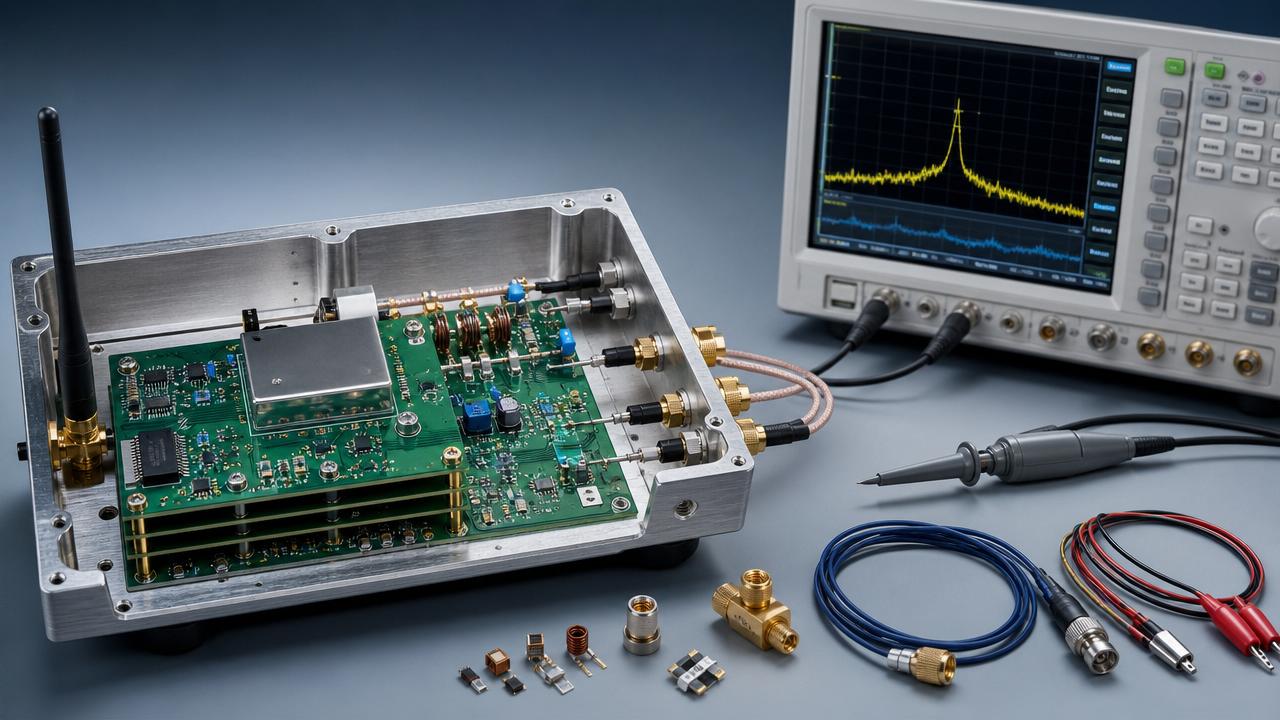
DETAILS
When RF transmitter range loss becomes a field problem
RF transmitter range loss rarely starts as a lab-only issue. It usually appears during installation, service visits, or after months of stable operation.
That is why practical diagnosis matters. A weak RF transmitter can disrupt controls, monitoring links, handheld devices, and embedded wireless functions across many industries.
In real deployments, the same RF transmitter may behave differently in a warehouse, inside metal equipment, or on a dense multilayer board.
The useful question is not only what failed. It is which operating conditions changed, and which signal path assumptions no longer hold.
For organizations tracking semiconductor and EMS quality, this distinction matters. Signal integrity, assembly precision, dielectric consistency, and component aging all shape transmitter range.
A data-driven view, similar to the benchmarking approach used across PCB, SMT, and component reliability analysis, helps narrow root causes faster.
Different operating settings change what the RF transmitter needs
Range loss does not have one universal pattern. A battery-powered node, an industrial controller, and a compact consumer module face different limits.
In short-range indoor systems, multipath reflection and local interference often dominate. In outdoor links, antenna placement, weather sealing, and cable loss become more important.
Compact boards create another challenge. The RF transmitter may meet datasheet power, yet lose practical range because layout, grounding, or nearby components detune the antenna.
This is where many service teams lose time. They replace the module first, while the actual problem sits in the enclosure, feed path, or power rail.
A quick comparison of field conditions
Antenna mismatch is often the first hidden cause
When an RF transmitter loses range suddenly, antenna mismatch is a common starting point. It can happen even if the transmitter IC itself remains healthy.
In field repairs, mismatch usually comes from enclosure changes, cable substitutions, loose connectors, or board revisions that shift impedance.
More compact products are especially vulnerable. Small antenna clearances, nearby batteries, displays, or heat spreaders can alter resonance enough to cut usable distance.
A common misread is trusting nominal antenna specifications without checking the installed system. An RF transmitter only performs well in its final electrical and mechanical environment.
- Measure VSWR or return loss in the assembled device, not only on the open bench.
- Inspect coax routing, solder joints, and connector torque before replacing active parts.
- Review enclosure material and antenna keep-out distance after any product revision.
Power instability shows up differently in portable and fixed systems
Some RF transmitter faults look like weak coverage, yet the real issue is unstable supply voltage during transmit bursts.
Portable devices often show this after battery aging, low-temperature use, or regulator stress. The transmitter still turns on, but peak output drops at the exact moment power is needed.
Fixed systems have a different pattern. Long power traces, noisy DC converters, and shared loads can inject ripple that degrades RF performance without causing a full reset.
This is where board-level quality matters. Stable decoupling, controlled impedance, and accurate SMT placement strongly affect repeatable RF transmitter behavior.
A practical fix starts with dynamic measurement. Static voltage readings can look acceptable while the RF transmitter still collapses under pulsed load.
What to verify before changing the module
- Capture supply voltage during transmission, not only at idle.
- Check regulator thermal behavior under sustained duty cycles.
- Inspect decoupling capacitors for aging, ESR rise, or substitution drift.
- Compare field boards against approved BOM and layout revision records.
Interference becomes more serious in mixed-signal environments
Not every weak RF transmitter is underpowered. In many mixed-signal products, interference reduces effective range before output power changes at all.
The more crowded the electronics, the more likely switching supplies, displays, processors, and nearby radios will raise the noise floor.
Industrial cabinets and smart equipment often make this worse. Metal surfaces create reflections, while cable harnesses act as unintended radiators or antennas.
A frequent mistake is assuming interference must be external. In practice, the strongest blocker may come from the same board or adjacent assembly.
The better approach is to separate symptoms. If range varies with motor startup, display refresh, or converter load, interference is more likely than transmitter aging.
Aging components and contact issues create slow range decline
When range loss develops gradually, passive components and interconnect reliability deserve closer attention.
Capacitors in matching networks can drift. Connectors can oxidize. Solder joints may survive continuity tests while adding enough parasitic change to weaken the RF transmitter path.
Harsh thermal cycling accelerates these failures. That is especially relevant where long-term reliability data, material consistency, and assembly quality vary across suppliers.
This is one reason independent component and manufacturing analysis matters. Reliability under environmental stress often predicts future RF transmitter service issues better than initial bench results.
If the same model fails after a similar service interval, the problem may be systematic rather than accidental.
PCB design choices decide whether fixes will last
Sometimes the RF transmitter recovers after repair, then fails again in the field. Repeated loss often points back to board design rather than a single bad part.
Poor RF grounding, inconsistent dielectric properties, crowded trace routing, and weak isolation between digital and RF sections can all shrink margin.
These problems are harder to catch through simple replacement work. They require comparing layout intent with manufacturing reality.
For multilayer boards, dielectric variation and stack-up control matter more than many teams expect. A small process deviation can shift impedance enough to affect RF transmitter performance.
The same applies to SMT accuracy. Placement offset, reflow inconsistency, and solder volume variation can alter matching networks and shielding behavior.
Design-level checks that reduce repeat failures
Where teams often misjudge RF transmitter range loss
Several patterns lead to wasted repairs and repeated service calls.
- Treating all weak RF transmitter cases as antenna failures, without checking power or interference.
- Trusting datasheet range values while ignoring enclosure, humidity, cable loss, and mounting conditions.
- Replacing active devices first, even when connector wear or passive drift fits the symptom better.
- Looking at initial purchase cost only, while overlooking service frequency and long-term component stability.
- Assuming two similar products need the same RF transmitter tuning and layout margins.
In practice, the better judgment path is contextual. Start with the operating scene, then move through antenna, power, noise, materials, and board execution.
A practical path to restore RF transmitter performance
The fastest durable fix usually comes from narrowing conditions, not from swapping parts in sequence.
Document where the RF transmitter loses range, under what load, after what service time, and in which enclosure state.
Then compare the unit against verified design and manufacturing baselines. Layout files, BOM control, dielectric data, and assembly metrics often explain why one build performs worse.
This is especially useful when products depend on global EMS and semiconductor supply chains. Small process differences can create large field effects.
A sensible next step is to sort failures by scenario, confirm the key limiting parameter, and build a repeatable check standard for future RF transmitter service work.
That approach does more than restore range. It reduces repeat failures, improves maintenance decisions, and makes future design revisions easier to validate.
Recommended News
- RF ModulesHow dielectric constant affects impedance stability in RF modulesDielectric constant for RF modules directly affects impedance stability. Learn how Dk variation, stackup control, frequency, and fabrication impact RF performance.
- RF ModulesHow to Choose Low Power Wireless Modules for Battery-Driven DevicesWireless modules low power selection starts with real energy use, not datasheet claims. Learn how to compare RF, protocol fit, battery life, and reliability for smarter device design.
- RF ModulesEU WEEE Rule Takes Effect for Leaded RF ModulesEU WEEE rule now impacts leaded RF modules at import: Bluetooth and Wi-Fi shipments may be blocked without a Pb-exemption code. Learn key compliance steps to avoid customs delays.
- RF ModulesLow Power RF Transmitter Range Limits in Real DeploymentsLow power RF transmitter range depends on antennas, interference, enclosures, and regulations. Learn what really limits field performance and how to plan reliable deployment.
- RF ModulesRF Transmitter Price Breakdown: What Drives Total CostRF transmitter price depends on more than the quote. Discover how specs, certification, materials, and reliability testing shape total cost and smarter supplier decisions.
- RF ModulesVietnam to Require VCCI Pre-Approval for RF Module ImportsVietnam RF Module imports will require VCCI pre-approval from Aug 1, 2026. Learn how the new rule may affect customs clearance, supply chains, and sourcing plans.