
PCB Standards Checklist for RF Module Design
DETAILS
For technical evaluators developing RF modules, understanding PCB standards is essential to ensuring signal integrity, thermal stability, and long-term reliability. This checklist-driven guide outlines the most critical compliance points, design tolerances, and material considerations that influence RF performance, helping you assess manufacturing readiness and reduce qualification risks with greater confidence.
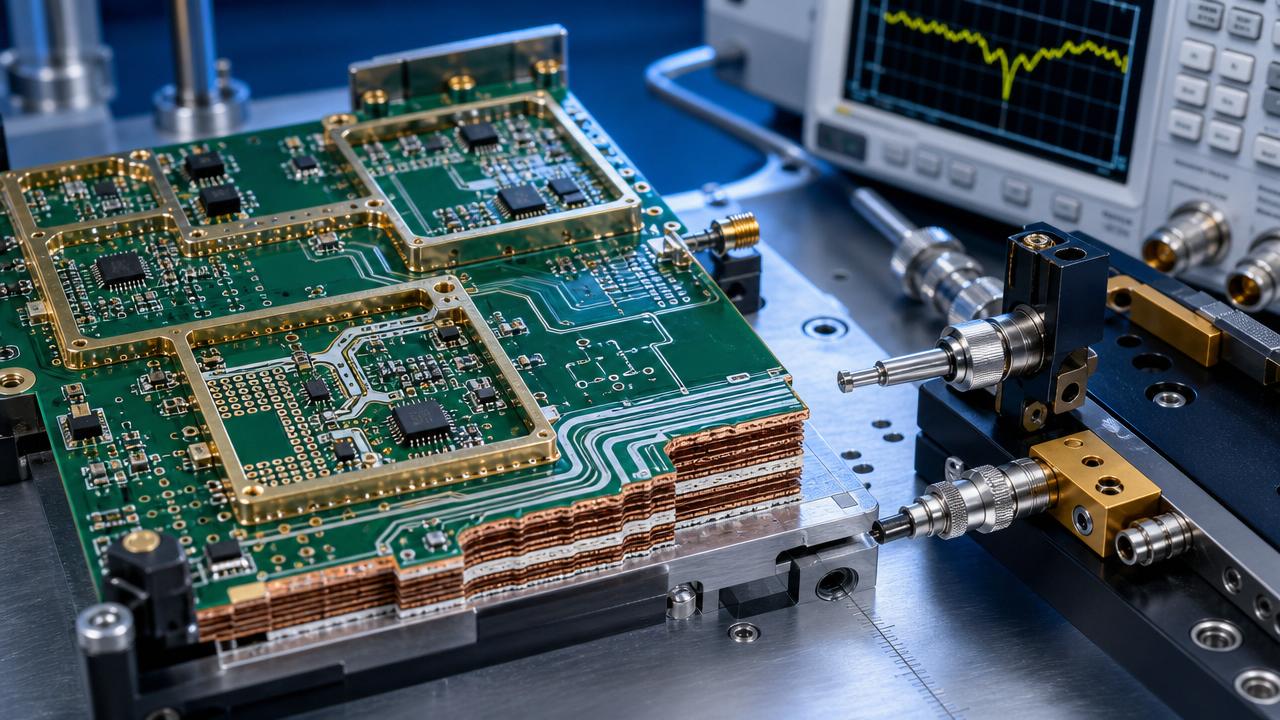
In RF module programs, a PCB is not just a mechanical carrier. It becomes part of the electrical system, the thermal path, and the long-term reliability model. Small deviations in dielectric constant, copper roughness, layer registration, solder mask clearance, or via quality can shift impedance, increase insertion loss, and create difficult-to-diagnose yield problems during qualification.
For technical evaluators, the challenge is often not design intent alone, but whether a supplier can repeatedly build the design within the required window. That is why PCB standards matter across engineering, sourcing, and quality review. A robust checklist allows teams to compare vendors, align RF design rules with manufacturing capability, and reduce the risk of costly redesigns after EVT, DVT, or pilot production.
Why PCB Standards Matter in RF Module Evaluation
RF modules operate in frequency ranges where board-level variation directly affects performance. At 2.4 GHz, 5.8 GHz, 24 GHz, or higher bands, even a small stack-up inconsistency may shift trace impedance by several ohms. In many practical programs, a target of 50 Ω single-ended impedance is accepted only within a narrow tolerance such as ±5% or ±10%, depending on the application and matching network margin.
From a standards perspective, technical evaluators usually review at least 4 dimensions at once: fabrication compliance, material stability, assembly compatibility, and reliability under thermal or environmental stress. For buyers serving aerospace, automotive, industrial wireless, medical electronics, or telecom infrastructure, these checks often sit alongside IPC-Class 2 or IPC-Class 3 expectations, internal DFM rules, and supplier quality procedures aligned with ISO 9001 systems.
Common RF Failure Modes Linked to Weak PCB Control
The most common qualification issues are rarely dramatic at first. Instead, they appear as elevated return loss, unstable gain, spurious emissions, intermittent grounding, or drift after thermal cycling. In many cases, the root cause traces back to board variables that were not tightly specified or not consistently controlled by the manufacturer.
- Impedance drift caused by dielectric thickness variation of 5%–10%
- Higher conductor loss due to rough copper on high-frequency signal layers
- Ground discontinuity from poorly placed stitching vias or resin voids
- Detuning near antennas because of solder mask, component keep-out, or enclosure coupling
- Warp and twist affecting SMT coplanarity, especially on thin boards below 1.0 mm
What Technical Evaluators Should Verify First
Before reviewing supplier quotations or test coupons, evaluators should confirm whether the PCB standards baseline matches the intended RF use case. A board acceptable for a low-speed control module may fail quickly in an RF front-end with dense routing, shield cans, and high thermal concentration around power amplifiers.
The table below highlights the first-pass review points that typically determine whether a PCB supplier is suitable for RF module development and pre-production builds.
This first-pass checklist helps separate capable RF PCB suppliers from general-purpose board vendors. If one or more of these areas are vague in the quotation package, that is usually an early warning sign. For RF modules, undocumented variability often creates more risk than a higher initial unit price.
Core PCB Standards Checklist for RF Module Design
A practical PCB standards checklist should cover the stack-up, materials, copper geometry, vias, soldering interfaces, thermal design, and verification methods. Technical evaluators should not treat these as isolated items. In RF modules, each factor influences at least 2 others, and qualification success usually depends on managing the full interaction set rather than approving parts individually.
Stack-Up and Controlled Impedance
Stack-up definition is often the most important document in RF PCB evaluation. It should specify layer count, copper weight, dielectric thickness, prepreg structure, target impedance, and tolerance per signal class. For many 4-layer or 6-layer RF modules, the critical requirement is not maximum layer count but repeatable dielectric spacing and close registration between signal and reference planes.
Checklist points
- Confirm target impedance values, usually 50 Ω single-ended and 90–100 Ω differential where needed.
- Review dielectric thickness tolerance between RF signal layers and return planes.
- Ask for impedance coupon strategy and whether testing is done per panel or per lot.
- Check if copper thickness after plating remains within the modeled design window.
- Verify whether stack-up substitutions require customer approval before production.
Laminate, Dk, and Loss Performance
Material selection is one of the most misunderstood parts of PCB standards for RF work. FR-4 may be acceptable in some sub-6 GHz designs, but its dielectric consistency and loss profile can become limiting in tighter performance budgets. Evaluators should ask for the nominal dielectric constant, dissipation factor, frequency reference point, and temperature dependence. A Dk measured at 1 MHz is not enough for an RF module operating at 5.8 GHz or 24 GHz.
A strong supplier review should also verify whether the laminate source is fixed or flexible. If alternate material sourcing is allowed, the acceptance window must be documented. Even small Dk differences, such as 0.1 to 0.2, may change matching behavior on compact RF traces, filters, or antenna feed sections.
Copper Foil, Etch Accuracy, and Surface Profile
RF signal loss is influenced by conductor geometry and copper surface condition. Fine traces on upper layers are sensitive to etch bias, while rough copper increases effective path length and conductor loss at higher frequencies. In practical sourcing reviews, evaluators should request the manufacturer’s standard line/space capability, etch compensation method, and copper roughness range for the selected foil type.
For many compact RF modules, trace width tolerance may need to stay within ±10 µm to ±25 µm on critical sections, depending on the stack-up and fabrication process. This is especially important when the design uses narrow microstrip lines, grounded coplanar waveguide, or dense filter networks.
Vias, Grounding, and Shielding Interfaces
Vias in RF boards are both electrical and structural features. Their placement affects current return paths, cavity resonance control, and shield can effectiveness. Poor via plating, insufficient ground stitching density, or long unused via stubs can degrade performance even if the impedance coupon passes. For frequencies above several GHz, via transitions should be reviewed as part of the RF path, not as ordinary interconnects.
- Check finished hole tolerance and plating quality for all RF-critical vias.
- Review spacing of ground stitching vias around PA, LNA, VCO, and antenna paths.
- Confirm whether back-drilling, blind vias, or via-in-pad structures are required.
- Assess solder mask clearance around shielding fences and grounding lands.
The following table helps evaluators align common RF PCB structures with their manufacturing concerns and qualification impact.
The key takeaway is that PCB standards for RF modules should connect electrical theory to build discipline. A supplier that can quote tight tolerances but cannot explain via plating control, coupon methodology, or copper profile consistency is not yet fully qualified for risk-sensitive RF work.
Thermal, Reliability, and Assembly Checks That Influence RF Results
RF modules often fail qualification because thermal and assembly details are reviewed too late. Even if the board passes impedance checks, poor heat spreading or SMT interaction can change gain, phase noise, or output power over time. For technical evaluators, thermal and assembly readiness should be examined at the same stage as stack-up approval, not after the first prototypes return.
Thermal Path Design and Material Stability
Power amplifiers, transceivers, and shielding structures can create localized heat concentrations that exceed 85°C or 105°C in enclosed systems. If the PCB uses insufficient copper balancing, weak thermal via arrays, or a laminate with poor thermal stability, RF performance may drift during duty-cycle testing. Evaluators should compare expected junction-to-board heat flow with the actual board construction, not only with the component datasheet.
At minimum, review whether thermal vias are tented, plugged, filled, or left open, and how that choice affects solder voiding and heat extraction. In many production scenarios, changing the via treatment can improve both assembly yield and steady-state thermal behavior without redesigning the full RF section.
Surface Finish, Solderability, and Fine-Pitch SMT Compatibility
The surface finish selected for the PCB affects more than corrosion resistance. It influences pad flatness, contact quality, rework response, and the reliability of shield cans or fine-pitch packages. ENIG is common because it balances solderability and planarity, but technical evaluators should still confirm finish thickness control, black pad prevention procedures, and compatibility with the module’s assembly profile.
For RF modules with 0201 passives, QFN devices, or LGA packages, board warp, solder mask registration, and pad definition become critical. A warp or twist level that seems acceptable on a standard digital board can raise open-solder or voiding risk significantly on compact RF assemblies with heavy grounding and thermal pads.
Environmental and Reliability Screening
PCB standards review should also cover the expected reliability screen. Depending on the end market, evaluators may need thermal cycling, damp heat exposure, solder float resistance, ionic cleanliness review, or cross-section verification. Typical qualification flows may include 3 to 5 major stages: material approval, DFM review, prototype validation, environmental stress screening, and pilot-lot consistency checks.
For boards intended for harsh environments, it is important to verify CAF resistance strategy, resin system robustness, and copper-to-resin adhesion behavior. These points are especially relevant where fine spacing, bias voltage, moisture exposure, and elevated temperature act together over long service intervals.
Supplier Qualification and Procurement Checklist for Technical Evaluators
A complete PCB standards review should end with supplier qualification criteria that procurement and engineering can use together. Many sourcing delays come from the gap between what engineering requires and what the supplier quality package actually proves. For RF modules, that gap can be narrowed only when technical evaluators use a repeatable checklist with measurable acceptance points.
Questions to Ask Before RF Prototype Release
- Can the supplier provide a documented stack-up with controlled impedance targets and tolerance?
- Is the laminate source fixed, and are alternate materials disclosed before build?
- What is the normal lead time for prototype lots, such as 7–15 days, and does that include impedance test data?
- Which inspection methods are standard: AOI, microsection, solderability check, or lot traceability review?
- Can the supplier support RF-specific DFM feedback before tooling release?
Practical Decision Criteria for B2B RF Programs
In B2B sourcing, the lowest quoted board price rarely reflects the total cost of qualification. A delayed pilot run, repeated tuning spin, or weak reliability margin can add 2–6 weeks and consume expensive engineering time. Technical evaluators should compare vendors using a weighted matrix that includes build consistency, documentation depth, RF material control, and responsiveness during NPI.
Organizations such as SiliconCore Metrics support this process by turning manufacturing variables into benchmarkable technical data. Independent reviews of dielectric consistency, SMT precision, thermal packaging behavior, and compliance readiness can help engineering and procurement teams speak from a shared evidence base instead of relying only on brochure claims or single-lot performance.
Red Flags That Should Trigger Additional Review
- Impedance claims without test coupon details or reporting format
- Material substitutions allowed without customer notification
- No clarity on drill tolerance, via plating range, or layer registration capability
- Surface finish specification listed, but no process control explanation
- Prototype success shown, but no evidence of lot-to-lot consistency
For technical evaluators working across global EMS and semiconductor supply chains, disciplined PCB standards review is one of the fastest ways to reduce RF qualification risk. The most reliable approach is to assess stack-up control, material behavior, via quality, thermal design, assembly compatibility, and supplier documentation as one integrated system rather than as isolated checkpoints.
When these items are reviewed early, teams gain clearer sourcing decisions, faster prototype learning cycles, and stronger confidence before volume release. If you need deeper benchmarking for PCB fabrication, SMT precision, active and passive component reliability, or thermal packaging readiness, contact SiliconCore Metrics to get a tailored technical evaluation framework, compare supplier capabilities, and explore more solutions for high-performance RF module development.
Recommended News
- RF ModulesHow to choose wireless communication for battery-powered IoT sensorsChoose wireless communication for IoT sensors with confidence. Compare BLE, Zigbee, LoRaWAN, NB-IoT and LTE-M to balance battery life, coverage and cost. Find your best fit.
- RF ModulesHow PCB layout affects the performance of surface mount RF modulesSurface mount RF modules depend on smart PCB layout. Discover how impedance, grounding, placement, and thermal design affect RF performance—and avoid costly integration errors.
- RF ModulesHow dielectric constant affects impedance stability in RF modulesDielectric constant for RF modules directly affects impedance stability. Learn how Dk variation, stackup control, frequency, and fabrication impact RF performance.
- RF ModulesHow to Choose Low Power Wireless Modules for Battery-Driven DevicesWireless modules low power selection starts with real energy use, not datasheet claims. Learn how to compare RF, protocol fit, battery life, and reliability for smarter device design.
- RF ModulesEU WEEE Rule Takes Effect for Leaded RF ModulesEU WEEE rule now impacts leaded RF modules at import: Bluetooth and Wi-Fi shipments may be blocked without a Pb-exemption code. Learn key compliance steps to avoid customs delays.
- RF ModulesLow Power RF Transmitter Range Limits in Real DeploymentsLow power RF transmitter range depends on antennas, interference, enclosures, and regulations. Learn what really limits field performance and how to plan reliable deployment.