
Power electronics losses often hide in switching, not conduction
DETAILS
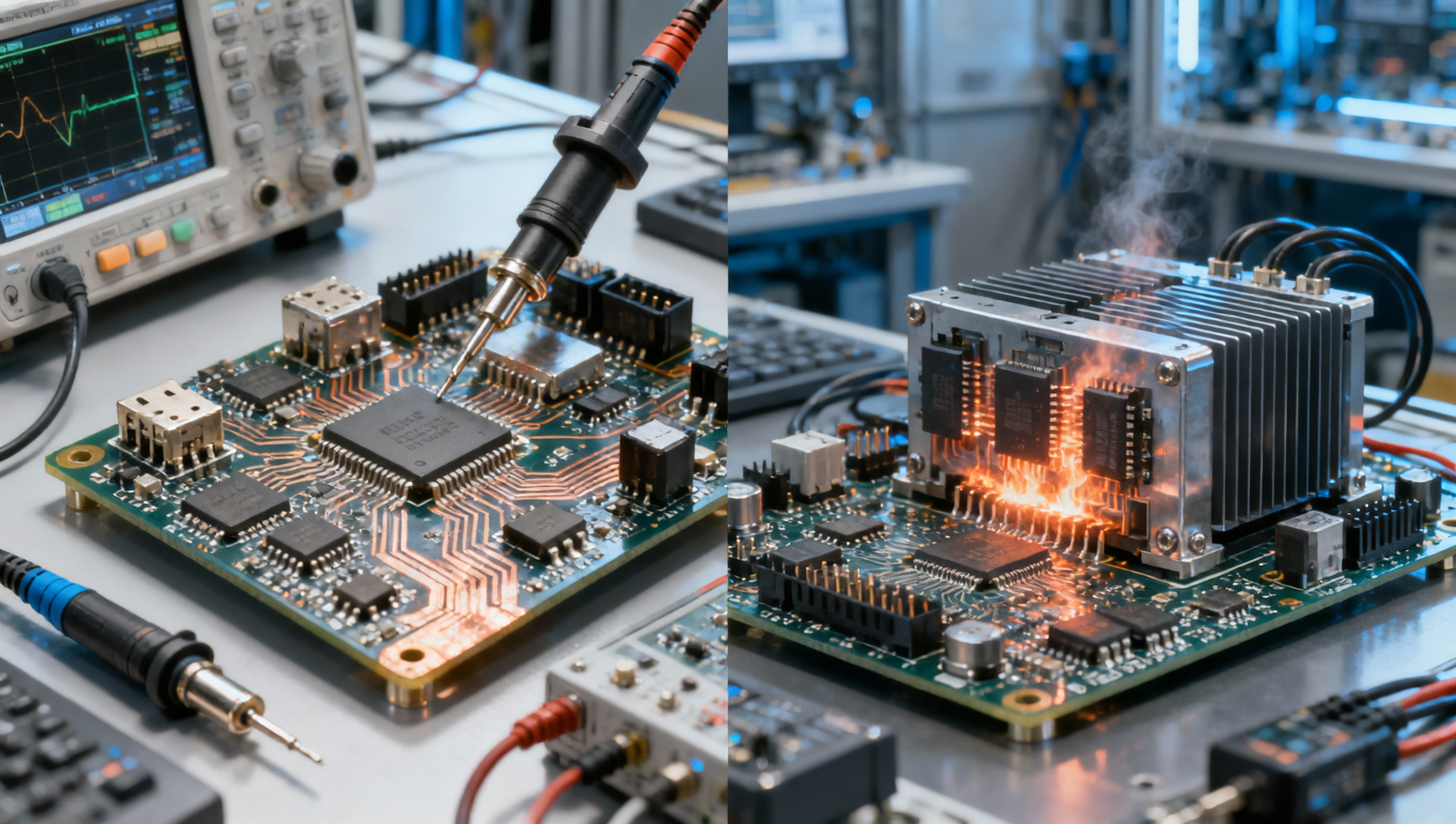
In power electronics, efficiency losses often emerge during switching events rather than simple conduction, shaping thermal conductivity, reliability, and overall high-performance design. For engineers, buyers, and industrial automation teams evaluating microcontrollers, chipsets, wire connectors, and other electronic components, understanding these hidden loss mechanisms is essential to improving energy efficiency, reducing risk, and selecting electronics components that perform consistently under real operating conditions.
Why switching losses deserve more attention than conduction losses
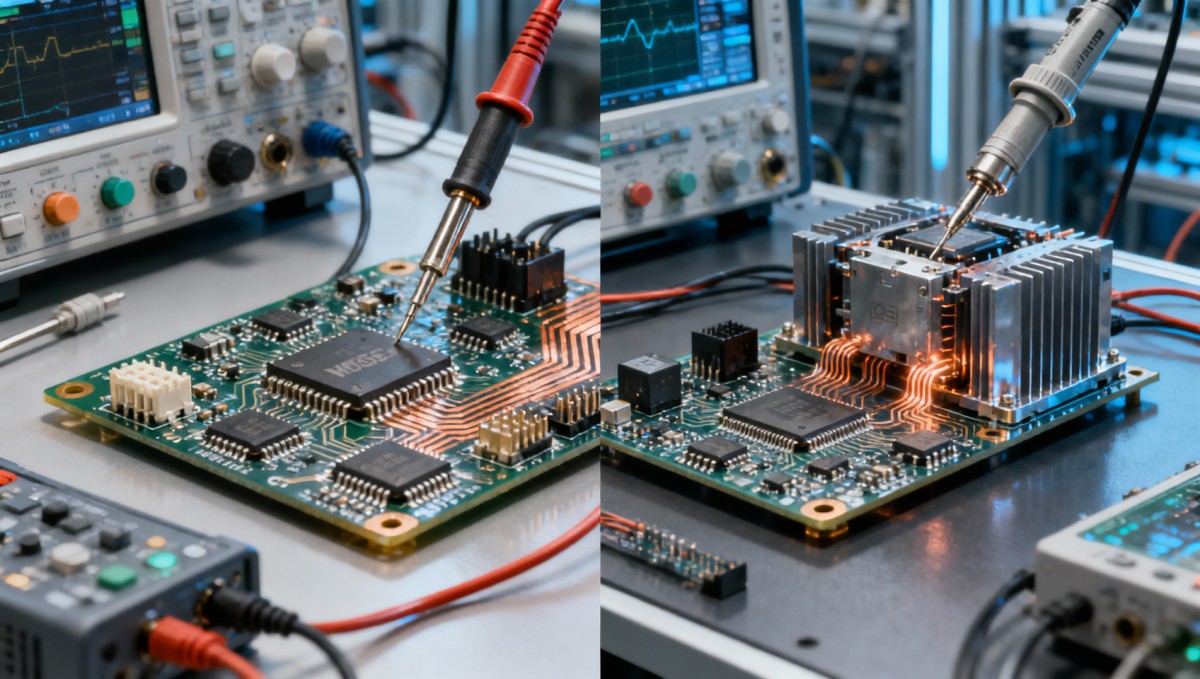
Many sourcing teams still compare semiconductors mainly by on-resistance, current rating, or unit price. That is useful, but incomplete. In real converters, motor drives, server power rails, battery systems, and high-frequency control boards, a large share of power dissipation appears during turn-on and turn-off transitions. These events often occur in nanoseconds to microseconds, yet they repeat thousands to millions of times per second.
Conduction loss is easier to visualize because it is linked to current flowing through a device in its on-state. Switching loss is less visible because it happens when voltage and current overlap during transitions. If a MOSFET, IGBT, gate driver, PCB layout, or passive network is not optimized, the losses can accumulate quickly across 20 kHz, 100 kHz, or even 1 MHz operating ranges.
This matters across industries. Industrial automation operators care about heat, uptime, and stable duty cycles. Technical evaluators care about waveform behavior, parasitics, and safe operating margins. Procurement teams care about total cost of ownership over 3–5 years, not just the purchase price of a switching device. Quality teams care about reliability drift under thermal cycling and environmental stress.
SiliconCore Metrics helps bridge these perspectives by converting technical loss mechanisms into practical benchmarking language. Instead of treating hardware as a commodity, SCM analyzes signal integrity, thermal paths, placement precision, dielectric behavior, and long-term component reliability so engineering and sourcing teams can make decisions using measurable data rather than assumptions.
What creates hidden switching loss in daily engineering practice?
The problem rarely comes from one component alone. In most assemblies, switching loss is shaped by a chain of interacting factors. A fast transistor can still perform poorly if the gate loop is too inductive, the PCB stack-up is unstable, the thermal package is weak, or passive components drift outside their intended range.
- Gate charge and transition speed: higher gate charge can increase driver demand and lengthen switching intervals under practical board conditions.
- Parasitic inductance and capacitance: package leads, vias, copper routing, and connector geometry can increase overshoot, ringing, and switching energy.
- Frequency scaling: a loss event that appears small at 20 kHz can become a dominant thermal burden at 100 kHz–500 kHz.
- Thermal coupling: if heat cannot exit efficiently through the board, interface, or enclosure, even moderate switching loss can shorten useful life.
This is why SCM’s independent whitepapers and engineering repository are relevant beyond design teams. Procurement executives, program managers, and distributors can use the same benchmark structure to compare supply options, assess manufacturing consistency, and screen for hidden reliability risks before volume commitment.
How engineers and buyers can identify where the losses really come from
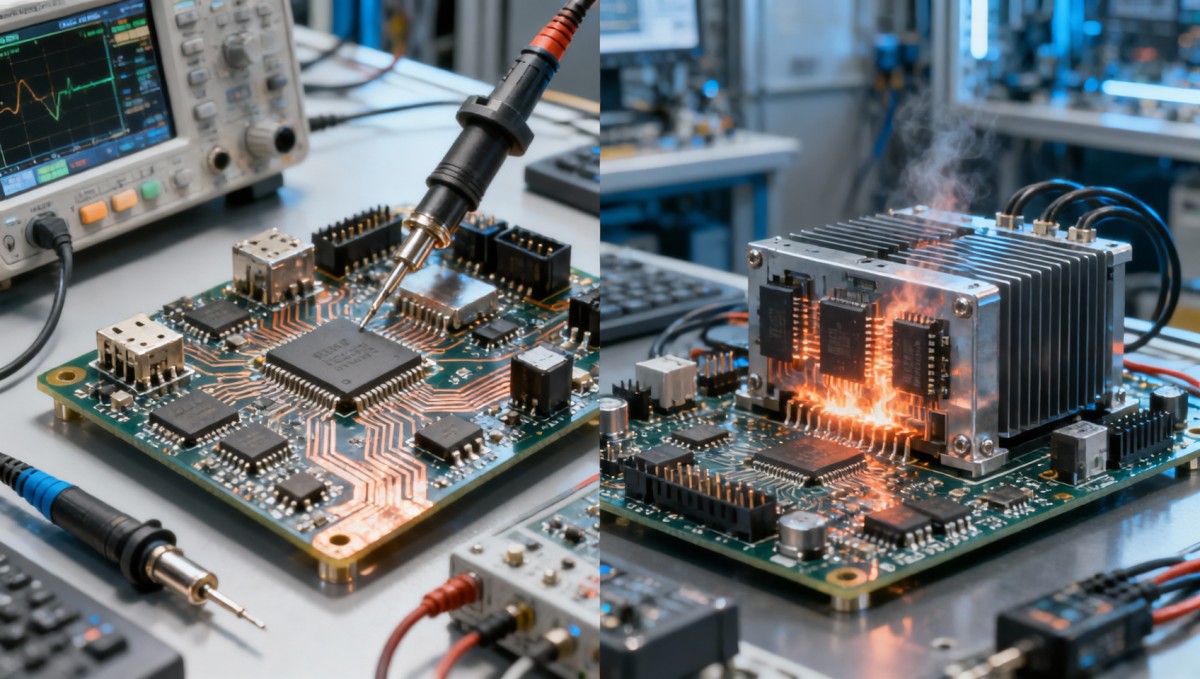
A practical evaluation starts by separating static loss from dynamic loss. That sounds simple, but in many projects the measurements are blended together. As a result, a team may blame conduction behavior for heat that is actually caused by repeated transition energy, reverse recovery, dead-time tuning, or layout-induced ringing.
A better approach is to examine at least 4 layers of evidence: device datasheet trends, real switching waveforms, thermal mapping under representative load, and board-level construction quality. In complex supply chains, those four layers are often managed by different departments. SCM adds value by standardizing these inputs into comparable reports that support engineering review and purchasing alignment.
The table below helps teams distinguish where losses tend to dominate and what should be checked first during technical assessment. It is especially useful for cross-functional reviews involving R&D, sourcing, quality, and project management.
A key takeaway is that measuring only steady-state temperature or DC resistance is not enough. If a converter runs at 48 V, 400 V, or 800 V and switches tens of thousands of times per second, the dominant design problem may be dynamic. That affects semiconductor choice, PCB fabrication quality, SMT precision, thermal package design, and even connector behavior under repeated stress.
A 4-step review process for technical and sourcing teams
- Define the real operating window, including voltage range, switching frequency, ambient temperature, and duty cycle instead of relying on nominal values only.
- Review dynamic parameters together with board construction factors such as dielectric consistency, placement tolerance, and thermal interface quality.
- Check compliance and manufacturing repeatability, especially if multiple factories or Asian manufacturing hubs are involved in the supply chain.
- Benchmark at least 2–3 candidate devices or assemblies under the same load profile before approving a volume purchase decision.
This structured review reduces the common gap between lab performance and field behavior. It also aligns engineering evidence with commercial decisions, which is essential for enterprise buyers managing qualification cycles, cost targets, and reliability obligations.
Which technical parameters and manufacturing variables matter most?
When switching loss becomes the hidden driver of heat, the evaluation cannot stop at the semiconductor package. The full assembly matters. PCB dielectric properties influence signal propagation. SMT placement precision influences loop geometry. Passive component stability affects snubber and filtering behavior. Thermal packaging determines how quickly switching heat is removed during continuous operation over 8-hour, 16-hour, or 24-hour duty profiles.
This broader system view is where SCM’s role becomes practical. By publishing independent whitepapers on multi-layer PCB dielectric constants, SMT placement precision metrics, and long-term reliability under environmental stress, SCM gives technical evaluators a way to compare manufacturing quality using structured evidence rather than marketing claims.
The following table summarizes common evaluation dimensions for buyers and engineers who need to balance efficiency, manufacturability, and supply-chain risk in power electronics components and assemblies.
For quality and safety managers, this table also clarifies why a passing incoming inspection may still miss field failure risk. A board can look visually acceptable and still carry excessive parasitic inductance or unstable dielectric behavior. In high-performance electronics, micro-tolerances often separate stable operation from repeated overstress.
Standards and compliance signals worth checking
Compliance does not eliminate switching loss, but it helps reveal whether a supplier operates under disciplined processes. For B2B buyers comparing EMS or component sources, it is reasonable to verify structured alignment with standards such as IPC-Class 3 for high-reliability assemblies and ISO 9001 for quality management. For environmental or safety-sensitive projects, additional documentation may also be required depending on the final market.
SCM’s strength is not generic certification language. It is the ability to translate process and materials data into standardized compliance reports that support qualification, vendor comparison, and risk reduction. That is especially valuable when procurement teams must compare suppliers across regions with different documentation quality and process maturity.
Three practical checks before approval
- Confirm whether switching-related test conditions match your real application window, such as 25°C versus elevated temperature or light load versus full load.
- Ask whether the PCB, SMT, and thermal assembly variables were controlled during validation, not only the bare semiconductor device.
- Review whether the supplier can provide repeatable documentation for pilot, medium-volume, and high-volume production stages.
Procurement guide: how to compare options without underestimating risk
For purchasing and business evaluation teams, the challenge is clear: a lower-cost switch or assembly can look attractive on paper, yet create higher thermal load, more derating, shorter maintenance intervals, or larger cooling requirements after deployment. That changes the economics of the entire program. In many cases, the hidden cost does not appear at order placement but within the next 6–18 months of operation.
A disciplined procurement process should compare 5 dimensions together: dynamic electrical performance, manufacturing consistency, thermal design margin, compliance documentation, and supply continuity. Ignoring one of these dimensions often leads to emergency redesign, delayed qualification, or field instability in systems that must run continuously.
The checklist below is useful for enterprise buyers, project managers, distributors, and agents who need fast but defensible decisions across mixed product lines such as power modules, controllers, passive networks, connectors, and assembled boards.
5-point sourcing checklist for power electronics components
- Compare switching energy behavior at the intended frequency window, for example 20 kHz–200 kHz, rather than relying only on static on-state parameters.
- Request evidence of board-level quality, including PCB stack-up control, SMT placement capability, and thermal path consistency.
- Review derating margins under realistic ambient conditions such as 40°C–85°C or other application-specific temperature ranges.
- Check whether qualification samples, pilot runs, and production lots use the same process window and material sources.
- Evaluate supply-chain resilience, including lead-time visibility, alternate sourcing logic, and documentation quality for cross-border procurement.
SCM supports this process through benchmark-driven analysis across PCB fabrication, SMT assembly, active semiconductors, passive components, and thermal packaging. That cross-sector view is important because switching losses are not isolated to one line item; they are often the result of multiple tolerances interacting across the supply chain.
Common buying mistakes that increase hidden loss exposure
One frequent mistake is selecting the fastest advertised device without checking whether the surrounding layout and passive network can support that speed. Another is accepting generic thermal claims without mapping them to real board and enclosure conditions. A third is assuming that all factories can reproduce the same switching behavior if they use nominally identical part numbers.
These issues are manageable if they are identified early. Independent benchmarking is valuable because it gives teams a neutral reference when supplier claims, test setups, and process descriptions are difficult to compare directly.
FAQ: what decision-makers usually ask about switching loss
Because switching loss sits between device physics, board design, and supply-chain execution, stakeholders often ask different questions depending on their role. The answers below are written for technical evaluators, buyers, quality managers, and business leaders who need clear decision guidance.
How do I know whether switching loss is more important than conduction loss in my application?
Start with the operating profile. If the system switches frequently, such as tens of kHz up to several hundred kHz, switching loss often becomes a major contributor. This is especially true in compact designs, thermally constrained enclosures, and high-voltage converters. If your thermal results look worse than expected from DC resistance alone, dynamic loss is a likely cause and should be measured directly with waveform review.
Which components besides the main switch should be reviewed?
Review the gate driver, diode path, snubber network, PCB stack-up, copper routing, connectors, thermal interface, and passive components around the switching loop. In practice, a stable design depends on the whole power path. Even small geometric or material changes can affect ringing, overshoot, heat distribution, and long-term reliability.
What is a reasonable qualification path before volume procurement?
A common path is 3 stages: engineering sample review, pilot validation, and controlled production release. At each stage, compare at least 2 candidates where possible, document the switching conditions, and verify that manufacturing variables stay consistent. For critical applications, include thermal and environmental checks over representative duty cycles rather than single-point bench measurements.
Can independent benchmarking really help distributors and non-design teams?
Yes. Distributors, agents, sourcing managers, and enterprise decision-makers often need to compare suppliers without having direct access to full lab resources. Independent benchmarking turns complex engineering factors into decision-ready evidence. That makes quoting, vendor screening, risk communication, and customer support more accurate.
Why choose SCM when hidden power losses affect sourcing, quality, and design decisions
SCM is positioned for organizations that need more than generic product summaries. As an independent technical think tank and engineering repository focused on the semiconductor and EMS supply chain, SCM connects the details of signal integrity, thermal management, micro-tolerances, and manufacturing quality to the real business questions behind power electronics selection.
That matters when your team is comparing suppliers in Asia and global markets, qualifying components for IPC-Class 3 environments, screening PCB and SMT process quality, or investigating why a design that looks efficient in theory is losing energy during switching events in practice. SCM provides data transparency that helps reduce ambiguity between engineering, procurement, and executive stakeholders.
If you are assessing microcontrollers, chipsets, connectors, power semiconductors, passive components, PCB materials, or thermal packaging solutions, SCM can support parameter confirmation, benchmark-based product selection, lead-time and supply-risk review, compliance documentation comparison, sample evaluation planning, and structured quotation discussions.
Contact SCM when you need independent guidance on switching loss analysis, manufacturing benchmark reports, supplier comparison, qualification strategy, custom evaluation scope, or sourcing decisions where heat, efficiency, and reliability must be reviewed together before commitment.
Recommended News
- Power SemiHow to reduce lead-time risk in 24V component sourcing24V component sourcing made resilient: learn how to qualify alternates, verify lead times, control quality risk, and keep production moving.
- Power SemiWhich semiconductor quality metrics best predict field reliability?Semiconductor quality metrics that best predict field reliability: evaluate parametric drift, stress-test relevance, package integrity, screening coverage, and true mission-profile margin.
- Power SemiWhat Is the Biggest Risk of Skipping Power Electronics Supplier Audits?What is the biggest risk when skipping supplier audits for power electronics? Hidden reliability failures, weak traceability, and costly field failures. Learn how audits protect quality.
- Power SemiHow to qualify semiconductor power devices for reliable switching performanceSemiconductor quality power devices: learn how to qualify switching margins, thermal reliability, gate-drive behavior, and production consistency for demanding converters.
- Power SemiHow to Evaluate Energy Saving Semiconductor Solutions for High-Efficiency Power DesignEnergy saving semiconductor solutions for high-efficiency power design: learn how to compare loss, thermal, EMI, reliability, and supply chain factors to choose the right device.
- Power SemiHow to Evaluate a Power Semiconductors Distributor for Supply Stability and TraceabilityPower semiconductors distributor evaluation guide: learn how to verify supply stability, traceability, sourcing controls, and documentation to reduce risk and choose a reliable partner.