
How to Prepare for Semiconductor Compliance Reviews
DETAILS
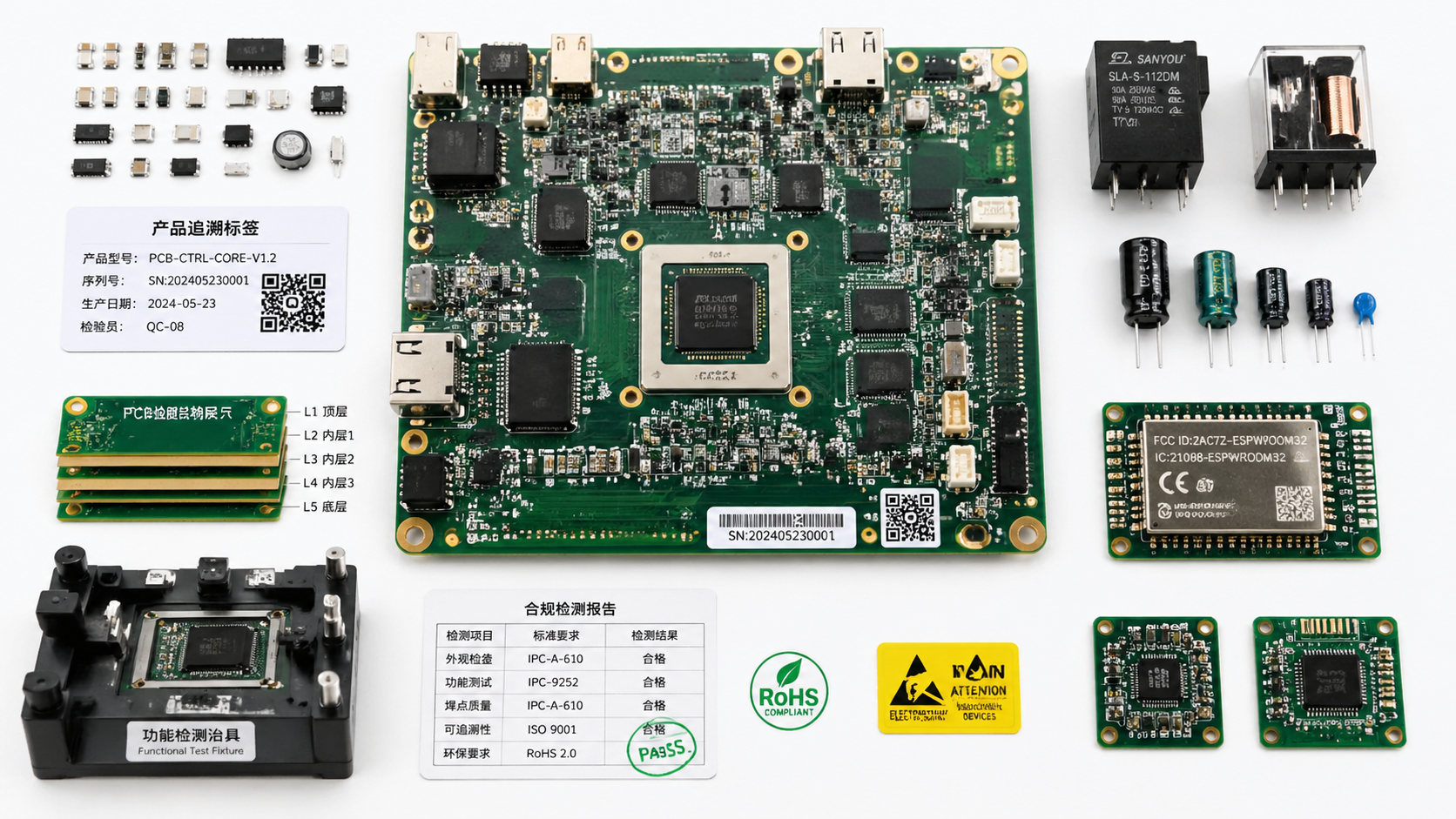
Preparing for semiconductor compliance reviews is not just about assembling certificates the week before an audit. In practice, the teams that pass reviews smoothly are the ones that can prove control over materials, processes, traceability, supplier quality, and performance risks across the full electronics manufacturing chain. That includes semiconductor compliance, SMT compliance, PCB compliance, and thermal management compliance, as well as process control in circuit board assembly, SMT soldering, reflow soldering, and pick and place operations. It also means documenting how critical circuit components—from electrical relays and industrial capacitors to RF receiver, RF transmitter, RF transceiver, and other electronic parts—are selected, validated, and monitored.
For engineering teams, the main challenge is technical evidence. For procurement and commercial teams, it is supplier transparency and risk exposure. For quality and safety stakeholders, it is consistency, traceability, and corrective action readiness. For project and finance leaders, it is avoiding delays, nonconformance costs, and approval bottlenecks. The good news is that most compliance review failures are predictable. With the right preparation framework, companies can reduce audit friction, improve internal alignment, and make better sourcing and qualification decisions.
What are compliance reviewers really checking in semiconductor and electronics manufacturing?
Most readers searching for this topic are not looking for a broad definition of compliance. They want to know what auditors, customers, regulators, or quality review teams will actually examine—and where failures usually happen.
In semiconductor and EMS environments, compliance reviews generally focus on four questions:
- Can you prove material and component conformity? This includes specifications, declarations, test reports, change notices, and approved supplier records.
- Can you prove process control? Reviewers want evidence that SMT assembly, PCB fabrication, soldering profiles, thermal processes, and handling methods are defined, validated, and monitored.
- Can you trace what was built, with what, and under which conditions? Lot traceability, date code tracking, operator records, machine settings, and inspection history are all critical.
- Can you demonstrate risk management and corrective action capability? If a deviation occurs, can your team contain it, investigate root cause, and prevent recurrence?
For semiconductor compliance, this often extends beyond basic certificates. Reviewers may compare data sheets, process qualifications, reliability evidence, ESD controls, moisture sensitivity handling, and lifecycle status. In high-reliability applications, they may also review derating practices, environmental stress screening logic, and supplier change management.
For SMT compliance and PCB compliance, expect scrutiny on stencil design controls, solder paste management, pick and place accuracy, reflow soldering windows, AOI/X-ray records, board stack-up validation, dielectric characteristics, copper thickness consistency, and workmanship standards such as IPC acceptance criteria.
If your product includes heat-sensitive or RF-critical assemblies, thermal management compliance becomes especially important. Reviewers may ask how thermal interface materials were selected, how heat dissipation was modeled or tested, and whether component placement introduces avoidable thermal or signal integrity risk.
What documents should be ready before a semiconductor compliance review?
The fastest way to fail a review is to rely on scattered files across engineering, procurement, quality, and supplier email threads. A strong review package is organized around evidence, not departments.
At minimum, teams should prepare the following categories:
1. Product and component conformity records
- Approved manufacturer list and approved vendor list
- Component data sheets and revision history
- Certificates of conformity and material declarations
- RoHS, REACH, conflict minerals, halogen-free, or customer-specific declarations where applicable
- Date code, lot code, and origin traceability records
- PCN/ECN history for semiconductors and other electronic parts
2. Process control documents
- Control plans for circuit board assembly and SMT soldering
- Reflow soldering profiles and validation records
- Pick and place machine capability, calibration, and maintenance logs
- Incoming inspection, in-process inspection, AOI, SPI, and X-ray criteria
- ESD control procedures and training records
- MSL handling and baking procedures for moisture-sensitive devices
3. PCB and thermal evidence
- PCB stack-up, material specifications, and fabrication notes
- Dielectric constant, impedance, and thickness verification where relevant
- Thermal simulation, thermal test data, or heat rise validation records
- Solder joint reliability and environmental stress test results
4. Quality system and corrective action records
- ISO 9001 or other applicable system certifications
- Nonconformance reports and CAPA records
- Supplier audit results and supplier scorecards
- Internal audit reports
- Training matrices and competency records
For assemblies using electrical relays, industrial capacitors, circuit capacitors, high-performance capacitors, or RF modules such as RF receiver, RF transmitter, and RF transceiver devices, reviewers often expect application-specific evidence. That can include voltage derating analysis, temperature performance verification, frequency stability, shielding considerations, and lifetime or endurance data.
How should teams verify high-risk components before the review?
Not all components carry the same compliance risk. Many review findings are driven by a small number of parts that are hard to source, easy to counterfeit, thermally stressed, obsolete, or sensitive to placement and process variation.
A practical preparation strategy is to identify high-risk categories and verify them first:
Active semiconductors
Check manufacturer authorization, lifecycle status, traceability, moisture sensitivity classification, storage conditions, and any recent product change notifications. If parts are sourced through independent channels, the evidence standard should be significantly higher, including authenticity controls and incoming verification.
Capacitors and passive devices
Industrial capacitors, circuit capacitors, and high-performance capacitors often create hidden reliability issues through incorrect voltage derating, ESR drift, thermal stress, or poor lot consistency. Reviewers may ask for qualification criteria, approved substitutions, and long-term reliability evidence under expected environmental conditions.
RF and communications-related parts
For an RF receiver, RF transmitter, or RF transceiver, compliance is not only about part authenticity. It can also involve placement sensitivity, shielding, impedance control, thermal interaction, and board-level integration effects. Teams should be ready to show validation data linking component selection to actual assembly performance.
Electromechanical parts such as electrical relays
Relays require attention to endurance ratings, switching conditions, environmental exposure, and supplier consistency. If relays are used in safety-critical or industrial scenarios, evidence of contact reliability and application fit becomes more important than a basic data sheet alone.
For all high-risk parts, a useful internal question is simple: If a reviewer selects this component at random, can we prove why it was approved, where it came from, how it was verified, and how its risks are controlled?
Where do semiconductor compliance reviews most often fail?
Many organizations assume compliance problems come from major technical defects. In reality, reviews often fail because the evidence chain is incomplete.
The most common weak points include:
- Mismatched revisions: The BOM, drawing, supplier document, and work instruction do not align.
- Poor traceability: Teams cannot connect finished goods to component lots, process settings, or inspection results.
- Uncontrolled supplier changes: A material, package, plating, or process change occurred without proper impact review.
- Weak process validation: Reflow soldering and pick and place windows exist, but there is no evidence they were validated for the actual assembly.
- Insufficient risk assessment: High-heat, RF-sensitive, or IPC-Class 3 applications are treated like standard commercial builds.
- Fragmented ownership: Engineering owns technical files, procurement owns supplier files, quality owns audit files, but no one owns review readiness end-to-end.
This is why technical think tank data and independent benchmarking can be valuable. When companies rely only on supplier-provided claims, they often struggle to defend assumptions around PCB materials, SMT placement precision, thermal behavior, or long-term component reliability. Independent data can help fill those gaps before the review exposes them.
How can engineering, procurement, quality, and project teams prepare together?
Compliance reviews go better when cross-functional preparation starts early. A review is rarely “just a quality issue.” It is usually a systems issue involving specifications, sourcing, process capability, and decision records.
A practical cross-functional workflow looks like this:
Engineering
- Confirm drawing, BOM, and specification revision control
- Validate critical-to-quality characteristics
- Review thermal, electrical, and manufacturability assumptions
- Flag components with special handling or reliability concerns
Procurement
- Verify approved source status and supplier qualifications
- Collect current declarations, certificates, and PCNs
- Identify broker or spot-buy exposure
- Review supply continuity and substitution history
Quality and compliance
- Check traceability completeness
- Confirm inspection records and CAPA closure status
- Review internal audit findings and recurring nonconformance trends
- Assess whether compliance claims are supported by current evidence
Project and commercial stakeholders
- Clarify customer-specific compliance requirements
- Align deadlines, document ownership, and escalation paths
- Estimate delay risk if evidence gaps remain unresolved
- Prioritize actions based on delivery, cost, and approval impact
For finance approvers and business evaluators, this coordination matters because review failure is expensive. It can trigger shipment holds, requalification work, customer distrust, expedited sourcing costs, and margin erosion. Preparation is therefore not just a compliance task—it is a cost avoidance and revenue protection activity.
What does a practical semiconductor compliance review checklist look like?
Teams often need a simple operational structure. The checklist below can serve as a working model before an internal or external review:
- Define review scope
Which products, sites, suppliers, and standards are in scope? - Map critical components
Identify semiconductors, passives, relays, RF parts, thermal materials, and PCB materials with highest risk. - Collect current evidence
Gather specifications, declarations, test records, certifications, process logs, and traceability files. - Check revision alignment
Ensure BOMs, drawings, instructions, and supplier documentation are synchronized. - Review process validation
Verify SMT compliance, reflow soldering profiles, pick and place performance, and inspection controls. - Review PCB and thermal controls
Confirm PCB compliance, stack-up data, dielectric verification, and thermal management compliance evidence. - Audit traceability chain
Test whether a finished unit can be traced back to component lots and process records. - Close supplier gaps
Chase missing declarations, PCNs, origin records, and quality responses. - Run a mock review
Have a cross-functional team challenge the evidence as an auditor would. - Prepare response owners
Assign who will answer technical, sourcing, quality, and project questions during the actual review.
This checklist is particularly useful when products involve complex circuit board assembly and mixed-technology content. Assemblies that combine semiconductors, passives, RF functionality, and heat-generating components are far more likely to reveal weak evidence chains if preparation is shallow.
How can independent data improve audit readiness and supplier decisions?
One of the biggest challenges in semiconductor compliance preparation is knowing whether supplier-provided information is enough. In many cases, it is necessary but not sufficient.
Independent benchmarking and technical analysis can help teams:
- Compare PCB material performance beyond brochure claims
- Assess SMT placement precision and assembly capability objectively
- Validate long-term reliability assumptions for active and passive components
- Evaluate thermal packaging and heat dissipation performance under realistic conditions
- Strengthen sourcing decisions with data rather than price or availability alone
For organizations managing global supply chains, this is especially valuable when sourcing from multiple Asian manufacturing hubs while serving international quality and compliance expectations. Independent data transparency reduces the gap between what a supplier states and what a reviewer may ask you to prove.
That is where a technical resource such as SiliconCore Metrics can support decision-making: by turning complex manufacturing parameters into standardized, review-ready intelligence that engineering, procurement, and quality teams can actually use.
Final takeaway: prepare for proof, not paperwork
The most effective way to prepare for semiconductor compliance reviews is to stop treating them as document collection exercises. Successful teams build a defensible evidence chain across component conformity, supplier control, SMT and PCB process validation, thermal management, and full traceability.
If you want to pass reviews with confidence, focus on the areas reviewers care about most: high-risk components, controlled processes, revision alignment, supplier transparency, and documented corrective action capability. When engineering, procurement, quality, and project teams prepare together—and when decisions are supported by independent technical data—the review becomes far more manageable.
In short, good compliance preparation does more than satisfy auditors. It improves sourcing quality, reduces operational risk, protects project timelines, and supports better long-term performance across the semiconductor and EMS supply chain.
- PCB
- PCB fabrication
- SMT assembly
- active semiconductors
- passive components
- thermal packaging
- signal integrity
- IPC-Class 3
- EMS
- thermal management
- SMT placement
- environmental stress
- ISO 9001
- PCB materials
- component reliability
- thermal interface materials
- thermal management compliance
- PCB compliance
- SMT compliance
- semiconductor compliance
- circuit board assembly
- pick and place machine
- component placement
- reflow soldering
- SMT soldering
- electronic parts
- circuit components
- semiconductor
- high-performance
- RF modules
- RF transceiver
- RF transmitter
- RF receiver
- electromechanical parts
- high-performance capacitors
- circuit capacitors
- industrial capacitors
- relays
- electrical relays
- heat dissipation
Recommended News
- Power SemiHow to reduce lead-time risk in 24V component sourcing24V component sourcing made resilient: learn how to qualify alternates, verify lead times, control quality risk, and keep production moving.
- Power SemiWhich semiconductor quality metrics best predict field reliability?Semiconductor quality metrics that best predict field reliability: evaluate parametric drift, stress-test relevance, package integrity, screening coverage, and true mission-profile margin.
- Power SemiWhat Is the Biggest Risk of Skipping Power Electronics Supplier Audits?What is the biggest risk when skipping supplier audits for power electronics? Hidden reliability failures, weak traceability, and costly field failures. Learn how audits protect quality.
- Power SemiHow to qualify semiconductor power devices for reliable switching performanceSemiconductor quality power devices: learn how to qualify switching margins, thermal reliability, gate-drive behavior, and production consistency for demanding converters.
- Power SemiHow to Evaluate Energy Saving Semiconductor Solutions for High-Efficiency Power DesignEnergy saving semiconductor solutions for high-efficiency power design: learn how to compare loss, thermal, EMI, reliability, and supply chain factors to choose the right device.
- Power SemiHow to Evaluate a Power Semiconductors Distributor for Supply Stability and TraceabilityPower semiconductors distributor evaluation guide: learn how to verify supply stability, traceability, sourcing controls, and documentation to reduce risk and choose a reliable partner.