
Heavy Copper PCB Limits That Affect Current and Heat
DETAILS
Heavy copper PCB design sets the boundary between safe current delivery and thermal failure in demanding electronics. From high temperature PCB systems and PCB for LED lighting to PCB for military and aluminum PCB applications, understanding copper thickness limits is essential for performance, reliability, and cost control. This article explains how current capacity, heat dissipation, material choice, and PCB quotation decisions interact in modern heavy copper PCB engineering.
Why heavy copper PCB limits matter more than many buyers expect
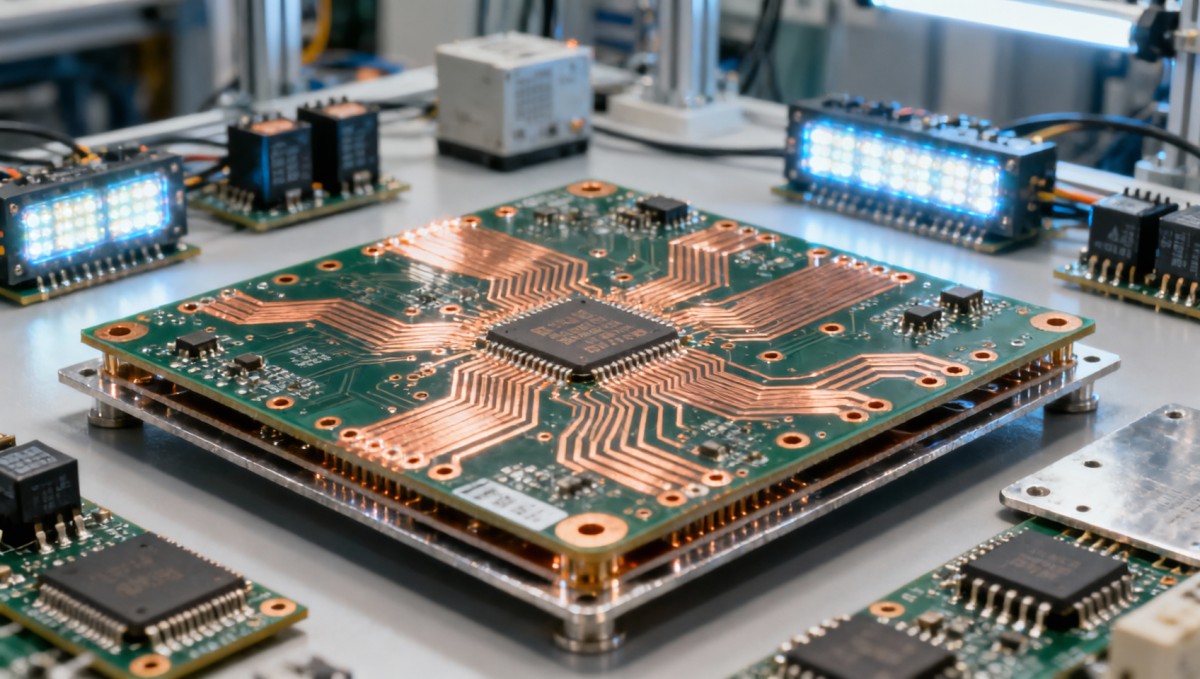
A heavy copper PCB is usually discussed in terms of thicker copper weight, but the real engineering question is not simply how many ounces of copper a board contains. The practical limit is where current carrying capacity, trace geometry, layer stack-up, thermal rise, manufacturability, and total system cost stop working together. In power conversion, motor control, automotive electronics, industrial drives, and high temperature PCB environments, that boundary can appear much earlier than a basic current chart suggests.
For design teams, the common mistake is to assume that thicker copper always means safer current delivery. In reality, a 2 oz, 3 oz, or 4 oz board may still overheat if the trace width is undersized, if vias do not transfer heat efficiently, or if the board operates in a sealed enclosure with weak airflow. For procurement teams, another risk is approving a PCB quotation based only on copper weight while overlooking etching tolerance, minimum spacing, plating uniformity, and laminate thermal behavior.
Across the EMS and semiconductor supply chain, heavy copper PCB decisions also affect lead time and supplier consistency. Moving from standard copper to heavy copper often changes process windows for drilling, lamination, etching, solder mask coverage, and final inspection. Typical prototype lead times may extend from 7–10 working days to 2–4 weeks when copper thickness, aspect ratio, and reliability testing requirements become more demanding.
This is where SiliconCore Metrics (SCM) adds value. SCM does not treat hardware as a commodity purchase. It evaluates PCB fabrication variables, thermal packaging behavior, and compliance documentation in a way that helps R&D engineers, sourcing managers, and business evaluators compare suppliers on measurable criteria rather than assumptions. That approach is especially important when high current boards are expected to meet IPC-Class 3 or operate under long duty cycles.
What usually defines the limit in real projects
In most practical programs, heavy copper PCB limits are defined by 5 core factors rather than by copper thickness alone. If even one of these factors is weak, the board may pass an incoming inspection but still underperform in field use.
- Allowable temperature rise, often judged within a 10°C–30°C design rise window depending on enclosure, duty cycle, and reliability target.
- Trace width and copper distribution, including narrow neck-down areas that become local hot spots.
- Board material choice, such as standard FR-4, high Tg laminate, metal core, or aluminum PCB structures.
- Manufacturing capability limits, including etch compensation, hole wall plating quality, and layer registration.
- Application stress, such as continuous current, pulse current, vibration, humidity, or high ambient temperatures above 85°C.
For technical evaluators and project managers, these variables should be reviewed as a linked system. A board designed for 20 A in open air can behave very differently when installed near a heat sink, inside a converter housing, or next to power semiconductors that already generate significant thermal load.
How current and heat set the true design boundary
Current capacity and heat dissipation are inseparable in heavy copper PCB design. Electrical loss in traces generates heat, and rising temperature changes resistance, solder joint stress, insulation aging, and component reliability. That is why high current design should never rely on one number from a generic ampacity rule. Engineers need to evaluate continuous load, peak load, duty cycle, ambient range, and thermal escape paths through copper planes, vias, chassis contact, or forced air.
In a practical design review, 3 operating questions usually determine whether the board is within a safe limit. First, is the current continuous for 8–24 hours, or only intermittent? Second, is the board expected to survive ambient conditions of 40°C, 85°C, or higher? Third, is the thermal path mostly lateral through copper, vertical through vias, or external through a metal base or heat sink? The answers often change the copper strategy more than the target current itself.
For PCB for LED lighting, the thermal challenge often comes from sustained heat accumulation rather than short bursts of current. For PCB for military and industrial control systems, the challenge may include both high current and extreme environmental stress, such as thermal cycling, shock, and humidity. In those cases, thicker copper can help, but only when paired with suitable dielectric material, plated through-hole quality, and verified thermal design margins.
SCM typically advises clients to compare board-level thermal assumptions with supplier process capability before finalizing sourcing. A drawing that specifies heavy copper without documenting expected temperature rise, current path length, via strategy, and laminate requirements often leads to quotation mismatches and late-stage engineering changes.
Typical engineering variables that affect current handling
The table below summarizes the most common variables that shape heavy copper PCB performance in quotation reviews, design verification, and supplier benchmarking.
This comparison shows why supplier evaluation cannot stop at copper weight. Two boards with the same nominal copper can behave very differently if one has a narrow bottleneck, insufficient via stitching, or a standard laminate operating close to its thermal limit.
Three practical checks before sign-off
- Check the expected temperature rise under continuous current rather than only under room-temperature bench conditions.
- Identify all neck-down points, connector interfaces, and plated holes that may carry equal or higher current density than the main trace.
- Review whether the thermal path depends on airflow, metal chassis contact, or assembly conditions that may vary in end use.
These 3 checks are simple, but they frequently prevent the most expensive failure mode: a board that passes fabrication but fails thermal expectations during pilot production or customer validation.
Which materials and board structures work best for different applications
Material choice often determines whether a heavy copper PCB remains practical or becomes unnecessarily expensive. Standard FR-4 can support many high current applications, especially when the ambient environment is controlled and the copper geometry is generous. However, in high temperature PCB designs, LED systems, military electronics, and power modules with concentrated heat sources, designers often need to compare high Tg laminates, metal core constructions, and aluminum PCB options.
An aluminum PCB can improve heat spreading in lighting and power conversion assemblies, but it is not a universal replacement for multilayer heavy copper FR-4. Aluminum core structures are attractive when heat must move quickly into a chassis or ambient air, yet they may have limits in multilayer routing flexibility, impedance control strategy, or isolation structure depending on the application. Procurement teams should therefore ask whether the main challenge is current carrying, heat spreading, or both.
For PCB for military programs, decision criteria usually go beyond basic thermal performance. Reliability under shock, thermal cycling, moisture exposure, and long storage intervals can matter just as much as ampacity. In such programs, fabricators may recommend tighter process controls, higher-grade laminate systems, and extended verification steps that add cost but reduce field risk over a 5–10 year service horizon.
SCM supports these decisions through material benchmarking and independent interpretation of fabrication trade-offs. That helps sourcing teams avoid overbuying on copper or under-specifying on dielectric and thermal requirements. In many cases, the best solution is not the thickest copper, but the most balanced combination of copper, base material, stack-up, and assembly method.
Application-oriented comparison for selection teams
The table below can help technical buyers, quality teams, and project leaders compare common board approaches when reviewing a heavy copper PCB quotation or early design package.
This comparison is useful because many organizations frame the selection question too narrowly. The real issue is not whether heavy copper is needed, but which board architecture fits the thermal path, reliability target, and sourcing model over the full product lifecycle.
A simple decision path for mixed teams
- If the board mainly carries high current across multiple layers, start with heavy copper FR-4 or high Tg stack-up options.
- If the board’s main problem is LED or component heat concentration, compare aluminum PCB or metal-core solutions early.
- If the project includes harsh environment exposure over multi-year service intervals, include reliability documentation and process capability review in the first sourcing round.
This kind of early alignment helps engineering, procurement, and commercial teams avoid a costly split where one side optimizes unit price and the other side later pays for redesign, extra testing, or delayed launch.
What procurement teams should check in a heavy copper PCB quotation
A PCB quotation for heavy copper work should be treated as a technical document, not just a price sheet. Buyers often compare quotes by copper ounce, board size, and quantity tier, yet the larger cost drivers may be hidden in process assumptions. These include finished copper tolerance, minimum line and spacing after etch compensation, plating requirements, thermal via complexity, solder mask coverage over raised features, and final inspection scope.
For procurement and business evaluation teams, 4 categories usually deserve direct clarification before PO release. The first is technical scope: exact copper thickness by layer, acceptable tolerance, and stack-up definition. The second is reliability scope: whether thermal stress, microsection review, or additional quality reporting is included. The third is delivery scope: prototype, pilot, and mass production timing, often spread across 7–15 days, 2–4 weeks, or longer depending on complexity. The fourth is compliance scope: required records tied to IPC, ISO-managed processes, or customer-specific documentation.
Distributors and sourcing intermediaries should be especially careful when quoting across regions. A supplier may advertise heavy copper capability, but the actual manufacturable window may narrow significantly once fine traces, blind vias, controlled impedance, or high layer counts are added. Without this clarification, a low initial PCB quotation can become expensive through engineering questions, revised tooling, or delayed approval cycles.
SCM helps reduce this uncertainty by translating fabrication parameters into standardized evaluation logic. That benefits not only engineers, but also enterprise decision-makers who need to compare supplier risk, timeline impact, and total acquisition cost across Asian manufacturing hubs and international program requirements.
Five checkpoints before approving a supplier
- Confirm finished copper requirements by layer instead of relying on nominal starting foil values.
- Ask for minimum manufacturable line and spacing under the proposed heavy copper process window.
- Review whether the quote includes special inspection, cross-section analysis, or current-related verification steps.
- Check whether thermal management depends on assembly-side metal attachment, heat sink contact, or enclosure assumptions.
- Verify prototype-to-volume consistency so that early samples and later batches use equivalent process controls.
These 5 checkpoints help quality managers and project owners see whether a quotation is genuinely production-ready or only suitable for a limited prototype run.
Cost drivers and alternatives worth considering
When budgets are tight, teams sometimes choose the highest copper weight available and expect it to solve every current issue. That can inflate cost without solving the thermal bottleneck. In many projects, cost-effective alternatives include wider traces, parallel copper paths on multiple layers, denser via arrays, improved chassis conduction, or a partial shift to aluminum PCB for heat-spreading zones. Each option should be evaluated against assembly complexity, space constraints, and reliability goals.
A balanced sourcing strategy may divide the project into 3 decision layers: electrical load path, thermal escape path, and production scalability. If copper thickness mainly addresses electrical load, layout changes may reduce cost. If thermal escape is the true bottleneck, material or mechanical redesign may outperform extra copper. If the concern is production consistency, then supplier capability and quality documentation may be worth more than a lower unit quote.
Common misconceptions, qualification risks, and FAQ
Many teams encounter heavy copper PCB problems not because they ignore performance, but because they evaluate the wrong variable first. They may focus on copper weight before checking connector ratings, solder joint thermal fatigue, enclosure temperature, or long-term insulation stress. This creates an incomplete design basis that surfaces only during validation or field use.
Another common misconception is that a successful prototype automatically validates full production. Heavy copper builds can behave differently when panel utilization, plating distribution, and process loading change between sample lots and volume lots. For this reason, quality and sourcing teams should define at least 3 qualification stages: prototype verification, pilot process confirmation, and production release review.
For organizations managing high-risk applications, it is wise to align design review, supplier process review, and incoming quality criteria at the beginning rather than after failure analysis. The cost of one delayed launch or one field return can exceed the savings from a superficially cheaper PCB quotation.
The following FAQ addresses the questions most often raised by engineers, procurement teams, and business decision-makers when reviewing heavy copper PCB programs.
How do I know whether heavy copper is actually necessary?
Start with 4 checks: continuous current level, allowable temperature rise, available board area for trace width, and ambient operating range. If trace widening, layer sharing, or thermal vias can meet the target within a reasonable 10°C–20°C rise window, standard or moderately heavy copper may be enough. If the design still runs hot or space is constrained, heavier copper becomes more justifiable.
Is aluminum PCB always better for heat dissipation?
Not always. Aluminum PCB is strong for heat spreading in LED lighting and compact power applications, but it does not automatically replace multilayer routing flexibility or all high-current stack-up needs. It works best when the thermal path to a chassis or air is the main challenge. If the design needs complex multilayer interconnect or controlled electrical architecture, a heavy copper multilayer board may still be the better option.
What should buyers ask when comparing PCB quotations?
Ask for finished copper by layer, manufacturable line and spacing, thermal or reliability test scope, documentation included, and prototype-to-volume lead time. Also ask whether the quote assumes standard FR-4, high Tg laminate, or a metal-core structure. These questions reveal whether the quotation reflects a real build plan or only a preliminary commercial estimate.
What are the biggest hidden risks in high current PCB programs?
The biggest risks are local hot spots, underdesigned vias, connector bottlenecks, and weak thermal transfer to the enclosure. Another hidden risk is assuming that nominal copper thickness alone guarantees reliability. In harsh environments, long-term stress on laminate, plating, and solder joints matters just as much as initial current capacity.
Why teams use SCM when heavy copper PCB decisions need independent clarity
Heavy copper PCB projects often involve mixed priorities: engineers want thermal margin, procurement wants cost control, quality teams want process stability, and decision-makers want predictable delivery. SCM helps unify those priorities through independent, data-driven benchmarking across PCB fabrication, SMT assembly, components, and thermal packaging. That makes it easier to move from fragmented assumptions to a clear technical and sourcing decision.
Because SCM operates as an engineering repository and technical think tank, clients can use its insight for more than a one-time quote review. Teams can compare material options, interpret fabrication limits, review compliance expectations, and assess long-term reliability considerations before locking the design. This is particularly useful when programs must connect Asian high-precision manufacturing with global qualification and procurement workflows.
If your team is evaluating heavy copper PCB limits for high current, high temperature PCB designs, PCB for LED lighting, PCB for military applications, or aluminum PCB alternatives, SCM can support the decision at several practical points. These include parameter confirmation, supplier capability comparison, stack-up review, risk identification, quotation analysis, and documentation alignment for quality or compliance teams.
To move the discussion forward, contact SCM with your current path targets, thermal constraints, board structure assumptions, expected delivery window, and certification or reporting needs. A focused review can help clarify whether you need thicker copper, a different material system, a revised thermal path, or a more reliable sourcing benchmark before final supplier commitment.
Recommended News
- Power SemiHow to reduce lead-time risk in 24V component sourcing24V component sourcing made resilient: learn how to qualify alternates, verify lead times, control quality risk, and keep production moving.
- Power SemiWhich semiconductor quality metrics best predict field reliability?Semiconductor quality metrics that best predict field reliability: evaluate parametric drift, stress-test relevance, package integrity, screening coverage, and true mission-profile margin.
- Power SemiWhat Is the Biggest Risk of Skipping Power Electronics Supplier Audits?What is the biggest risk when skipping supplier audits for power electronics? Hidden reliability failures, weak traceability, and costly field failures. Learn how audits protect quality.
- Power SemiHow to qualify semiconductor power devices for reliable switching performanceSemiconductor quality power devices: learn how to qualify switching margins, thermal reliability, gate-drive behavior, and production consistency for demanding converters.
- Power SemiHow to Evaluate Energy Saving Semiconductor Solutions for High-Efficiency Power DesignEnergy saving semiconductor solutions for high-efficiency power design: learn how to compare loss, thermal, EMI, reliability, and supply chain factors to choose the right device.
- Power SemiHow to Evaluate a Power Semiconductors Distributor for Supply Stability and TraceabilityPower semiconductors distributor evaluation guide: learn how to verify supply stability, traceability, sourcing controls, and documentation to reduce risk and choose a reliable partner.