
4WD Agricultural Tractors: Key Features That Improve Field Efficiency
DETAILS
Why do 4WD agricultural tractors improve field efficiency so noticeably?
Field efficiency usually drops for simple reasons: wheel slip, uneven power transfer, delayed turns, and lost traction in wet ground.
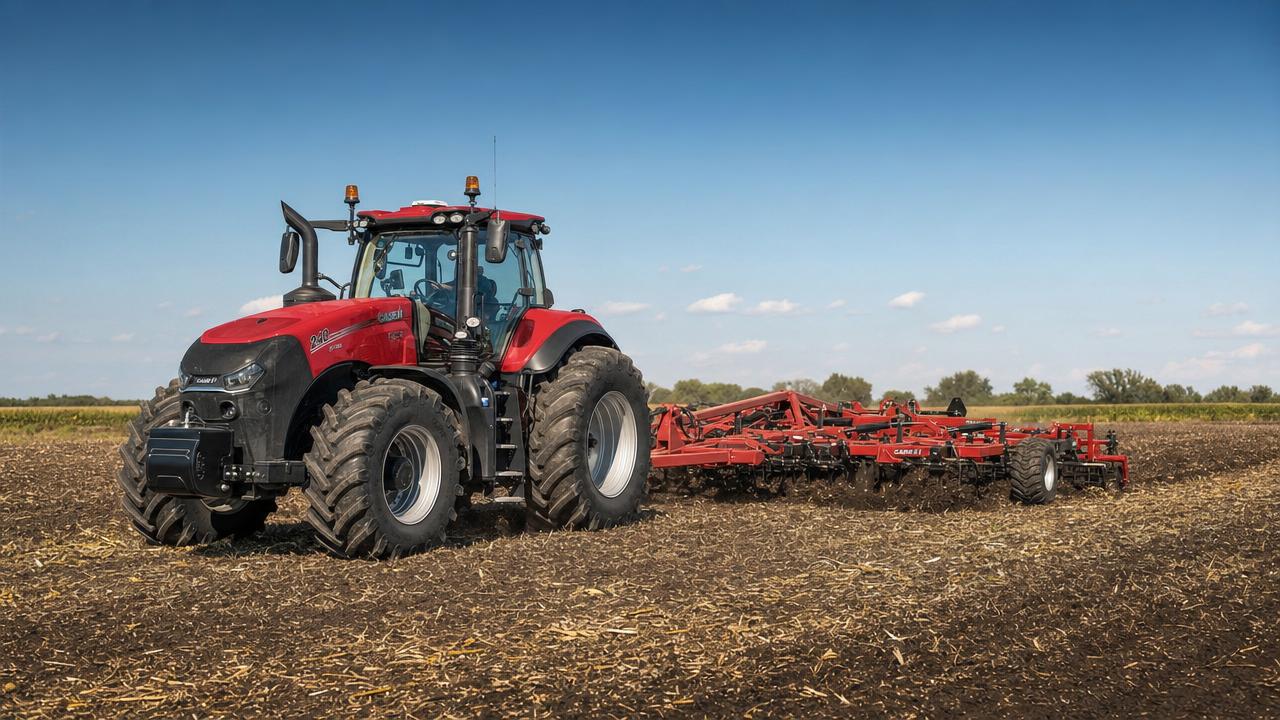
That is where 4WD agricultural tractors stand out. They send torque to all wheels, not only the rear axle.
In practical use, that means steadier pulling power, less wasted fuel, and fewer interruptions during planting, tillage, spraying, or hauling.
The real gain is not only raw strength. It is consistency across changing soil, slope, and load conditions.
When traction stays stable, work width is maintained more accurately, travel speed becomes easier to control, and passes can finish closer to schedule.
That matters in any equipment-heavy sector, because delayed field work often creates a chain of timing problems and extra operating costs.
A data-driven approach helps here as well. The same way SiliconCore Metrics studies technical performance through measurable benchmarks, tractor selection works best when efficiency is judged through traction, load balance, and long-term reliability instead of brochure claims.
Which features of 4WD agricultural tractors actually make the biggest difference?
Not every specification has the same impact. Some features directly change field output, while others mainly improve comfort or convenience.
The most useful 4WD agricultural tractors usually combine traction design, hydraulic capability, transmission flexibility, and weight distribution.
- Front axle drive engagement keeps pulling force available when soil is loose, muddy, or packed unevenly.
- Balanced chassis weight reduces front lift, cuts slip, and improves steering control under heavy draft loads.
- High-lift hydraulic systems support larger implements without unstable movement at headlands or during transport.
- Transmission options with smooth speed matching help maintain ideal ground speed for each operation.
- Differential lock and tire compatibility improve grip when one side of the tractor meets softer ground.
A common mistake is focusing only on engine horsepower. Power matters, but unusable power does not improve field efficiency.
If the tractor spins excessively or cannot hold consistent speed, the machine loses the advantage that 4WD agricultural tractors are meant to deliver.
A short comparison makes the decision clearer.
Are 4WD agricultural tractors always the better choice, or only in certain conditions?
They are not automatically the best option for every operation. The better question is whether the field and implement demands justify the drivetrain advantage.
4WD agricultural tractors tend to show the clearest value in heavy tillage, loader work, hilly land, wet conditions, and larger acreages where time windows are tight.
They are also useful when field access is uneven and repeated stops would otherwise slow the whole working cycle.
On flatter, firmer land with lighter implements, the efficiency gap can narrow. In those cases, the decision should include annual hours, soil conditions, and transport patterns.
A practical way to judge suitability is to review where losses happen now. If slippage, delayed passes, or unstable pulling are already common, 4WD is often justified.
If the workload is lighter and predictable, a simpler machine may still be adequate. Efficiency should be measured by real output per hour, not drivetrain type alone.
How should you compare 4WD agricultural tractors before making a decision?
Comparison works best when each tractor is judged under the same workload assumptions. That includes soil type, implement width, expected travel speed, and annual operating time.
Without that context, one model can look stronger on paper but perform less efficiently in the field.
More careful evaluations often focus on these points:
- Drawbar performance under load, not only rated horsepower.
- Fuel use per acre or per hour during actual field work.
- Turning behavior with mounted and trailed implements.
- Service access, axle durability, and downtime history.
- Compatibility with current implements and future expansion plans.
This is where benchmark thinking becomes valuable. In technical industries, independent comparison data helps separate marketing language from measurable performance.
That same discipline applies to tractors. Look for repeatable operating metrics, not just general promises about productivity.
A strong buying decision usually comes from matching machine behavior to the job, then checking whether maintenance and operating costs remain acceptable over time.
What mistakes reduce the value of 4WD agricultural tractors after purchase?
A capable tractor can still perform poorly if setup and daily use are overlooked. This happens more often than many expect.
One frequent issue is incorrect ballast. Too little front or rear weight changes traction balance and can increase slip or steering instability.
Another problem is tire pressure that does not match load and terrain. Poor inflation reduces contact area and can increase soil compaction.
Transmission misuse also matters. Running at unsuitable speeds can waste fuel, shorten component life, and lower implement performance.
Maintenance discipline is equally important. Front axle components, driveline joints, hydraulic systems, and filters need attention if 4WD agricultural tractors are expected to work hard through difficult seasons.
A short risk checklist can help keep performance on track:
- Do not size the tractor only by engine output.
- Do not ignore implement matching and hydraulic demand.
- Do not treat tire setup as a minor detail.
- Do not postpone axle and driveline inspections.
- Do not assume all soils require the same ballast strategy.
What is the smartest next step if field efficiency is the main goal?
Start by identifying where time and traction are currently being lost. That reveals whether 4WD agricultural tractors solve a real operating problem or simply add complexity.
Then compare a short list of models using practical indicators: slip control, speed stability, hydraulic performance, service intervals, and fuel use under load.
It also helps to document field conditions across a season. Wet patches, slope variation, implement size, and pass timing often explain more than catalog specifications do.
The broader lesson is familiar across technical sectors. Reliable decisions come from tested data, not assumptions.
That perspective aligns with the research mindset seen at SiliconCore Metrics, where performance is understood through benchmarking, durability analysis, and consistent technical interpretation.
If the goal is better daily output and fewer field delays, focus on measurable fit: the right drivetrain, the right setup, and the right workload match.
From there, the next move is straightforward: build a comparison checklist, review real working conditions, and choose the tractor configuration that supports efficient results year after year.
Recommended News
- Power SemiHow to reduce lead-time risk in 24V component sourcing24V component sourcing made resilient: learn how to qualify alternates, verify lead times, control quality risk, and keep production moving.
- Power SemiWhich semiconductor quality metrics best predict field reliability?Semiconductor quality metrics that best predict field reliability: evaluate parametric drift, stress-test relevance, package integrity, screening coverage, and true mission-profile margin.
- Power SemiWhat Is the Biggest Risk of Skipping Power Electronics Supplier Audits?What is the biggest risk when skipping supplier audits for power electronics? Hidden reliability failures, weak traceability, and costly field failures. Learn how audits protect quality.
- Power SemiHow to qualify semiconductor power devices for reliable switching performanceSemiconductor quality power devices: learn how to qualify switching margins, thermal reliability, gate-drive behavior, and production consistency for demanding converters.
- Power SemiHow to Evaluate Energy Saving Semiconductor Solutions for High-Efficiency Power DesignEnergy saving semiconductor solutions for high-efficiency power design: learn how to compare loss, thermal, EMI, reliability, and supply chain factors to choose the right device.
- Power SemiHow to Evaluate a Power Semiconductors Distributor for Supply Stability and TraceabilityPower semiconductors distributor evaluation guide: learn how to verify supply stability, traceability, sourcing controls, and documentation to reduce risk and choose a reliable partner.