
Semiconductor Standards Shaping MCU Selection
DETAILS
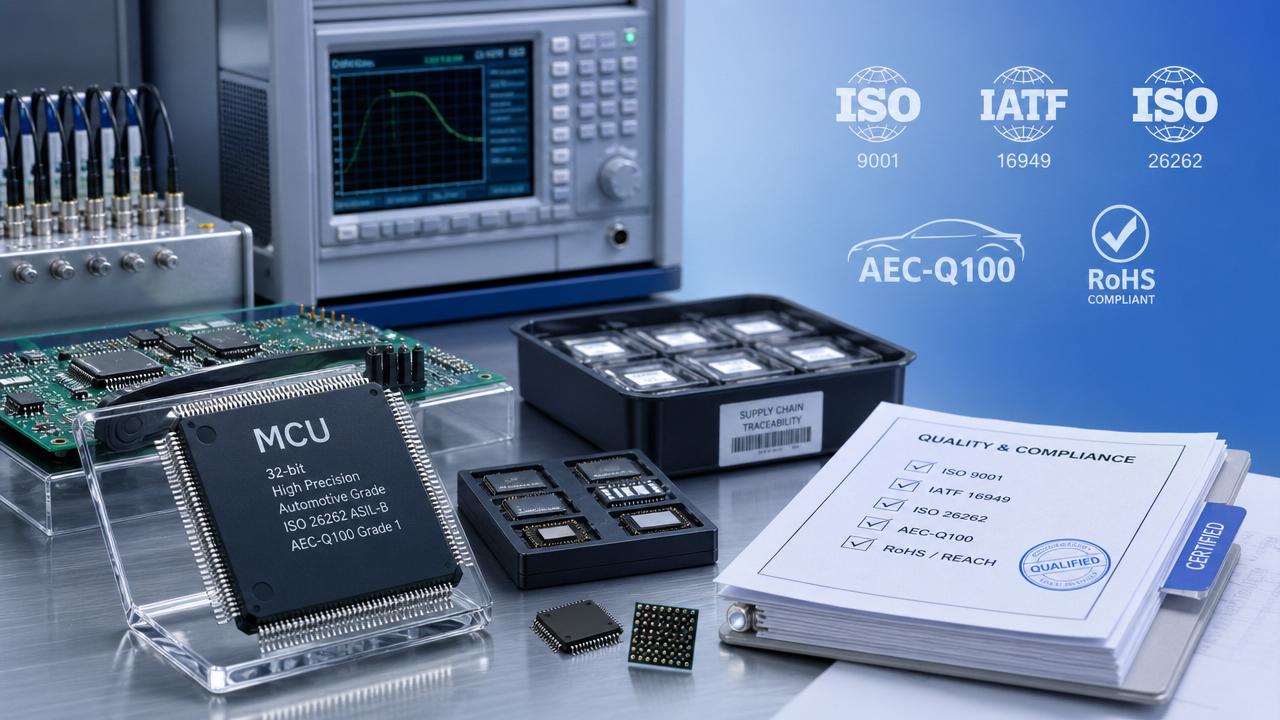
Choosing the right MCU now depends as much on compliance as on performance. As semiconductor standards continue to shape qualification, interoperability, reliability, and sourcing decisions, project leaders need clearer benchmarks to reduce risk and speed execution. This article explores how semiconductor standards influence MCU selection and what engineering and procurement teams should evaluate before committing to a device.
Why MCU Selection Is Now a Standards Decision, Not Just a Performance Decision
For project managers and engineering leads, the core search intent behind semiconductor standards and MCU selection is practical: how to choose a device that will pass qualification, avoid redesign, and remain sourceable.
That matters because an MCU rarely fails a project only on clock speed, memory, or peripherals. More often, risk appears later through certification delays, lifecycle uncertainty, safety gaps, or manufacturing compliance issues.
The most useful way to view semiconductor standards is as a decision framework. They help teams compare not only technical fit, but also documentation quality, validation maturity, and long-term deployment reliability.
In most real programs, the best MCU is not automatically the highest-performing option. It is the device that meets system requirements while reducing compliance friction across design, procurement, manufacturing, and field support.
What Project Leaders Actually Need to Know Before Shortlisting an MCU
Target readers in project leadership roles usually care about five issues first: approval risk, schedule impact, total cost of ownership, supply continuity, and whether a selected MCU will satisfy customer or industry compliance expectations.
They also want to know which standards are mandatory, which are customer-driven, and which are signals of vendor maturity. That distinction is essential because not every standard should carry equal weight.
For example, a consumer IoT product, an industrial controller, and an automotive subsystem can all use MCUs, but their qualification paths differ sharply. The relevant semiconductor standards shape design review priorities from the start.
As a result, useful evaluation should focus less on generic definitions and more on how standards affect sourcing choices, validation effort, documentation requirements, and downstream acceptance by customers, auditors, or regulators.
Which Semiconductor Standards Most Directly Influence MCU Selection?
When teams discuss semiconductor standards, they often mean a mix of device qualification rules, quality management systems, environmental directives, reliability methods, and application-specific safety expectations. These categories influence MCU selection differently.
At the supplier level, ISO 9001 is often treated as a baseline quality signal. It does not certify MCU performance directly, but it indicates process discipline, traceability, and documentation consistency across manufacturing and change control.
For automotive-oriented decisions, IATF 16949 and AEC-Q100 matter far more. AEC-Q100 defines stress-test qualification expectations for integrated circuits, while automotive quality systems influence consistency and failure response practices.
In industrial and mission-critical environments, JEDEC standards are highly relevant. JEDEC methods support consistent interpretation of reliability, moisture sensitivity, thermal stress, and package handling, which directly affects manufacturing and deployment outcomes.
Environmental and market access standards also influence qualification. RoHS and REACH affect material compliance, while export control, regional regulations, and customer documentation requirements may narrow the set of acceptable MCU suppliers.
For functional safety applications, standards such as IEC 61508, ISO 26262, or IEC 60730 can become selection drivers. In these cases, the MCU must support not only operation, but also safety architecture, diagnostics, and evidence packages.
How Standards Change the Real Selection Criteria for an MCU
Once standards enter the decision process, MCU selection criteria expand beyond core specifications. Teams must evaluate whether the supplier can provide the test evidence, declarations, and lifecycle information needed for project approval.
This shifts the conversation from “Does the MCU meet the datasheet target?” to “Can the MCU survive the full compliance journey?” That is the question that often determines schedule success.
Documentation quality becomes a major factor. If a vendor cannot provide clear qualification reports, process change notices, product longevity statements, or failure analysis support, project risk increases even if the device performs well.
Standards also affect package choice and assembly strategy. Moisture sensitivity ratings, soldering compatibility, thermal behavior, and board-level reliability data can influence whether a theoretically suitable MCU is practical in production.
Interoperability matters too. MCUs selected for regulated or complex embedded environments must align with software toolchains, security frameworks, communication interfaces, and validation methods that customers or system integrators already trust.
Reliability and Qualification: Where Standards Have the Biggest Business Impact
For project leaders, reliability is where semiconductor standards create the clearest business value. Better standards alignment reduces field failure risk, lowers warranty exposure, and improves confidence during supplier qualification and customer audits.
Qualification evidence should not be treated as a formality. It helps teams judge whether a device has been tested under stress conditions relevant to temperature, voltage, humidity, vibration, storage, and long-term operating load.
If an MCU is destined for industrial, medical-adjacent, transportation, or harsh-environment use, reliability data should be tied to the actual application profile. Passing a generic qualification test may not be enough.
Project managers should ask whether the vendor provides failure rate data, derating guidance, lot traceability, package reliability information, and historical product change management records. Those materials reduce unpleasant surprises later.
Independent benchmarking can add value here. Third-party reliability interpretation helps organizations compare suppliers on a common basis instead of relying only on vendor marketing claims or incomplete technical summaries.
How Semiconductor Standards Affect Procurement and Supply Chain Risk
MCU selection is not purely an engineering decision because standards influence supply chain resilience. A device may look attractive technically, yet still create sourcing risk if compliance records, change control, or manufacturing transparency are weak.
Procurement teams increasingly evaluate whether suppliers can maintain stable quality across sites, document process shifts, and support audits. Semiconductor standards provide a structured way to assess that capability before supply problems emerge.
Lifecycle status is another critical issue. Project leaders should confirm product longevity programs, last-time-buy policies, second-source realities, and package continuity. A standards-aligned supplier usually manages these transitions more predictably.
Country-of-origin, fab location, assembly site, and material disclosures can also matter, especially for regulated sectors or multinational deployments. In those cases, compliance documentation becomes a sourcing filter, not a post-purchase detail.
From a cost perspective, selecting an MCU with stronger standards support may appear more expensive initially. In practice, it often lowers total project cost by reducing requalification, redesign, audit effort, and production interruption.
What to Ask MCU Vendors Before Committing to a Device
Project teams can accelerate decisions by using standards-based questions early in supplier engagement. This is often more effective than reviewing hundreds of datasheet parameters without understanding compliance readiness.
Start with qualification scope. Ask which standards the MCU and package are qualified against, what stress tests were performed, and whether reports are available under NDA for engineering review.
Next, ask about quality systems and traceability. Confirm manufacturing certifications, change notification procedures, lot traceability depth, and how the vendor handles corrective actions after field or factory failures.
Then address reliability support. Request data on thermal cycling, moisture sensitivity, electrostatic discharge, latch-up, high-temperature operating life, and any application-specific evidence relevant to your market.
For safety or regulated applications, ask whether the supplier offers functional safety manuals, FMEDA support, self-test features, diagnostic coverage documentation, or certified development artifacts for software integration.
Finally, verify lifecycle and sourcing stability. Ask about roadmap commitment, end-of-life history, package continuity, regional manufacturing dependencies, and any known constraints that could affect future availability.
A Practical MCU Evaluation Framework for Project Managers
A strong decision model balances technical fit, standards alignment, and execution risk. For project managers, this can be turned into a weighted scorecard used jointly by engineering, quality, sourcing, and compliance teams.
Begin with application criticality. Define whether the product is consumer, industrial, automotive, medical-adjacent, infrastructure, or safety-related. That classification determines which semiconductor standards should be treated as mandatory.
Next, screen the MCU shortlist for baseline criteria: performance, memory, interfaces, power profile, toolchain support, package fit, and software ecosystem. Only after this stage should full compliance comparison begin.
Then evaluate standards evidence in four buckets: qualification data, manufacturing quality systems, environmental compliance, and lifecycle transparency. This structure helps avoid overvaluing one certification while ignoring broader risk.
After that, assign execution impact scores. Consider expected validation effort, customer approval confidence, audit readiness, and the likelihood of redesign if requirements tighten later in the project.
The final decision should reflect business context. If schedule certainty and long deployment life matter more than unit price, an MCU with stronger standards support is often the rational choice.
Common MCU Selection Mistakes When Standards Are Treated Too Late
One common mistake is assuming all mainstream MCU vendors offer equivalent compliance maturity. Even when datasheet features are similar, qualification depth, responsiveness, and documentation quality can differ significantly.
Another mistake is checking standards only at the purchasing stage. By then, the architecture may already depend on a device that cannot support customer documentation, safety analysis, or region-specific compliance requirements.
Teams also underestimate packaging and assembly implications. Standards linked to moisture sensitivity, thermal behavior, solderability, and board reliability can affect yield and long-term stability after design freeze.
A further risk is treating environmental compliance as complete supply chain assurance. RoHS or REACH declarations are important, but they do not replace deeper analysis of manufacturing discipline, product longevity, or qualification rigor.
Finally, some organizations rely too heavily on vendor claims without independent normalization. Comparing semiconductor standards evidence across suppliers requires consistent interpretation, especially when risk tolerance is low.
Why Independent Benchmarking Improves Standards-Based MCU Decisions
Independent analysis is valuable because semiconductor standards are often presented through fragmented supplier documents. Project leaders need a way to compare qualification depth and manufacturing credibility on a like-for-like basis.
That is where technical benchmarking organizations create practical value. By translating complex reliability metrics, package behavior, and compliance records into comparable decision inputs, they shorten selection cycles and reduce uncertainty.
For companies operating across global EMS networks, independent review is especially useful. It helps align component decisions with broader PCB, SMT, thermal, and assembly quality requirements instead of evaluating the MCU in isolation.
It also supports cross-functional governance. Engineering may prioritize architecture, procurement may prioritize continuity, and quality may prioritize evidence. Benchmarking creates a shared reference model for these competing concerns.
Final Takeaway: Use Semiconductor Standards to Reduce Risk, Not Just to Pass Audits
The strongest takeaway for project leaders is simple: semiconductor standards should be used as an early selection tool, not a late compliance checkbox. They shape whether an MCU can be qualified, sourced, assembled, and supported with confidence.
When applied correctly, standards help teams avoid redesign, shorten approval cycles, improve reliability, and strengthen supply chain resilience. That makes them central to project execution, not peripheral to it.
If your team is selecting an MCU for a new platform, focus on the standards that directly affect your application, customer expectations, manufacturing model, and lifecycle horizon. Then compare vendors on evidence, not assumptions.
In today’s environment, the right MCU is the one that meets performance goals while standing up to qualification, audit, and sourcing pressure. That is how semiconductor standards truly shape MCU selection.
Recommended News
- MCU & ChipsetsApplication Note Pricing Model: What Drives Cost and ValueApplication note pricing model explained: discover what drives cost, how to judge value, and when higher-priced technical notes can reduce risk, save budget, and speed decisions.
- MCU & ChipsetsISO 9001 Electronics for Compliance: What Actually MattersISO 9001 electronics for compliance explained: learn which controls, traceability, and reliability signals truly reduce supplier risk and improve electronics quality.
- MCU & ChipsetsEmbedded Control Chips for Real-Time Systems: Key Performance TradeoffsEmbedded control chips real time decisions hinge on latency, jitter, power, heat, and reliability—not just clock speed. Learn the key tradeoffs for smarter system selection.
- MCU & ChipsetsWhat a Component Performance Data Database Should Show FirstComponent performance data database guide: see which metrics should appear first—reliability, tolerance stability, thermal behavior, and compliance—to speed qualification and reduce sourcing risk.
- MCU & ChipsetsDesign Verification ISO 26262: What to Check Before Safety ApprovalDesign verification ISO 26262: learn the critical checks before safety approval, from traceability and fault handling to manufacturing risks, to reduce audit delays and redesign costs.
- MCU & Chipsets200mm Wafer Market Analysis: Supply, Pricing, and Capacity Outlook for 2026200mm wafer market analysis for 2026: explore tightening supply, firmer pricing, and limited capacity expansion shaping sourcing risk, contract strategy, and procurement decisions.