
The truth about UV-resistant epoxy potting compounds
DETAILS
The Truth About UV-Resistant Epoxy Potting Compounds
Discover the critical differences between UV-resistant epoxy potting compounds and silicone alternatives for electronic encapsulation. As industrial adhesives specialists, SiliconCore Metrics reveals how premium potting compounds protect sensitive components from environmental stress while maintaining signal integrity. Learn which material delivers optimal performance for your specific application needs in this definitive guide.
Understanding UV-Resistant Epoxy Potting Compounds
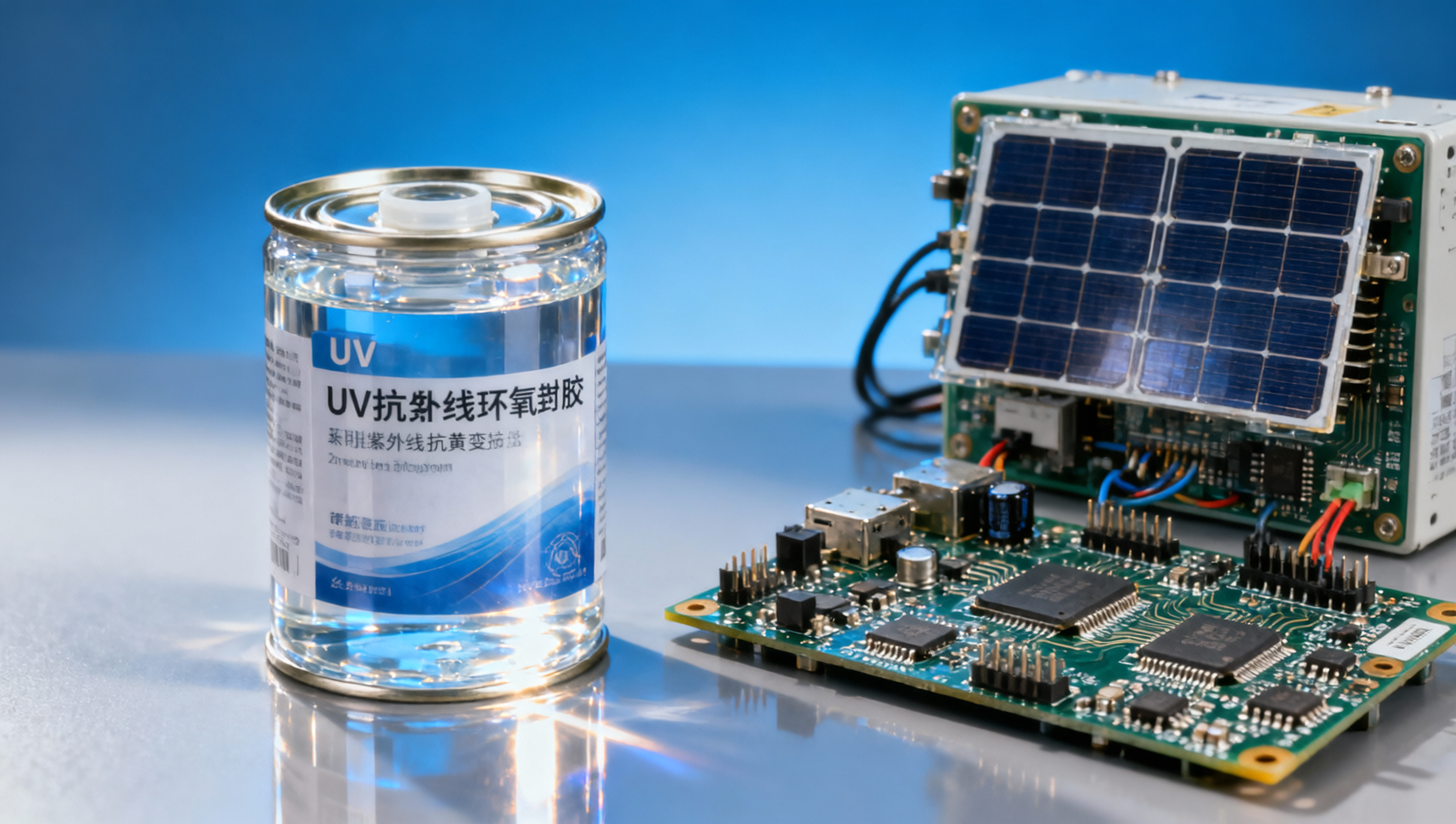
UV-resistant epoxy potting compounds are specialized polymer formulations designed to protect sensitive electronic components from environmental stressors while maintaining excellent electrical insulation properties. These materials combine the mechanical strength of epoxy resins with advanced UV stabilizers that prevent yellowing and degradation when exposed to sunlight or artificial UV sources.
Unlike standard epoxy formulations, UV-resistant variants contain additives like hindered amine light stabilizers (HALS) and UV absorbers at concentrations typically ranging from 0.5% to 3% by weight. These compounds demonstrate exceptional performance in outdoor applications, withstanding continuous UV exposure for 5,000+ hours without significant property degradation.
The table above demonstrates that while UV-resistant epoxies maintain the core electrical and thermal properties of standard formulations, they offer significantly enhanced protection against ultraviolet degradation. This makes them ideal for applications where both electrical performance and long-term visual clarity are required.
Key Applications and Performance Requirements
UV-resistant epoxy potting compounds find critical applications across multiple industries where electronic components face harsh environmental conditions. The automotive sector utilizes these materials for under-hood electronics, LED lighting systems, and sensor protection, where temperatures can range from -40°C to 150°C with continuous UV exposure.
In renewable energy systems, these compounds protect solar inverter components and monitoring electronics that must withstand 15-25 years of outdoor exposure. Telecommunications equipment, particularly 5G infrastructure components mounted on towers or rooftops, also benefits from UV-resistant potting that maintains signal integrity while preventing moisture ingress.
- Outdoor LED drivers and lighting control systems
- Avionics and aerospace electronic housings
- Marine navigation and communication equipment
- Industrial automation sensors in exposed locations
- Medical devices requiring sterilization resistance
Performance Thresholds for Critical Applications
For applications requiring UL certification, UV-resistant epoxies must meet specific performance thresholds. The material should maintain at least 85% of its original mechanical properties after 1,000 hours of UV exposure per ASTM G154 testing. Dielectric strength must remain above 15 kV/mm after thermal cycling between -40°C and 125°C for 200 cycles.
Material Selection: Epoxy vs. Silicone Potting Compounds
When selecting between UV-resistant epoxy and silicone potting compounds, engineers must evaluate several performance factors. Epoxy compounds generally offer superior mechanical strength (tensile strength of 50-90 MPa vs. 5-10 MPa for silicones) and better resistance to chemicals and solvents. However, silicones provide greater flexibility (elongation at break of 200-600% vs. 2-5% for epoxies) and maintain performance across wider temperature ranges.
The choice between epoxy and silicone often comes down to the specific application requirements. Epoxy's lower coefficient of thermal expansion (CTE) makes it preferable for components with tight dimensional tolerances, while silicone's flexibility better accommodates components subject to vibration or thermal cycling.
Procurement Considerations for UV-Resistant Potting Compounds
When specifying UV-resistant epoxy potting compounds, procurement professionals should evaluate materials against six critical parameters: UV stability certification, thermal management properties, cure characteristics, compliance standards, supplier reliability, and total cost of ownership.
- Verify UV resistance testing per ASTM G154 or ISO 4892 with minimum 3,000 hours exposure data
- Confirm thermal conductivity meets application needs (typically 0.5-1.5 W/mK for power electronics)
- Evaluate cure time and process compatibility (room temperature vs. heat-cured systems)
- Check compliance with relevant industry standards (UL 94 V-0, IPC-CC-830, MIL-I-46058C)
- Assess supplier quality systems (ISO 9001 certification with aerospace/automotive experience preferred)
- Calculate total cost including waste, processing, and rework factors
Supplier Evaluation Criteria
Leading manufacturers of UV-resistant epoxy potting compounds should provide comprehensive technical data sheets with at least 12 months of accelerated aging data. Preferred suppliers maintain batch-to-batch consistency with viscosity variations under ±5% and gel time consistency within ±10% of specification. For mission-critical applications, suppliers should offer material traceability down to the raw material lot level.
Implementation Best Practices
Proper application of UV-resistant epoxy potting compounds requires attention to surface preparation, mixing ratios, degassing, and cure conditions. Components should be cleaned with isopropyl alcohol or plasma treatment to achieve surface energies above 50 dynes/cm prior to potting. For two-part systems, mix ratios must be maintained within ±1% of manufacturer specifications to ensure complete cure and optimal properties.
Degassing is particularly critical for UV-resistant formulations, as entrapped air bubbles can create light-scattering centers that accelerate localized UV degradation. Vacuum degassing at 25-29 inHg for 5-15 minutes typically reduces void content below 0.5% by volume. Cure schedules should follow manufacturer recommendations precisely, as under-cured material may exhibit reduced UV resistance.
Conclusion and Next Steps
UV-resistant epoxy potting compounds offer a unique combination of environmental protection and electrical performance for demanding electronic applications. By understanding the material properties, application requirements, and implementation best practices outlined in this guide, engineers and procurement professionals can make informed decisions that extend product lifetimes in harsh environments.
For organizations requiring specialized formulation advice or material testing services, SiliconCore Metrics provides independent technical consulting and benchmarking services. Our laboratories can evaluate your specific application requirements against industry standards and recommend optimal potting solutions. Contact our materials engineering team today to discuss your UV-resistant potting compound needs and receive customized performance data for your application environment.
Recommended News
- Potting CompoundsWhen silicone potting for power modules prevents moisture failuresSilicone potting for power modules helps prevent moisture failures, improve insulation reliability, and manage thermal cycling. Explore key selection and process insights.
- Potting CompoundsHow to write a potting compound specification that manufacturers can followPotting compound specification guide: learn how to define clear, testable requirements manufacturers can follow to reduce sourcing risk, improve compliance, and ensure reliable electronic performance.
- Potting CompoundsHow Silicone Embedded Components Improve Sealing and Vibration ResistanceSilicone embedded components improve sealing and vibration resistance by reducing leaks, absorbing stress, and boosting long-term reliability in electronics, automotive, and industrial systems.
- Potting CompoundsEU RoHS Tightens Phthalate Limit for Potting CompoundsEU RoHS tightens phthalate limits for potting compounds to 0.1%, effective Oct 1, 2026. Learn who is affected, key compliance steps, and how to update CE files fast.
- Potting CompoundsTUV Rheinland Tightens Annex H for Potting CompoundsTUV Rheinland Tightens Annex H for Potting Compounds: learn how the new UL94 V-0 and CTI >=600V rules impact EU certification, sourcing, and supply-chain readiness.
- Potting CompoundsPCB Thermal Potting Lead Times Extend to 14 WeeksPCB Thermal Potting lead times now stretch to 14 weeks, disrupting Metal Core PCB, EV controls, and inverter delivery. See risks, causes, and smart planning actions.