
High Speed PCB Routing Choices That Increase EMI Risk
DETAILS
In high speed PCB design, routing decisions made for performance or cost can quietly amplify EMI risk, affecting everything from low loss PCB signal paths to high temperature PCB reliability. This article examines the layout choices that undermine compliance, product stability, and sourcing confidence, helping engineers, buyers, and technical evaluators make smarter decisions across PCB OEM, PCB quotation, and advanced application scenarios.
Which High Speed PCB Routing Choices Most Often Increase EMI Risk?
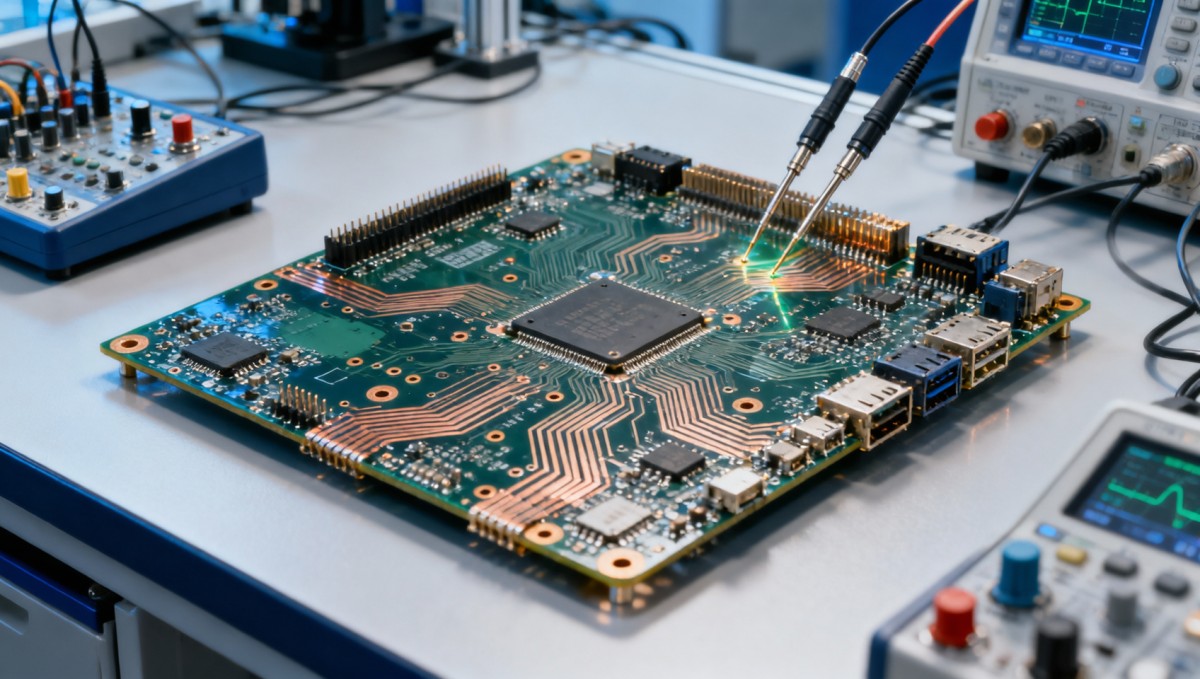
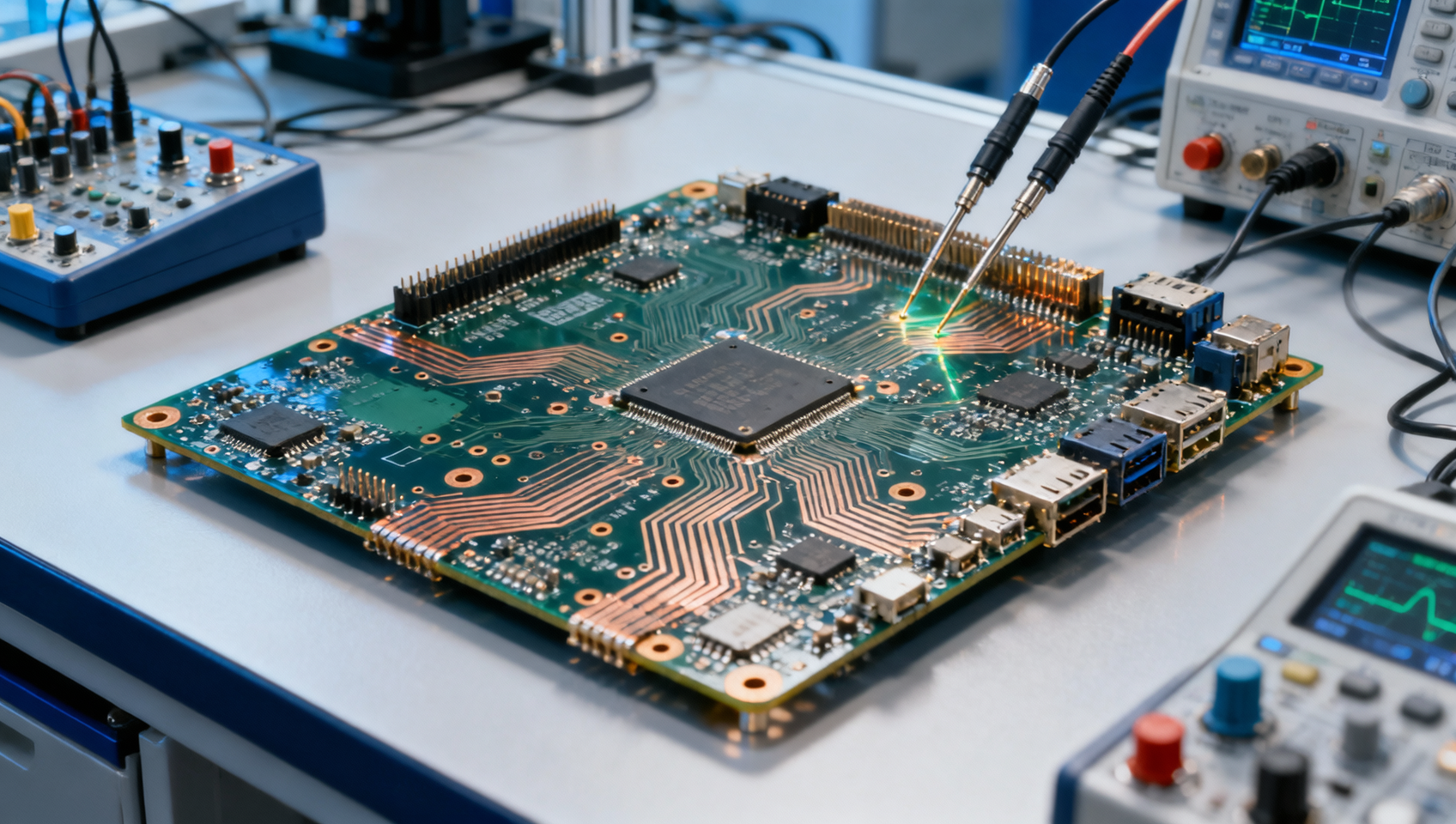
High speed PCB routing is rarely judged by one signal trace alone. EMI risk usually grows from a stack of decisions: longer return paths, poor reference plane continuity, aggressive layer changes, weak edge-rate control, and trace placement that favors convenience over field containment. In practice, the most expensive failures appear not during schematic review, but during pre-compliance testing, pilot builds, or field use under thermal and switching stress.
For design teams, the challenge is technical. For sourcing teams, the challenge is visibility. A PCB quotation may look competitive, yet omit material consistency, impedance control windows, copper roughness behavior, or drill-to-copper tolerances that influence EMI performance above common high speed ranges such as 1 Gbps, 5 Gbps, or multi-GHz clock domains. That is where independent benchmarking becomes valuable.
SiliconCore Metrics supports this evaluation by turning manufacturing variability into decision-ready intelligence. Instead of treating a board as a generic commodity, SCM examines dielectric behavior, placement precision, thermal packaging interaction, and reliability under stress cycles. For enterprise teams balancing design risk, compliance timing, and supplier selection, that data shortens the gap between a promising prototype and a manufacturable product.
The routing mistakes that deserve early review
Most EMI-sensitive routing errors can be screened during the first 2–3 design review rounds. Waiting until final gerber release often multiplies correction cost because stackup, connector position, and return path architecture are already frozen. The issue is not just radiated emissions. These choices also affect crosstalk, eye margin, common-mode conversion, and sensitivity to assembly variation.
- Routing high speed traces across splits or voids in the reference plane, forcing return current to detour and increasing loop area.
- Using excessive via transitions on fast lanes without return vias nearby, especially in dense BGA breakout regions.
- Placing differential pairs too close to noisy power stages, clocks, transformers, or board-edge cable exits.
- Prioritizing shortest path only, while ignoring layer reference consistency, skew control, and field coupling to adjacent structures.
When these issues combine, EMI risk often rises before anyone sees visible damage. The board may still boot, pass a bench check, and even survive functional validation. Yet compliance margin can narrow sharply within a few dB, leaving project managers exposed to redesign delays of 2–4 weeks and additional spins that impact both launch schedules and distributor commitments.
How Specific Routing Decisions Affect Signal Integrity, EMI, and Reliability
Not every high speed PCB routing choice carries the same EMI weight. Some directly increase current loop area. Others create mode conversion or degrade return current continuity. A useful review method is to separate layout choices into four categories: reference path, transition structure, spacing strategy, and edge interaction. This keeps engineering discussions precise and helps procurement teams compare suppliers on meaningful process capability.
The table below highlights common routing choices and the mechanism by which they elevate EMI risk. These are not abstract theory points. They often show up in products such as industrial controllers, networking boards, embedded compute modules, automotive-adjacent electronics, and power-dense communication equipment where both signal integrity and thermal stress must be managed over multi-year service life.
For engineering teams, this means EMI prevention must begin with field containment, not cosmetic cleanup. For commercial teams, it means a lower PCB quotation can become expensive if the supplier cannot hold impedance, registration, and layer consistency within the ranges your high speed design expects. A board that is electrically functional but compliance-fragile can disrupt qualification far more than a board that costs modestly more upfront.
Reference planes and return current matter more than many teams expect
If one layout rule had to be prioritized across almost every high speed product, it would be preserving an uninterrupted return path. At frequencies where edge rates are fast and current return follows the path of least impedance, any slot, anti-pad cluster, or plane island can behave like an EMI multiplier. Even a short crossing of a discontinuity can matter if it occurs on a critical lane or near a connector launch.
This is also where SCM’s value is practical. Independent review of multilayer PCB dielectric constants, fabrication tolerances, and assembly precision helps teams judge whether a supplier’s nominal stackup aligns with real production behavior. In a 4-layer design the margin may already be thin; in 8-layer to 16-layer platforms used for denser routing, unnoticed stackup deviation can alter impedance, delay, and coupling in ways that complicate EMI control.
Three questions to ask during technical evaluation
- Does every critical high speed route maintain a continuous reference plane for at least 90% of its path, especially through breakout and connector regions?
- Where a layer transition is unavoidable, are return vias or stitching structures placed close enough to control current path disruption?
- Has the design team reviewed whether thermal relief patterns, copper voids, or mounting constraints create hidden return discontinuities?
These questions help not only designers but also quality managers and project leads. They translate electrical risk into measurable review points and reduce the chance that a compliance failure appears after tooling, sample approval, or regional shipment planning has already started.
What Should Buyers, Program Managers, and Evaluators Check Before Approving a PCB Supplier?
In B2B electronics sourcing, EMI risk is often treated as a design-only problem. That is incomplete. Supplier capability influences whether the intended routing strategy survives real fabrication. Resin content variation, registration drift, copper profile differences, drill wander, solder mask alignment, and assembly placement accuracy can all shift the electrical behavior of a supposedly fixed layout. Procurement teams therefore need a review model that goes beyond piece price.
A structured sourcing review should cover at least 5 key checkpoints: stackup consistency, impedance control process, drill and plating capability, material traceability, and compliance documentation. For projects under tight launch windows of 7–15 days for prototypes or 2–4 weeks for pilot runs, these items determine whether the supplier supports fast iteration or creates hidden risk that surfaces during validation.
The next table is designed for technical buyers, commodity managers, and business evaluators who must compare PCB OEM options without losing sight of engineering consequences. It converts routing-related EMI concerns into a supplier review framework that is easier to use during RFQ, sample approval, and design-for-manufacturing meetings.
For many organizations, this table also improves communication between departments. Engineers can define what must be controlled. Buyers can ask for the right documents. Program managers can decide whether a supplier is suitable for EVT, DVT, or volume production. SCM strengthens this process by supplying neutral benchmarking and compliance-oriented reporting, especially when supplier claims are difficult to compare directly.
A practical approval workflow for EMI-sensitive projects
When time is limited, teams benefit from a 4-step approval flow rather than fragmented emails and late-stage surprises. This is especially important for products that combine high speed digital paths, thermal density, and strict quality expectations such as IPC-Class 3 aligned builds or applications governed by internal reliability gates.
- Confirm the routing-critical stackup, impedance targets, and material options before the final PCB quotation is locked.
- Review breakout, via transitions, return path continuity, and connector launch regions in a joint engineering and sourcing meeting.
- Request fabrication and assembly capability evidence relevant to your design, not just a generic capability list.
- Tie sample approval to measurable checks such as coupon results, visual review of critical zones, and pre-compliance readiness criteria.
This workflow reduces ambiguity. It also helps distributors, agents, and channel partners explain to end customers why one quoted option deserves preference over another, even when nominal specifications look similar on paper.
Which Design Trade-Offs Create Hidden EMI Problems in Real Applications?
High speed PCB routing decisions are rarely made in isolation. Teams trade layer count against cost, board size against connector placement, loss budget against material price, and thermal paths against clean reference planes. Problems start when one optimization quietly weakens another. A shorter route may cross a split plane. A cheaper stackup may increase loss and push designers toward stronger equalization, which can raise emissions elsewhere.
In industrial and embedded systems, one common pattern is routing fast digital lanes too close to power conversion sections to save area. In compact communication hardware, another pattern is placing high speed connectors near enclosure openings, making common-mode leakage easier. In high temperature PCB environments, thermal expansion and long-term material aging can further reduce the safety margin that looked acceptable during early testing.
Because these trade-offs span design, sourcing, and operations, the best response is cross-functional review. SCM’s role is useful here because it connects manufacturing data, materials intelligence, and compliance-focused interpretation. That matters when a project owner needs to decide between two laminates, two factories, or two layout revisions within one decision cycle.
Common trade-offs and how to judge them
Cost reduction versus stackup discipline
Moving from a more robust layer architecture to a minimal one can lower board cost, but it may also force routing compromises that expand EMI risk. If a design moves from 8 layers to 6 layers, ask whether return path continuity, isolation from noisy zones, and impedance control are still preserved. Savings on bare board cost can be erased by one additional compliance iteration.
Shortest route versus clean electromagnetic behavior
A route that is physically shorter is not always electrically quieter. If it crosses a reference gap, changes layers repeatedly, or runs near switching edges, it may radiate more than a slightly longer path with a stable reference environment. For high speed links, designers should compare at least 2 routing options when critical nets pass near noisy regions or dense I/O boundaries.
Material substitution versus long-term reliability
Procurement teams sometimes approve alternate materials during supply pressure or cost control programs. That may be reasonable, but only if dielectric behavior, thermal stability, and process compatibility are reviewed carefully. A substitute laminate that works in a room-temperature test may behave differently after repeated thermal cycles, particularly in applications with elevated ambient ranges such as 70°C to 105°C operating zones.
- If a cost-down proposal changes layer count, require a fresh review of return paths and spacing near connectors and power sections.
- If a PCB OEM proposes alternate material, confirm dielectric and thermal implications before approving volume production.
- If board edge placement is constrained, evaluate enclosure, cable, and grounding interactions together rather than separately.
These checks are relevant across the supply chain: design engineers want stable performance, quality teams want fewer escapes, buyers want predictable quotations, and enterprise decision-makers want fewer program delays tied to hidden technical debt.
FAQ and Next-Step Guidance for EMI-Sensitive PCB Projects
Teams researching high speed PCB routing often need direct answers, not theory alone. The questions below reflect common search intent from engineers, sourcing managers, quality teams, and channel partners trying to reduce EMI risk while keeping schedule and quotation pressure under control.
How can we identify EMI-prone routing before prototype build?
Start with 3 focus areas: return path continuity, layer transitions, and proximity to noisy structures. Review all critical nets that run above key speed thresholds in your product context, especially lanes crossing connectors, BGAs, or power-dense areas. A pre-build review should also inspect whether plane splits, voids, mounting constraints, and thermal copper shapes interrupt the reference environment. Catching these issues before gerber release can save one or more build cycles.
What should procurement ask for in a PCB quotation for high speed boards?
Ask for more than price and lead time. Request the proposed stackup, impedance control approach, material options, tolerances that affect routing fidelity, and any limits around via structures or alternate laminates. For sensitive designs, ask how the supplier handles low loss PCB materials, high temperature PCB requirements, and whether assembly precision could affect critical routing zones. This turns the quotation into a technical decision tool instead of a cost-only document.
Are differential pairs automatically safe from EMI issues?
No. Differential pairs reduce sensitivity when routed correctly, but they can still radiate if pair symmetry is broken, if skew grows through poor breakout, or if the return environment is inconsistent. Common-mode conversion is a major concern. That is why pair spacing, pair balance, connector launch quality, and nearby reference stitching deserve review even when the interface itself is nominally differential.
When is independent benchmarking worth using?
Independent benchmarking is especially useful in 4 situations: when supplier claims differ but are hard to verify, when a project is moving from prototype to volume, when alternate materials are being considered, and when compliance margin looks narrow. SCM helps by translating dielectric data, assembly precision, thermal reliability, and supplier variation into structured evidence that engineering and procurement can both use.
Why choose us for technical evaluation and sourcing intelligence?
SiliconCore Metrics supports companies that cannot afford guesswork in high speed PCB decisions. Our independent whitepapers, manufacturing benchmarks, and compliance-oriented reports help teams confirm parameters, compare PCB OEM options, review quotation assumptions, and understand how routing, materials, thermal behavior, and assembly precision interact in real production. This is valuable for information researchers, engineers, buyers, project managers, quality teams, and enterprise decision-makers working across global EMS supply chains.
If you are evaluating a new board, an alternate supplier, or a cost-down redesign, contact us for support on stackup review, low loss PCB material comparison, high temperature PCB suitability, sample planning, compliance risk screening, and quotation discussions. We can help clarify which parameters should be confirmed first, which supplier claims need evidence, what delivery window is realistic for your stage, and where routing choices may be creating hidden EMI exposure before it becomes a launch problem.
Recommended News
- EMI ShieldingHow to choose a design verification resource for EMI testingDesign verification resource guide for EMI testing: compare technical depth, traceable evidence, and compliance insight to prevent costly redesigns.
- EMI ShieldingHow automotive component compliance testing supports EMC approvalComponent compliance testing automotive helps secure EMC approval through traceability, pre-compliance checks, and controlled design changes. Learn how to reduce risk.
- EMI ShieldingDo High-Performance Embedded Boards Need Different EMI Shielding?Do high-performance embedded boards require different EMI shielding approaches? Explore practical strategies for grounding, thermal design, cable control, compliance, and reliable performance.
- EMI ShieldingEU Adds Halogenated Flame Retardants and EMI Coatings to RoHS ScopeEU RoHS scope expands to halogenated flame retardants and EMI coatings under Directive (EU) 2026/1389. See how PCB exporters can prepare for the 2027 compliance deadline.
- EMI ShieldingEU Requires EPDs for EMI Shielding PartsEU Requires EPDs for EMI Shielding Parts from January 2027. Learn how the new EU rule affects compliance, carbon disclosure, shipment timing, and supplier planning.
- EMI ShieldingCBP Tightens Filing Rules for EMI Shielding ImportsCBP Tightens Filing Rules for EMI Shielding Imports: learn how the September 2026 ACE filing change affects RoHS, REACH, customs timing, and buyer risk for U.S.-bound shipments.