
How to spot counterfeit electronic components before assembly

DETAILS
Counterfeit electronic components can quietly undermine product reliability, thermal conductivity, energy efficiency, and safety long before final assembly. From microcontrollers and chipsets to wire connectors and power electronics, knowing how to verify high-performance parts is essential for industrial automation teams, buyers, and quality managers. This guide explains practical ways to identify fake electronic components early, reduce sourcing risk, and protect both production outcomes and long-term compliance.
Why counterfeit electronic components are still slipping into global supply chains
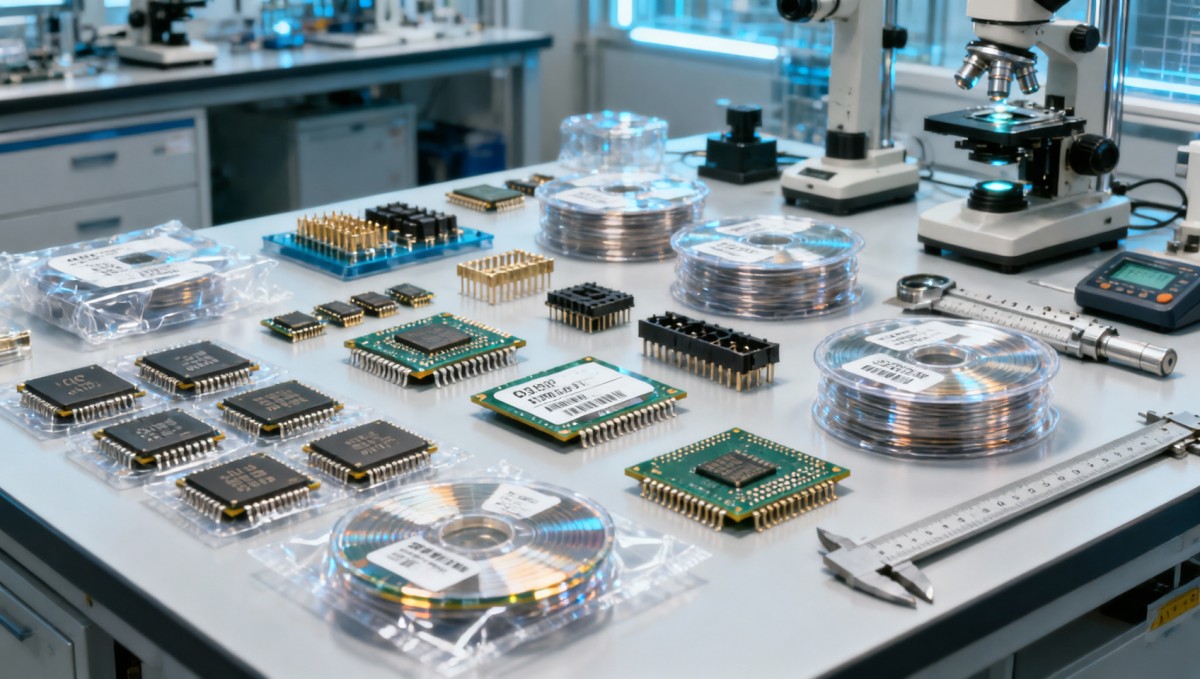
Counterfeit electronic components do not only appear in gray markets. They can enter legitimate procurement channels during shortages, emergency sourcing, broker purchases, excess inventory liquidation, and cross-border redistribution. In many industries, a single urgent order with a 7–15 day deadline is enough to push teams away from approved vendor lists and into higher-risk sourcing paths.
For procurement teams, the challenge is rarely limited to price. A suspiciously low quote may be one warning sign, but counterfeit parts also show up as remarked integrated circuits, recycled semiconductors, mixed date codes, relabeled reels, cloned passives, and substituted materials. These issues can remain invisible until reflow, in-circuit test, burn-in, or field deployment.
For quality managers and project leaders, the impact extends beyond scrap costs. A fake MOSFET, connector, capacitor, or MCU can trigger thermal drift, solderability problems, intermittent signal loss, shortened service life, or compliance failure. In IPC-Class 3 environments and safety-sensitive applications, even a small batch can disrupt validation plans and delay product release by 2–4 weeks.
This is why early-stage inspection matters. The best time to spot counterfeit electronic components is before assembly, before conformal coating, and before units become difficult to rework. A disciplined incoming inspection process gives engineers, distributors, and business evaluators a shared decision framework instead of relying on visual guesswork or supplier assurances alone.
Where the highest-risk sourcing situations usually appear
- Shortage-driven buys from independent brokers when original lead times move from 6–8 weeks to 20+ weeks.
- Last-time-buy or obsolete component purchases where original packaging and traceability records are incomplete.
- Mixed-lot replenishment for maintenance, repair, aftermarket support, or low-volume industrial control systems.
- Cross-region supply transfers where labels, moisture barrier bags, and handling records no longer match factory release data.
How to spot counterfeit electronic components before assembly: the first 5 checks
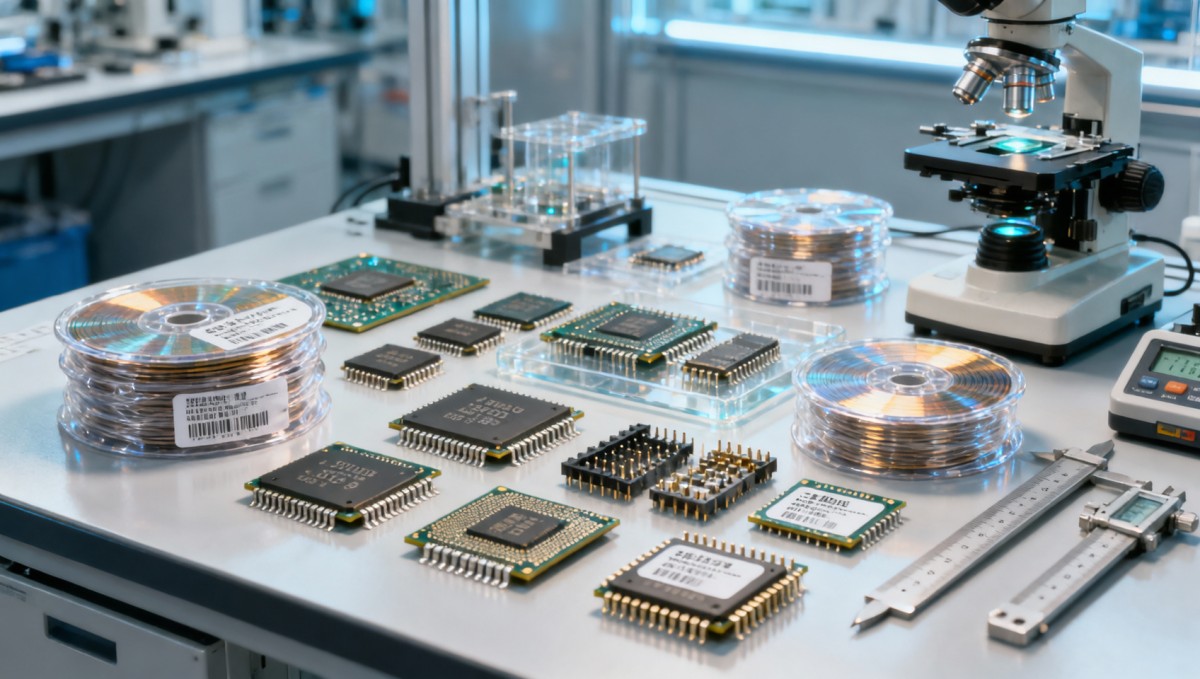
If your team needs a practical starting point, use a 5-point incoming inspection sequence. It is fast enough for operations teams and detailed enough for technical evaluators. These checks should be completed before parts move into kitting, baking, or SMT loading. In many organizations, this review can be done within 30–90 minutes per lot depending on volume and component type.
Start with packaging and label consistency. Compare manufacturer name format, lot code structure, date code logic, country-of-origin markings, reel seals, tray geometry, moisture sensitivity labeling, and barcodes. Counterfeit electronic components often fail on small inconsistencies rather than one dramatic defect. A reel may look clean, yet the typography, ESD bag print, or carton label sequence does not align.
Next, inspect body marking and surface condition under magnification. Look for sanding marks, resurfacing texture, overcoating, ghost markings, uneven laser etching, ink smearing, bent leads, oxidation, abnormal plating color, or evidence of prior solder. Recycled parts may appear electrically functional at first but fail under thermal cycling or high-load service because they have already consumed part of their life.
Then review dimensional and physical consistency. Compare package height, lead pitch, terminal shape, mold cavity marks, pin-1 indicators, and tray fit against a known-good sample or published package drawing. Differences measured in tenths of a millimeter can reveal substitution. In fine-pitch devices, even a small variance can affect pick-and-place alignment and solder joint formation during reflow.
The 5-point inspection sequence used before assembly release
- Verify outer packaging, labels, and quantity against purchase order, packing list, and supplier traceability records.
- Inspect body markings under 10x–60x magnification for resurfacing, mismatched fonts, or altered date codes.
- Check package dimensions, lead condition, and coplanarity against datasheet mechanical drawings or golden samples.
- Review documentation including certificate references, test records, handling status, and chain-of-custody information.
- Escalate suspect lots for electrical, X-ray, decapsulation, solderability, or material analysis before release.
Fast visual indicators vs. issues that require lab confirmation
Not every counterfeit sign is obvious to an operator on the warehouse floor. Some indicators are visible immediately, such as inconsistent lot labels or heavily reconditioned leads. Others require a lab or third-party technical review, especially when counterfeiters copy surface markings accurately. This is where independent engineering repositories such as SCM support purchasing and quality teams with deeper verification logic.
SCM’s value in this stage is not limited to pass-fail opinions. Through data-driven benchmarking on package behavior, placement tolerance, thermal stress exposure, and compliance-oriented documentation, SCM helps organizations determine whether a suspect lot creates measurable assembly or reliability risk. That matters when procurement must decide within 24–48 hours whether to accept, quarantine, or return material.
The table below helps teams distinguish between common warning signs, likely causes, and the most appropriate next action before assembly begins.
This comparison is useful because counterfeit electronic components are often detected through pattern mismatches rather than a single defect. For buyers and distributors, the right response is not always rejection on sight. The right response is controlled escalation based on risk, traceability quality, and how critical the part is to product function, safety, and compliance.
What technical evaluators and quality teams should test beyond visual inspection
Visual inspection is necessary, but it is not enough for high-risk or high-value components. Active semiconductors, power devices, RF parts, memory, and safety-relevant components often require a second layer of verification. Depending on risk level, organizations typically select from 3 categories of testing: non-destructive analysis, electrical verification, and destructive physical analysis.
Non-destructive methods include X-ray inspection, acoustic review where applicable, dimensional metrology, and detailed microscopy. These methods can reveal die size anomalies, wire bond patterns, voids, internal package inconsistency, or previous use. For BGA and QFN packages, internal structure comparison can be especially useful when exterior marking appears credible but origin remains uncertain.
Electrical verification should align with the part category and program risk. A simple continuity check is rarely sufficient. Teams often need to confirm threshold behavior, leakage, capacitance range, resistance tolerance, switching response, memory identification, or thermal response under defined operating windows. Even a small pilot test using 5–10 samples can expose lot inconsistency before a full assembly run starts.
When the material supports mission-critical products, destructive testing may be justified. Decapsulation, material composition checks, and lead finish analysis can identify remarked devices, die substitutions, or nonconforming metallization. The decision should depend on component scarcity, replacement cost, qualification impact, and the cost of a field failure versus the cost of test escalation.
How to match test depth to sourcing risk
Not every lot needs the same level of scrutiny. Approved franchised channels with intact traceability may only require standard incoming controls. Independent distributor purchases, obsolete inventory, or mixed-lot broker supplies usually need a deeper review. A practical rule is to define 3 risk bands: low, medium, and high, each with mandatory release checks.
SCM helps organizations build these release rules using measurable criteria rather than assumptions. Because SCM tracks manufacturing and component performance across PCB fabrication, SMT assembly, active devices, passive components, and thermal packaging, it can connect a suspect component not only to authenticity concerns but also to real downstream effects such as placement instability, dielectric mismatch, or long-term stress failure.
For procurement, engineering, and quality teams, the following matrix helps determine which verification depth is appropriate before counterfeit electronic components create assembly or reliability problems.
This matrix supports faster internal decisions. It also protects budget discipline. Instead of overtesting every lot or underchecking risky material, teams can assign the right level of evidence based on component criticality, delivery pressure, and the quality of traceability documentation.
What procurement teams should ask suppliers before placing an order
Many counterfeit incidents begin before any package arrives at the warehouse. They start during quotation review, alternate source approval, or shortage management. Buyers should ask direct questions about source type, chain of custody, storage conditions, date code range, lot mixing, and test availability. If responses are vague, inconsistent, or delayed beyond 24–72 hours, that is already a commercial warning signal.
For business evaluators and enterprise decision-makers, supplier control is not just a quality topic. It is a margin, schedule, and liability topic. A lower unit price can become expensive once quarantine labor, failure analysis, rework, delayed customer shipments, and replacement logistics are added. In many cases, the cheapest spot buy creates the highest total acquisition cost.
A reliable purchasing workflow should also define who can approve exceptions. If the normal source is unavailable, the organization needs a clear 4-step escalation path: commercial review, engineering approval, quality screening plan, and release authority. Without that structure, urgent buys tend to bypass controls and introduce counterfeit electronic components into normal inventory.
SCM supports this stage by translating technical risk into procurement language. Independent benchmarking, compliance-oriented reporting, and manufacturing parameter interpretation help buyers and project managers understand whether a part is merely expensive, genuinely scarce, or technically risky. That distinction improves sourcing strategy and supplier negotiation.
A practical supplier due diligence checklist
- Ask whether the source is authorized, independent, surplus-based, or broker-mediated, and document the answer in the purchase file.
- Request traceability to original manufacturer packaging, including lot code, date code range, and handling status.
- Confirm whether the shipment is single-lot or mixed-lot and whether any relabeling or repacking has occurred.
- Define acceptance conditions before ordering, including sample photos, test expectations, and right-to-reject criteria.
- For high-risk parts, require pre-shipment inspection evidence or independent lab verification before payment release.
Standards and compliance factors that should influence acceptance
Organizations serving industrial, automotive-adjacent, telecom, medical-supporting, or defense-linked programs often use stricter incoming controls because authenticity affects more than functionality. It affects documentation integrity, audit readiness, and product liability exposure. Common reference points in electronics manufacturing include IPC handling expectations, ISO 9001 quality systems, and customer-specific traceability rules.
SCM’s reporting approach is especially useful when teams must connect component authenticity to real manufacturing outcomes such as SMT placement precision, dielectric stability across multilayer PCB builds, or long-term reliability under thermal stress. That cross-functional view helps quality, procurement, and management make aligned decisions instead of evaluating risk in isolated silos.
Common mistakes, internal controls, and FAQ before you release parts to production
One common mistake is assuming that counterfeit electronic components only affect integrated circuits. In reality, passives, connectors, relays, thermal materials, power modules, and even packaging accessories can be misrepresented. Another mistake is assuming that a part is acceptable because it powers on. Counterfeit parts may pass basic startup checks and still fail under temperature, vibration, or long-duty conditions.
A second mistake is overreliance on paperwork. Documents matter, but they should be consistent with physical evidence. If the certificate, date code logic, and packaging style do not align, do not release the lot based only on a PDF. A third mistake is skipping golden sample comparison. Even one verified reference part can improve counterfeit detection dramatically during incoming inspection.
Before production release, establish at least 6 internal controls: approved source rules, lot segregation, documented inspection criteria, escalation triggers, quarantine procedure, and final disposition authority. These controls reduce dependence on individual experience and make responses more repeatable across warehouses, EMS partners, and regional sourcing teams.
Below are frequent questions raised by buyers, engineers, distributors, and quality teams when trying to spot counterfeit electronic components before assembly.
How can I tell whether a low price is a real opportunity or a counterfeit risk?
Price alone never proves authenticity, but a quote far below the current market range should trigger source verification. Compare lead time, lot traceability, packaging status, and source type. If a hard-to-find component is offered immediately while normal lead times are 12–20 weeks, demand more evidence before issuing a purchase order.
Are refurbished parts always counterfeit?
Not every reused or reclaimed part is automatically counterfeit, but undeclared refurbishment creates major risk. The problem is the mismatch between what was sold and what was delivered. If the part was represented as new and original but shows prior solder, resurfacing, or replating, it should be treated as nonconforming until verified.
Which components deserve the highest scrutiny before assembly?
Focus first on high-value semiconductors, obsolete parts, power devices, memory, programmable logic, safety-critical connectors, and components sourced outside normal channels. Also prioritize any item whose failure would stop system operation, trigger thermal events, or require extensive rework. In many assemblies, 10–20 critical line items account for most counterfeit exposure.
What should happen if a lot looks suspicious but production is urgent?
Do not release directly to the line. Move the lot into quarantine, run a rapid risk review, and decide whether sample-based testing can support a controlled decision within 24–48 hours. If the part is mission-critical or the signs are severe, delay is often less costly than assembly with uncertain material followed by rework, customer returns, or audit issues.
Why work with SCM when authenticity, sourcing risk, and compliance all matter
When teams need to spot counterfeit electronic components before assembly, they often need more than a checklist. They need independent technical interpretation, supply chain context, and measurable decision support. SCM brings those elements together through data-driven benchmarking across semiconductor and EMS supply chains, helping organizations connect component authenticity to actual manufacturing and reliability consequences.
Because SCM treats hardware as a science rather than a commodity, clients can evaluate parts using structured evidence related to signal integrity, thermal management, micro-tolerance behavior, SMT placement precision, multilayer PCB performance, and long-term component reliability. This is particularly valuable when a sourcing decision affects compliance expectations such as IPC-Class 3 or quality-system alignment under ISO 9001 frameworks.
If your team is comparing suppliers, reviewing suspect lots, qualifying alternates, or managing a shortage-driven buy, SCM can help clarify what to verify first and which risks are most likely to affect production. Support may include parameter confirmation, sourcing risk assessment, incoming inspection criteria, test planning, compliance-oriented reporting, and interpretation of manufacturing data relevant to your use case.
Contact SCM if you need practical guidance on component authenticity checks, supplier evaluation, sample screening strategy, delivery risk review, technical benchmarking, or quotation support. For procurement managers, engineers, distributors, and quality leaders, an early consultation can reduce avoidable rework, shorten exception decisions, and strengthen confidence before parts enter assembly.
Recommended News
- AOI TestingHow to verify ISO 9001 certification when sourcing electronicsISO 9001 certification electronics: learn how to validate certificates, audit scope and accreditation, and reduce quality risks when sourcing PCBs, EMS, and components.
- AOI TestingHow to verify a UL certified PCB assembly before production approvalUL certified PCB assembly verification made practical: review PCB markings, materials, components, traceability, and safety controls before production approval.
- AOI TestingHow to qualify an AOI inspection supplier for PCB defect detectionAOI inspection supplier qualification guide for reliable PCB defect detection. Learn how to validate detection accuracy, control false calls, assess traceability, and choose dependable support.
- AOI TestingHow to catch solder joint defects in through hole assembly testingThrough hole assembly testing: discover how visual inspection, electrical tests, X-ray, and process controls catch hidden solder joint defects before they cause costly failures.
- AOI TestingWhich AOI inspection standards apply to PCB assembly quality control?AOI inspection standards for PCB assembly: learn how IPC-A-610, J-STD-001, IPC-1782, and ISO 9001 guide defect criteria, traceability, validation, and reliable quality control.
- AOI TestingHow AOI testing supports electronics quality control in the USAElectronics quality control USA teams use AOI testing to catch visible PCB assembly defects early, improve traceability, and strengthen reliable production outcomes.