
AOI Testing Limits on Dense SMT Boards
DETAILS
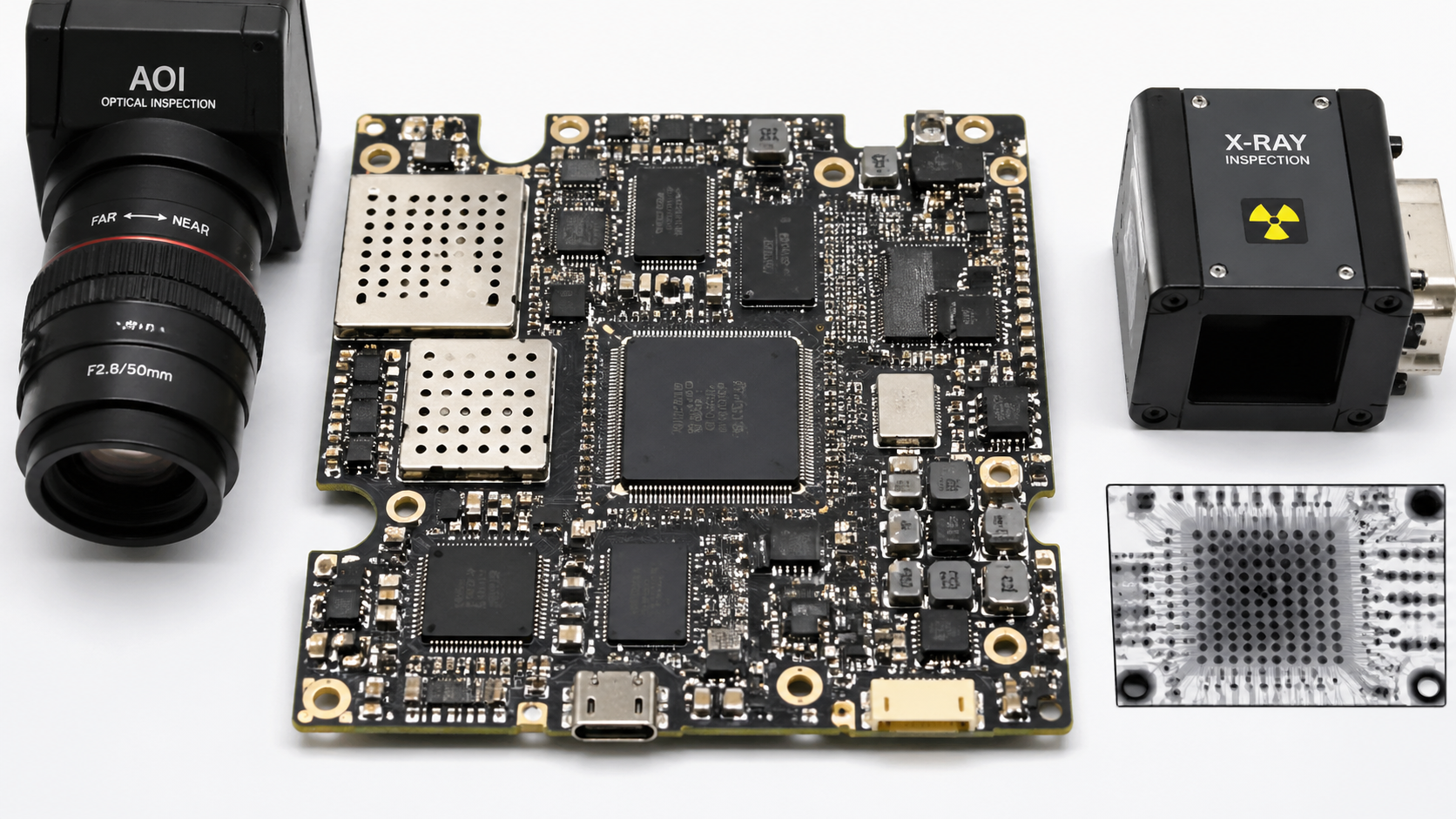
On dense SMT boards, AOI testing can miss defects hidden by component shadowing, ultra-fine pitch layouts, and complex thermal profiles. For engineers, buyers, and quality teams evaluating circuit board assembly, SMT soldering, reflow soldering, and pick and place specifications, understanding these limits is essential to improving SMT compliance, PCB compliance, and thermal management compliance while reducing risk across electronic parts and circuit components.
Why AOI reaches its limits on dense SMT boards
Automated Optical Inspection remains a core control step in SMT assembly, but dense PCB layouts expose its practical boundaries. As component pitch moves toward 0.5 mm, 0.4 mm, or below, the visual separation between pads, leads, solder fillets, and adjacent bodies becomes harder to resolve consistently across production lots. On boards with stacked connectors, bottom-terminated components, shields, and mixed-height packages, AOI can identify many visible defects, yet it cannot reliably evaluate every hidden solder joint or every geometry affected by shadowing.
This matters beyond manufacturing yield. For technical evaluators, a narrow AOI pass/fail report may create a false sense of assurance if inspection strategy does not match board complexity. For procurement teams, unclear inspection coverage can distort supplier comparison. For project managers, defects missed during inline inspection often reappear later as rework, delayed shipment, or field return events, especially when thermal cycling and vibration reveal weak solder joints that looked acceptable from a top-down camera angle.
Dense SMT boards typically combine 3 risk drivers at once: reduced spacing, increased component diversity, and tighter thermal windows during reflow soldering. When these factors overlap, AOI performance depends heavily on programming quality, lighting strategy, image library accuracy, board design for inspectability, and the integration of additional controls such as SPI, X-ray, or functional test. In practice, AOI is rarely a complete inspection answer for advanced assemblies; it is one layer in a broader quality architecture.
SCM approaches this problem from a benchmarking and compliance perspective. Instead of treating AOI as a generic checkpoint, SCM evaluates how inspection capability interacts with SMT placement precision, solder paste volume control, component package type, board warpage, and process repeatability. That approach supports more realistic decision-making for R&D engineers, quality managers, and sourcing teams that need comparable, data-driven visibility across suppliers operating under IPC-Class 3 and ISO 9001 frameworks.
What AOI can detect well, and what it often struggles to confirm
AOI is most effective when the defect has a visible signature: polarity reversal, wrong component, lifted lead, offset placement, missing parts, tombstoning on small passives, and certain solder bridge conditions. It becomes less definitive when the defect is concealed under the package body or when a valid joint presents low visual contrast due to reflectivity, angle, or thermal discoloration.
- Strong AOI use cases: chip resistors and capacitors, gull-wing lead packages, visible paste spread patterns, and repeatable board families with stable lighting conditions.
- Higher-risk use cases: QFN void-related issues, BGA hidden joints, connectors with cavity shadowing, tall electrolytic neighborhoods, and assemblies with reflective metal shields.
- Process-sensitive use cases: boards with mixed reflow masses, large copper imbalance, or temperature-sensitive components that alter solder wetting profile across zones.
For buyers and business evaluators, the key question is not whether a supplier has AOI. The real question is whether AOI coverage is aligned with board architecture, package mix, defect criticality, and downstream reliability exposure over the product’s expected service life.
Which defect mechanisms are most likely to escape optical inspection?
In dense SMT production, the most costly escapes are often not the easiest ones to see. Hidden solder insufficiency under bottom-terminated components, head-in-pillow behavior on area-array packages, marginal wetting near thermal pads, and intermittent opens caused by board flex are examples where AOI alone may not provide enough confidence. These issues often arise when paste deposition, placement accuracy, and reflow profile interact within a narrow process window.
Another challenge is defect mimicry. A solder fillet may look acceptable from above while containing internal voiding, non-wetting, or an insufficient contact area. Conversely, a joint may be flagged as suspicious by AOI because of cosmetic variation even though it is electrically and mechanically sound. That creates two operational costs at once: false negatives that escape, and false positives that consume repair capacity. On medium-volume to high-volume lines, even a 1-step increase in manual review burden can slow takt time materially.
Dense boards also increase contextual errors. A 0201 or 01005 package placed close to a connector wall or RF can may receive uneven illumination. Fine-pitch leads near silk marking, adhesive residue, or flux staining can be misclassified. Thermal shadowing from large copper planes may produce wetting differences between zones, especially when peak reflow temperature and time above liquidus are optimized for one package family but remain marginal for another. These are not rare edge cases in mixed-technology electronics assembly.
From a quality and risk standpoint, organizations should rank AOI escape exposure by defect severity, not just defect frequency. A low-frequency hidden open on a safety-related control board can have a much higher commercial impact than a higher-frequency cosmetic reject on a non-critical assembly. This is why SCM emphasizes structured risk mapping before teams compare suppliers, approve PPAP-like submissions, or finalize sourcing strategies for electronic parts and circuit components.
Typical AOI blind spots in dense SMT assemblies
The table below helps cross-functional teams connect board architecture with likely inspection gaps. It is especially useful during supplier evaluation, new product introduction, and complaint root-cause review.
This comparison shows why AOI capability should be read together with package mix, process controls, and failure mode criticality. A supplier claiming full SMT inspection may still deliver partial defect visibility if hidden-joint risk is not covered by other methods.
How engineers and procurement teams should evaluate inspection coverage
When sourcing dense SMT assembly, it is useful to move from equipment-based questions to coverage-based questions. Asking whether a factory owns AOI equipment is too basic. A better approach is to ask how the inspection plan changes for 4-layer versus 12-layer boards, for 0201 versus 01005 passives, or for visible-lead ICs versus hidden-joint packages. This helps both technical and commercial teams avoid comparing quotations that appear similar but represent very different quality assumptions.
SCM commonly advises teams to assess 5 core dimensions: inspectability by design, solder paste control, placement capability, reflow stability, and post-reflow verification depth. These dimensions are interdependent. For example, weak SPI discipline can increase false confidence in AOI because the optical system is evaluating an already unstable solder foundation. Likewise, superior pick and place accuracy cannot compensate for a thermal profile that produces marginal wetting on large exposed pads.
Commercially, this evaluation helps finance approvers and sourcing managers understand why the lowest assembly price is not always the lowest total cost. Rework, quarantine review, failure analysis, delayed launch, and warranty exposure can quickly exceed the apparent savings of a weaker inspection plan. In new product introduction, even a 2-4 week delay tied to debug and revalidation can affect customer commitments and revenue timing.
For operators and after-sales teams, better up-front inspection planning also reduces ambiguity in fault isolation. If the original build record connects AOI findings, SPI trends, and thermal profile data, later troubleshooting becomes faster and more evidence-based. That shortens the path from symptom to corrective action, particularly on intermittent or temperature-sensitive failures.
A practical supplier review checklist
Use the following decision table when comparing SMT partners, contract manufacturers, or compliance reporting providers for dense board programs.
This checklist is most useful when combined with sample build review, first-article data, and a clear defect escalation path. A supplier with modest marketing claims but disciplined reporting can be a lower-risk choice than a supplier with impressive equipment lists but limited transparency.
Five procurement signals that deserve extra attention
- Inspection claims are broad, but package-specific limitations are not documented.
- Quotes do not distinguish between visible-joint boards and hidden-joint assemblies.
- No clear method exists for handling false calls, quarantine review, or repair validation.
- Thermal profile control is described generally, without product-family differentiation.
- Compliance reports cannot tie process data to lot, date code, or board revision.
These signals do not automatically disqualify a supplier, but they often indicate where total cost, schedule risk, or quality escapes may be underestimated during early commercial discussions.
What inspection strategy works better than AOI alone?
A stronger strategy starts before reflow. Solder Paste Inspection can identify volume, area, height, and offset trends before components are placed, reducing the chance that AOI will later be asked to judge a bad joint created by poor paste deposition. For dense assemblies, this sequence matters because many post-reflow defects are downstream consequences of stencil, aperture, print support, and paste behavior rather than purely placement errors.
After placement and reflow, AOI should be applied where visible evidence is meaningful, while X-ray or targeted functional testing should cover hidden-joint risk. The exact combination depends on product criticality, lot size, package mix, and required confidence level. For example, a cost-sensitive consumer board may tolerate a narrower inspection stack than an industrial control or automotive-adjacent assembly with long service expectations and tighter failure consequences.
Reflow profiling is another overlooked control. On dense SMT boards, a temperature difference across zones or across high-mass and low-mass areas can translate into inconsistent wetting. Typical validation involves multiple thermocouple points and repeated runs across at least 3 stages: setup, confirmation, and monitored production release. Without this thermal discipline, AOI may simply certify the visible top surface of a process that remains unstable underneath.
SCM supports organizations that need an independent way to compare these strategies. By benchmarking SMT placement precision metrics, reviewing PCB material behavior, and translating process evidence into standardized compliance reports, SCM helps teams decide whether a current inspection plan is proportionate to board density, end-use risk, and sourcing geography.
A layered control model for dense board assembly
- Step 1: Design-for-inspection review. Check spacing, keep-out conflicts, fiducial quality, and visibility constraints before production release.
- Step 2: SPI at paste stage. Identify systematic print variation early, especially on fine apertures and thermal pad regions.
- Step 3: Placement and reflow validation. Confirm pick and place consistency and thermal profile stability across representative board loads.
- Step 4: AOI for visible defects plus selective X-ray or electrical test for hidden-risk packages.
- Step 5: Traceable reporting. Connect inspection results to lot, revision, corrective action, and acceptance criteria.
For many organizations, this 5-step structure balances speed and confidence better than expanding AOI programming alone. It also makes customer audits easier because each control layer has a defined purpose.
Compliance, documentation, and risk control for B2B decision-makers
In B2B electronics procurement, inspection strength is only part of the decision. Buyers, finance approvers, and quality leaders also need documentation that translates process complexity into verifiable compliance language. For dense SMT boards, that usually means mapping inspection scope, process windows, acceptance criteria, and exception handling to recognized frameworks such as IPC workmanship requirements and the supplier’s ISO 9001 quality management system.
A practical compliance package often includes 4 to 6 elements: build record, inspection summary, nonconformance log, rework record if applicable, traceability data, and change history. When these documents are fragmented, commercial review becomes slower and disputes are harder to resolve. When they are standardized, engineering, procurement, and customer-facing teams can make faster decisions about lot acceptance, supplier approval, and long-term sourcing continuity.
This is where SCM adds value beyond basic manufacturing commentary. SCM’s role as an independent technical think tank and engineering repository allows stakeholders to compare supplier claims against standardized, data-oriented benchmarks. That is useful when teams are balancing Asian high-precision manufacturing options with international customer expectations around reliability, thermal management, signal integrity, and documentation discipline.
For after-sales and quality teams, stronger documentation also shortens containment cycles. If a field issue appears after 6 months or 12 months of deployment, traceable process evidence can help isolate whether the root cause is linked to soldering, component quality, board design, thermal exposure, or handling damage. Without that evidence, corrective action tends to be slower and more expensive.
Common misconceptions that distort inspection decisions
“If AOI is installed, hidden solder defects are covered.”
Not necessarily. AOI confirms visible conditions well, but hidden-joint packages require other controls. The right question is coverage by failure mode, not the presence of a single machine type.
“More aggressive AOI programming always improves quality.”
Over-tight rules can raise false rejects and manual review effort without improving escape prevention. Program tuning should reflect package family, cosmetic tolerance, and critical defect thresholds.
“Inspection can compensate for poor thermal process control.”
Inspection identifies outcomes; it does not repair unstable process physics. If reflow windows are marginal, the best control sequence is preventive, beginning with print, placement, and thermal validation.
FAQ and next-step guidance for evaluation teams
How should we choose between AOI-only and AOI plus X-ray?
Start with package architecture and defect criticality. If the board includes BGA, LGA, QFN thermal pads, or any bottom-terminated component where the solder interface is hidden, AOI-only coverage is usually incomplete. For visible-lead and visible-joint assemblies, AOI may be sufficient if SPI, placement control, and reflow stability are already mature. A mixed approach is common: AOI for all boards, with selective X-ray on critical packages, first articles, and process-change events.
What should buyers request in a quotation for dense SMT board inspection?
Request package-specific inspection scope, not just a general statement. Ask for supported component size range, hidden-joint coverage method, first-article review process, traceability detail, rework control, and expected lead time for program setup. For NPI or small-batch runs, clarification on whether extra validation takes 3-7 days or longer can materially affect project planning.
Which teams inside the organization should review AOI limitations?
At minimum, involve engineering, quality, procurement, and program management. If the product has strict uptime or safety expectations, include service and field support teams as well. Each group sees a different risk: engineering sees package physics, procurement sees supplier comparability, quality sees escape routes, and finance sees total cost exposure.
Can board design reduce AOI blind spots?
Yes. Design-for-inspection changes can improve visibility and reduce false calls. Typical actions include adjusting component spacing, avoiding avoidable shadowing near low-profile passives, improving fiducial strategy, and reviewing whether package choices match the intended inspection stack. These changes are often less expensive before layout release than after recurring production issues appear.
Why choose SCM for this evaluation process?
SCM gives technical and procurement teams an independent framework for interpreting SMT assembly risk. Instead of relying only on supplier marketing language, you can use SCM’s data-driven benchmarking, whitepaper resources, and standardized compliance reporting approach to compare SMT placement precision, PCB material behavior, thermal management exposure, and inspection sufficiency across sourcing options. This is especially valuable when decisions involve cross-border supply chains, high-performance requirements, and micro-tolerance reliability concerns.
If your team is reviewing dense SMT board programs, contact SCM to discuss parameter confirmation, inspection stack selection, supplier comparison, compliance documentation needs, sample-build evaluation, expected delivery windows, and reporting formats for internal approval. That conversation is most useful when you share package mix, layer count, pitch range, reliability target, and any IPC-Class 3 or customer-specific acceptance requirements already in scope.
- PCB
- SMT assembly
- signal integrity
- IPC-Class 3
- thermal management
- high-precision manufacturing
- SMT placement
- precision metrics
- compliance reports
- ISO 9001
- thermal management compliance
- PCB compliance
- SMT compliance
- circuit board assembly
- pick and place specifications
- reflow soldering
- SMT soldering
- electronic parts
- circuit components
- high-performance
- connectors
Recommended News
- AOI TestingHow to verify ISO 9001 certification when sourcing electronicsISO 9001 certification electronics: learn how to validate certificates, audit scope and accreditation, and reduce quality risks when sourcing PCBs, EMS, and components.
- AOI TestingHow to verify a UL certified PCB assembly before production approvalUL certified PCB assembly verification made practical: review PCB markings, materials, components, traceability, and safety controls before production approval.
- AOI TestingHow to qualify an AOI inspection supplier for PCB defect detectionAOI inspection supplier qualification guide for reliable PCB defect detection. Learn how to validate detection accuracy, control false calls, assess traceability, and choose dependable support.
- AOI TestingHow to catch solder joint defects in through hole assembly testingThrough hole assembly testing: discover how visual inspection, electrical tests, X-ray, and process controls catch hidden solder joint defects before they cause costly failures.
- AOI TestingWhich AOI inspection standards apply to PCB assembly quality control?AOI inspection standards for PCB assembly: learn how IPC-A-610, J-STD-001, IPC-1782, and ISO 9001 guide defect criteria, traceability, validation, and reliable quality control.
- AOI TestingHow AOI testing supports electronics quality control in the USAElectronics quality control USA teams use AOI testing to catch visible PCB assembly defects early, improve traceability, and strengthen reliable production outcomes.