
PCB Wholesaler Pricing Models and Hidden Cost Risks
DETAILS
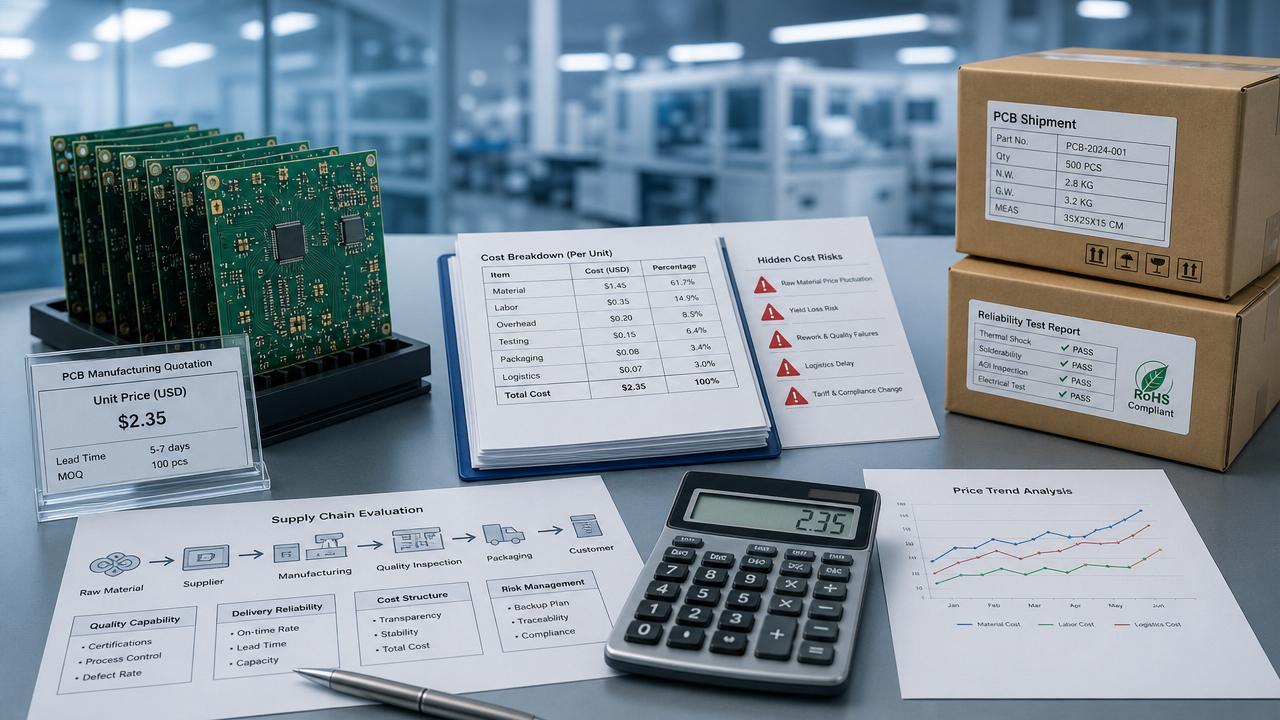
Choosing a PCB wholesaler by unit price alone looks efficient, yet the cheapest quote often creates the most expensive outcome. In electronics, small pricing assumptions can trigger large downstream losses.
A low headline rate may hide tooling charges, yield loss exposure, material substitutions, inspection gaps, shipping shocks, or non-compliance penalties. These risks affect budgets, delivery confidence, and product reliability.
For firms managing complex hardware programs, a PCB wholesaler should be evaluated as a risk-bearing supply partner, not only as a transactional source. The right review method protects margin and operational continuity.
Why PCB wholesaler pricing is changing faster than many budgets expect
The pricing environment for any PCB wholesaler has become more dynamic. Material volatility, regional compliance rules, and tighter performance requirements are reshaping how quotes are built and revised.
Boards once treated as standard now require stricter impedance control, thermal stability, and cleaner documentation. As technical expectations rise, hidden cost risk shifts from factory floor issues into financial planning.
Another trend is quote fragmentation. One PCB wholesaler may separate engineering, test, packaging, and logistics fees, while another embeds them partially. The comparison becomes harder than line-by-line price checking.
The main pricing models a PCB wholesaler may use
Most PCB wholesaler offers fall into a few recurring models. Understanding each structure helps identify where the real cost sits and where future adjustments may emerge.
1. Fixed unit pricing
This model presents a simple price per board. It is easy to approve, but often excludes non-recurring engineering, stencil, test fixture, or urgent production premiums.
2. Tiered volume pricing
The PCB wholesaler offers lower pricing at higher order bands. This can improve planning, but it may push excess inventory or encourage over-ordering to reach an artificial discount threshold.
3. Cost-plus pricing
This structure links charges to material, labor, and overhead inputs. It can provide transparency, yet it also transfers raw material spikes and process inefficiencies directly into the buyer’s cost base.
4. Project-bundle pricing
Some PCB wholesaler contracts combine fabrication, assembly coordination, test, and logistics. Bundling may lower administration cost, but hidden cross-subsidies can obscure poor performance in one area.
5. Spot quote pricing
This model is common during shortages or prototype demand peaks. A PCB wholesaler may quote aggressively for immediate capacity, then reset pricing sharply on repeat orders.
The strongest signals behind hidden cost risk
Hidden cost risk rarely appears as a single dramatic fee. It usually emerges through a chain of small assumptions that were not tested before approval.
These signals matter across industries because electronics projects increasingly depend on precise documentation, predictable lead times, and stable compliance evidence. Weak quote structure usually means weak cost control later.
What usually drives these pricing shifts
- Copper, laminate, and specialty resin costs remain sensitive to energy and capacity fluctuations.
- Higher layer counts and tighter tolerances raise process complexity and reduce yield stability.
- Compliance documentation for IPC, ISO, RoHS, and traceability adds non-visible administrative cost.
- Demand for fast-turn prototypes increases expediting fees and schedule compression risk.
- Geographic diversification creates mixed freight, tariff, and customs exposure.
- Quality escapes now carry larger financial impact because downstream assemblies are more expensive.
An independent technical view, such as the benchmarking approach used by SiliconCore Metrics, helps separate valid engineering cost from avoidable commercial opacity.
How hidden costs spread through business operations
A weak PCB wholesaler agreement does not harm only the invoice line. It can reshape schedules, capital efficiency, audit readiness, and customer satisfaction at the same time.
Budget planning impact
When pricing excludes recurring extras, forecast accuracy falls. Teams may approve a program that looks viable on paper but underperforms after freight, scrap, and retest are included.
Engineering impact
If a PCB wholesaler substitutes materials or modifies stack-up assumptions, signal integrity, thermal behavior, and long-term reliability can change without obvious warning at purchase stage.
Operations impact
Late shipments, partial lots, and documentation gaps force rescheduling. That creates idle time, emergency sourcing, and pressure on customer commitments.
Compliance impact
Missing certificates or weak traceability can trigger audit issues. The resulting cost may include testing repeats, legal review, blocked deliveries, or contract penalties.
What to verify before approving a PCB wholesaler
A sound approval decision should test the total cost framework, not just the nominal board price. The following checks are practical and widely applicable.
- Confirm whether tooling, CAM review, test fixtures, and packaging are included.
- Request clear stack-up, material brand, dielectric, copper weight, and surface finish definitions.
- Check quote validity period and material escalation clauses.
- Define acceptable yield, defect responsibility, and replacement timing.
- Review IPC class alignment, ISO support, and traceability depth.
- Map freight terms, customs responsibility, and regional tax exposure.
- Verify whether rush builds affect standard orders or quality controls.
- Ask for sample reporting on electrical test, microsection, and reliability evidence.
A practical framework for comparing PCB wholesaler quotes
This comparison method gives a more realistic view of which PCB wholesaler delivers the best total value. It also improves internal approval confidence.
What deserves closer attention in the next buying cycle
The next cycle should focus less on isolated discounts and more on stability indicators. Market conditions reward suppliers that can document consistency across quality, lead time, and engineering control.
- Track landed cost, not only quoted board cost.
- Score each PCB wholesaler on documentation quality and change transparency.
- Model the cost of one late lot or one defective batch.
- Use benchmark data to challenge unexplained premiums or vague discounts.
- Favor repeatable reporting over promotional pricing language.
Independent intelligence is especially useful where high-reliability boards, thermal constraints, or micro-tolerance requirements increase the penalty of wrong assumptions.
A smarter next step for evaluating a PCB wholesaler
Before final approval, convert each quote into a total-risk worksheet. Include engineering assumptions, logistics terms, compliance evidence, test scope, and recovery obligations for defects or delay.
Then compare each PCB wholesaler across both price and risk-adjusted performance. This approach exposes hidden liabilities before they reach production, warranty, or audit stages.
For organizations seeking deeper validation, independent benchmarking from SiliconCore Metrics can support better quote interpretation, stronger technical due diligence, and more resilient supplier decisions.
Recommended News
- HDI TechnologyHow to vet PCB suppliers in a directory before requesting quotesPCB suppliers directory guide: learn how to verify capabilities, certifications, traceability, and quote assumptions before selecting a reliable PCB partner.
- HDI TechnologyHow UAE engineering data repositories improve design traceabilityEngineering data repository UAE solutions strengthen design traceability by linking requirements, revisions, supplier evidence, and manufacturing data. Explore practical ways to reduce risk and accelerate releases.
- HDI TechnologyHow to verify UL recognition for printed circuit boardsPrinted circuit boards UL verification made clear: learn how to check UL marks, file numbers, factory scope, stack-ups, and traceability for audit-ready compliance.
- HDI TechnologyMulti layer PCB design guide for controlling signal crosstalkMulti layer PCB design guide for controlling signal crosstalk with stackup, spacing, return-path, and validation strategies for reliable high-density boards.
- HDI TechnologyHow tighter manufacturing tolerances change HDI PCB pricesMicro tolerance manufacturing price explained: see how tighter HDI PCB tolerances affect yield, inspection, supplier options, and sourcing costs.
- HDI TechnologyHow automotive PCB impedance control prevents signal failuresAutomotive PCB impedance control prevents reflections, noise, and timing errors in ADAS, EV, and infotainment systems. Learn how to build reliable signal paths.