
PCB Alternatives: When to Switch Materials or Stackups
DETAILS
Choosing the right PCB alternatives can determine whether a product meets performance, cost, and reliability targets. For business decision-makers facing tighter thermal, signal integrity, and compliance demands, knowing when to switch materials or redesign stackups is a strategic advantage. This article explains the key triggers, evaluation factors, and risks behind material and stackup changes in modern electronic manufacturing.
When do PCB alternatives become a business decision rather than an engineering detail?
Many companies first discuss PCB alternatives only after a failure appears in prototyping, EMC testing, thermal validation, or field use. That is usually too late. A material or stackup change can affect yield, lead time, qualification cost, and supplier availability across the full EMS supply chain.
For enterprise buyers and technical leaders, the issue is not simply whether FR-4 should be replaced. The real question is whether the current board platform still supports the product roadmap, the target margin, and the compliance profile required by the end market.
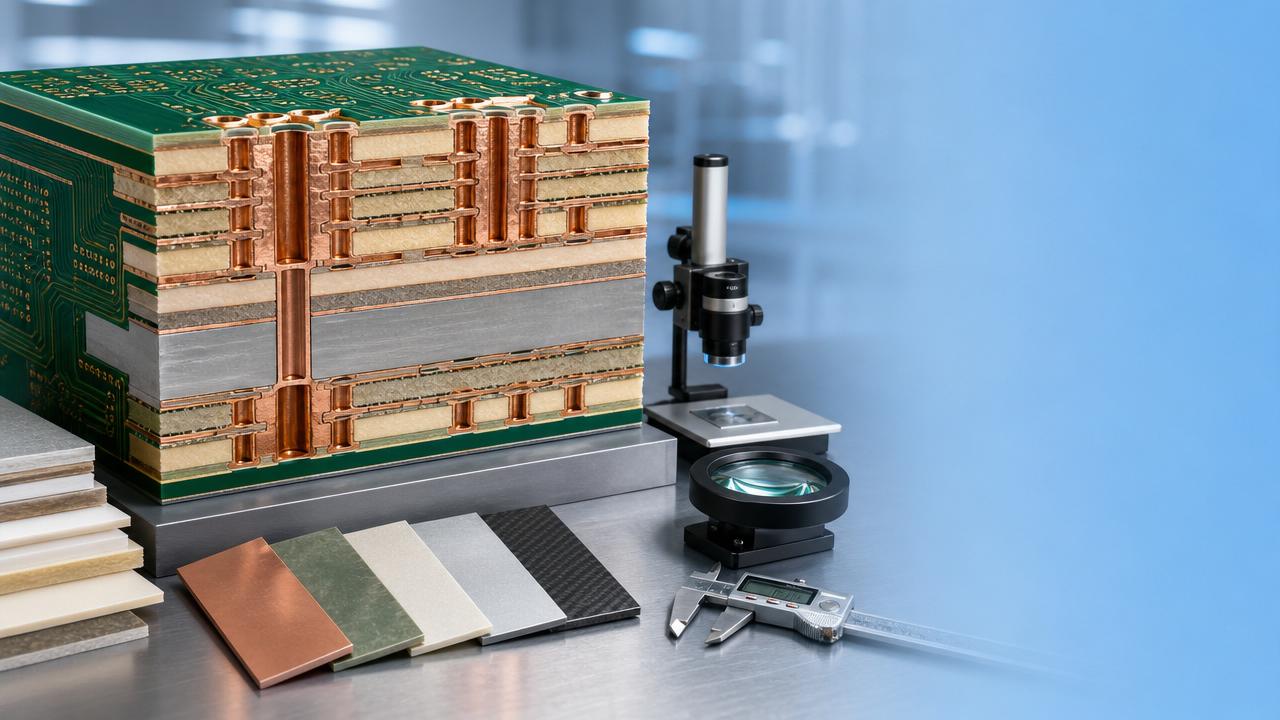
In practical terms, PCB alternatives may involve new laminates, hybrid constructions, different copper weights, revised layer counts, lower-loss dielectrics, metal-core options, or stackup changes that improve routing and isolation without fully changing the base material.
- A high-speed design begins to fail insertion loss or timing budgets as data rates rise.
- A power-dense assembly creates hot spots that conventional laminates cannot dissipate efficiently.
- A procurement team faces unstable laminate supply, inconsistent quality, or large cost swings from a single material family.
- A product must meet stricter reliability expectations for automotive, industrial, telecom, aerospace-adjacent, or medical environments.
Why this matters to decision-makers
A stackup or material change influences much more than electrical performance. It can alter panel utilization, drilling complexity, lamination cycles, assembly warpage risk, test repeatability, and long-term supplier qualification. These variables directly affect total cost of ownership, not just piece price.
That is why many global organizations rely on independent technical benchmarking. SiliconCore Metrics supports this process by translating dielectric behavior, SMT precision realities, and reliability data into comparable decision inputs that procurement and engineering can use together.
Which triggers usually justify switching PCB materials or stackups?
The strongest trigger for evaluating PCB alternatives is a mismatch between board capability and product requirements. That mismatch may be visible in the lab, in sourcing negotiations, or in customer quality feedback. The table below summarizes common trigger points and the strategic response they often require.
The key lesson is that PCB alternatives should not be treated as a last-minute substitution exercise. They are often the result of measurable performance, manufacturability, or sourcing triggers that can be identified early through data-led review.
Four warning signs companies often overlook
- The board passes bench validation but shows inconsistent behavior across production lots, indicating material variability or stackup tolerance sensitivity.
- Procurement secures lower laminate pricing, but assembly scrap and field returns begin rising, eroding the original savings.
- Design teams keep adding shielding, heat spreaders, or rework steps instead of addressing the board structure itself.
- Qualification records focus on nominal data sheets rather than independent testing under realistic thermal and environmental stress.
How should executives compare common PCB alternatives?
Not every design requires an expensive material upgrade. In many cases, a revised stackup delivers enough performance improvement. In other cases, only a material change can solve dielectric loss, thermal stress, or reliability concerns. The comparison below helps frame the trade-offs.
This comparison shows why PCB alternatives should be reviewed in the context of application and business model. The lowest laminate cost can be the wrong decision if it increases qualification cycles, field risk, or assembly instability.
Material switch versus stackup redesign
A material switch changes the physical behavior of the board. A stackup redesign changes how layers, reference planes, dielectric thicknesses, and copper are arranged. The second option is often less disruptive if the existing laminate family remains suitable.
However, if dielectric loss, thermal expansion, moisture resistance, or long-term reliability are the root problems, stackup optimization alone may only delay a more fundamental change. This is where independent board-level benchmarks are valuable.
What technical factors should shape a PCB alternatives decision?
Electrical performance
Decision-makers should ask whether dielectric constant stability, dissipation factor, impedance control tolerance, and copper surface profile are aligned with current and future channel requirements. A board that works at one data rate may become a bottleneck at the next product generation.
Thermal behavior
As power density rises, PCB alternatives must be evaluated for glass transition temperature, thermal conductivity, decomposition resistance, and the interaction between board heating and component reliability. A hotter design can fail through solder fatigue long before the laminate itself degrades.
Mechanical and assembly stability
Warping, via reliability, z-axis expansion, copper balance, and lamination symmetry are central to SMT yield. SCM’s focus on SMT placement precision and long-term reliability is especially relevant here because the board substrate and assembly process are tightly linked.
Supply chain robustness
A technically strong board material can still be a weak business choice if only a narrow set of fabricators can source or process it consistently. Procurement teams should validate alternative laminate families, regional availability, minimum order constraints, and requalification burden before committing.
How can procurement teams evaluate PCB alternatives without slowing the program?
A disciplined evaluation model helps prevent redesign loops and conflicting supplier claims. The goal is not to collect more data than necessary. The goal is to gather the right data that connects engineering risk to sourcing and launch timing.
- Define the failure or limitation clearly, such as excess insertion loss, hot spot formation, CAF concern, warpage, or unreliable lead time.
- Separate mandatory requirements from preferred features, including compliance thresholds, reliability expectations, cost limits, and fabrication capability.
- Compare at least two realistic PCB alternatives, not just one premium option against one commodity baseline.
- Request evidence in the form of test data, process capability ranges, and environmental reliability context rather than marketing summaries.
- Review the impact on PCB fabrication, SMT assembly, active and passive component interaction, and thermal packaging together.
A practical evaluation checklist
For enterprise programs, the decision should be cross-functional. Engineering may favor performance margin, while sourcing may prioritize second-source flexibility. Quality may focus on accelerated life risks. A balanced PCB alternatives review aligns these views before tooling and production commitments increase.
What cost assumptions often distort PCB alternatives decisions?
The most common error is treating laminate price as the dominant cost driver. In reality, total economics often depend more on yield, qualification effort, thermal mitigation hardware, field reliability, and launch delay exposure than on raw material delta alone.
The table below shows how cost should be assessed more broadly when comparing PCB alternatives for commercial programs.
A more expensive board can reduce total program cost if it avoids repeated testing, lowers assembly fallout, or protects product reliability in the field. Conversely, a premium material is not justified if a stackup revision would solve the same issue with less disruption.
Which standards and compliance points should not be ignored?
For regulated or quality-sensitive sectors, PCB alternatives must be screened against manufacturing and reliability expectations, not only electrical behavior. Companies often review IPC performance classes, thermal cycling assumptions, flammability needs, and quality management alignment with supplier controls.
- IPC-Class 3 expectations can raise the bar for structural integrity and process discipline in high-reliability applications.
- ISO 9001 alignment is useful as a baseline for quality management, but it does not replace material-level validation.
- Environmental stress testing should match the actual use case, such as temperature cycling, humidity, mechanical shock, or prolonged power loading.
- For high-speed boards, dielectric consistency across lots should be checked because catalog values may not capture production variation.
SCM’s role is especially relevant when companies need neutral, standardized reporting rather than relying solely on vendor literature. That matters when supplier claims must be translated into procurement-grade risk assessments.
Common mistakes when reviewing PCB alternatives
Mistake 1: assuming all FR-4 grades behave the same
They do not. Resin systems, glass styles, dielectric loss, Tg behavior, and process consistency can vary meaningfully between material families that are all casually labeled FR-4.
Mistake 2: changing material without reviewing stackup symmetry
A new laminate does not automatically fix assembly issues. If copper balance and layer arrangement remain poor, warpage and solder joint stress can continue.
Mistake 3: letting suppliers define success too narrowly
A supplier may optimize for what they produce most easily. Buyers should instead define success around application risk, qualification repeatability, and multi-source resilience.
Mistake 4: ignoring future product revisions
If the next generation will push higher bandwidth or tighter thermal constraints, selecting PCB alternatives only for today’s minimum requirement may create an avoidable redesign later.
FAQ: what do buyers and program leaders ask most about PCB alternatives?
How do we know whether to switch materials or just change the stackup?
Start with the root cause. If the issue is impedance control, routing density, plane referencing, or warpage from poor symmetry, a stackup change may be enough. If the issue is dielectric loss, thermal endurance, moisture sensitivity, or repeated reliability failures, material change becomes more likely.
Which PCB alternatives are most relevant for high-speed products?
Low-loss and very-low-loss laminates are common candidates, but hybrid stackups can also be effective. The right choice depends on channel length, frequency content, insertion loss budget, fabrication capability, and how much cost premium the business case can absorb.
Can a cheaper alternative increase total program cost?
Yes. A lower-cost board can raise scrap, delay qualification, reduce field life, or force additional thermal hardware. That is why total cost should include manufacturing stability, reliability exposure, and launch timing risk.
What evidence should procurement request before approving PCB alternatives?
Request dielectric and thermal data under relevant conditions, fabrication capability windows, reliability test context, and evidence of repeatability across lots. Where possible, compare vendor claims with independent reports and standardized benchmarks.
Why work with SCM when evaluating PCB alternatives?
PCB alternatives are difficult to judge when suppliers present different data formats, test assumptions, and marketing narratives. SCM helps engineering and procurement teams cut through that noise with independent technical analysis across PCB fabrication, SMT assembly, semiconductors, passive components, and thermal packaging.
Our work is built around measurable realities that matter in production: multi-layer PCB dielectric behavior, SMT placement precision, and reliability under environmental stress. That gives decision-makers a stronger basis for comparing material changes, stackup redesigns, and supply chain risk before commercial commitments deepen.
- Ask us to support parameter confirmation for dielectric, thermal, and manufacturability questions tied to PCB alternatives.
- Use SCM intelligence to compare material selection paths, qualification burden, and likely sourcing constraints.
- Discuss delivery risk, compliance expectations, sample evaluation strategy, and quotation alignment before final supplier nomination.
- Request a more structured review when your team needs an independent view on stackup redesign, component interaction, or thermal packaging implications.
If your organization is deciding whether to stay with standard constructions or move to more advanced PCB alternatives, the most efficient next step is a data-based review of performance targets, supply conditions, qualification scope, and cost exposure. That is the point where better evidence creates better decisions.
Recommended News
- HDI TechnologyHow to vet PCB suppliers in a directory before requesting quotesPCB suppliers directory guide: learn how to verify capabilities, certifications, traceability, and quote assumptions before selecting a reliable PCB partner.
- HDI TechnologyHow UAE engineering data repositories improve design traceabilityEngineering data repository UAE solutions strengthen design traceability by linking requirements, revisions, supplier evidence, and manufacturing data. Explore practical ways to reduce risk and accelerate releases.
- HDI TechnologyHow to verify UL recognition for printed circuit boardsPrinted circuit boards UL verification made clear: learn how to check UL marks, file numbers, factory scope, stack-ups, and traceability for audit-ready compliance.
- HDI TechnologyMulti layer PCB design guide for controlling signal crosstalkMulti layer PCB design guide for controlling signal crosstalk with stackup, spacing, return-path, and validation strategies for reliable high-density boards.
- HDI TechnologyHow tighter manufacturing tolerances change HDI PCB pricesMicro tolerance manufacturing price explained: see how tighter HDI PCB tolerances affect yield, inspection, supplier options, and sourcing costs.
- HDI TechnologyHow automotive PCB impedance control prevents signal failuresAutomotive PCB impedance control prevents reflections, noise, and timing errors in ADAS, EV, and infotainment systems. Learn how to build reliable signal paths.