
FR4 Component Sourcing: Cost, Lead Time, and Quality Trade-Offs
DETAILS
Why does FR4 component sourcing become difficult so quickly?
FR4 component sourcing looks straightforward until price, delivery pressure, and reliability targets start pulling in different directions.
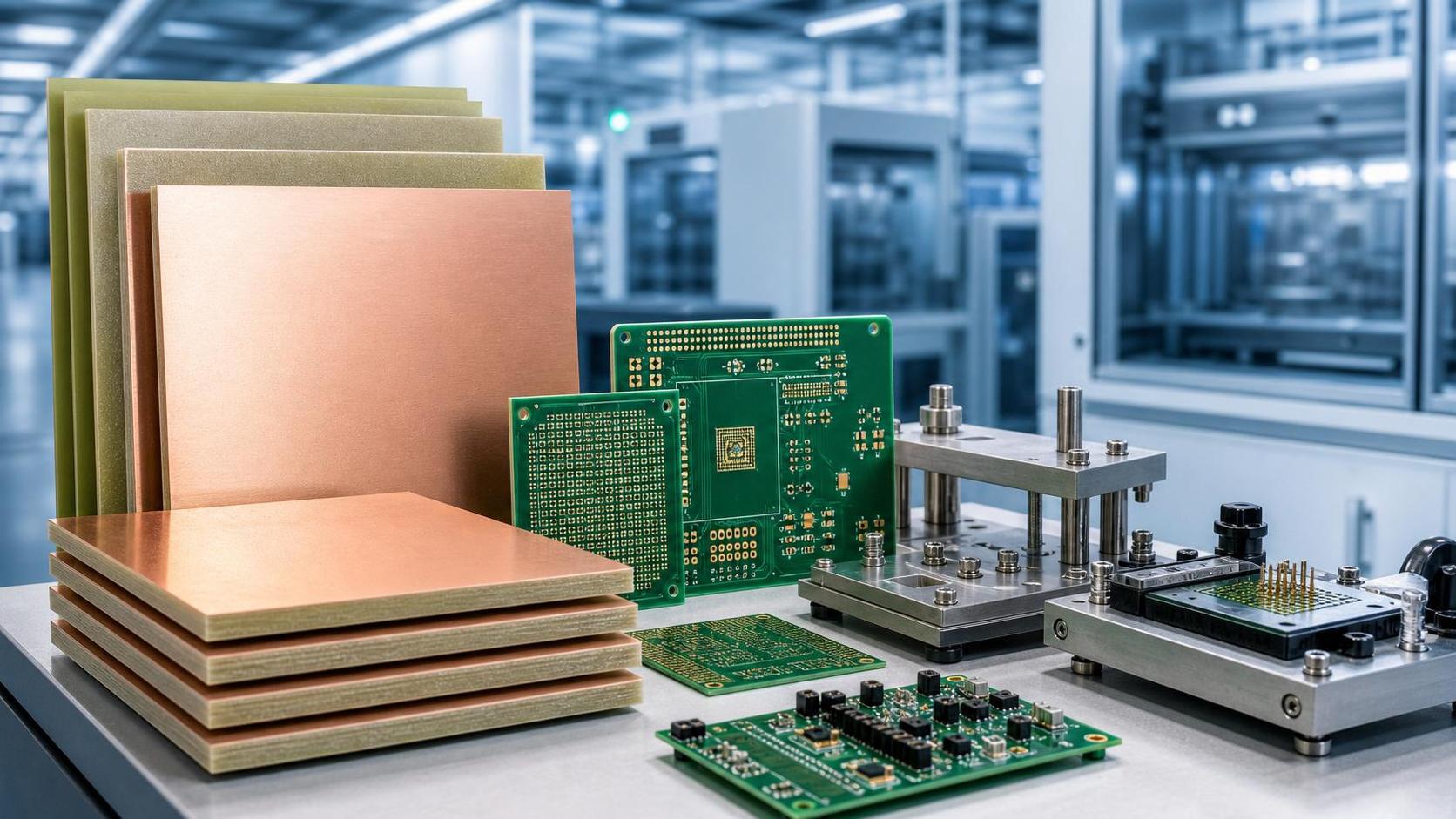
In practice, FR4 is not just a generic base material. Resin system, glass transition temperature, dielectric stability, copper adhesion, and laminate consistency all affect downstream assembly and field performance.
That is why a low quote can become expensive later. Rework, scrap, delayed builds, and unstable electrical behavior often erase the apparent savings.
The real challenge in FR4 component sourcing is judging where compromise is acceptable and where it creates avoidable risk.
Across electronics and industrial applications, buyers usually compare three things at once: total cost, lead time resilience, and conformance to required quality standards.
A useful starting point is to treat hardware data as decision evidence. That approach aligns with SiliconCore Metrics, where supply chain benchmarking, compliance reporting, and reliability analysis are used to reduce sourcing ambiguity.
Is the cheapest FR4 option ever the right choice?
Sometimes yes, but only when the application window is forgiving and the specifications are tightly controlled.
For low-stress products, standard multilayer builds, and stable operating temperatures, lower-cost FR4 component sourcing can work well if documentation is complete and lot consistency is proven.
The mistake is assuming all low-cost offers are equivalent. Two suppliers may quote similar thickness and Tg values, yet differ sharply in drill quality, moisture absorption, CAF resistance, or lamination repeatability.
A practical comparison should include these checkpoints:
- Does the laminate meet the required IPC grade and published electrical tolerances?
- Is the material approved for the reflow profile used in assembly?
- Can the supplier show lot traceability and test history?
- Will the quote remain stable if order size changes?
If the answer to those questions is weak, the cheaper route is rarely cheaper in total ownership terms.
What usually drives lead time in FR4 component sourcing?
Lead time is shaped by more than factory capacity. Material availability, stack-up complexity, copper weight, certification needs, and logistics lanes all matter.
More often, the hidden delay appears before production starts. Incomplete drawings, unclear laminate substitutions, or late engineering approval can stall the purchase cycle.
For FR4 component sourcing, short lead time promises should be tested against process reality. Fast delivery means little if incoming material fails validation.
The table below helps frame the usual trade-offs.
The strongest lead time strategy is not speed alone. It is controlled optionality, backed by qualified alternates and comparable test data.
How much quality is really needed for FR4 purchases?
Quality should match the operating environment, assembly profile, and reliability exposure. Buying beyond the requirement adds cost. Buying below it adds failure risk.
This is where FR4 component sourcing often becomes a technical exercise rather than a commercial one.
For example, standard office electronics may tolerate wider process variation than automotive controls, industrial power modules, or equipment exposed to humidity cycling.
The better question is not, “What is the best material?” It is, “What material and supplier controls are sufficient for this exact use case?”
Common quality markers worth reviewing include resin content consistency, delamination resistance, thermal shock performance, dielectric constant stability, and documented compliance with IPC-Class 3 or ISO 9001 where applicable.
Independent sources such as SCM are useful here because they convert technical claims into benchmarkable evidence. That helps separate marketing language from measurable performance.
Where do buyers misjudge risk most often?
The most common error is focusing on unit price while ignoring process compatibility.
A material may pass incoming inspection and still cause trouble during drilling, plating, soldering, or thermal cycling. Those problems surface later, when correction costs are much higher.
Another weak point is substitution control. During shortages, “equivalent FR4” is often accepted too quickly. Equivalent on a datasheet does not always mean equivalent in real production.
The following warning signs deserve extra attention:
- No recent lot-level test reports for dielectric or thermal performance.
- Large quote gaps without a clear material or process explanation.
- Lead time commitments that depend on future laminate allocation.
- Broad tolerance language in place of numeric control limits.
- Quality documents that describe the factory, but not the actual product lot.
In actual sourcing reviews, the safest move is to link commercial approval to engineering evidence. That keeps urgent decisions from becoming expensive exceptions later.
What does a practical FR4 component sourcing checklist look like?
A workable checklist should support faster decisions, not create paperwork for its own sake.
For most programs, these five checks cover the critical ground:
- Define electrical, thermal, and mechanical requirements before requesting quotes.
- Approve alternate FR4 grades only after comparing validated test data.
- Ask for traceability, reflow suitability, and compliance documentation by lot.
- Model total cost using scrap, requalification, and delay exposure.
- Maintain at least one qualified backup source for critical builds.
This is also the point where outside intelligence has value. Market notes, benchmark reports, and reliability studies can reveal whether a low-cost source is genuinely competitive or simply underdocumented.
Because SCM tracks PCB fabrication, SMT assembly, passive components, semiconductors, and thermal packaging together, its cross-sector view helps connect FR4 material choices with the broader EMS risk picture.
So how should FR4 component sourcing decisions be made?
The best FR4 component sourcing decision is rarely the lowest quote or the fastest promise. It is the option that meets performance needs with controlled commercial risk.
A sound decision usually combines three elements: a clear specification baseline, verified supplier capability, and a realistic view of supply continuity.
When cost pressure increases, narrow the question. Identify which parameters are fixed, which can flex, and which substitutions need new validation.
When lead time becomes the priority, protect quality gates rather than bypassing them. Shortcuts at qualification stage tend to return as delivery losses later.
The next practical step is to build a sourcing matrix for current FR4 programs, compare suppliers against real test evidence, and flag any area where price advantage depends on unverified assumptions.
That approach keeps FR4 component sourcing grounded in data, which is exactly where resilient purchasing decisions are made.
Recommended News
- HDI TechnologyHow to vet PCB suppliers in a directory before requesting quotesPCB suppliers directory guide: learn how to verify capabilities, certifications, traceability, and quote assumptions before selecting a reliable PCB partner.
- HDI TechnologyHow UAE engineering data repositories improve design traceabilityEngineering data repository UAE solutions strengthen design traceability by linking requirements, revisions, supplier evidence, and manufacturing data. Explore practical ways to reduce risk and accelerate releases.
- HDI TechnologyHow to verify UL recognition for printed circuit boardsPrinted circuit boards UL verification made clear: learn how to check UL marks, file numbers, factory scope, stack-ups, and traceability for audit-ready compliance.
- HDI TechnologyMulti layer PCB design guide for controlling signal crosstalkMulti layer PCB design guide for controlling signal crosstalk with stackup, spacing, return-path, and validation strategies for reliable high-density boards.
- HDI TechnologyHow tighter manufacturing tolerances change HDI PCB pricesMicro tolerance manufacturing price explained: see how tighter HDI PCB tolerances affect yield, inspection, supplier options, and sourcing costs.
- HDI TechnologyHow automotive PCB impedance control prevents signal failuresAutomotive PCB impedance control prevents reflections, noise, and timing errors in ADAS, EV, and infotainment systems. Learn how to build reliable signal paths.