
Advanced Circuit Boards vs Standard Designs: What Really Changes
DETAILS
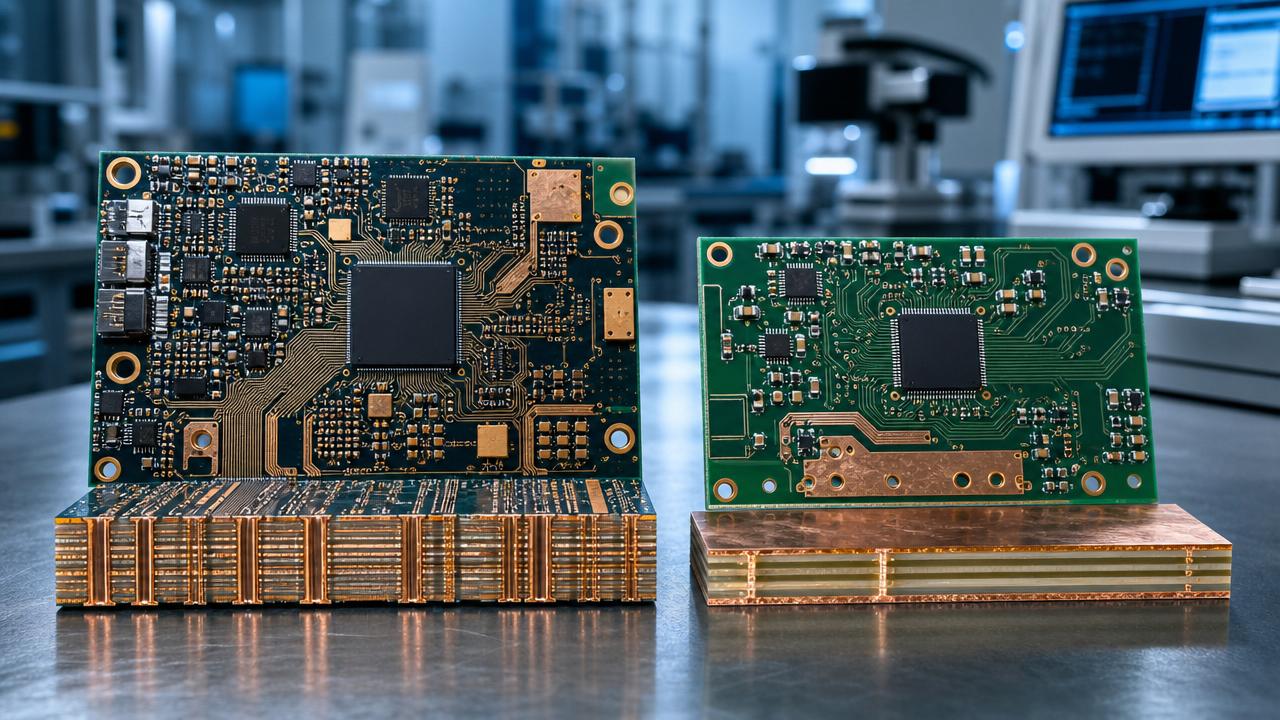
When comparing advanced circuit boards with standard designs, the real differences go far beyond layer count or cost. For engineers, sourcing teams, and technical researchers, the shift involves signal integrity, thermal control, material performance, and long-term reliability. This article breaks down what truly changes, helping information-driven readers evaluate design complexity through a more practical and data-based lens.
In the semiconductor and EMS supply chain, the term advanced circuit boards is often used too loosely. Some buyers assume it only means more layers, finer traces, or a higher quotation. In reality, the move from a standard PCB design to an advanced board usually reflects a full system-level shift: tighter impedance control, more demanding dielectric behavior, lower insertion loss, stricter warpage limits, and process windows that can shrink from comfortable millimeters to micro-level tolerances.
For information researchers and technical sourcing teams, this distinction matters because a board that appears acceptable on a drawing can still underperform in assembly, field operation, or environmental stress testing. In high-speed computing, automotive electronics, telecom infrastructure, industrial controls, and compact power systems, the wrong design assumptions can turn a 2-week prototype into a 10-week redesign cycle. That is why technical benchmarking and manufacturing transparency have become as important as unit price.
What Makes Advanced Circuit Boards Different at the Engineering Level
At a basic level, standard boards are designed for stable, proven requirements: moderate signal speeds, common laminate materials, conventional via structures, and less aggressive thermal density. Advanced circuit boards, by contrast, are engineered to solve problems that emerge when electrical, thermal, and mechanical constraints begin to overlap. This is common in designs above 6 layers, in HDI layouts with stacked or staggered microvias, and in applications where impedance variation must stay within roughly ±5% to ±10%.
Electrical performance is no longer a secondary concern
In many standard boards, traces primarily serve connectivity. In advanced circuit boards, traces become transmission paths that must preserve waveform quality. Once frequencies rise and edge rates tighten, layout choices directly affect return loss, crosstalk, skew, and timing margins. A board carrying DDR, RF, PCIe, high-speed sensor links, or mixed-signal modules cannot rely on generic stack-up habits.
This is where material selection changes the design conversation. A standard FR-4 solution may work for general control electronics, but advanced boards often need lower-loss laminates, controlled resin content, and more predictable dielectric constants across temperature and frequency ranges. Even a small Dk variation can alter impedance targets, especially when line widths are narrow and spacing is compressed below 100 microns in dense layouts.
Typical electrical shifts from standard to advanced designs
- Impedance control moves from a “good practice” item to a release-critical specification.
- Layer stack-up planning becomes an early design task rather than a fabrication handoff detail.
- Loss budget, propagation delay, and reference plane continuity must be reviewed before routing is finalized.
- Manufacturing tolerances for copper thickness, etch compensation, and prepreg flow become performance variables.
Thermal management becomes built into the board, not added afterward
Another major difference is thermal behavior. Standard boards often dissipate moderate heat loads through copper pours, chassis contact, or airflow. Advanced circuit boards may need to handle localized hot spots, high component density, and sustained thermal cycling. In these cases, the board itself becomes part of the thermal architecture through heavy copper areas, thermal vias, insulated metal structures, or carefully balanced layer distribution.
For example, a power module or high-density processor board can see temperature gradients of 20°C to 40°C across a compact area. If thermal expansion, resin stability, and via reliability are not considered early, long-term failure risk rises. Delamination, barrel cracking, pad cratering, and solder joint fatigue are not always immediate; they often emerge after repeated cycles in field use.
The comparison below shows how design expectations usually change when a project moves from standard boards to advanced circuit boards.
The table highlights a core procurement lesson: advanced circuit boards are not simply “better boards.” They are boards built for more difficult operating conditions and narrower design margins. That distinction should guide supplier evaluation, qualification planning, and the level of technical documentation requested before purchase approval.
What Changes in Materials, Structures, and Manufacturing Complexity
The most visible difference between standard and advanced circuit boards is usually structural complexity. However, structure only matters because it changes manufacturability and reliability. A standard 2-layer or 4-layer board may tolerate wider annular rings, larger drill diameters, and simpler soldermask alignment. Advanced boards often involve 8, 10, or 12 layers, blind or buried vias, sequential lamination, and more rigorous registration control between inner layers.
Microvias, HDI, and sequential lamination raise both capability and risk
High-density interconnect designs are one of the clearest markers of advanced circuit boards. Once designers move into microvia structures, the fabrication process may require multiple lamination cycles, laser drilling, copper filling, and tighter plating uniformity. Each added cycle can improve routing density, but it also increases process sensitivity, inspection demand, and failure modes if not well controlled.
For procurement teams, this means a supplier quote should not be judged only by nominal stack-up and piece price. Questions should also cover aspect ratio limits, microvia reliability history, registration capability, coupon test methods, and whether the manufacturer routinely builds to IPC-Class 3 when mission-critical reliability is required.
Material behavior under stress becomes a purchase variable
Advanced circuit boards place greater demands on the material system because stress is rarely single-dimensional. A board may face thermal cycling from -40°C to 125°C, high humidity exposure, vibration, or continuous operation at elevated current density. In such cases, glass transition temperature, coefficient of thermal expansion, moisture absorption, CAF resistance, and resin stability are not abstract datasheet lines. They affect field life.
This is one reason independent benchmarking is valuable. Suppliers may offer nominally similar laminates, yet the practical difference in dielectric consistency, resin flow behavior, or plating adhesion can materially change yield and reliability. For technical researchers, comparing process capability data across manufacturing hubs is often more useful than comparing brochure claims.
Common structure-related decisions in advanced board programs
- Define whether HDI is required for electrical density or simply for mechanical packaging.
- Confirm stack-up symmetry to reduce warpage risk during reflow and assembly.
- Review via strategy early: through-hole, blind, buried, filled, capped, or stacked.
- Set measurable acceptance criteria for impedance, bow and twist, and copper balance.
- Align reliability testing with end-use conditions rather than prototype convenience.
The following matrix helps technical buyers distinguish which manufacturing variables usually separate standard work from advanced circuit boards in real sourcing scenarios.
A practical takeaway from this matrix is that advanced circuit boards require closer collaboration between design, fabrication, and assembly teams. The more the board depends on microvias, fine lines, and specialized materials, the less effective a simple RFQ process becomes. Technical due diligence must be deeper and earlier.
How Reliability, Qualification, and Cost Drivers Shift
Many buyers first notice the difference between standard and advanced circuit boards in quoted cost. Yet the cost change is only the visible result of deeper qualification demands. A board that must maintain stable electrical behavior after repeated reflow cycles, vibration, humidity exposure, or continuous high-load operation requires more than fabrication skill. It needs controlled materials, process validation, inspection discipline, and sometimes extended testing cycles that add 5 to 15 working days depending on complexity.
Reliability planning starts earlier in advanced designs
In standard board programs, reliability concerns may be addressed after prototypes are built. In advanced circuit boards, reliability must influence stack-up, pad design, copper balancing, and assembly profile from the beginning. This is especially true for industrial, automotive-adjacent, telecom, and high-availability computing systems where downtime cost can exceed the board cost by a factor of 10 or more.
Qualification often includes multiple checkpoints: design review, fabrication capability review, first article validation, and stress-oriented testing. Even when no formal environmental standard is mandated, teams commonly evaluate thermal cycling, solderability, dimensional stability, and impedance conformance. For global sourcing operations, that validation work can be the difference between a stable multi-quarter supply program and repeated field returns.
Why advanced boards cost more—and when that premium is justified
The price premium associated with advanced circuit boards usually comes from 4 areas: material upgrades, tighter process controls, additional inspection, and lower effective yield. For example, moving from a conventional stack-up to an HDI build with sequential lamination can increase processing steps by 2 to 4 major stages. Adding low-loss materials or heavy copper can further affect cycle time, scrap risk, and rework limits.
However, the premium is justified when system risk is high. If a board supports dense BGA escape routing, high-current power handling, or controlled high-speed links, under-specifying the design can lead to more expensive failures later. A lower initial quote may hide higher total cost once redesign, retest, assembly disruption, and schedule slip are included.
Four cost questions technical buyers should ask
- Which price increase is driven by materials, and which by process complexity?
- What inspection or coupon validation is included in the quotation?
- How many lamination, drilling, plating, and test stages are expected?
- What reliability margin is gained by choosing the advanced design route?
How Engineers and Procurement Teams Should Evaluate Advanced Circuit Boards
For information-driven readers, the most useful question is not whether advanced circuit boards are superior in general. The better question is whether the application truly requires them. Overengineering raises cost and lead time, but underengineering increases failure risk. The right decision depends on the electrical profile, thermal load, assembly density, operating environment, and lifecycle expectation of the product.
A practical evaluation framework
A strong qualification process often starts with 5 checkpoints. First, define the signal environment: low-speed control, mixed signal, RF, or high-speed serial. Second, define the thermal load and expected operating temperature range. Third, identify packaging pressure, such as fine-pitch BGAs or compact form factor constraints. Fourth, set reliability expectations, including service life and stress exposure. Fifth, verify whether the selected supplier has repeatable capability at the required tolerance level.
This approach helps teams avoid a common sourcing mistake: comparing advanced circuit boards from different suppliers using only piece price and nominal lead time. A 3-week lead time from one fabricator may exclude full impedance validation or detailed coupon reporting, while a 4-week quote from another may include tighter process control and broader documentation. Those are not equivalent offers.
What to request from a technically credible supplier or intelligence partner
When assessing suppliers or reviewing a manufacturing region, engineers and sourcing leads should ask for measurable evidence. Useful inputs include dielectric data across frequency ranges, SMT placement accuracy ranges, warpage control expectations, copper thickness consistency, and reliability reporting under representative stress conditions. These are the kinds of data points that turn advanced circuit boards from a marketing term into an engineering decision.
This is also where an independent technical intelligence source adds value. For organizations managing global semiconductor and EMS sourcing, neutral benchmarking can reduce uncertainty between suppliers that appear similar on paper. Comparing process capability, material behavior, and compliance readiness across PCB fabrication and assembly ecosystems supports better qualification decisions and fewer late-stage surprises.
Common misreadings to avoid
- Assuming higher layer count automatically means better performance.
- Treating impedance control as sufficient proof of high-speed readiness.
- Ignoring assembly interaction, especially for warpage-sensitive packages.
- Using standard laminate assumptions in harsh thermal or moisture environments.
- Evaluating quotes without clarifying test coverage and process controls.
Advanced circuit boards change the design and sourcing equation because they force every variable—electrical, thermal, mechanical, and manufacturing—to operate in a tighter window. For researchers, engineers, and procurement decision-makers, the real difference is not simply complexity. It is the level of control required to achieve stable performance from prototype through long-term deployment.
SiliconCore Metrics supports this decision process by translating manufacturing variables into usable technical intelligence across PCB fabrication, SMT assembly, semiconductors, passive components, and thermal packaging. If your team is evaluating advanced circuit boards for a new program or benchmarking suppliers across Asia-based manufacturing networks, contact us to discuss a data-driven assessment, request a tailored report, or explore more technical sourcing solutions.
Recommended News
- HDI TechnologyHow to vet PCB suppliers in a directory before requesting quotesPCB suppliers directory guide: learn how to verify capabilities, certifications, traceability, and quote assumptions before selecting a reliable PCB partner.
- HDI TechnologyHow UAE engineering data repositories improve design traceabilityEngineering data repository UAE solutions strengthen design traceability by linking requirements, revisions, supplier evidence, and manufacturing data. Explore practical ways to reduce risk and accelerate releases.
- HDI TechnologyHow to verify UL recognition for printed circuit boardsPrinted circuit boards UL verification made clear: learn how to check UL marks, file numbers, factory scope, stack-ups, and traceability for audit-ready compliance.
- HDI TechnologyMulti layer PCB design guide for controlling signal crosstalkMulti layer PCB design guide for controlling signal crosstalk with stackup, spacing, return-path, and validation strategies for reliable high-density boards.
- HDI TechnologyHow tighter manufacturing tolerances change HDI PCB pricesMicro tolerance manufacturing price explained: see how tighter HDI PCB tolerances affect yield, inspection, supplier options, and sourcing costs.
- HDI TechnologyHow automotive PCB impedance control prevents signal failuresAutomotive PCB impedance control prevents reflections, noise, and timing errors in ADAS, EV, and infotainment systems. Learn how to build reliable signal paths.