
Circuit Capacitors: What Really Impacts Lifespan
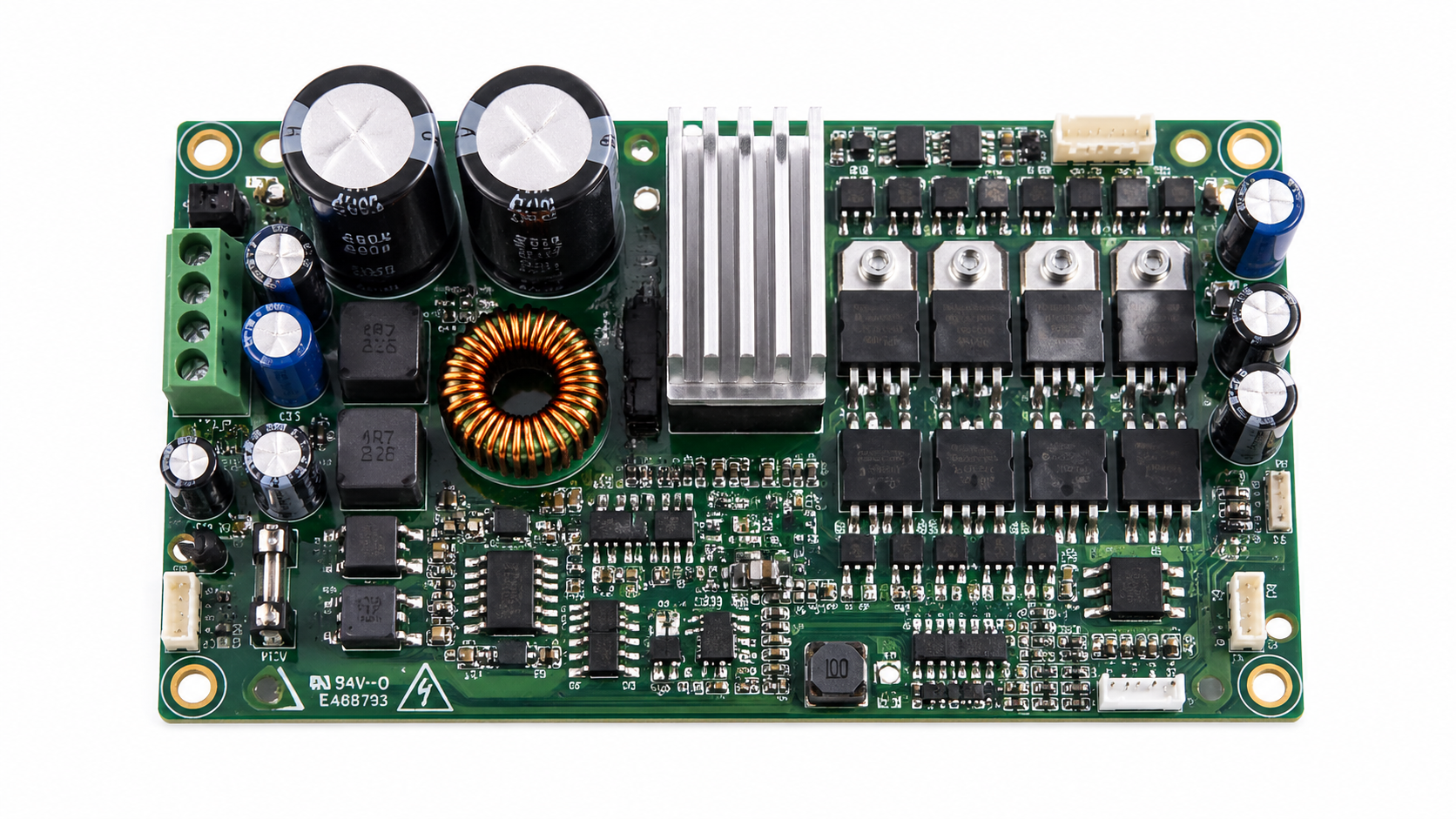
DETAILS
From circuit capacitors to industrial capacitors and other circuit components, lifespan is shaped by more than rated hours. Engineers, buyers, and quality teams must evaluate thermal management compliance, circuit board assembly quality, SMT soldering consistency, and semiconductor compliance to understand real reliability. This guide explains the key factors behind high-performance capacitors and why they matter across modern electronic parts sourcing and operation.
For most readers searching “Circuit Capacitors: What Really Impacts Lifespan,” the real question is not simply how long a capacitor can last on paper. It is how to predict service life in actual operating conditions, how to avoid premature failure, and how to tell the difference between a component that looks compliant in a datasheet and one that will remain stable in a real product. The short answer is this: capacitor lifespan is mainly determined by temperature, electrical stress, ripple current, voltage margin, board-level assembly quality, environmental exposure, and supplier process control. Rated life matters, but only as a starting point.
That matters across the full decision chain. Engineers need confidence in reliability under thermal and electrical load. Procurement teams need a practical way to compare suppliers beyond price. Quality and safety teams need indicators that reveal hidden failure risk. Project and finance stakeholders need to know whether paying more for certain passive components reduces warranty exposure, field failure, and supply chain disruption. In practice, understanding capacitor lifespan is less about one specification and more about system-level reliability.
Why rated hours alone do not tell you real capacitor life
A capacitor datasheet may state a rated life such as 2,000 hours, 5,000 hours, or 10,000 hours, often at a maximum temperature and rated ripple current. Many buyers and even some design teams treat that number as a direct measure of expected field life. That is a mistake. Rated hours describe survival under a defined stress condition, not a universal service-life guarantee.
In real applications, a capacitor operates within a wider mix of variables: ambient temperature, self-heating from ripple current, airflow conditions, voltage derating, switching frequency, enclosure design, vibration, contamination, and PCB layout. A capacitor rated for a modest test condition may outlast a higher-rated alternative in a well-managed design. The reverse is also true: a premium component can fail early if thermal management and board assembly are poor.
For technical evaluation, the more useful question is: under our operating profile, what accelerates wear-out? For procurement and business review, the better question is: what evidence shows this supplier’s capacitor performance remains stable after assembly, thermal cycling, and long-duration use? Those questions are far more predictive than simply comparing rated hours.
Temperature is usually the biggest lifespan driver
If one factor dominates capacitor aging in most electronics, it is heat. Elevated temperature speeds up electrolyte loss in aluminum electrolytic capacitors, changes dielectric behavior in ceramic capacitors, and increases stress across many passive components. Even when a capacitor is electrically within specification, excess heat can shorten life significantly.
Two temperatures matter: ambient temperature around the component and internal temperature rise caused by ripple current. In dense electronic assemblies, internal heating is often underestimated. Components placed near power semiconductors, transformers, high-current copper zones, or poorly ventilated corners of an enclosure may experience temperatures far above board-average assumptions.
For readers involved in design, sourcing, or quality review, the practical takeaway is clear: ask not only for the capacitor’s temperature rating, but also for evidence of thermal stability within the intended application. Useful indicators include:
- Measured case temperature under normal and worst-case load
- Ripple current capability at operating frequency
- Thermal derating guidance from the manufacturer
- Board-level thermal mapping in packed assemblies
- Long-duration performance under elevated temperature and bias
This is where thermal management compliance becomes a real reliability issue rather than a checkbox. The better the heat dissipation path, ventilation strategy, and component spacing, the more likely a capacitor will achieve predictable service life.
Electrical stress, voltage derating, and ripple current directly affect wear-out
Capacitor lifespan is also shaped by how hard the part is driven electrically. Three areas deserve the most attention: applied voltage, ripple current, and surge behavior.
Voltage derating: Operating a capacitor too close to its maximum rated voltage reduces reliability margin. In many applications, especially where transients are possible, voltage derating is one of the simplest ways to improve longevity. The ideal derating level depends on capacitor type and circuit function, but the core principle is universal: more margin generally means lower long-term stress.
Ripple current: In power electronics, motor drives, converters, and industrial controls, ripple current often becomes a hidden life limiter. Excess ripple generates internal heat, and that heat accelerates aging. Two capacitors with the same capacitance and voltage rating may perform very differently if one has better internal construction, lower ESR, or stronger thermal dissipation.
Transient and surge events: Repetitive voltage spikes, inrush events, and switching noise can degrade capacitors over time, even when average operating conditions seem acceptable. This is especially relevant in systems where active semiconductors switch rapidly and create localized stress conditions.
For engineers and technical evaluators, this means capacitor selection should be linked to actual waveform behavior, not just nominal values. For procurement teams, it means supplier comparison should include ripple-current data, ESR consistency, and surge performance where relevant.
Capacitor type and material system matter more than generic category labels
Not all circuit capacitors age in the same way. A realistic lifespan assessment must consider the component family and material system, because each technology responds differently to heat, bias, frequency, and mechanical stress.
Aluminum electrolytic capacitors are widely used and cost-effective, but their life is often highly temperature-dependent. Electrolyte evaporation and seal degradation can become the main wear-out mechanisms over time.
Polymer capacitors typically offer lower ESR and strong ripple performance, but application fit still depends on temperature profile, voltage stress, and board design.
MLCCs (multilayer ceramic capacitors) are common in high-density designs, yet they bring different risks, including capacitance loss under DC bias, mechanical cracking from board flex, and stress linked to assembly handling.
Film capacitors can provide strong stability in certain power and industrial uses, but physical size, environmental exposure, and voltage conditions still affect practical life.
For decision-makers, the key point is this: “best capacitor” is application-specific. Selecting high-performance capacitors requires matching the technology to the real electrical, thermal, and mechanical environment, not just choosing a premium label or the highest visible spec.
PCB assembly and SMT soldering quality can shorten life before the product even ships
One of the most overlooked lifespan factors is circuit board assembly quality. A capacitor may be well designed and properly rated, yet still fail early because of weak process control during SMT assembly or through-hole soldering. This is especially important for buyers and quality teams evaluating electronic parts sourcing across multiple manufacturing partners.
Common assembly-related risks include:
- Poor solder joint formation leading to intermittent electrical contact
- Excessive thermal exposure during reflow damaging sensitive components
- Board warpage or flex cracking, particularly in ceramic capacitors
- Misplacement or tombstoning in fine-pitch SMT processes
- Flux residue, contamination, or cleaning issues affecting long-term stability
SMT soldering consistency is not a minor production detail. It is a reliability variable. High-reliability products need evidence of process repeatability, stencil and paste control, reflow profile validation, AOI/X-ray discipline where appropriate, and robust defect traceability.
For procurement and supplier qualification, this is why factory capability should be reviewed alongside component specifications. A capacitor’s life in the field depends partly on how well it was mounted on the PCB.
Mechanical and environmental conditions often create hidden failure modes
Many capacitor failures are not caused by simple electrical overload. They emerge from the interaction between environmental stress and mechanical weakness. This is particularly relevant in automotive-adjacent electronics, industrial controls, outdoor systems, telecom hardware, and portable devices.
Key stressors include:
- Vibration and shock
- Humidity and condensation
- Salt mist or corrosive atmosphere
- Dust and conductive contamination
- Repeated thermal cycling
- Mechanical bending of the PCB during assembly or service
For example, an MLCC may pass electrical test but later crack due to board strain during installation. An electrolytic capacitor may degrade faster in a hot, sealed enclosure with poor airflow. A film capacitor may face insulation stress in humid environments if system protection is inadequate. These issues matter greatly for after-sales teams and maintenance personnel because root cause is often misidentified as a generic “component defect” when the true problem is operating environment.
The right evaluation approach is to test capacitors under realistic combined stress conditions rather than relying only on room-temperature inspection or one-dimensional qualification data.
Supplier quality, compliance discipline, and process transparency are major predictors of field reliability
Capacitor lifespan is not determined only by design physics. It is also shaped by manufacturing consistency. Variability in raw materials, dielectric formulation, electrolyte purity, winding precision, seal integrity, plating quality, and outgoing inspection can produce major differences in long-term performance between suppliers with similar datasheet claims.
This is where semiconductor compliance and broader component compliance culture become relevant. Organizations that apply disciplined process control, maintain traceable quality systems, and validate long-term reliability data are generally better positioned to deliver stable capacitor performance.
For technical and commercial decision-makers, useful supplier review points include:
- Consistency of lot-to-lot electrical parameters
- Reliability testing under temperature, humidity, and bias stress
- IPC and ISO quality system alignment
- Failure analysis capability and reporting quality
- Traceability for materials and production batches
- Responsiveness to corrective action requests
For financial approvers, this translates into a straightforward business truth: lower purchase price does not necessarily mean lower total cost. Capacitor-related failures can trigger warranty claims, service visits, line stoppages, product recalls, and reputation damage. Reliable sourcing often creates measurable downstream savings.
How to judge capacitor lifespan more accurately during selection and approval
If your team needs a practical framework, use a layered review instead of a one-spec comparison. A better capacitor assessment should answer the following questions:
- What is the true operating temperature? Include ambient, neighboring heat sources, and self-heating from ripple current.
- What electrical margin exists? Review voltage derating, ripple-current margin, transient exposure, and switching behavior.
- Is the capacitor technology well matched to the application? Consider not only capacitance and size, but also failure mode and environmental suitability.
- Can the PCB assembly process preserve reliability? Check solder profile compatibility, board strain risk, and assembly capability.
- Has the supplier proven long-term consistency? Look for test data, compliance records, traceability, and failure analysis discipline.
- Have real-world stress conditions been simulated or tested? Thermal cycling, humidity bias, vibration, and endurance testing all add confidence.
This approach helps different stakeholders align. Engineers gain technical clarity. Procurement gets stronger supplier comparison criteria. Quality teams get audit points. Project leaders gain better risk visibility. Finance reviewers gain a more credible basis for lifecycle cost decisions.
What this means for electronic parts sourcing and reliability strategy
In modern electronics manufacturing, capacitor lifespan should be treated as a system-level sourcing and design issue, not a standalone component attribute. The most reliable outcomes usually come from combining sound component selection, strong thermal design, disciplined circuit board assembly, robust SMT process control, and supplier transparency.
That is especially important when sourcing across global semiconductor and EMS supply chains, where parts may appear interchangeable at the catalog level but differ meaningfully in process maturity and long-term stability. Independent benchmarking, cross-supplier comparison, and application-focused reliability review can reduce that uncertainty.
For organizations managing industrial capacitors and other circuit components at scale, the most valuable question is no longer “Which capacitor has the highest advertised life?” It is “Which capacitor, from which supplier, under which assembly and operating conditions, gives us the most reliable performance and the lowest risk over the product lifecycle?”
Conclusion: the longest-lasting capacitor is usually the best-managed one
What really impacts capacitor lifespan is not one isolated spec but the combined effect of temperature, ripple current, voltage stress, component technology, assembly quality, environmental exposure, and supplier process control. Rated life remains useful, but it is only the beginning of a serious reliability assessment.
For target readers across engineering, procurement, quality, program management, maintenance, and commercial review, the practical takeaway is simple: evaluate capacitors in context. Prioritize thermal management, confirm assembly robustness, examine compliance and traceability, and compare suppliers on proven long-term performance rather than headline specifications alone.
That is how high-performance capacitors should be judged in real-world electronic parts sourcing—and how organizations can make more confident decisions on reliability, cost, and lifecycle risk.
- PCB
- SMT assembly
- active semiconductors
- passive components
- EMS
- thermal management
- environmental stress
- SMT process
- PCB assembly
- thermal management compliance
- semiconductor compliance
- circuit board assembly
- SMT soldering
- electronic parts
- circuit components
- semiconductor
- Power Semi
- power electronics
- high-performance
- high-performance capacitors
- circuit capacitors
- industrial capacitors
- heat dissipation
Recommended News
- Precision CapacitorsPrecision capacitors guide to choosing the right tolerancePrecision capacitors guide to choosing the right tolerance: compare dielectric stability, DC-bias effects, temperature drift, and qualification factors for reliable designs.
- Precision CapacitorsHow to verify RoHS compliance for lead free passive componentsLead free passive components: learn how to verify RoHS compliance with part-specific declarations, exemption checks, lot traceability, and targeted testing.
- Precision CapacitorsEU EN 62368-3:2026 Takes Effect for Precision CapacitorsEU EN 62368-3:2026 takes effect for precision capacitors, reshaping EU compliance for AV and IT equipment. Learn Annex D report requirements, thermal runaway risks, and supply chain impacts.
- Precision CapacitorsHow Passive Component Category Intelligence Improves Capacitor Sourcing DecisionsPassive component category intelligence helps buyers make smarter capacitor sourcing decisions by reducing risk, controlling cost, and approving truly usable alternates faster.
- Precision CapacitorsAEC-Q200 Specification: Key Tests and Pass CriteriaAEC Q200 specification explained: discover key tests, pass criteria, and practical evaluation tips to compare passive components, reduce sourcing risk, and improve reliability decisions.
- Precision CapacitorsPassive Component Technology Intelligence: Key Signals for 2026 Sourcing DecisionsPassive component technology intelligence reveals the 2026 sourcing signals that impact reliability, cost, and supply continuity—helping buyers reduce risk and make smarter decisions.