
Industrial automation upgrades often expose weak connector choices
DETAILS
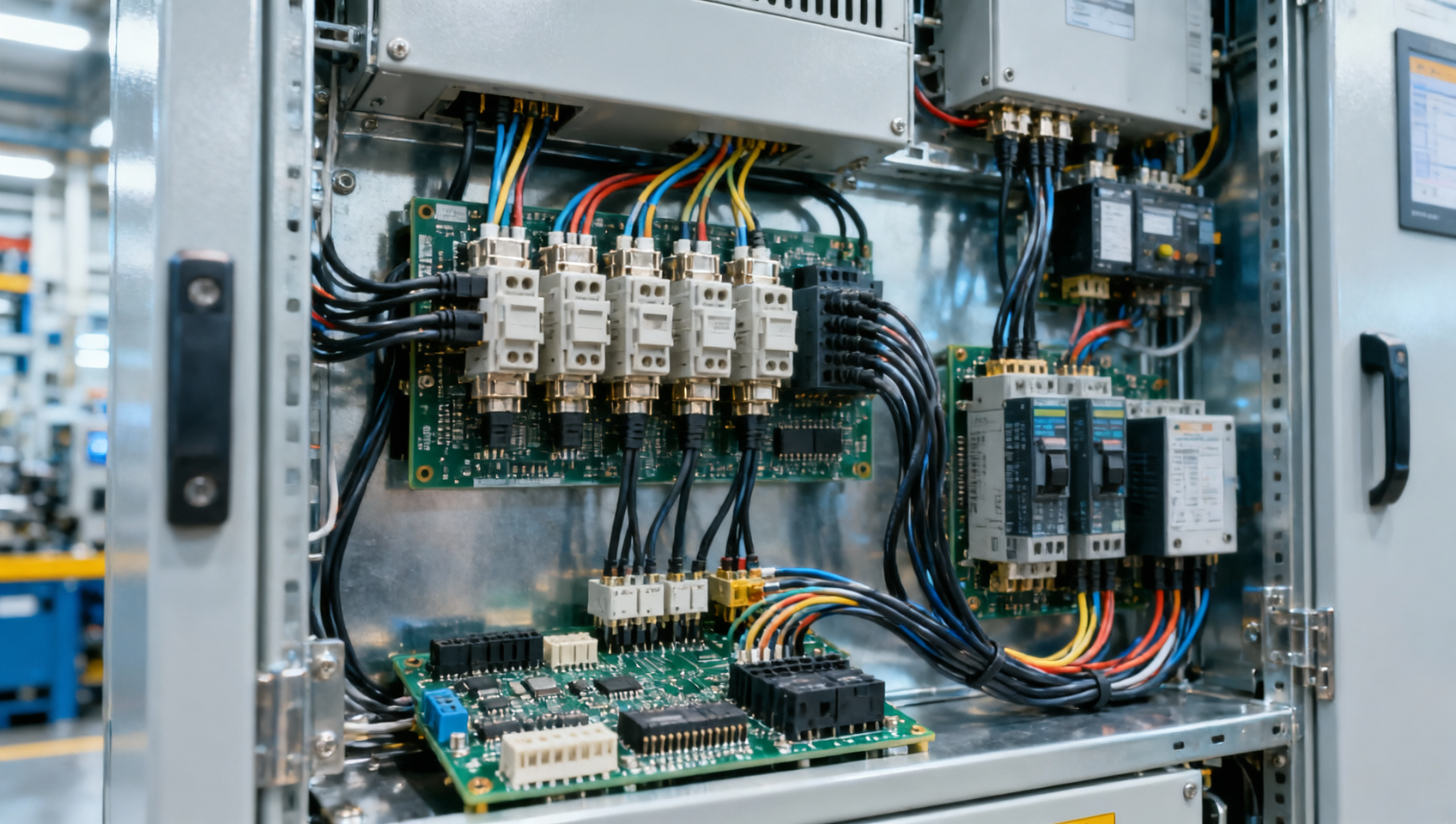
Industrial automation upgrades often reveal how overlooked wire connectors and electronic components can undermine high-performance systems. From microcontrollers and chipsets to power electronics, every interface affects thermal conductivity, energy efficiency, and long-term reliability. For engineers, procurement teams, and decision-makers, understanding these weak points is essential to selecting electronic components that support safer, more stable, and scalable industrial automation.
Why connector weakness becomes visible during automation upgrades
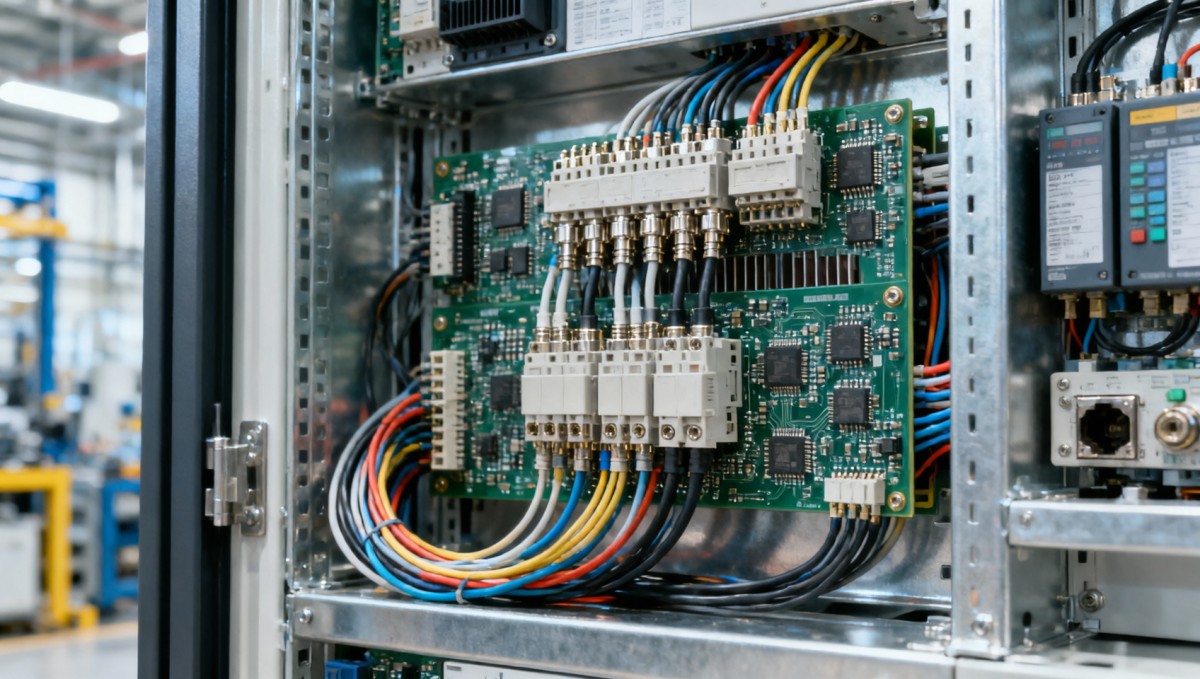
In many factories, process plants, logistics hubs, medical device lines, and energy systems, legacy connectors may perform adequately at low speed or limited duty cycles. Problems appear when an upgrade introduces faster control loops, higher current density, denser cabinets, or round-the-clock data exchange. A connector that was once “good enough” can become the first point of instability within 6–18 months of intensified operation.
This is not only a manufacturing issue. It affects every industry that depends on sensors, PLCs, servo systems, drives, industrial PCs, gateways, and edge devices. When contact resistance rises, thermal load follows. When shielding is inconsistent, signal integrity degrades. When mating cycles exceed the intended range, intermittent faults emerge. These weak links often hide behind larger upgrade budgets focused on controllers, software, robotics, and network architecture.
For technical evaluators and quality teams, the challenge is practical: connector failure rarely announces itself as a single catastrophic event. It more often appears as a cluster of symptoms such as random resets, unstable sensor readings, overheating at terminal points, or unexplained downtime during shift changes. These symptoms may start at 1 interface and spread across multiple cabinets, especially in systems operating across vibration, dust, humidity, or temperature cycling.
For procurement and commercial teams, weak connector choices also distort cost calculations. A lower unit price can create a higher total ownership cost when field replacement, line stoppage, troubleshooting hours, and requalification are included. In industrial automation, the real decision is not connector price alone. It is the cost of electrical instability over a 3–5 year operating window.
Typical weak points exposed after control and power upgrades
- Power connectors selected only by nominal current, without enough margin for heat rise during continuous duty, peak load, or cabinet crowding.
- Signal connectors lacking stable shielding continuity, which becomes problematic after migration to faster communication protocols or denser PCB routing.
- Wire termination systems that perform poorly under repeated maintenance, with retention force dropping after 20–50 mating cycles.
- Component pairings where the connector is not evaluated together with PCB stack-up, chipset switching behavior, or thermal packaging constraints.
This is where SiliconCore Metrics (SCM) provides value beyond generic sourcing advice. SCM analyzes hardware as an engineering system, not as isolated parts. Through benchmark-driven reviews of PCB dielectric behavior, SMT placement precision, and long-term reliability under environmental stress, SCM helps teams see whether the connector choice aligns with the full electrical and mechanical stack rather than the datasheet headline alone.
Which connector risks matter most across industrial environments?
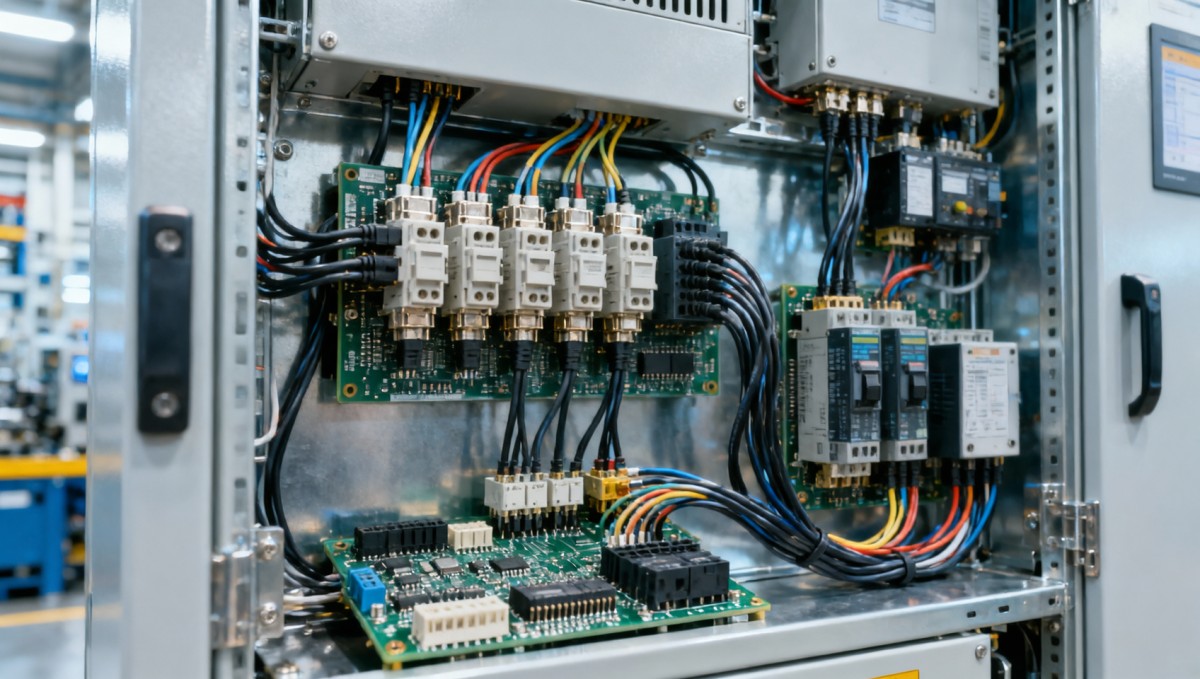
Connector weakness is not uniform across industries. A food processing line, semiconductor tool cabinet, renewable energy inverter, warehouse AGV, and telecom edge enclosure each apply different stress profiles. However, 5 risk dimensions usually dominate evaluation: electrical load, signal speed, thermal behavior, ingress exposure, and maintenance frequency. Missing even 1 of these dimensions can turn an otherwise compliant design into a field reliability problem.
Technical teams often focus first on voltage and current, but thermal conductivity and contact resistance deserve equal attention. In compact automation cabinets, a connector operating near its rated threshold can experience additional heating from nearby drives, power supplies, or tightly packed harnesses. A modest ambient shift from 25°C to 40°C can materially change reliability margins, especially during continuous operation or seasonal load peaks.
Signal-side weaknesses become more visible after upgrades to Ethernet-based control, high-resolution encoders, machine vision, or edge analytics. Connectors that worked in slower fieldbus environments may show noise sensitivity, insertion loss, or grounding inconsistency when paired with higher-frequency switching electronics and dense PCB assemblies. This is why connector review should happen together with PCB fabrication quality, component placement precision, and chipset-level signal behavior.
The table below helps information researchers, users, and procurement teams compare major connector risk categories in a practical automation context rather than a purely catalog-based format.
The main insight is simple: connector risk is system-dependent. A robust sourcing decision requires review of electrical stress, thermal packaging, and assembly quality together. SCM supports this process by translating complex manufacturing parameters into benchmark-ready reports, helping R&D, procurement, and project leaders compare options on measurable engineering grounds.
A practical 4-point field check before approving a connector set
- Review actual duty profile, not just nominal rating. Include startup peaks, continuous load, and ambient temperature range.
- Confirm compatibility with the PCB and enclosure environment, especially where micro-tolerances and tight placement affect alignment.
- Check maintenance expectations such as 12-month, 24-month, or quarterly access cycles that may raise mating wear risk.
- Request evidence of long-term reliability under environmental stress rather than relying only on initial lab performance.
How engineers and buyers should compare connector options during selection
Connector selection for industrial automation should be treated as a cross-functional decision. Users need stable operation. Engineers need electrical and mechanical fit. Procurement needs repeatable supply and rational cost. Quality teams need traceability and compliance confidence. Project managers need implementation speed. A useful comparison framework should therefore cover at least 6 dimensions, not only part number and lead time.
In practice, buyers often compare three broad paths: keeping a low-cost legacy connector, moving to an upgraded industrial-grade connector, or redesigning the interconnect architecture together with PCB and harness changes. Each path has different implications for downtime risk, assembly complexity, and requalification effort over a typical 2–4 week evaluation stage or a larger phased retrofit program.
The table below is designed for procurement teams, technical evaluators, distributors, and business reviewers who need a decision tool that reflects industrial automation realities.
For many organizations, the middle path is the most practical. Yet even that option fails if teams do not verify tolerances, process capability, and environmental match. This is why SCM’s independent benchmarking across PCB fabrication, SMT assembly, active semiconductors, passive components, and thermal packaging matters. Connector choice should be validated in the same ecosystem as the electronics components it must serve.
What to include in a 6-item procurement checklist
- Electrical margin: verify realistic load range instead of nominal load only.
- Thermal margin: review enclosure heat, cable bundle density, and nearby power electronics.
- Mechanical fit: confirm tolerance alignment with PCB layout, wire gauge, and maintenance access space.
- Supply continuity: check whether the source supports stable replenishment over 12–36 months.
- Compliance documentation: request relevant IPC, ISO-aligned, or customer-specific manufacturing evidence.
- Failure analysis support: ensure there is a path for root-cause review if field issues emerge after deployment.
This checklist also helps distributors and sourcing agents communicate with end users more effectively. Instead of selling only availability, they can support application fit, risk screening, and lifecycle planning—areas where technical transparency increasingly shapes purchase decisions.
What standards, reliability signals, and process evidence should you request?
Industrial buyers rarely need theoretical perfection. They need evidence that a connector and its related electronic components can perform within a defined operating context. Useful evidence often includes manufacturing process consistency, material traceability, compatibility with IPC-oriented assembly expectations, and quality management alignment such as ISO 9001. These do not eliminate risk, but they improve decision confidence.
For quality and safety managers, the most important question is whether the supplier can explain how reliability was evaluated. Was the component reviewed only at room temperature, or across a practical operating range such as -20°C to 70°C where relevant? Were insertion cycles considered? Was humidity exposure assessed? Were plating and insulation materials selected for the target environment rather than a generic use case?
For project leaders, process evidence matters because delays often come from late-stage qualification gaps. A connector that appears available may still stall a project if its supporting documentation cannot satisfy customer audits, internal quality review, or regional compliance requirements. Lead times for evaluation, corrective action, and resubmission can easily stretch from 7–15 days into several weeks when documentation is incomplete.
Three categories of evidence worth requesting early
1. Design-fit evidence
Ask for dimensional tolerances, wire compatibility range, PCB interface constraints, and thermal considerations. This is particularly important in compact assemblies where SMT precision, board warpage control, and connector alignment affect assembly yield.
2. Reliability evidence
Request information on environmental stress exposure, expected mating cycle range, contact material behavior, and performance drift over time. Even when data is limited, a supplier should be able to define the intended use boundaries clearly.
3. Supply-chain evidence
Confirm manufacturing location, batch traceability approach, document availability, and change-notification discipline. For B2B buyers, reliability is not only technical. It also depends on whether the supplier can support stable procurement and engineering review during redesigns or urgent replacements.
SCM’s advantage in this stage is its ability to convert highly technical manufacturing variables into standardized, decision-ready reporting. That helps procurement teams speak the same language as R&D engineers, while giving executives a clearer basis for supplier comparison and risk reduction.
Common mistakes, FAQ, and the next step for industrial buyers
Many automation upgrades fail at the connector level not because teams ignore quality, but because they review the wrong variables at the wrong time. The usual mistakes are predictable: selecting by catalog headline, copying an old bill of materials, underestimating heat rise, or separating connector review from PCB, chipset, and enclosure decisions. In modern automation, those shortcuts create avoidable risk.
The best results come from structured evaluation. Start with application stress, then verify interface fit, then review compliance and supply continuity, and only then finalize price negotiations. This approach protects both engineering outcomes and commercial decisions, especially when retrofits must stay on schedule and downtime windows are narrow.
FAQ: what buyers and engineers ask most often
How do I know whether a connector is underspecified for an automation upgrade?
Look beyond nominal current or voltage. Review heat rise risk, cabinet density, signal speed changes, maintenance frequency, and environmental exposure. If the upgraded system adds higher duty cycles, faster data exchange, or tighter packaging, the original connector may no longer have enough performance margin.
Which applications are most sensitive to weak connector choices?
High-density control cabinets, servo and drive systems, machine vision platforms, edge computing nodes, outdoor electrical enclosures, and lines with vibration or chemical exposure are common high-risk cases. In these environments, electrical, thermal, and mechanical stresses compound quickly.
What should procurement ask for before placing an order?
At minimum, request the usable operating range, mating cycle expectation, material and plating information, dimensional fit details, compliance documentation, and supply continuity terms. If the project is critical, ask for sample support and a review of the connector alongside the relevant PCB and electronics components.
How long does a practical technical review usually take?
For a straightforward replacement, an internal review can often be completed in 7–15 days if documentation is complete. For redesigns involving PCB updates, thermal review, and supply-chain validation, the process often extends to 2–4 weeks or more depending on the number of interfaces and qualification steps.
Why work with SCM on connector and component decisions?
SCM supports organizations that need more than catalog selection. Its independent technical research, benchmark-oriented analysis, and supply-chain intelligence help teams validate connector decisions in the broader context of PCB fabrication, SMT assembly, active semiconductors, passive components, and thermal packaging. That is especially useful when weak connector choices may be masking deeper issues in signal integrity, thermal management, or assembly precision.
If you are reviewing an automation upgrade, SCM can help clarify parameter confirmation, connector and electronics component selection, expected delivery windows, compliance questions, sample evaluation priorities, and supplier comparison logic. This gives engineers, procurement leads, quality managers, and decision-makers a shared basis for action instead of fragmented assumptions.
Contact SCM when you need support with connector risk screening, PCB and interface compatibility review, thermal and reliability interpretation, documentation alignment, sample benchmarking, or quotation-stage technical comparison. A well-informed connector decision is often one of the fastest ways to reduce downtime risk and protect the value of an industrial automation upgrade.
Recommended News
- ConnectorsHow to compare connector suppliers when quoted prices differSupplier comparison price guide for connector sourcing: compare technical fit, landed cost, quality, lead times, and supplier risk to make confident purchasing decisions.
- ConnectorsHow to assess connector quality when sourcing electronic components in SingaporeElectronic components Singapore sourcing guide: assess connector quality, traceability, plating, mechanical reliability, and supplier controls to reduce costly failures.
- ConnectorsHow to prevent connector corrosion in aquaculture installationsAquaculture installations need reliable connectors. Discover practical ways to prevent corrosion with smart sealing, material selection, cable routing, and maintenance.
- ConnectorsHow to select automotive connector systems for high-vibration environmentsAutomotive connector systems for high-vibration environments: learn how to evaluate contact stability, sealing, locking, harness support, and qualification evidence.
- ConnectorsWhen should you source from a connector systems wholesaler?connector systems wholesaler: learn when wholesale sourcing reduces supply risk, controls total cost, and protects production with qualified, reliable availability.
- ConnectorsHow to select connector systems for telecom exposed to vibrationConnector systems for telecom exposed to vibration demand more than basic specs. Learn how to protect signal integrity, retention, and reliability with smarter selection criteria.