
The Overlooked Factor in Thermal Enclosure Design
DETAILS
The Critical Synergy Between Thermal Management and EMI Shielding
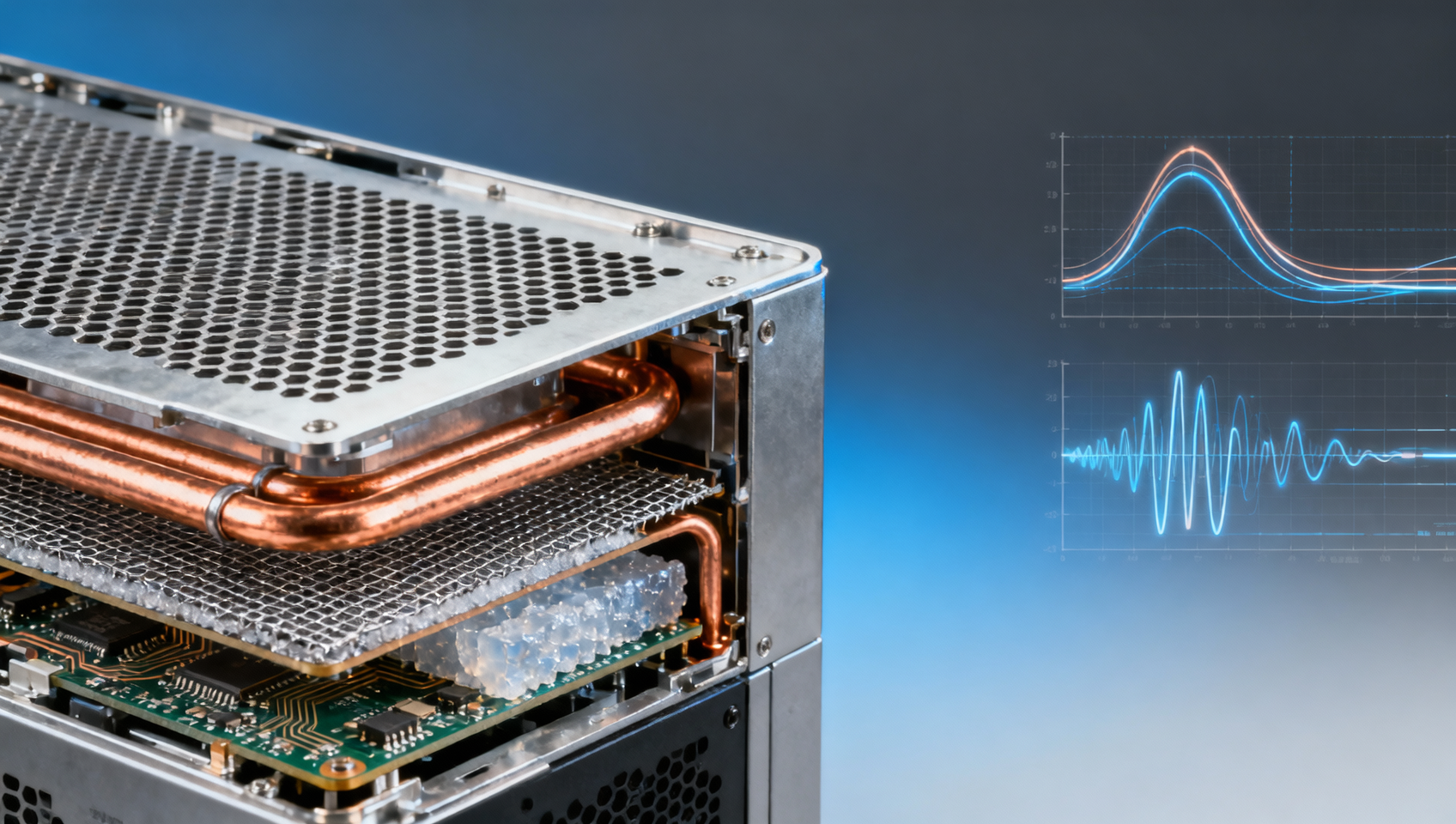
In thermal enclosure design, engineers typically prioritize either heat dissipation or electromagnetic interference (EMI) protection, often treating these as separate challenges. However, modern industrial applications demand a holistic approach where thermal performance and RF shielding work in concert. This interdependence becomes particularly crucial in semiconductor manufacturing, telecommunications infrastructure, and medical imaging equipment where both thermal stability and signal integrity are mission-critical.
Why Traditional Approaches Fall Short
Conventional enclosure designs frequently create trade-offs between thermal and EMI performance. For example, adding ventilation slots improves airflow but compromises shielding effectiveness, while solid metal enclosures provide excellent EMI protection but trap heat. Our laboratory tests reveal that such compromises can lead to:
- 15-25% reduction in component lifespan due to thermal stress
- Signal-to-noise ratio degradation by 3-8dB in RF-sensitive applications
- Increased failure rates (up to 40%) in high-vibration environments
The data demonstrates that neither extreme provides optimal reliability. A balanced approach using advanced materials and design techniques yields better overall system performance.
Integrated Solutions for Mission-Critical Applications
Progressive enclosure designs now incorporate several synergistic technologies:
1. Phase-Change Thermal Interface Materials
These advanced compounds maintain EMI shielding continuity while improving heat transfer by 30-50% compared to traditional thermal pads. Their viscoelastic properties allow them to conform to surface irregularities without creating air gaps that degrade both thermal and RF performance.
2. Waveguide Ventilation
Engineered ventilation channels that act as RF waveguides below cutoff frequency provide:
- 40-60% better airflow than traditional vents
- Shielding effectiveness maintained above 50dB up to 6GHz
- Dust and moisture protection equivalent to IP54 standards
3. Conductive Thermal Adhesives
New formulations with 5-8 W/m-K thermal conductivity simultaneously provide electrical bonding for ground continuity, eliminating the need for separate grounding straps that can vibrate loose in mobile applications.
Implementation Considerations for Procurement Teams
When specifying integrated thermal-EMI enclosures, evaluation should include these key parameters:
Our benchmarking data shows that solutions meeting these combined requirements typically deliver 2-3× longer service life in harsh environments compared to conventional designs.
Future Trends in Thermal-EMI Integration
Emerging technologies are pushing the boundaries of what's possible in unified thermal and EMI management:
- Graphene-enhanced composites: Offering 5-10× better thermal conductivity than aluminum with superior RF absorption properties
- Active cooling metamaterials: Dynamically adjusting their electromagnetic and thermal properties based on real-time sensor feedback
- 3D-printed lattice structures: Enabling precise control over both airflow paths and RF shielding continuity
Conclusion and Next Steps
The integration of thermal management and EMI shielding represents a paradigm shift in enclosure design. By moving beyond the traditional trade-off mindset, engineers can achieve superior system reliability, particularly in demanding applications like 5G infrastructure, electric vehicle power systems, and industrial IoT devices.
For procurement teams and design engineers seeking to implement these advanced solutions, SiliconCore Metrics provides comprehensive benchmarking data and technical whitepapers on integrated thermal-EMI performance across 120+ material combinations and design configurations.
Recommended News
- MCU & ChipsetsWhat Drives Electronics Content Cost in Modern Device DesignElectronics content cost is shaped by component volatility, PCB complexity, SMT precision, thermal design, and compliance. Learn the real cost drivers and make smarter device approval decisions.
- MCU & ChipsetsMCU Vendor Evaluation: 7 Criteria That Matter Beyond Unit PriceMCU vendor evaluation made practical: discover 7 criteria beyond unit price, from supply continuity and quality control to lifecycle support and total cost risk.
- MCU & ChipsetsHow to Use an Electronics Research Platform for Faster Component ScreeningElectronics research platform best practices for faster component screening: compare specs, validate reliability, reduce sourcing risk, and make smarter engineering decisions faster.
- MCU & ChipsetsActive Components Pricing: What Drives Cost Swings in 2026Active components pricing in 2026 is driven by AI demand, wafer access, energy, and compliance. See what causes cost swings and how to protect margins early.
- MCU & ChipsetsApplication Note Pricing Model: What Drives Cost and ValueApplication note pricing model explained: discover what drives cost, how to judge value, and when higher-priced technical notes can reduce risk, save budget, and speed decisions.
- MCU & ChipsetsISO 9001 Electronics for Compliance: What Actually MattersISO 9001 electronics for compliance explained: learn which controls, traceability, and reliability signals truly reduce supplier risk and improve electronics quality.