
MCU and Chipsets: How to Match the Right Platform
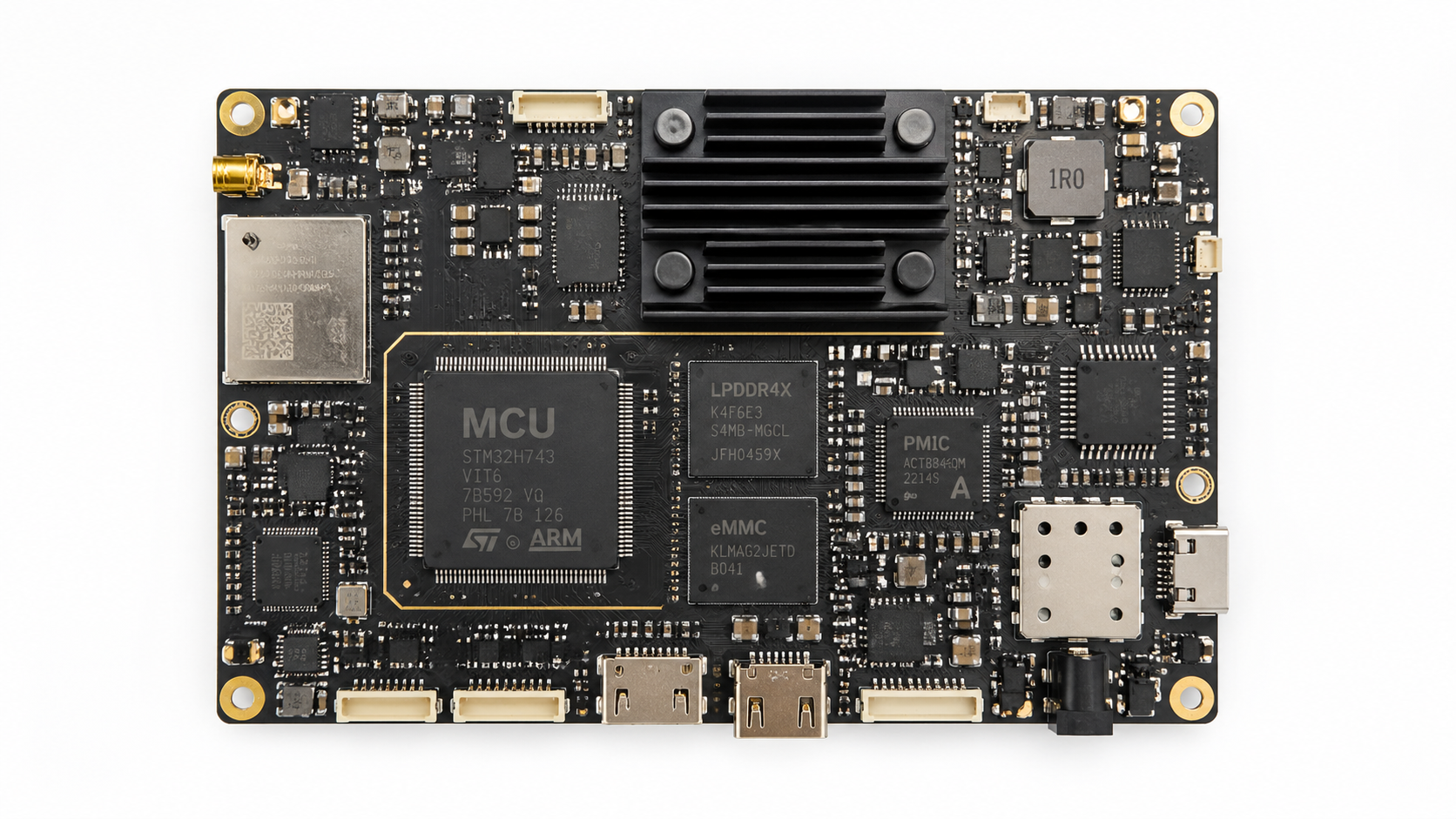
DETAILS
Choosing between an MCU and a chipset affects performance, cost, compliance, and long-term scalability. For engineers, buyers, and project teams evaluating circuit components, electronic parts, RF transceiver integration, SMT soldering, circuit board assembly, and thermal management compliance, the right platform decision starts with clear technical and supply-chain benchmarks.
In semiconductor-led product development, this decision is rarely only about processing power. It also influences BOM stability, PCB stack-up complexity, firmware workload, qualification effort, repairability, and sourcing resilience across a 12- to 36-month product lifecycle. For teams working in industrial electronics, smart devices, communications modules, and embedded control systems, selecting the right platform early can reduce redesign risk and shorten validation cycles.
For SCM’s audience, the practical question is not whether MCUs or chipsets are “better” in the abstract. The real question is which architecture matches functional requirements, manufacturing constraints, compliance targets, and supplier risk tolerance. A robust decision framework helps technical evaluators, procurement teams, quality managers, and project owners align around measurable criteria rather than assumptions.
Understanding the Core Difference Between an MCU and a Chipset
An MCU, or microcontroller unit, typically integrates a CPU core, memory, timers, analog interfaces, communication peripherals, and GPIO on a single chip. It is commonly used for deterministic control tasks, low-power operation, and compact embedded designs. In many products, a 32-bit MCU with 128 KB to 2 MB of flash and several UART, SPI, or I2C interfaces can handle sensing, motor control, HMI logic, and simple wireless coordination without external companion silicon.
A chipset, by contrast, usually refers to a multi-chip or functionally partitioned platform that may include an application processor, PMIC, connectivity ICs, memory support logic, RF front-end blocks, and interface bridges. Chipsets are often chosen when systems need higher computing throughput, richer operating environments, video or AI acceleration, or complex connectivity such as Wi-Fi, LTE, GNSS, or multi-protocol RF transceiver integration. This architecture can unlock greater feature density, but it also raises design and validation complexity.
The technical boundary becomes clearer when teams map workloads. If the system must respond in microseconds, operate under tight power budgets below 200 mW in active mode, and maintain straightforward firmware, an MCU-based design is often the practical route. If the system must support Linux-class software, edge analytics, display output, advanced networking, or large memory footprints above 256 MB external DRAM, a chipset platform may be more suitable.
Another major distinction is board-level impact. A single-chip MCU solution may fit on a 2- to 4-layer PCB for less demanding products, while a chipset-based platform may require 6 to 12 layers, controlled impedance routing, more aggressive thermal dissipation planning, and tighter SMT placement accuracy. That difference affects not only engineering effort but also assembly yield, rework feasibility, and test strategy.
The table below shows a practical comparison framework that engineering and sourcing teams can use during platform selection.
The key conclusion is that platform matching starts with workload partitioning and board-level consequences. When teams evaluate MCU versus chipset only at the silicon level, they often underestimate downstream effects on SMT soldering windows, RF layout constraints, field maintenance, and total qualification cost.
Where confusion usually starts
A common mistake is assuming that more integrated processing automatically reduces risk. In reality, higher integration can introduce new dependencies: external DRAM tuning, power sequencing, high-speed interface validation, and stricter thermal limits. For many industrial designs with 5- to 10-year maintenance expectations, simplicity and serviceability may outweigh raw feature expansion.
A quick rule of thumb
- If the design needs deterministic control, low standby current, and limited UI complexity, start with an MCU-first assessment.
- If the design needs advanced OS support, high-speed connectivity, or substantial multimedia processing, evaluate a chipset-first architecture.
- If lifecycle continuity is critical, compare second-source options and package availability before locking the platform.
How Performance, Thermal Design, and PCB Constraints Shape the Choice
Performance evaluation should go beyond clock speed and core count. In practical engineering review, teams need to assess latency tolerance, memory bandwidth, I/O concurrency, interrupt behavior, and thermal operating margins. An MCU running at 80 to 240 MHz may outperform a more complex platform for real-time control if the software path is shorter and the timing model is predictable. Conversely, a chipset with multiple compute domains may be essential when the application combines data acquisition, encryption, wireless stack management, and user interface processing in parallel.
Thermal design is often the hidden decision driver. A low-power MCU-based board may dissipate less than 1 W in steady operation and can frequently rely on copper spreading and enclosure conduction. A chipset platform integrating application processing and RF functions may generate 3 W to 12 W or more depending on duty cycle, communication mode, and ambient conditions. Once junction temperatures approach package limits, the design may require heat spreaders, graphite films, thermal vias, or more restrictive enclosure layouts.
PCB constraints also move quickly from manageable to critical. High-pin-count chipsets often increase layer count, fine-pitch BGA usage, escape routing difficulty, impedance control needs, and power integrity demands. In SMT assembly, finer pitch and denser placement can narrow process windows for solder paste deposition and reflow consistency. That has direct implications for first-pass yield, X-ray inspection effort, and defect analysis during pilot builds.
RF transceiver integration makes the trade-off even sharper. If a platform requires co-location of processing, antenna routing, switching regulators, and sensitive analog or RF paths, layout discipline becomes as important as silicon selection. Engineers must consider isolation spacing, return path continuity, and EMI behavior across multiple board revisions. For many mid-volume products, an MCU plus certified RF module may reduce compliance effort even if the unit cost is marginally higher than a fully discrete chipset approach.
The following checklist helps align performance needs with board and thermal realities before schematic freeze.
- Define worst-case workload: include peak communication, sensor polling, encryption, and UI activity within one operating window of 10 to 60 seconds.
- Estimate power dissipation by functional block rather than only total current draw, especially for PMIC, RF, and external memory sections.
- Map required PCB stack-up early: 2 to 4 layers may be realistic for simple MCU products, while higher-speed chipset designs may need 6 to 12 layers.
- Set thermal targets: for many industrial electronics, keeping hotspot rise within 20°C to 35°C above ambient improves long-term reliability.
- Validate assembly capability with manufacturing partners before locking fine-pitch packages or stacked memory options.
When these factors are quantified early, platform selection becomes less subjective. It also gives quality teams a clearer basis for defining environmental stress screening, solder joint inspection criteria, and field reliability expectations.
Why thermal margins affect procurement decisions
Procurement and finance teams often focus on unit pricing, but thermal overhead changes the real cost picture. A lower-cost chipset can trigger added spending on multilayer PCB fabrication, heat dissipation materials, shielding, validation runs, and enclosure changes. In contrast, a slightly higher-cost MCU platform may reduce NPI iterations and simplify compliance testing. The total landed cost should therefore include silicon, board complexity, assembly yield impact, and expected rework burden over at least 3 production phases: prototype, pilot, and mass production.
Selection Criteria for Engineering, Procurement, and Quality Teams
A strong platform decision requires cross-functional scoring. Engineering usually prioritizes functionality, interface availability, firmware effort, and debug access. Procurement looks at lead time, MOQ, second-source flexibility, and price volatility. Quality and safety teams focus on compliance documentation, traceability, process capability, and long-term reliability under thermal cycling, humidity, and vibration. If these criteria are reviewed separately, teams may approve a technically elegant platform that is commercially fragile or difficult to qualify.
One effective method is to use a weighted selection matrix with 5 to 7 core categories. In many B2B electronics programs, technical fit may account for 30% to 35% of the decision, supply continuity 20% to 25%, manufacturing compatibility 15% to 20%, compliance readiness 10% to 15%, cost structure 10% to 15%, and serviceability the remainder. The exact weighting depends on whether the product is cost-sensitive, safety-sensitive, or performance-led.
Lead time should never be treated as a temporary issue. A platform with nominal 8- to 12-week availability but weak distribution visibility can be riskier than a slightly more expensive alternative with stronger channel support and package continuity. For project managers, a late silicon change can delay EVT, DVT, and production release by 6 to 16 weeks, especially if the redesign alters power architecture or PCB layout density.
Quality reviewers should also examine package robustness, solder joint inspectability, moisture sensitivity level, and failure analysis access. These are not academic concerns. Under IPC-Class 3 expectations or other high-reliability requirements, the package style and assembly process window can materially affect acceptance criteria and field service outcomes.
The table below offers a practical cross-functional decision model for MCU and chipset selection.
This matrix helps teams move beyond one-dimensional comparisons. A lower purchase price does not guarantee a better platform if it increases validation effort, field failure risk, or sourcing volatility. The most resilient selection is usually the one that balances 4 dimensions at once: technical fit, manufacturability, availability, and lifecycle maintainability.
Key red flags during evaluation
- A platform that meets performance targets only at more than 85% CPU utilization leaves little room for firmware updates or diagnostic functions.
- A chipset requiring uncommon memory configurations may increase procurement friction and qualification time.
- An MCU that appears cheaper but lacks critical interfaces can create hidden board spin costs and connector workarounds.
- Packages with tight process windows should be reviewed against actual EMS capabilities, not only datasheet recommendations.
Recommended review cadence
For projects with moderate to high complexity, run platform reviews at 3 gates: concept selection, pre-layout architecture freeze, and pre-pilot build. This cadence catches the most expensive errors before tooling, regulatory preparation, and volume procurement begin.
Implementation Path: From Prototype to Volume Production
Once a platform is shortlisted, the next challenge is execution discipline. The best MCU or chipset decision can still fail if the implementation path is rushed. In practice, teams should treat platform adoption as a 4-stage process: feasibility, prototype validation, pilot readiness, and volume control. Each stage requires different evidence, from schematic risk review to thermal test data and assembly process characterization.
During feasibility, engineering teams should verify pin multiplexing, rail sequencing, interface conflicts, and firmware toolchain maturity. For chipset designs, memory compatibility and boot stability deserve early bench testing. For MCU-based designs, teams should confirm timing margins, analog performance, and low-power behavior under realistic load transitions. This stage often lasts 2 to 6 weeks depending on design reuse and supplier support quality.
Prototype validation should include more than functional bring-up. It should test reflow survivability, RF coexistence, thermal hotspots, and signal integrity on critical nets. If the board includes fine-pitch BGA packages or multi-rail sequencing, at least 2 prototype iterations may be justified before pilot release. This is particularly important when the same platform must satisfy both engineering performance and procurement continuity requirements.
Pilot readiness is where manufacturing intelligence becomes decisive. Teams should review solder paste aperture design, stencil strategy, package warpage sensitivity, moisture handling, inspection coverage, and rework limits. For high-density chipset assemblies, X-ray sampling plans and thermal profiling often need tighter control than for simpler MCU boards. A stable pilot run usually provides the most reliable evidence for final sourcing approval.
The implementation flow below can be used as a practical control structure for new platform introduction.
- Feasibility screening: 1 to 2 candidate platforms, architecture review, lifecycle and availability check.
- Engineering prototype: bench validation, firmware baseline, thermal and SI review, first PCB manufacturability feedback.
- Pilot build: 20 to 200 units depending on product class, SMT window validation, defect analysis, stress testing.
- Production release: approved AVL, incoming inspection criteria, revision control, and field-service documentation.
Organizations that formalize this sequence tend to reduce uncontrolled substitutions and late-stage redesigns. It also gives quality and after-sales teams a clearer foundation for repair strategy, spare planning, and revision traceability over the product’s supported life.
Where SCM-style benchmarking adds value
Independent technical benchmarking is especially useful when choosing between functionally similar platforms. Comparative data on PCB dielectric behavior, SMT placement precision, thermal package performance, and long-term component reliability can reveal which option is more robust under actual manufacturing conditions, not just on paper. For multinational teams sourcing from multiple regions, this type of data reduces interpretation gaps between design, procurement, and supplier quality functions.
Common Mistakes, Risk Controls, and FAQs for Platform Matching
The most common error in MCU and chipset selection is over-specifying the platform for future possibilities while under-specifying the manufacturing path needed to support it. Another frequent mistake is assuming a reference design will translate directly into production-grade hardware. In real-world EMS environments, assembly yield, component substitutions, thermal drift, and compliance documentation quality can shift the viability of a platform long after initial lab success.
Risk control starts with measurable thresholds. Set acceptable lead-time exposure, such as reviewing any critical component that moves beyond 12 to 16 weeks. Define thermal acceptance limits, for example hotspot rise below 30°C over ambient in the target enclosure. Establish firmware headroom, such as keeping average compute utilization below 70% in typical workloads. These thresholds prevent platform decisions from becoming overly subjective or politically driven.
Project managers and financial approvers should also watch for “invisible complexity.” A platform that appears to consolidate functions may still require more test fixtures, more expensive debugging tools, and longer regression cycles. After-sales teams should ask a simple question early: can field diagnostics isolate faults at board or module level within 15 to 30 minutes, or will the platform force costly full-board replacement?
The following FAQ addresses practical search intent from technical, sourcing, and operational stakeholders.
How do I know if an MCU is enough for my product?
If your system mainly performs sensing, control, basic communications, and limited local UI tasks, an MCU is often sufficient. A good early test is to estimate memory, interface count, and processing load with at least 20% growth margin. If the design does not require rich OS support, high-speed graphics, or large external memory, an MCU platform usually offers lower power, simpler PCB design, and easier long-term support.
When is a chipset the better choice?
A chipset is generally justified when the application needs complex connectivity, multimedia handling, advanced user interfaces, edge analytics, or multi-domain processing. It also becomes relevant when the product roadmap includes significant software expansion over 2 to 3 years. However, teams should confirm that thermal management, external memory integration, and assembly capability are compatible with the added complexity.
What procurement metrics matter most during selection?
The most useful metrics are lead-time stability, lifecycle status, package availability, MOQ, channel visibility, and second-source flexibility. Procurement should also assess whether the chosen platform depends on tightly coupled companion parts such as PMICs, memory, or RF components. A platform with stable 8- to 12-week replenishment and broad distribution can be preferable to a lower-cost option with inconsistent allocation risk.
What quality teams should verify before final approval?
Quality teams should check package process sensitivity, inspection accessibility, thermal cycling robustness, operating temperature range, and documentation completeness. For boards targeting higher reliability, review solder joint risk areas, rework feasibility, and evidence that the platform can be assembled consistently within the EMS partner’s process capability. These checks are especially important when IPC-Class 3 expectations or harsh-environment use cases apply.
Final risk-control reminders
- Do not select only on CPU performance; include assembly, thermal, and lifecycle factors.
- Do not approve a platform without reviewing companion component availability.
- Do not rely on prototype success alone; pilot yield and inspection results matter more for production readiness.
- Do not ignore serviceability if the product requires multi-year field support.
Matching the right MCU or chipset platform is a strategic engineering and supply-chain decision, not just a component choice. The strongest decisions combine workload analysis, PCB and thermal feasibility, sourcing resilience, compliance readiness, and lifecycle maintainability into one evaluation model. For organizations navigating semiconductor complexity across design, procurement, quality, and production, disciplined benchmarking reduces risk and speeds alignment.
SCM supports this process by connecting platform evaluation with measurable manufacturing and reliability data across PCB fabrication, SMT assembly, active semiconductors, passive components, and thermal packaging. If your team needs a clearer basis for selecting between an MCU and a chipset, contact us to get a tailored assessment, compare technical trade-offs, and explore more solution paths for your next build.
- PCB
- PCB fabrication
- SMT assembly
- active semiconductors
- passive components
- thermal packaging
- signal integrity
- IPC-Class 3
- EMS
- thermal management
- SMT placement
- environmental stress
- component reliability
- PCB design
- thermal management compliance
- circuit board assembly
- SMT soldering
- electronic parts
- circuit components
- MCU
- Chipsets
- semiconductor
- RF transceiver
- heat dissipation
- 32-bit MCU
- multilayer PCB
Recommended News
- MCU & ChipsetsIoT Embedded System Components: Selection Guide for Performance, Power, and ConnectivityIoT embedded system components selection guide covering performance, power, and connectivity. Learn how to reduce risk, improve reliability, and choose smarter for long-term IoT success.
- MCU & ChipsetsWhat Drives Electronics Content Cost in Modern Device DesignElectronics content cost is shaped by component volatility, PCB complexity, SMT precision, thermal design, and compliance. Learn the real cost drivers and make smarter device approval decisions.
- MCU & ChipsetsMCU Vendor Evaluation: 7 Criteria That Matter Beyond Unit PriceMCU vendor evaluation made practical: discover 7 criteria beyond unit price, from supply continuity and quality control to lifecycle support and total cost risk.
- MCU & ChipsetsHow to Use an Electronics Research Platform for Faster Component ScreeningElectronics research platform best practices for faster component screening: compare specs, validate reliability, reduce sourcing risk, and make smarter engineering decisions faster.
- MCU & ChipsetsActive Components Pricing: What Drives Cost Swings in 2026Active components pricing in 2026 is driven by AI demand, wafer access, energy, and compliance. See what causes cost swings and how to protect margins early.
- MCU & ChipsetsApplication Note Pricing Model: What Drives Cost and ValueApplication note pricing model explained: discover what drives cost, how to judge value, and when higher-priced technical notes can reduce risk, save budget, and speed decisions.